Low volume PCB assembly provides an important bridge between prototype development and full-scale manufacturing. It allows electronics companies to produce a controlled number of functional PCB assemblies while validating manufacturing processes, component sourcing, testing procedures, and product reliability.
Unlike a one-off prototype, a low volume PCB assembly build is designed to demonstrate that an electronic product can be manufactured repeatedly and consistently. This makes low-volume production particularly useful for industrial electronics, medical devices, automotive electronics, communications equipment, AI hardware, IoT products, and other high-mix electronic products.
For companies moving from engineering validation toward commercial production, choosing the right PCB assembly manufacturer can reduce manufacturing risks, shorten development cycles, and create a smoother transition into larger production volumes.
What Is Low Volume PCB Assembly?
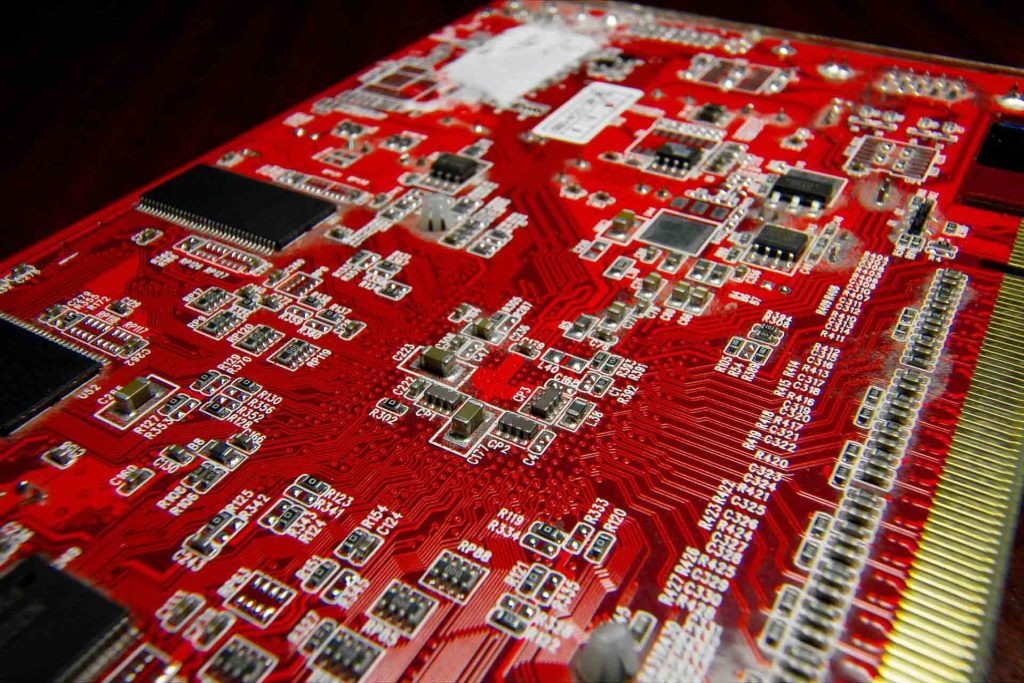
Low volume PCB assembly refers to the production of a relatively small quantity of printed circuit board assemblies. Depending on the product and manufacturing strategy, a low-volume order may range from a few boards to several hundred or even 1,000 units.
The exact definition varies between manufacturers because production volume is influenced by PCB complexity, component count, assembly technology, testing requirements, and product demand.
Low-volume production is commonly used for:
- New product introduction
- Engineering validation
- Pilot production
- Product testing
- Market trials
- Industrial equipment
- Medical electronics
- Communication equipment
- High-mix products
- Products with limited annual demand
- Products requiring frequent revisions
The key difference between low-volume production and simple prototyping is manufacturing repeatability.
A prototype answers:
Does the design work?
A low-volume production build answers:
Can the design be manufactured repeatedly, tested consistently, and controlled through production?
Prototype PCB Assembly vs. Low Volume Production
Although prototype and low-volume assembly may use the same SMT equipment, their objectives are different.
Prototype PCB Assembly
A prototype PCB assembly is primarily used to validate the engineering design.
Typical objectives include:
- Circuit functionality
- Component selection
- Firmware operation
- Mechanical fit
- Connector positioning
- Thermal behavior
- Electrical performance
- Initial manufacturability
Engineering teams may accept manual modification or controlled rework during this stage because the primary goal is learning.
Low Volume PCB Assembly
Low-volume production focuses on manufacturing consistency.
Important validation points include:
- Assembly repeatability
- Component availability
- Approved alternatives
- Production yield
- Test coverage
- Work instructions
- Revision control
- Material traceability
- Rework procedures
- Production documentation
| Factor | Prototype PCB Assembly | Low Volume PCB Assembly |
|---|---|---|
| Main objective | Validate the design | Validate repeatable manufacturing |
| Quantity | Usually very small | Small batch |
| Engineering changes | Frequent | Controlled |
| Tooling | Temporary | Production-ready |
| Testing | Engineering-focused | Repeatable production testing |
| Documentation | Development-oriented | Controlled manufacturing release |
| Traceability | Limited | More comprehensive |
| Production yield | Less important initially | Critical |
Therefore, prototype PCB assembly reduces design uncertainty, while low volume PCB manufacturing reduces manufacturing uncertainty.
When Should a Product Move From Prototype to Low Volume Production?
A product should not enter low-volume manufacturing simply because one prototype operates successfully.
Before production release, the engineering team should verify that:
- The schematic is finalized.
- The PCB revision is controlled.
- The BOM is complete.
- Pick-and-place data matches the PCB revision.
- Assembly drawings are available.
- Component polarity and orientation are clearly defined.
- Approved substitutions are identified.
- Programming files are version-controlled.
- Test procedures include measurable limits.
- Known prototype problems have been corrected.
For example, if a prototype only works after a technician manually changes a resistor or adds a jumper wire, that modification should be incorporated into the official design before the board enters low volume PCB assembly.
This is one of the most important differences between engineering prototyping and production manufacturing.
What Is the MOQ for Low Volume PCB Assembly?
One of the most common questions from product developers is:
How many PCB assemblies do I need to order?
There is no universal MOQ for low-volume PCBA because the economics depend on the manufacturing process.
A practical range may look like:
| Production Stage | Typical Quantity |
|---|---|
| Engineering prototype | 1–10 |
| Design validation | 10–50 |
| Pilot production | 50–200 |
| Repeat low-volume production | 200–1,000 |
| High-mix production | 10–500 per batch |
However, a capable manufacturer may accept much smaller quantities.
Kingda supports PCB assembly orders starting from 1 piece, allowing customers to use the same manufacturing partner for prototype, low-volume production, and larger-volume projects.
This is particularly useful for engineers who want to avoid changing suppliers between development stages.
Why Does Small-Batch PCB Assembly Cost More Per Unit?
The unit price of low volume PCB assembly is normally higher than high-volume production because many manufacturing costs are fixed.
Even a small production run may require:
- Engineering review
- SMT programming
- Stencil preparation
- Feeder setup
- Solder paste preparation
- AOI programming
- Reflow profile verification
- Inspection
- Testing
- Documentation
When these costs are distributed over 10 or 50 boards, the cost per board is relatively high.
As production quantities increase, setup costs are distributed across more assemblies.
Major Low Volume PCB Assembly Cost Factors
The total cost may include:
- PCB fabrication
- Components
- Stencil
- SMT placement
- THT assembly
- Soldering
- Inspection
- X-ray
- Electrical testing
- Functional testing
- Programming
- Rework
- Packaging
- Engineering services
However, unit price should not be the only factor when selecting a PCB assembly manufacturer.
A lower quotation that excludes engineering review, inspection, testing, or traceability can create additional costs later through rework or failed product validation.
Component Sourcing for Low Volume PCB Assembly
Component procurement becomes particularly important in small-batch manufacturing.
A single missing component can delay the entire production lot.
Common material risks include:
- Long lead-time components
- Obsolete components
- Counterfeit components
- Small-quantity purchasing premiums
- Cut-tape availability
- Manufacturer changes
- Unapproved substitutions
Kingda provides component sourcing as part of its one-stop PCBA service and works with established suppliers to support material availability and production scheduling.
Customers can choose different supply models depending on their project:
- Fully customer-supplied components
- Partial component consignment
- Manufacturer-sourced components
- Full turnkey PCB assembly
This flexibility is useful for both engineering prototypes and repeat low-volume production.
DFM Before Low Volume Production
One of the most effective ways to reduce low-volume manufacturing cost is to identify problems before production begins.
Design for Manufacturing (DFM) reviews the PCB design from the manufacturer’s perspective.
A DFM review may examine:
- Trace and spacing
- Drill sizes
- Annular rings
- Solder-mask clearance
- Via structures
- PCB stack-up
- Impedance requirements
- Panelization
- Component spacing
- Manufacturing tolerances
For assembly, Design for Assembly (DFA) focuses on:
- Component spacing
- Component orientation
- Pin 1 identification
- Fiducials
- BGA placement
- Stencil aperture design
- Test points
- Through-hole accessibility
Kingda provides DFM/DFA engineering support and reviews manufacturing data such as BOM and Gerber files before production. This helps identify potential manufacturing problems before boards are built.
NPI: The Bridge Between Design and Production
New Product Introduction (NPI) is an important part of low-volume manufacturing.
A typical NPI process includes:
- Engineering data review
- BOM analysis
- DFM/DFA review
- Component availability review
- PCB fabrication
- Stencil design
- SMT programming
- First article assembly
- Inspection
- Electrical testing
- Functional testing
- Corrective action
- Pilot production
- Production release
The goal is not simply to build the first boards.
The goal is to establish a repeatable manufacturing process.
First Article Inspection
During a pilot build, the first few assemblies can be inspected in greater detail before the remaining quantity is released.
Potential issues include:
- Wrong component orientation
- Incorrect polarity
- Excessive solder paste
- Insufficient solder
- BGA soldering problems
- QFN voiding
- Connector alignment problems
- Programming errors
- Test coverage gaps
Early detection limits the impact of defects.
If an error is found on the first few boards, engineers can correct the process before the entire batch is completed.
Kingda’s Low Volume PCB Assembly Advantages
For customers looking for a low volume PCB assembly manufacturer, Kingda combines PCB fabrication, component sourcing, assembly, testing, and engineering support in one manufacturing system.
One-Stop PCB and PCBA Manufacturing
Kingda integrates:
- PCB design
- PCB manufacturing
- Component procurement
- SMT assembly
- DIP/THT assembly
- Testing
- Conformal coating
- Box build assembly
This reduces the need to coordinate multiple suppliers.
Flexible Order Quantities
Kingda supports PCB assembly starting from 1 piece, making it possible to move from prototype to small-batch production without necessarily changing manufacturing partners.
Fast Turnaround
For projects where components are ready, Kingda states that rapid low-volume PCB assembly can be delivered in approximately 8–48 hours, depending on project requirements.
Engineering Support
Kingda’s engineering team provides DFM/DFA review and manufacturing optimization to help customers identify design and process risks before production.
Component Procurement
A stable supply network helps support component sourcing and reduce material-related production delays.
Flexible Supply Models
Customers can choose:
- Consigned assembly
- Partial turnkey assembly
- Full turnkey assembly
This allows the manufacturing model to match the customer’s procurement capabilities.
Quality Management
Kingda states that its quality management systems include ISO 9001, ISO 13485, and IATF 16949, supporting requirements across general electronics, medical electronics, and automotive-related manufacturing.
How to Choose a Low Volume PCB Assembly Manufacturer
Before selecting a supplier, ask the following questions:
- What is the minimum order quantity?
- Can the supplier support prototypes and repeat production?
- Is DFM/DFA included?
- Can the supplier source components?
- Can the supplier manufacture the bare PCB?
- What SMT and THT technologies are supported?
- What inspection methods are available?
- Is X-ray inspection available for BGA and QFN?
- Are electrical and functional tests supported?
- Is production traceability available?
- How are engineering revisions controlled?
- What is the typical turnaround time?
The right supplier should provide more than assembly capacity. It should provide engineering support, procurement capability, manufacturing flexibility, quality control, and reliable communication.
Conclusion
Low volume PCB assembly is more than simply producing a small number of circuit boards.
It is a critical manufacturing stage that connects prototype PCB assembly with repeat production.
A successful low-volume process requires:
- Complete engineering data
- DFM/DFA review
- Reliable component sourcing
- Controlled SMT and THT assembly
- First-article inspection
- Electrical and functional testing
- Traceability
- Revision control
- Flexible production capacity
Kingda combines PCB manufacturing, component procurement, SMT/DIP assembly, testing, DFM/DFA engineering, and turnkey services to support customers from prototype development through low-volume and higher-volume production.
For companies developing new electronic products, partnering with a manufacturer capable of supporting the entire product lifecycle can reduce supplier changes, simplify communication, and accelerate the transition from engineering prototype to reliable production.