Manual and Automatic SMT Assembly: Process Guide
Manual and automatic SMT assembly are used together in a modern PCBA factory. Automatic pick-and-place machines place surface mount components at high speed, while manual methods remain useful for through-hole parts, prototypes, and small production quantities. The factory chooses the correct method for each component and product volume.
Surface mount technology is used for parts production and assembly processing equipment. Many manufacturers now use SMT mounters, but they can still create problems if the operator, environment, or material handling is not controlled correctly.
This guide explains the important details of SMT machine operation and the complete manual and automatic PCB assembly process.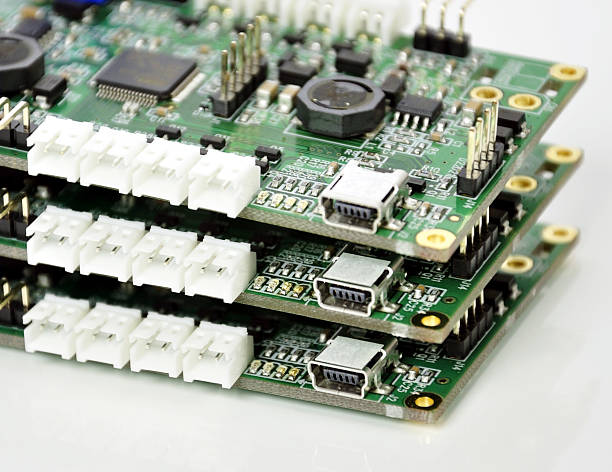
Control Temperature and Humidity
The SMT production workshop contains many instruments and equipment. The placement machine is precision equipment and is sensitive to differences in temperature and humidity.
According to electronics workshop rules, the temperature of SMT chip processing equipment should be controlled within 25 plus or minus 3 degrees Celsius. The relative humidity should also be controlled in a safe range for components and materials.
If the humidity is too high, solder paste and components can absorb moisture. If it is too low, static charge can build up on the operator and board. Both conditions create quality risk.
The workshop should use calibrated temperature and humidity sensors and record the environment during every shift.
Use Professional Operators
SMT machine operation is a detailed process. If the operator is not qualified, it is easy to discard parts, omit components, or set the machine incorrectly because the details are not controlled.
Operators should receive professional training and only start work after they have passed a certification test. Trained personnel can increase both productivity and output.
The training should cover machine setup, feeder loading, nozzle selection, program verification, safety, and common error correction.
Supervisors should check that operators are following the standard procedure, not just completing the training course.
Use Solder Paste Correctly
Solder paste used in SMT processing contains tin powder and flux. In the most common paste, the volume ratio of tin powder particles to flux is about 1 to 1, while the weight ratio is about 9 to 1.
Before use, the solder paste should be stirred gently and thoroughly. Mixing must not create bubbles or raise the temperature of the paste.
The most important rule is that refrigerated paste should return to room temperature naturally. It should never be heated with an abnormal heat source because heat damages the flux chemistry.
The paste should be used within its recommended pot life and discarded when it becomes dry or contaminated.
Store PCBs Correctly
After PCB processing, the customer may not collect the boards immediately, or the boards may need temporary storage. The storage method affects solderability and final quality.
The factory should choose packaging that protects the boards during transport and storage. The environment should be dry to prevent the board from absorbing moisture or oxidizing during later processing.
Conformal coating products should not be applied to boards that will still require soldering or rework, unless the process document requires it.
Stored boards should be kept in sealed packages with a humidity indicator card until they are needed.
Manual Placement of Through-Hole Parts
Through-hole parts are normally placed manually because their leads must be inserted through holes in the PCB. The operator follows the assembly drawing and inserts each component in the correct position and direction.
Manual insertion is practical for low-volume boards, connectors, and large parts that are difficult for a pick-and-place machine to handle.
After insertion, the leads are soldered by wave soldering. The molten wave contacts the bottom side of the board and forms a joint around each lead.
For small quantities, hand soldering or selective soldering can also be used instead of a full wave line.
Automatic Placement of Surface Mount Parts
Surface mount components are placed with a pick-and-place machine. Solder paste is first applied to the board through a stencil, then the machine places each component onto the wet paste.
The board is then processed in a reflow furnace, where the paste melts and creates the solder joint. Reflow soldering is used for surface mount parts because it is fast and repeatable.
Automatic assembly is usually not feasible for very small quantities because the machine setup time is high relative to the number of boards. Manual placement may be more practical for a prototype or a few sample boards.
For most production quantities, automatic placement gives higher speed, better accuracy, and more consistent quality.
Hybrid Technology Assembly
Many modern boards use hybrid technology, combining surface mount components and through-hole components on the same PCB. The board may require both reflow soldering and wave soldering.
The process order must be planned so that the first soldering step does not damage components added later. Surface mount parts are often reflowed first, then the through-hole parts are inserted and wave soldered.
Selective wave soldering can be used when only a small area of the board contains through-hole components. This reduces the thermal stress applied to the complete assembly.
The layout should be designed so that both manual and automatic assembly methods can be used efficiently.
Cleaning the Assembled Board
After the circuit board is soldered, the factory should clean it to remove flux residue. Modern cleaning methods use detergent, agitation, and heating to remove flux debris from the board surface and under components.
The cleaning process must be matched to the flux chemistry. Water-soluble flux may require a different cleaner than rosin flux.
Cleaning should not damage component markings, conformal coating areas, or sensitive connectors. The board must be dried completely after cleaning.
Residue left on the board can cause corrosion, leakage current, or intermittent operation in high-impedance circuits.
Inspection After Assembly
The circuit board should be sent for detailed inspection to verify that every component is placed in the correct position. Advanced inspection tools are used to verify the quality of the assembled board.
Sampling inspection can check a percentage of boards, while automated optical inspection can check every board on the line. AOI finds missing, reversed, shifted, and poorly soldered components.
X-ray inspection is used for BGAs and other hidden solder joints. It can find voids, bridges, and opens that cannot be seen from the top surface.
After inspection, the boards should be electrically tested to confirm function before they are delivered to the customer.
SMT Line Equipment
A complete SMT assembly line includes solder paste printers, placement machines, reflow ovens, wave soldering machines, PCB loaders, PCB unloaders, and inspection systems.
SPI can verify the solder paste after printing, and AOI can inspect placement before or after reflow. X-ray and electrical test provide additional quality assurance.
Conveyor systems connect the machines so boards move automatically from one process step to the next. The line is balanced so that no machine becomes a bottleneck.
The equipment combination should be selected according to the product mix and production volume.
An experienced SMT PCB assembly service combines automatic placement with manual assembly for through-hole and low-volume work.
The complete process should follow the PCB assembly documentation so that operators and machines use the correct components and process settings.
After cleaning and inspection, boards should pass PCBA testing to verify the final circuit. Functional test can be added when the product requires operation under real conditions.
Documentation and quality management records should be kept for every lot so that any field failure can be traced to the correct assembly step.
Production Planning and Material Kitting
Before the assembly process begins, the factory should prepare the BOM, assembly drawing, PCB, components, stencil, and solder paste for the product. Material kitting reduces the time the operator spends searching for parts and prevents a wrong component from being loaded onto the line.
The engineer should separate surface mount components for the placement machine from through-hole components for manual insertion. Each component should be verified against the part number and value. Kits should be labeled with the work order and revision so that different products are not mixed.
A well-prepared kit also makes changeover faster. When one product finishes, the operator can remove the old feeders and load the next kit without waiting for material delivery. The saved setup time increases the effective capacity of the SMT line.
Quality Gates Between Processes
The assembly process should include quality gates after printing, placement, reflow, and wave soldering. A quality gate checks the result of the completed process before the board is allowed to continue. This prevents a defect from being covered by the next operation.
Solder paste inspection after printing checks the amount and position of paste. Placement inspection checks for missing parts and polarity. Post-reflow AOI checks the solder joints. Each gate should have a clear acceptance criterion and an owner who is responsible for the decision.
Quality gate data should be reviewed daily. If one gate reports a growing number of defects, the process engineer should correct the cause before the defect reaches final testing. The combination of manual checks and automatic inspection keeps the assembly process under control.
Conclusion
Manual and automatic SMT assembly methods support different component types and production volumes. Through-hole parts are often placed manually and wave soldered, while surface mount components are placed by machine and reflowed.
Temperature, humidity, operator training, solder paste, and PCB storage must all be controlled to prevent process defects. Cleaning, inspection, and testing complete the PCBA process.
By combining manual skill with automatic production, a PCBA factory can deliver accurate, reliable boards for every type of product.