Medical PCB Cleaning Standards: Why Cleanliness Matters
A Medical PCB is a critical electronic component in diagnostic equipment, patient monitoring systems, life-support devices, laboratory instruments, and other medical electronics. Its cleanliness can directly affect electrical reliability, signal integrity, service life, and overall equipment safety.
Unlike conventional consumer electronics, medical electronics often operate under demanding conditions where electrical leakage, corrosion, contamination, or insulation failure can create serious reliability concerns. PCB assemblies may also be exposed to cleaning agents, disinfectants, humidity, temperature cycling, and repeated handling during their service life.
For this reason, medical PCB cleaning standards should address much more than visible cleanliness. A reliable cleaning process must control flux residues, ionic contamination, particles, moisture, and cleaning-agent residues while protecting sensitive components, solder joints, traces, vias, and substrate materials.
A well-controlled process typically covers four major areas:
- Cleaning objectives and contamination control
- Process and cleaning-agent selection
- Post-cleaning inspection and cleanliness testing
- Quality management and regulatory compliance
When PCB fabrication and assembly are closely integrated, cleaning requirements should also be considered during design and manufacturing rather than treated as a final-stage operation. Professional PCB manufacturing capabilities can help coordinate material selection, board construction, assembly, inspection, and downstream reliability requirements.
What Are the Main Objectives of Medical PCB Cleaning?
The purpose of PCB cleaning is not simply to make the board look clean. The primary objective is to eliminate contaminants that could compromise electrical performance, mechanical reliability, or subsequent manufacturing processes.
1. Remove Flux and Manufacturing Residues
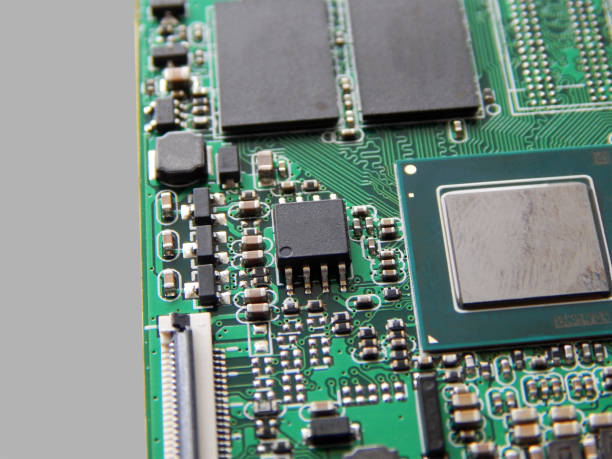
Soldering processes can leave behind flux residues, solder particles, metal debris, dust, and other contaminants. If these materials remain on the PCB surface, they may absorb moisture and contribute to corrosion, leakage current, or reduced insulation resistance.
Effective cleaning should therefore remove contaminants from exposed surfaces as well as areas around solder joints, component leads, pads, and other difficult-to-access locations.
2. Maintain Electrical and Insulation Reliability
Medical electronic equipment often requires stable and predictable electrical performance over long operating periods.
Residual ionic contamination can become conductive in humid environments. This can increase leakage current between adjacent conductors and potentially contribute to electrochemical migration or insulation degradation.
A controlled PCB cleaning process helps maintain the required surface insulation characteristics and reduces the risk of contamination-related electrical failures.
3. Improve Resistance to the Medical Operating Environment
Medical equipment may be exposed to humidity, disinfectants, saline solutions, cleaning procedures, and other environmental conditions.
A properly cleaned PCB minimizes the possibility that residual contaminants will react with moisture or chemicals during operation. This is particularly important for equipment that undergoes frequent disinfection or operates in demanding clinical environments.
4. Support Subsequent Assembly and Coating Processes
PCB cleanliness can also affect subsequent manufacturing operations.
Before conformal coating, encapsulation, bonding, or additional soldering, the PCB surface should be free from contamination that could reduce adhesion or interfere with process consistency.
For prototype and early-stage medical electronics, prototype PCB assembly can also help identify cleaning, assembly, and design-related issues before higher-volume production begins.
Medical PCB Cleaning Process Standards
The appropriate cleaning method depends on the PCB’s substrate, structure, component package, contamination type, and final application.
There is no single cleaning process suitable for every medical PCB. Instead, the process should be selected according to the actual construction and manufacturing requirements.
Spray Cleaning
Spray cleaning uses controlled liquid pressure to remove contaminants from accessible PCB surfaces.
It can be suitable for relatively conventional PCB structures and production environments where contaminants are primarily located on exposed surfaces.
However, excessive pressure should be avoided. Improper pressure or mechanical conditions may affect delicate components, solder joints, or the PCB itself.
Ultrasonic Cleaning
Ultrasonic cleaning uses high-frequency vibration to help remove contaminants from small gaps and difficult-to-access areas.
This method may be considered for boards containing complex structures, small apertures, or areas where conventional spray cleaning has limited access.
However, ultrasonic parameters must be carefully controlled. Excessive ultrasonic energy may not be appropriate for every component type or assembly structure.
Vacuum-Assisted or Specialized Cleaning
For high-precision assemblies, specialized cleaning approaches may be used to improve access to difficult areas and reduce the possibility of trapped contamination.
The actual method should be determined through engineering evaluation rather than assuming that a more aggressive cleaning process is always better.
Temperature and Cleaning Time Control
Temperature, cleaning duration, chemical concentration, and drying conditions are important process parameters.
If the temperature is too high, sensitive components, substrates, solder joints, or other materials may be affected. If the cleaning time or chemical concentration is insufficient, contaminants may remain on the PCB.
After cleaning, thorough drying is equally important. Moisture trapped around components, vias, connectors, or other structures can contribute to oxidation and insulation problems.
A controlled process should therefore define:
- Cleaning temperature
- Cleaning duration
- Chemical concentration
- Spray or ultrasonic parameters
- Rinsing conditions
- Drying temperature
- Drying duration
- Inspection requirements
These parameters should be documented and monitored as part of the manufacturing process.
How to Select Cleaning Agents for Medical Electronics
Cleaning-agent selection is another important part of medical PCB cleaning standards.
The cleaning agent must effectively remove the target contamination without damaging PCB materials, component packages, solder joints, markings, coatings, or other assembly materials.
Water-Based Cleaning Agents
Neutral or appropriately formulated water-based cleaning agents can be considered for many PCB cleaning applications.
Their advantages may include effective removal of certain flux residues and compatibility with automated cleaning systems. However, the specific formulation must be validated against the PCB materials and components being processed.
Solvent-Based Cleaning
Solvent-based cleaning may be appropriate for certain contamination types or localized cleaning requirements.
Isopropyl alcohol and other commonly used solvents can be effective for particular applications, but compatibility should always be verified before production use. Material compatibility, flammability, evaporation characteristics, residue, and worker safety should all be evaluated.
Environmental and Regulatory Considerations
Cleaning chemicals should also be selected with environmental and regulatory requirements in mind.
Manufacturers should consider applicable requirements concerning restricted substances, chemical handling, wastewater, emissions, and waste disposal. The specific compliance requirements depend on the manufacturing location, product category, and target market.
PCB Cleanliness Testing After Cleaning
Visual inspection alone is not sufficient to verify the cleanliness of a medical PCB.
A robust PCB cleanliness testing program can combine visual inspection, electrical testing, contamination measurement, and reliability verification.
Visual Inspection
Visual inspection can identify obvious contamination, solder particles, residues, corrosion marks, damaged areas, or other visible defects.
Magnification equipment or automated inspection systems may be used depending on the production requirements.
Inspectors should pay particular attention to:
- Component leads and solder joints
- Fine-pitch areas
- Connectors
- Vias and apertures
- High-density routing areas
- Board edges
- Areas underneath or around components
Ionic Contamination Testing
Ionic contamination is particularly important because ionic residues may become electrically conductive when exposed to moisture.
Testing can be used to evaluate the overall cleanliness of the PCB surface and determine whether the cleaning process is achieving the required level of contamination control.
The acceptable limit should be defined according to the applicable product requirements, process specifications, and customer requirements rather than using one universal value for every medical application.
Insulation Resistance Testing
Surface insulation performance can be evaluated under appropriate environmental conditions.
The objective is to determine whether contamination or moisture has adversely affected the insulation characteristics between adjacent conductors.
For high-reliability medical electronics, electrical cleanliness should be evaluated together with the expected operating environment.
Reliability Testing
Cleaning should not be evaluated as an isolated manufacturing step.
Where appropriate, cleaned PCB assemblies may undergo environmental and reliability testing such as temperature cycling, humidity exposure, or other application-specific tests.
The purpose is to verify that the cleaning process does not introduce latent reliability problems and that the assembly continues to meet its intended performance requirements.
Cleaning Requirements for HDI and Complex Medical PCBs
Modern medical electronics increasingly use compact PCB structures to support smaller equipment and higher functional density.
HDI boards, fine-pitch components, microvias, blind and buried vias, and densely populated assembly areas can make contamination removal more difficult.
For these assemblies, cleaning process development should consider:
- Accessibility of contamination-prone areas
- Component package structure
- Via and microvia geometry
- Cleaning-agent penetration
- Rinsing effectiveness
- Drying efficiency
- Residual contamination measurement
The PCB design itself can influence cleaning effectiveness. Therefore, manufacturing and assembly engineers should consider cleaning requirements during PCB layout and DFM evaluation. Professional PCB design and layout can help identify manufacturing constraints before production begins.
Quality Management and Compliance
Medical electronics require strong process control and traceability.
Cleaning procedures should therefore be incorporated into the manufacturer’s quality management system rather than treated as an informal workshop operation.
A documented process should define:
- Approved cleaning equipment
- Approved cleaning chemicals
- Process parameters
- Inspection methods
- Cleanliness acceptance criteria
- Equipment maintenance requirements
- Operator responsibilities
- Batch records
- Nonconformance procedures
- Corrective and preventive actions
For manufacturers supplying medical products, applicable quality and regulatory requirements should be evaluated according to the final product, target market, and role of the PCB assembly within the finished medical device.
Traceability
Process traceability is particularly valuable when investigating quality problems.
Production records can connect the PCB or assembly to its material batches, cleaning process, inspection results, and other manufacturing parameters. This makes it easier to identify the source of contamination or process variation when an issue occurs.
How PCB Cleaning Fits Into Medical PCB Assembly
PCB cleanliness should be considered throughout the entire manufacturing workflow.
A typical production sequence may include:
PCB design → PCB fabrication → component procurement → SMT/THT assembly → soldering → cleaning → inspection → electrical testing → reliability verification → final assembly
Cleaning requirements may vary depending on the assembly technology.
For example, assemblies combining surface-mount and through-hole components may contain different component geometries and contamination-prone areas. A controlled mixed technology PCB assembly process can integrate different assembly technologies while maintaining consistent quality controls.
For projects requiring a complete manufacturing workflow, turnkey PCB assembly can integrate PCB assembly, component sourcing, testing, and other production services under a coordinated manufacturing process.
Common Problems Caused by Improper PCB Cleaning
Insufficient or inappropriate cleaning can create several potential problems:
Electrical Leakage
Ionic residues combined with humidity can create conductive paths between adjacent conductors.
Corrosion
Residual chemicals and contaminants can contribute to corrosion of copper traces, solder joints, and other metallic structures.
Reduced Coating Adhesion
Contamination left on the surface can interfere with conformal coating or encapsulation adhesion.
Insulation Failure
Contamination and moisture can reduce surface insulation resistance and increase the risk of electrical instability.
Long-Term Reliability Problems
A PCB may pass initial electrical testing but still experience reliability degradation if contamination remains in difficult-to-access areas.
These risks demonstrate why cleanliness should be treated as a controlled manufacturing parameter rather than simply a cosmetic requirement.
Best Practices for Medical PCB Cleaning
For reliable production, manufacturers should establish a documented cleaning and verification process based on the actual PCB design and application.
Recommended practices include:
- Identify contamination sources before selecting the cleaning process.
- Select cleaning agents based on PCB and component compatibility.
- Validate temperature, pressure, chemical concentration, and cleaning time.
- Establish appropriate rinsing and drying procedures.
- Perform visual inspection after cleaning.
- Use quantitative contamination testing where required.
- Verify insulation performance for relevant applications.
- Maintain process records and traceability.
- Periodically validate cleaning equipment and process performance.
- Integrate cleaning requirements into PCB design and assembly engineering.
For production programs with changing demand, production volume should also be considered when selecting the manufacturing model. A controlled high-volume PCB assembly workflow can provide standardized process control when medical electronics move from prototype development into larger-scale production.
Conclusion
Reliable medical PCB cleaning standards should address the complete process rather than focusing only on visible surface cleanliness.
The cleaning method, chemical selection, temperature, cleaning time, rinsing, drying, inspection, contamination testing, insulation verification, and reliability validation all contribute to PCB cleanliness and long-term assembly performance.
Medical electronics also require strong traceability and process control. By integrating cleaning requirements into PCB design, fabrication, assembly, inspection, and quality management, manufacturers can reduce contamination-related risks and establish a more consistent production process.
For medical electronic projects, selecting a manufacturing partner with integrated PCB fabrication, assembly, testing, and quality-control capabilities can simplify process coordination and support reliable production from prototype through volume manufacturing.