Medical PCB Manufacturing: Standards Beyond the Cleanroom
Discussion of medical electronics often reduces to a single number, such as the cleanliness class a factory claims. Real medical PCB manufacturing is judged on something broader: whether material, process, environment and records are controlled together, in a way that can be audited years after a device was shipped.
Recent claims that every medical board must meet one particular cleanroom class or one specific ionic limit are not accurate as blanket statements. Implantable and minimally invasive devices do carry strict requirements, but those requirements follow the risk class of the device, the applicable standard and the customer specification.
What Actually Changed in the Standards
The direction of travel is clear even where the numbers are debated. Regulators and device makers are paying more attention to contamination, material compatibility and process documentation, and less attention to a simple pass or fail electrical test at the end of the line.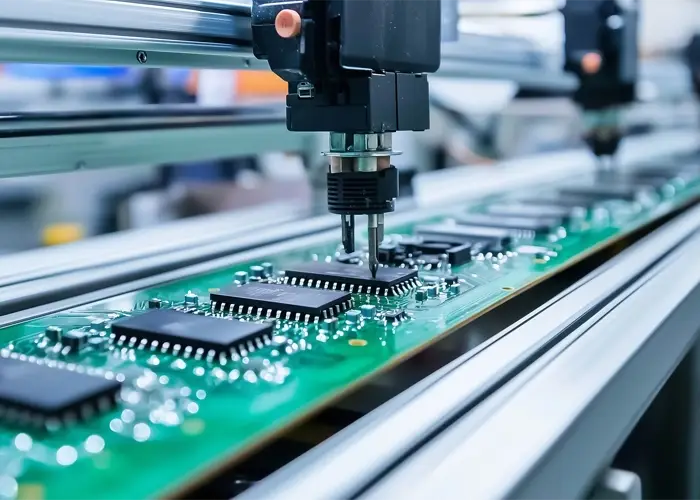
For a board supplier this means the deliverable is no longer only a functioning panel. It is a panel plus the evidence that describes how it was made, what it was made from and what was measured along the way, in a form that survives an audit.
Cleanroom Class Is Not the Whole Story
A controlled environment reduces particulate contamination, which matters for devices that contact tissue or circulate in the bloodstream. But a clean room only controls one input. Material selection, handling discipline, cleaning chemistry and the cleanliness of the assembly step all influence the final result.
A factory can hold a high class room and still produce contaminated boards if its personnel practices are weak. Conversely, a well run facility can meet a demanding specification without advertising an extreme class number, provided the specific requirement of the device is understood and controlled.
Ionic Contamination and Why It Matters
Ionic residue left on a board after assembly can combine with moisture and an applied voltage to form conductive paths. The failure is electrochemical migration, and it typically appears as leakage, dendritic growth or corrosion rather than as a clean open circuit.
Measurement matters as much as the limit. Ionic contamination is quantified by extracting residues from a known surface area and measuring conductivity in the extraction solution. The result depends on the method, the time and the surfaces included, so comparing two numbers from different procedures is meaningless.
Flux Residue, Humidity and Migration
Flux chemistry determines how much residue remains after reflow. No clean processes leave a controlled residue that is designed to be benign, while water soluble chemistries require thorough washing because their residues are actively corrosive if left behind.
Cleaning is therefore a process with its own parameters, not a step that happens automatically. Water quality, rinse effectiveness, drying and the ionic measurement that verifies cleanliness all need to be specified, monitored and recorded for devices where the risk justifies it.
Sterilisation Compatibility
Devices are sterilised after assembly, and the sterilisation method interacts with the electronics. Ethylene oxide is chemically aggressive to some polymers, radiation changes the properties of certain materials, and steam imposes thermal and moisture stress on the whole assembly.
Compatibility has to be validated on the actual material set: solder mask, conformal coating, connector housings, adhesives and flexible films. Adding sterilisation as a final step to a design that was never evaluated for it is one of the more common ways a medical programme loses a year.
Materials Must Match the Process
Medical electronics uses the same laminate families as other industries, but the selection is constrained by biocompatibility, outgassing and stability after sterilisation. A material chosen purely for electrical performance may fail when it is exposed to repeated cleaning or to a sterilant.
Because of that, material change control matters more here than in consumer products. Substituting a solder mask or a coating to solve a supply problem can invalidate a validated process, which is why change notification requirements are written into most medical supply agreements.
Traceability Requirements in Practice
Traceability in a medical programme means being able to link a finished device back to the material lots and process steps that produced it. That requires marking at panel level, records linked to serial numbers at assembly and a retention period long enough to cover the service life of the product.
In practice, the hard part is not storing the data but keeping it usable. A database that survives a supplier change, a software upgrade and a decade of organisational turnover is a real engineering achievement, and it should be demonstrated rather than described.
Change Control and Revalidation
When a process changes, the question is what has to be revalidated. A move to a different plating line, a new laminate supplier or a revised reflow profile all create a need to demonstrate that the output still meets specification.
Suppliers with genuine process control systems answer that question with data from routine production rather than with a fresh qualification exercise. That difference shows up directly in how quickly a customer can approve a change without risking a regulatory problem.
Miniaturisation Drives HDI Into Medical Devices
Endoscopes, implantable monitors, surgical robots and neural interfaces all add sensing, processing and communication while the available space shrinks. The result is the same pressure that produced HDI in consumer electronics, applied under a much stricter quality regime.
Fine line routing, laser microvias and higher density interconnect capability therefore enter medical designs for practical reasons. The difference is that a yield improvement is not only a cost matter here; it is also a reliability and traceability matter.
Flexible Circuits in Catheters and Probes
Catheters, probes and wearable monitors need interconnect that follows a curved path and survives handling. Flexible circuits and rigid flex constructions solve that problem, and they also reduce the number of solder joints inside a device that cannot easily be repaired.
Manufacturing difficulty rises with every reduction in cross section. Thin adhesiveless laminate, fine lines and reliable flexible circuit assembly are needed at once, and the cleaning requirements of medical production apply to the flexible process just as they do to a rigid board.
Imaging and Surgical Robotics Need High Speed
Medical imaging and robotic surgery have adopted the same electronics architecture as other high performance industries. High resolution sensors and real time control require high speed serial links, dense processing and low loss materials, which pushes layer counts upward.
At the same time, these systems run in operating rooms where service interruptions are unacceptable. That combination of high speed and high availability makes validation depth, rather than raw capability alone, the deciding factor in supplier selection.
Power Sections in Diagnostic Equipment
Diagnostic and therapeutic equipment includes power conversion and drive electronics, and those sections need heavy copper and good thermal paths. A single device can therefore contain high density digital boards, heavy copper power boards and flexible interconnect in one bill of materials.
Coordinating that mix through one supplier simplifies validation and change control considerably. Fewer interfaces mean fewer places where a specification can be lost between fabrication, assembly and the customer quality department.
Assembly Quality Decides Board Level Reliability
Many medical failures originate at the assembly step rather than in the bare board. Voiding under a package, insufficient paste on a fine pitch pad or residue trapped under a component can all pass a functional test and still create a long term risk.
That is why inspection sequences such as paste measurement, optical inspection and X-ray are used as production controls, and why board level testing is specified rather than assumed. The objective is to catch a defect while it is still cheap to correct.
Where Cleanroom Claims Should Be Questioned
Buyers should ask which specific operations are performed under controlled conditions, and which standards the environment is verified against. A cleanroom class that applies only to final assembly, while bare boards are handled elsewhere, does not support an implantable claim.
Equally important is the question of applicability. A supplier that understands which requirement belongs to which device class is more useful than one that applies the strictest possible claim to every project, because unnecessary requirements add cost without reducing risk.
Why Medical Work Changes a Factory
Medical programmes tend to change how a factory operates, not just what it produces. Documentation becomes continuous rather than retrospective, non conforming material is quarantined by rule rather than by judgement, and every process owner knows which records an auditor will ask for.
That discipline is not free, and it is not the right answer for every product. It is best applied where the consequence of a field failure is serious, which is exactly the calculation a device maker makes when it decides which boards need a validated medical process and which do not.
How to Qualify a Medical PCB Partner
Qualification should examine the quality management system, the control of materials, equipment calibration, process records and the disposition of non conforming product. Medical programmes also expect a documented approach to risk management, not only an inspection plan.
The strongest indicator is willingness to discuss limits. A manufacturing partner that states clearly which capabilities it can support for medical PCBA programmes, and which requirements need separate evaluation, will be easier to audit and safer to depend on than one that promises everything at the first meeting.