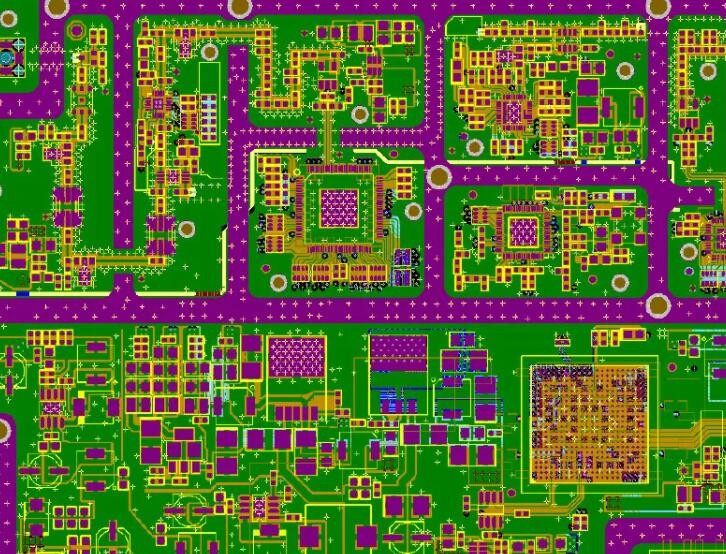
Panelization Strategy for Odd Shaped Boards
A rectangular board of moderate size panelizes easily. A circular board, an L shaped board or a long narrow strip does not, because there is no straight edge to run along the conveyor and no obvious place to put the tabs. Panelization for odd shapes is a design exercise in creating the mechanical support that the assembly line needs without wasting material or creating a separation problem.
Why Odd Shapes Are Different
The assembly line grips a panel by its edges. A board that has no straight edge cannot be conveyed unless a rail is added, and a rail has to be attached in a way that survives reflow and can be removed afterwards. On a rectangular board this is trivial; on a circular one the rail has to be connected by tabs placed on the curve.
Odd shapes also pack badly. Circles leave gaps, and long narrow boards leave large unused areas unless they are oriented to share the panel efficiently. Both problems cost material, which is why panelization should be decided together with the outline rather than after it.
Rails and Their Width
A rail needs to be wide enough for the conveyor and the clamp, which usually means at least five millimetres and preferably eight. It also has to be continuous along the direction of travel, because a conveyor that grips intermittently will not transport the panel reliably.
Where the board itself is too small to support a rail, the panel may need a frame that surrounds the whole array. A frame adds material and cost, but it gives the assembly line a rigid carrier that behaves like a standard panel and removes a whole class of handling problems.
Tab Placement and Count
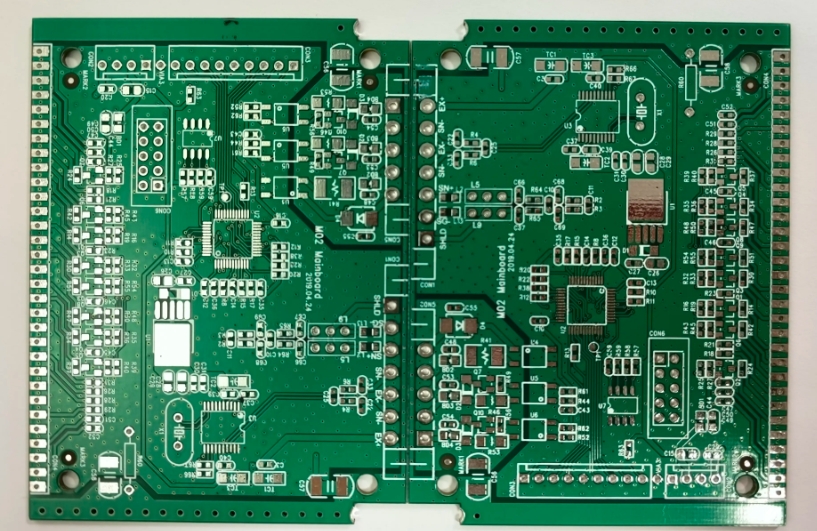
Tabs are the mechanical links between the board and the rail, and they carry the whole assembly through the line. Three tabs is the practical minimum for a small board, and larger boards need more so that the board cannot flex between them. Tab width is a compromise between strength during handling and force during separation.
Placement is driven by two constraints that often conflict. A tab should be located so that the separation force does not travel through a component, and it should be placed so that the board is supported where the assembly process applies load. The interaction between tab geometry and the separation operation is described in our article on breakaway tab design.
Routing Versus Scoring
Scoring requires a straight line, which rules it out for curved outlines. Routing follows any profile, so it is the standard method for odd shapes, and it allows the cut to be positioned with a controlled clearance from copper and components.
Routing is slower and leaves a burr, and it needs a tool path that avoids re-cutting. Where part of an odd outline is straight, that portion can still be scored, and the two methods can be combined on one panel provided the clearance rules for each are applied to the right segment.
Panel Utilization
Utilization is the fraction of the panel that becomes product. Circles packed in a grid waste the areas between them, and rotating a shape can sometimes improve the packing significantly. Panel utilization also affects cost, because the fabricator charges for the panel rather than for the product area.
The trade is not only material. A tighter packing leaves less room between boards, which makes routing slower and can force tabs into awkward positions. Where the board is expensive, a slightly lower utilization with a manufacturable panel usually costs less overall than a tight packing that creates defects.
Tooling Holes and Registration
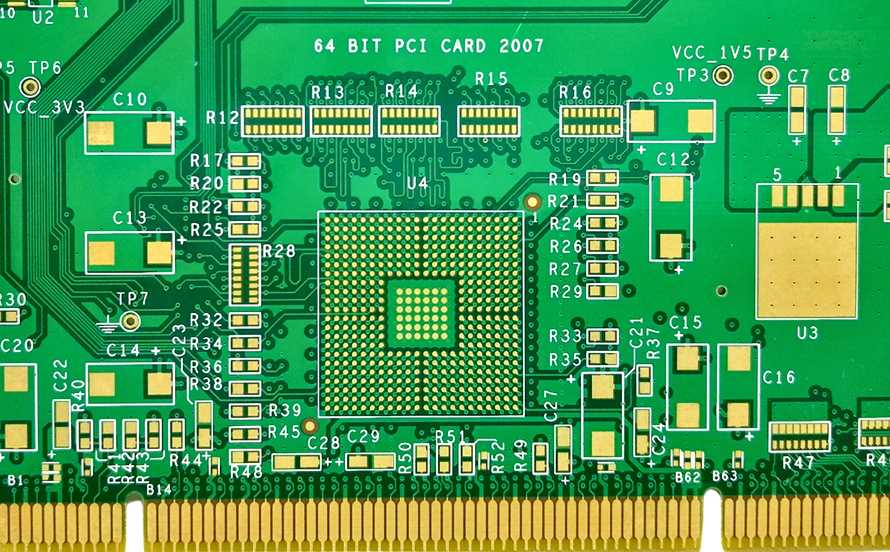
Registration depends on tooling holes, and their position is fixed by the panel rather than by the board. On an odd shaped array the holes are usually placed in the rail or the frame, and their relationship to the board outline has to be defined so that every downstream fixture can locate the panel consistently.
Accuracy of those holes relative to the board determines whether the assembler can place components close to the edge without running out of tolerance. The rules for their placement and tolerance are described in our article on tooling holes and registration.
Handling After Separation
Once the boards are separated, an odd shape is harder to handle than a rectangle. There is no straight edge to grip, and the board may not sit flat on a conveyor for test or coating. Where the shape is unusual, the fixtures downstream should be designed at the same time as the panel, not after.
A board that cannot be held in a standard fixture may need a carrier for test and for subsequent processes, which changes the cost model. That consequence belongs in the panelization review, because it is invisible if only the assembly line is considered.
Documenting the Panel Design
The panel drawing should show the outline, the rail or frame, the tab positions and widths, the tooling holes and the intended separation method. It should also state the copper to edge clearance and the outline tolerance, so that the fabricator can verify the design rather than interpret it. The tolerance conventions are set out in our note on board outline tolerance.
Where a panel has been developed over several revisions, the drawing should record why each decision was made. A tab moved to avoid a component, or a rail widened for a particular conveyor, is not obvious from the geometry alone, and the reasoning is what prevents the next revision from undoing it.
Process Control and Verification
On a design of this kind, panel utilization is the item that decides how the rest of the board is arranged. Documenting the assumption is part of the design work, and a short note on the drawing prevents a question that would otherwise arrive a day later and cost a day of schedule. The process window is set by the narrowest step in the flow, so an improvement anywhere else shows up as margin rather than as yield until that step is addressed.
A short note on the drawing about handling, storage or packaging is often worth more than an extra decimal place on a tolerance.
Process Control and Verification
On a design of this kind, panel utilization is the item that decides how the rest of the board is arranged. Documenting the assumption is part of the design work, and a short note on the drawing prevents a question that would otherwise arrive a day later and cost a day of schedule. The process window is set by the narrowest step in the flow, so an improvement anywhere else shows up as margin rather than as yield until that step is addressed.
FAQ
Can a circular board be scored out? Only if a straight web is added for the score to follow, which changes the shape. Routing is the normal method for curved outlines.
How many tabs should a small board have? Three is the usual minimum and four is common. The number is set by the support the board needs during handling and reflow rather than by the separation force.
Does a frame cost more than rails? It uses more material, but it often reduces assembly defects. The comparison should include the value of the boards lost to handling problems.