Ordering a PCB Prototype: Checks Before You Send
A prototype order is a small transaction with an outsized influence on the project. The files that are sent, the questions that are asked and the checks that are performed before the panel is built decide whether the first boards arrive usable or whether a week is lost to a misunderstanding.
This article sets out what a fabricator reviews when a prototype order arrives, what the designer is responsible for, and what to agree before the order is placed.
What the Fabricator Reviews
The first thing that happens to an order is a design review against the process. The layer count, the minimum trace and space, the smallest drill, the board size and the finish are all compared with what the shop can produce, and where the design asks for something outside that range, the question comes back to the customer rather than being decided in the shop.
Parameter consistency is the second check. The written specification and the fabrication data have to agree, and where they do not, the shop has to ask which one governs. A drawing that states a finished thickness that the stack-up cannot produce is a common example, and the answer changes the material that will be used rather than the price alone.
File Completeness and the Silkscreen Question
The data has to be complete before it is useful. Layers that are missing, a drill file that does not match the pad sizes, or a board outline that does not close are all things that stop the order rather than being corrected silently.
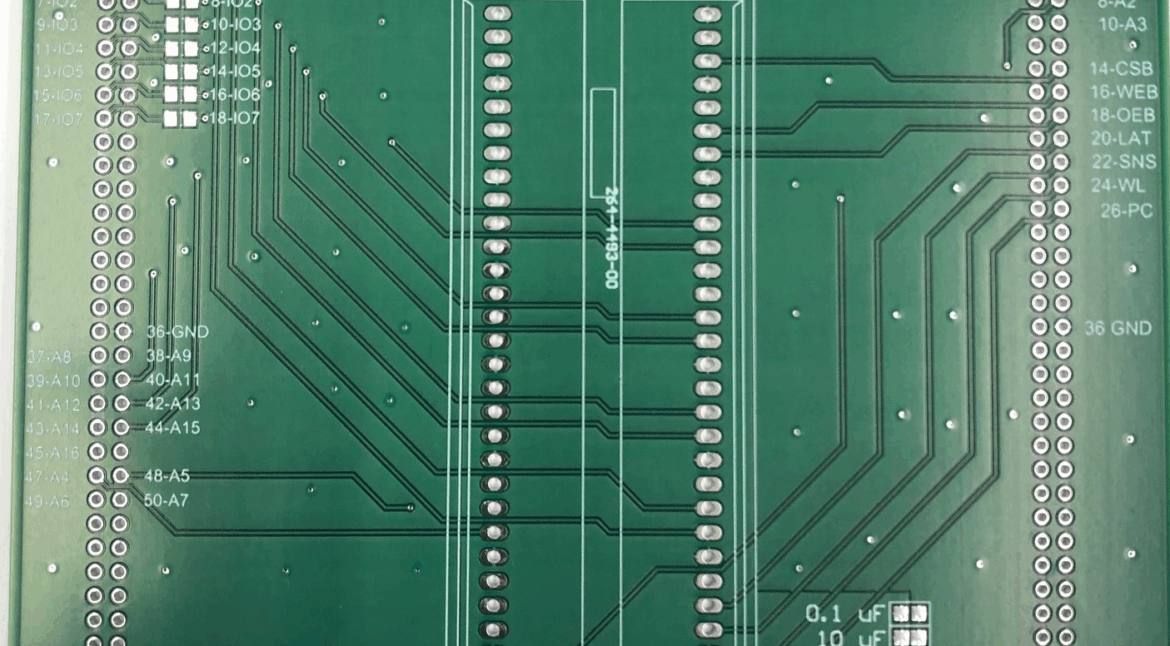
One question recurs on prototypes: whether the bottom silkscreen should be mirrored. The convention differs between tools and between shops, and getting it wrong produces a board whose reference designators read backwards. It is worth stating the convention explicitly in the order rather than assuming it, because the correction afterwards is a new panel. A note in the order costs nothing; a re-spin costs the whole lead time.
Choosing the Supplier
Prototype suppliers are not interchangeable. Some are set up to produce one or two boards quickly at low cost and do not test them electrically; others are production shops that take prototype work alongside volume orders and subject every board to electrical test.
For a board that is difficult or that will be used for a design decision, the second kind is worth the extra cost, because the electrical test is what catches an open or a short that visual inspection cannot see. The comparison is not between prices but between what happens after a defect is found, and a quotation that includes test is usually the cheaper one once a failure has to be investigated. It is worth asking which method is used as well, because flying probe and bed-of-nails fixtures find different classes of defect. The requirements for a multilayer prototype are the basis of that comparison.

What the Designer Is Responsible For
The designer’s half of the transaction is the specification. The layer count, the material, the finished thickness, the copper weight, the finish, the impedance targets and the tolerances all have to be stated, because a fabricator who is not told will choose, and the choice will be made on cost rather than on the requirement.
The parameters that accompany the order are equally important. The dimensions have to match the data, the hole table has to be complete and the quantity has to be realistic, because a prototype of five boards that is built as fifty is a waste of material and a prototype of five that is built as one leaves nothing to test to destruction. The sequence that produces the fabrication data is where these are settled.
Completeness of the Artwork
Every layer that the process needs should be present in the order, even where it appears to be empty. A board that has no legend still has a silkscreen layer, and a fabrication drawing that omits a layer may be interpreted as a request to omit the feature.
The drill data deserves its own check. Every plated hole, every unplated hole and every slot has to appear with its size, and the small holes that carry a connection are distinguishable from the ones that do not. An order that mixes them produces a board where a mounting hole is connected to a net or a via is left unplated.
What to Ask Before the Order Is Placed
Three questions are worth asking on any prototype. Is the design inside the shop process capability, which is answered by the DFM check rather than by the quotation. Will every board be electrically tested. What is the realistic lead time, which is different from the standard one when the board needs a finish the shop runs less often.
The answers to those three questions determine whether the prototype produces a decision or a delay, and a delay is the outcome the order was meant to avoid. Where the design pushes the process, the answer to the first question also indicates which of the design rules is likely to be the first to cause a problem in volume, as the steps in a multilayer prototype build make clear.
The Order Document Itself
The specification should be a document rather than a set of notes in an email. It states the layer count, the material, the finished thickness, the copper weight, the surface finish, the impedance requirements, the mask and legend colour, and the quantity.
Two items on that list deserve a second look. The colour is a cosmetic requirement with a process consequence, and the finish decides the shelf life of the boards before they are assembled. Both are easy to leave unstated, and both are chosen by the shop when they are.
When the Boards Arrive
The prototype is not finished when the boards arrive. The delivery is checked against the order, the boards are inspected and the key dimensions are measured before anything is assembled, because a dimensional problem found now is a conversation with the supplier and a problem found after assembly is a design change.
The assembly then follows the process that was planned, and the results are recorded. A prototype that is assembled without being measured, and whose result is remembered rather than written down, gives the project an opinion rather than a data point, and the orderly assembly of the components is what makes the comparison between prototypes meaningful.
FAQ
How many boards should a prototype order contain? Enough to assemble, to keep one as a reference and to destroy one in test if the design justifies it. Five is a common compromise for a small board, and the right number also depends on how many measurements the project needs to make.
Should the prototype be built by the same shop as the production run? Where possible, yes, because the process capability and the stack-up are already proven. Where the volumes are far apart, the two may differ, and the differences should be identified before the transfer.
What is the most common cause of a rejected prototype order? A specification that does not match the data. The shop can build either, and it cannot know which of the two was intended.