OSP Versus ENIG: Surface Finish Selection
What the Finish Has To Do
The copper on a pad has to remain solderable from the moment the board leaves the plating line until the last joint is made, which may be weeks later and several thermal cycles away. The surface finish is the thin layer that protects the copper from oxidation and provides a surface that molten alloy will wet. It also has to survive storage, handling, the stencil printing process and, on some designs, more than one reflow. The two most common finishes for fine-pitch work are organic solderability preservative and electroless nickel immersion gold, and they behave in almost opposite ways.
OSP in Practice
OSP is an organic film, typically a few tenths of a micrometre thick, that bonds to the copper and prevents it from oxidising. It is applied by immersion, it is cheap, and it is very flat, because the film is thin enough that the pad geometry is essentially unchanged. Flatness matters at fine pitch, where a stencil has to seal over small apertures. The film is removed by the flux during reflow, which exposes fresh copper to the molten alloy, so the soldering window is generous on the first reflow. Its weakness is thermal: the film is consumed by each reflow and each wave or selective soldering operation, so a board that needs multiple thermal cycles or a second side reflow can run out of protection on the pads that were processed first.
ENIG in Practice
ENIG is a nickel layer of a few micrometres with a thin gold layer on top. The gold protects the nickel from oxidation and the nickel provides a diffusion barrier to the copper. It is flat, has a long shelf life, tolerates multiple reflow cycles and can be used for wire bonding and for press-fit connections. It is also the finish of choice where the pad must remain clean through a long assembly process. The cost is higher, because the process involves a nickel bath and a gold bath and needs careful control, and the failure mode to watch is a poorly controlled nickel layer that corrodes during soldering and produces a brittle joint known as black pad.
Shelf Life and Handling
ENIG stores for a year or more in a sealed package and tolerates normal handling. OSP is more sensitive: it will survive months in a dry, sealed bag but degrades faster in humid air, and it is affected by fingerprints and by repeated handling, because the film is thin and easily disturbed. For a product where the boards are stored for a long time before assembly, or where the assembly process is long and involves multiple thermal excursions, this difference is often decisive. For a product that is assembled immediately after fabrication and reflowed once, OSP is entirely adequate.
Cost and the Fabrication Process
OSP is the cheaper finish and adds almost nothing to the fabrication cost, because it is an immersion step with a short cycle. ENIG is more expensive both in materials and in process control, and the cost scales with the area of exposed copper, so a board with large ground pads and test points pays more than one with only component pads. The gold thickness also matters: a thin gold layer is cheaper but leaves more porosity in the nickel, and a thicker layer costs more without necessarily improving solderability. The right specification is the minimum gold thickness that the process can control consistently, not the thickest the customer can afford.
Failure Modes
OSP fails by losing its protection, which shows as poor wetting on pads that have been through too many thermal cycles or stored too long. The symptom is a joint that wets on one part of the board and not on another. ENIG fails by black pad, where the nickel corrodes at the grain boundary and the solder joint forms on a weak, phosphorus-rich layer that fractures under mechanical or thermal load. Black pad is a process control problem rather than an inherent property of the finish, and it appears where the nickel bath is contaminated or the immersion gold step is out of specification. It is the reason ENIG requires a supplier whose plating line is under statistical control rather than merely capable.
Choosing Between Them
Choose OSP where the boards will be assembled soon after fabrication, where the design has one or two reflow cycles, and where flatness at fine pitch is the priority and cost matters. Choose ENIG where there will be multiple thermal cycles, where the boards will be stored, where press-fit or wire bonding is involved, or where the assembly process is long and handling is heavy. Both are flat and both solder well when the process is right, so the decision usually turns on the number of thermal excursions and the storage time rather than on solderability itself.
Finishes on the Same Board
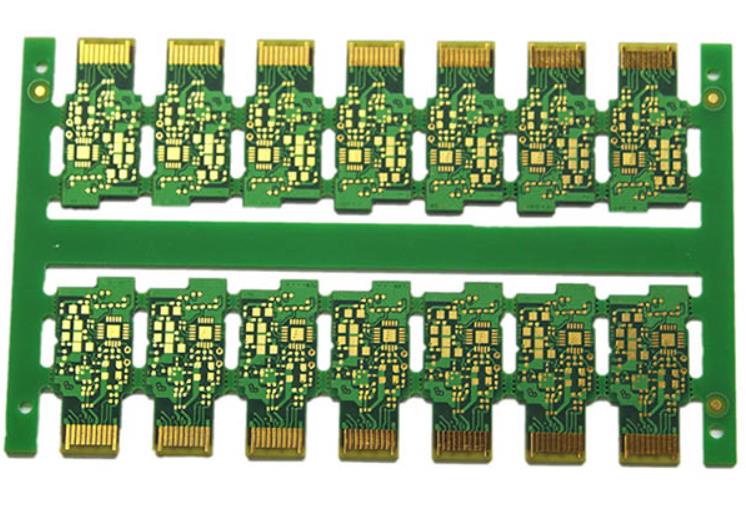
One board does not have to carry one finish everywhere. A widely used compromise is a selective finish, where the component pads receive one treatment and a different area another: ENIG on the fine-pitch and bonding pads, cheaper OSP or a tin finish on the test points and the large pads, or a carbon or gold coating on a connector edge. Selective finishes add process steps and a masking operation, so they cost more than a single finish, but they can avoid paying for gold over an area of copper that only needs to be solderable once. Where a design mixes a press-fit connector with a fine-pitch array, a selective finish is often the most economical answer, since press-fit joints benefit from the durability of a plated finish while the fine pitch benefits from flatness. The fabrication drawing has to show clearly which areas receive which finish, because an unmarked area will be treated as the default and that is not always the right answer.

FAQ
Which finish is flatter? Both are effectively flat. The difference is that OSP is a very thin organic film while ENIG is a metal layer a few micrometres thick.
How many reflows does OSP survive? Usually one to two, depending on the formulation. The film is consumed by each thermal cycle.
What is black pad? A corrosion of the nickel layer under the gold that produces a brittle joint, caused by poor process control in the ENIG line.
Which is cheaper? OSP, by a wide margin, since it is a short immersion step with low material cost.
Can ENIG be used for wire bonding? Yes, which is one reason it is common on boards that carry both bonded die and soldered components.
Conclusion
The finish is chosen from the number of thermal cycles, the storage time and the processes the pads have to withstand, not from solderability alone. OSP suits a board that is assembled promptly and reflowed once or twice; ENIG suits multiple cycles, long storage, press-fit and bonding. Whatever is chosen, specify the process control that keeps it consistent, since both finishes fail through the plating line rather than through the design. Surface finish options are listed under PCB capabilities, the plating sequence is described in PCB manufacturing, and the soldering consequences are covered by SMT PCB assembly. Boards with mixed assembly steps are usually evaluated through PCBA testing in 2026.