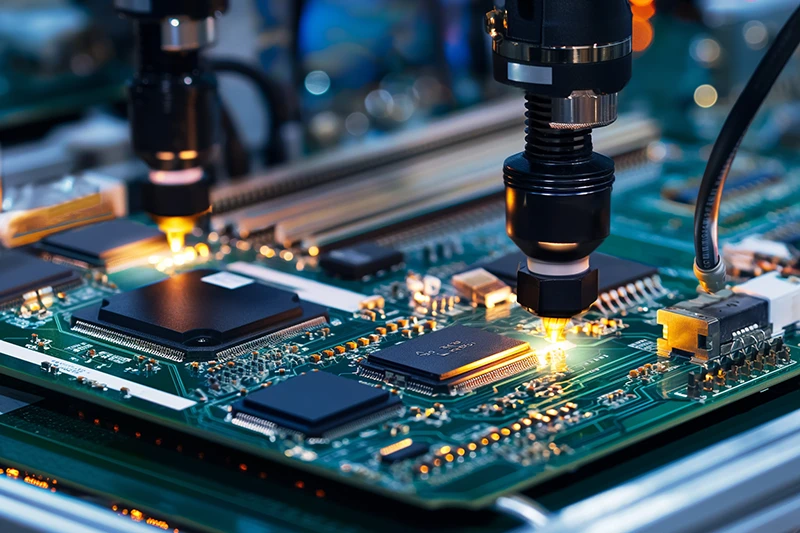
SMT Nozzle Cleaning Station: Setup, Solvent and Verification A nozzle cleaning station is the equipment that removes flux, dust and paste from placement nozzles between uses, and it does more for placement yield than its size suggests. The nozzle is the one tool that touches every component, and its condition…

Solder Paste Viscosity: Thixotropic Index and Shear Rate Solder paste is not a simple liquid. Its viscosity falls when it is stirred or squeezed and recovers when it is left alone, which is what allows it to be pushed through a stencil aperture and then stay in place on the…
Dry Film Thickness Control: Lamination, Resolution and Exposure Dry film photoresist is supplied as a sandwich of a polyester cover sheet, the resist itself and a polyethylene separator, and it is laminated onto the copper under heat and pressure. The thickness of the resist layer is chosen when the film…
Plating Bath Level Control: Make-Up Water and Concentration Plating bath level control is the discipline of keeping a tank at the volume its chemistry was written for, and it is usually treated as an operator housekeeping task. The level decides the concentration of every component in the bath, and that…
PCB Drill Hit Count Limits: Setting and Managing Tool Life A drill hit count limit is the number of holes a bit is allowed to drill before it is removed, and it is the main tool life control on a drilling floor. Set it too high and the hole quality…
Press Fit Pin Insertion: Hole Tolerance and Insertion Force A press fit pin forms its connection by deforming the copper in a plated hole rather than by being soldered to it. The pin is slightly larger than the hole, and pressing it in creates an interference fit that produces a…
Flux Specific Gravity and Acid Value Control Liquid flux is supplied as a concentrate or as a ready-to-use mixture, and its activity depends on the concentration of the solids it contains. As flux is used, the volatile solvent evaporates and the solids concentration rises, so the flux becomes progressively more…
Plating Current Efficiency: What the Tank Actually Deposits Current efficiency is the share of the electrical charge a plating tank consumes that actually ends up as metal on the work, and the rest is lost to side reactions. It is the number that connects the rectifier setting to the deposit…
Dosing Pump Calibration: 5 Steps for Accurate Chemistry Addition Dosing pump calibration is the step that connects an analysis result to a chemical addition, and it is where many wet lines quietly lose control. An operator titrates a bath, calculates the make-up volume and dials a pump setting. If the…
Exhaust Scrubber Maintenance: 6 Checks for Clean Discharge Exhaust scrubber maintenance is invisible when it works and expensive when it does not. A scrubber that loses efficiency does not stop the line, it simply lets more chemistry leave through the stack, where it corrodes nearby structures, stains the building and…