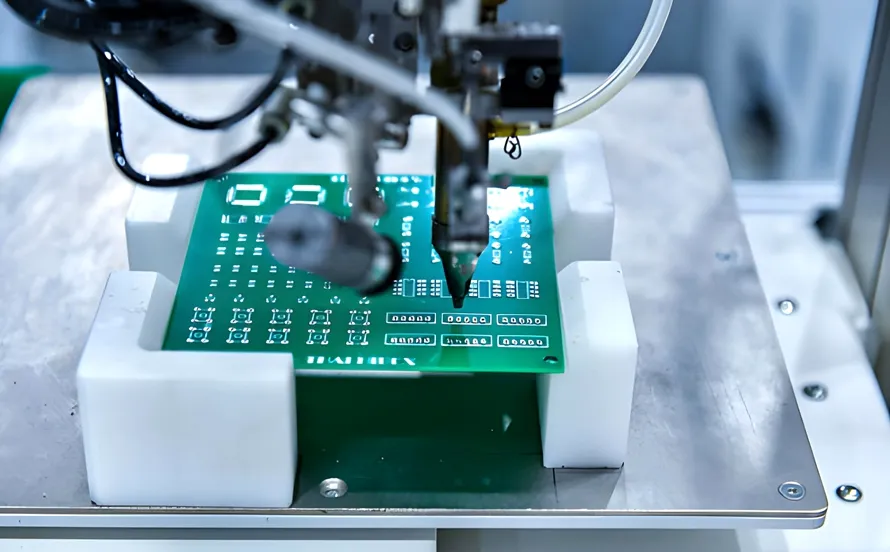
PCB Serpentine Tuning: Process Details and Inspection Points Electronics manufacturing has become a discipline of small details. Solder paste volumes, placement accuracy, temperature profiles and inspection limits all add up to the final result. This guide looks at PCB serpentine tuning from the perspective of a PCBA factory floor, covering…

PCB Length Matching Rules: Practical Process Controls Buyers and engineers often focus on the finished product and forget the production line behind it. In practice, most field failures can be traced back to process decisions made during assembly. Understanding PCB length matching rules gives you a practical advantage when you…
PCB Differential Pair Skew: Keeping the Two in Step Two traces leave a driver together and should arrive together. Any difference in their electrical length shows up as skew, and skew eats the margin a differential link was designed to keep. This article explains where that mismatch comes from on…
PCB Design Review: Mistakes That Cost a Revision Most board revisions are not caused by a circuit that did not work. They are caused by details that were never checked: a footprint with the wrong pad pitch, a connector placed where the enclosure will not let the cable bend, a…
PCB Glass Weave Effect: Process Details and Inspection Points Modern electronics depend on boards that are assembled correctly the first time. Every product – a phone, a charger, a medical instrument or an industrial controller – relies on thousands of solder joints that must conduct current for years. This article…
PCB Stack-Up Design: Layers, Planes and EMC The stack-up is the arrangement of copper layers and dielectric between them, and it is decided once for a design. It sets the cost of the board, the impedances that can be achieved, the crosstalk between routing layers and the emissions the product…
Ultra-Thin Flexible PCB: Stackup, Handling and Bending An ultra-thin flexible PCB is a different material to handle, not simply a thinner version of a normal one. Below about a tenth of a millimetre the board stops behaving like a sheet of plastic and starts behaving like a film: it curls,…
PCB Crosstalk Between Traces: From Prototype to Volume Production Modern electronics depend on boards that are assembled correctly the first time. Every product – a phone, a charger, a medical instrument or an industrial controller – relies on thousands of solder joints that must conduct current for years. This article…
PCB Return Path Planning: Key Process and Quality Checks Modern electronics depend on boards that are assembled correctly the first time. Every product – a phone, a charger, a medical instrument or an industrial controller – relies on thousands of solder joints that must conduct current for years. This article…
PCB Reference Plane Design: A Factory-Floor Review Buyers and engineers often focus on the finished product and forget the production line behind it. In practice, most field failures can be traced back to process decisions made during assembly. Understanding PCB reference plane design gives you a practical advantage when you…