



Industrial automation systems rely heavily on stable and reliable electronic control platforms. From programmable logic controllers and robotics controllers to machine vision systems and AI powered industrial computers, the performance of the entire system depends on the reliability of the underlying control boards.
Industrial automation PCB assembly plays a critical role in ensuring long term operational stability in harsh factory environments where vibration, temperature variation, electromagnetic interference, and continuous operation are common.
High reliability PCB assembly techniques enable industrial control systems to operate with precision, safety, and efficiency across manufacturing, logistics, energy, and smart factory applications.
What Is Industrial Automation PCB Assembly
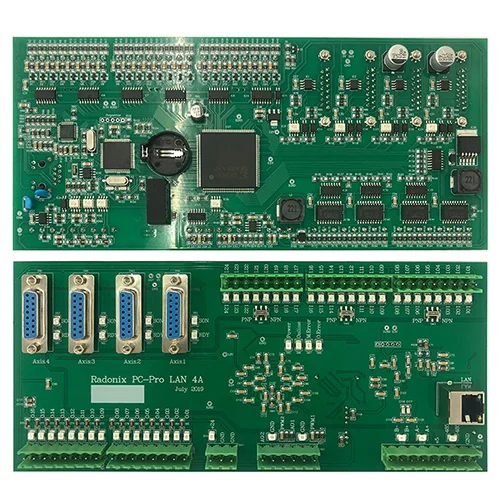
Industrial automation PCB assembly refers to the process of assembling electronic components onto printed circuit boards used in industrial control equipment. These boards act as the core computing and control platforms inside automation systems.
Typical industrial control PCBs integrate microprocessors, communication modules, power management circuits, sensors, and high speed interfaces that connect machines, robots, and data networks.
Compared with consumer electronics, industrial automation PCBs require stronger durability, higher reliability, and longer operational lifetimes.
Key functions supported by industrial automation control boards include real time data processing, machine control and motion control, industrial network communication, AI assisted decision systems, and safety monitoring.
Key Technical Requirements for Industrial Automation PCB Assembly
High Reliability and Long Term Stability
Industrial equipment often operates continuously for years. PCB assemblies must be designed and manufactured with high reliability components and stable solder joints to ensure long lifecycle performance.
Signal Integrity for High Speed Industrial Communication
Modern automation systems rely on high speed industrial communication protocols such as EtherCAT, CAN, Ethernet, and industrial fieldbus networks. Controlled impedance routing and optimized PCB stack up help maintain signal integrity and reduce transmission errors.
EMI Control and Electromagnetic Compatibility
Industrial environments contain numerous motors, inverters, and high power switching devices. Proper grounding design, shielding structures, and filtering components are necessary to minimize electromagnetic interference.
Thermal Management for High Power Components
Industrial control boards frequently include power modules, processors, and communication chips that generate heat. Effective thermal management through copper thickness optimization, heat spreading layers, and thermal vias ensures stable operation.
High Density SMT Assembly
Modern industrial control boards integrate increasingly complex processors, memory devices, and communication interfaces. Precision SMT assembly supports fine pitch packages such as BGA, QFN, and high density connectors.
PCB Materials and Structures for Industrial Automation Control Boards
Industrial automation PCB assemblies commonly use robust PCB materials and multilayer structures designed for durability and signal performance.
Common PCB design characteristics include multilayer PCB structures for complex routing, thick copper layers for power distribution, controlled impedance traces for communication signals, high Tg FR4 materials for thermal stability, and reinforced mechanical structures for vibration resistance.
For high speed industrial computing platforms and AI enabled controllers, low loss materials and high layer count PCBs may be required to support advanced processors and high bandwidth interfaces.
Industrial Automation PCB Assembly Process
Professional industrial PCB assembly services typically follow a structured manufacturing process to ensure quality and reliability.
Engineering Review and DFM Analysis
Before production begins, engineering teams review design files, PCB stack up, and bill of materials to verify manufacturability and reliability.
Component Procurement and Verification
Industrial grade components are sourced through reliable supply chains and verified to ensure authenticity and performance stability.
SMT Assembly and Precision Component Placement
Automated pick and place machines install surface mount components with high accuracy, ensuring proper alignment for fine pitch devices.
Reflow Soldering and Process Control
Carefully optimized temperature profiles are used to produce stable solder joints and prevent thermal damage to sensitive components.
Inspection and Quality Verification
Multiple inspection technologies are applied during assembly, including automated optical inspection, X ray inspection for hidden solder joints, and in circuit testing.
Functional Testing
Completed assemblies undergo electrical and functional testing to verify system level performance before shipment.
Quality Assurance for Industrial Automation PCBA
High reliability industrial electronics require strict quality management systems.
Professional PCB assembly manufacturers implement incoming component inspection, process traceability throughout the production line, automated inspection systems, environmental reliability testing, and compliance with international manufacturing standards such as IPC and ISO quality systems.
These procedures ensure consistent production quality and minimize the risk of field failures.
Applications of Industrial Automation PCB Assembly
Industrial automation PCB assemblies are widely used in modern smart manufacturing systems.
Common application areas include programmable logic controllers and industrial control systems, robotics motion control boards, industrial AI computing modules, machine vision processing boards, factory automation equipment, industrial sensor networks, energy management systems, and intelligent logistics equipment.
As Industry 4.0 technologies continue to evolve, industrial control boards increasingly integrate AI computing capabilities and advanced communication modules, making PCB assembly precision even more critical.
Advantages of Professional Industrial Automation PCB Assembly Services
Working with an experienced PCB assembly manufacturer provides several advantages.
Manufacturers with advanced SMT production lines can support high density industrial electronics. Engineering teams provide design for manufacturing support to improve reliability and manufacturability. Integrated PCB fabrication and assembly services simplify supply chain management. Advanced testing procedures ensure stable product performance in demanding industrial environments.
These capabilities help automation equipment manufacturers accelerate product development and maintain high quality standards.
Conclusion
Industrial automation PCB assembly is a fundamental manufacturing process that supports modern intelligent manufacturing systems. High reliability assembly techniques, advanced materials, and strict quality control enable industrial control boards to operate reliably in complex environments.
As automation technology continues to evolve with robotics, AI computing, and smart factory integration, the demand for high performance industrial control PCBs will continue to grow.
Partnering with a professional industrial automation PCB assembly provider ensures stable product performance, efficient production, and long term reliability for advanced automation equipment.
