



Cleaning Machine: Design Rules and Process Limits
Cleaning removes the residue that the soldering process leaves behind, and whether it is needed depends on the residue and on what the assembly will face. The decision is a product decision, and the machine is chosen after it.
What the Residue Is
Flux residue, paste vehicles, conductive particles and skin oils are the common contaminants. A no clean flux leaves a residue by design, and whether that residue is acceptable depends on the humidity and the voltage of the application.
The residue should be identified before a chemistry is chosen. Our flux residue notes describe the risk assessment.
Chemistry and Mechanism
Aqueous cleaning relies on water with a saponifier or a surfactant, and solvent cleaning relies on a non polar chemistry. Each attacks a different part of the residue, and the wrong choice removes the easy fraction and leaves the rest.
The residue chemistry and the cleaning chemistry have to match. Our cleanliness notes describe the measurement that confirms it.
Machine Types
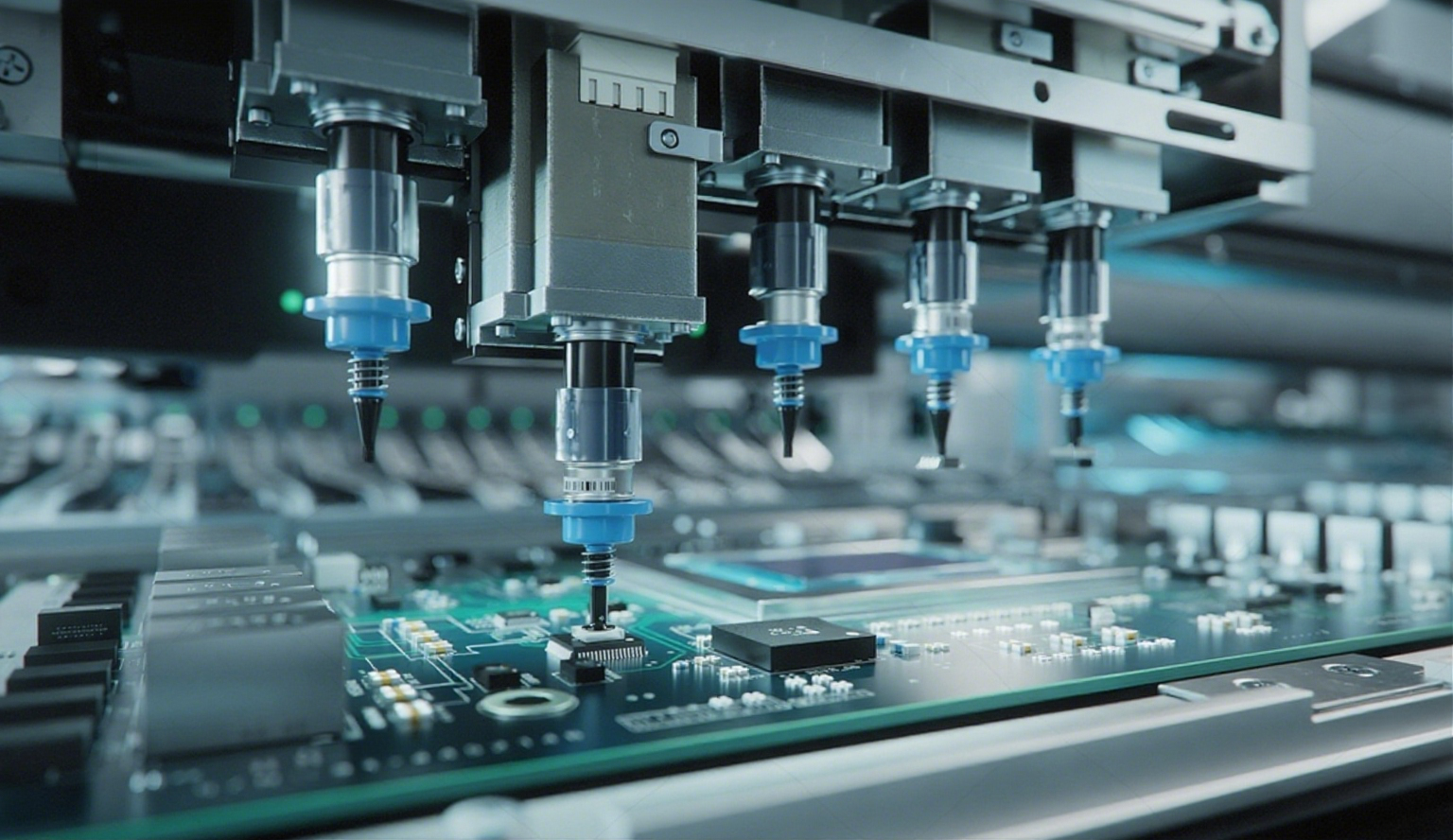
Inline machines clean continuously and batch machines clean a load at a time. Inline suits a high volume line where the cycle is set by the conveyor, and batch suits a lower volume or a part that needs a longer dwell.
The agitation method, the number of stages and the filtration all belong to the choice. Our floor control notes describe the layout that results.
Rinsing and Its Importance
The rinse removes the chemistry as well as the residue, and a rinse that is incomplete leaves its own contamination. The rinse water quality is therefore part of the specification.
The resistivity of the final rinse is the usual control. Our ionic contamination notes describe the limits that apply.
Drying and Trapped Liquid
Water left under a component causes corrosion and popcorning at the next reflow. The drying stage has to reach under the parts, which is why air knives and hot air circulation are used together.
Blind holes and connectors trap liquid, and the orientation of the board in the machine decides whether it drains. Our coating notes describe what happens when a coating is applied over trapped moisture.
Measurement
The measurement is an ionic contamination test on a test board or a sample assembly, expressed as an equivalent of sodium chloride per unit area. A visual check proves nothing about the ionic state.
The sample should be taken at the point of use rather than at the machine outlet. Our quality notes describe how the record is kept.
Verification
The verification is a residue identified and a chemistry matched to it, a rinse quality recorded, a drying stage confirmed by inspection of the underside of a component, and an ionic contamination result against a written limit.
Our fabrication notes list the points to confirm.
Process Control and Verification
On a design of this kind, drying is the item that decides how the rest of the board is arranged. Running a first article through the same checks as the production panel confirms that the two agree, and that comparison is the cheapest form of process control available at prototype stage. Keeping a sample from the panel turns a dispute into a measurement, because the same coupon can be re-examined by both parties without rebuilding the batch.
Reviewing the design before the data is released is cheaper than correcting it after the panel is in the tank, because every step downstream inherits the decision made at the front end. Documenting the assumption is part of the design work, and a short note on the drawing prevents a question that would otherwise arrive a day later and cost a day of schedule.
The process window is set by the narrowest step in the flow, so an improvement anywhere else shows up as margin rather than as yield until that step is addressed. A short note on the drawing about handling, storage or packaging is often worth more than an extra decimal place on a tolerance.
Where a value sits close to a process limit, the drawing should say so, since the shop can then open the process window rather than working to a nominal figure that carries no tolerance. A stack-up that is drawn rather than described removes most of the ambiguity from a quotation, and it lets the fabricator price the board against the dielectric and copper weights that will actually be used.
Where the requirement is not written down, the shop supplies its own default, and the default is chosen for the process rather than for the design.
Process Control and Verification
On a design of this kind, drying is the item that decides how the rest of the board is arranged. Running a first article through the same checks as the production panel confirms that the two agree, and that comparison is the cheapest form of process control available at prototype stage. Keeping a sample from the panel turns a dispute into a measurement, because the same coupon can be re-examined by both parties without rebuilding the batch.
Reviewing the design before the data is released is cheaper than correcting it after the panel is in the tank, because every step downstream inherits the decision made at the front end. Documenting the assumption is part of the design work, and a short note on the drawing prevents a question that would otherwise arrive a day later and cost a day of schedule.
The process window is set by the narrowest step in the flow, so an improvement anywhere else shows up as margin rather than as yield until that step is addressed.
Process Control and Verification
On a design of this kind, drying is the item that decides how the rest of the board is arranged. Running a first article through the same checks as the production panel confirms that the two agree, and that comparison is the cheapest form of process control available at prototype stage. Keeping a sample from the panel turns a dispute into a measurement, because the same coupon can be re-examined by both parties without rebuilding the batch.
Reviewing the design before the data is released is cheaper than correcting it after the panel is in the tank, because every step downstream inherits the decision made at the front end.
Process Control and Verification
On a design of this kind, drying is the item that decides how the rest of the board is arranged. Running a first article through the same checks as the production panel confirms that the two agree, and that comparison is the cheapest form of process control available at prototype stage. Keeping a sample from the panel turns a dispute into a measurement, because the same coupon can be re-examined by both parties without rebuilding the batch.
A first article check confirms that the process and the drawing agree on the points listed above, and that the coupon data supports the values used in the design.
Where a measurement falls outside the expected window, the sample is retained so that the cause can be established before the balance of the batch is released.
FAQ
Is cleaning always necessary? No. Where the flux is qualified as no clean and the residue is benign at the working humidity and voltage, cleaning adds cost without benefit.
Can a solvent machine replace an aqueous one? It can, where the residue is non polar or where water is incompatible with the assembly. The residues it removes are different.
What does gopcb provide for cleaning? We provide a residue identified before a chemistry is chosen, a rinse quality recorded at the final stage, a drying stage confirmed under a component rather than at the surface, and an ionic contamination result measured against a written limit.



1 Comment
No-Clean Residue Acceptance
[…] cleaning notes describe the equipment that […]