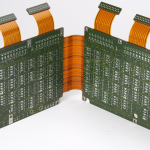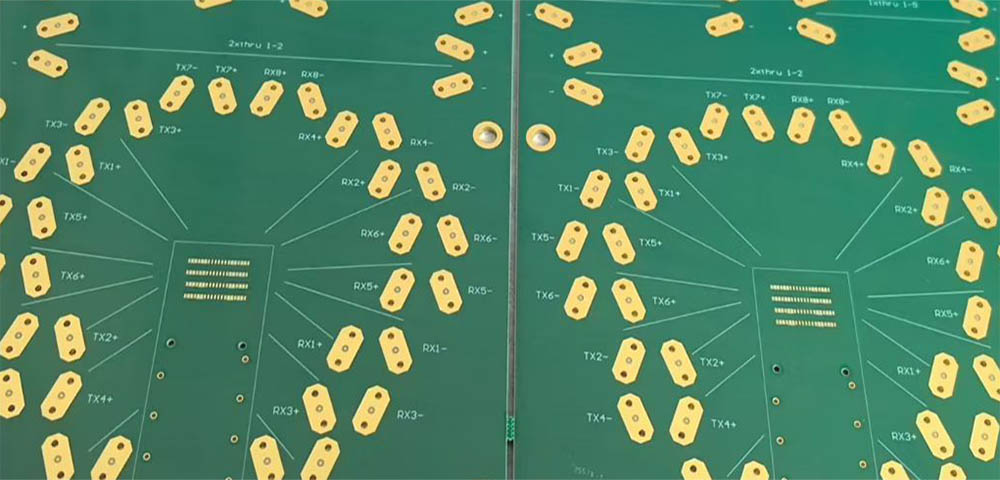
PCB Dewarping Process Guide
A board that has bowed or twisted cannot be assembled reliably. The paste printer cannot hold it flat, the placement machine sees a shifting fiducial and the reflow oven bakes the distortion in. Dewarping is the process that removes the shape after the board has been built, and it is a repair rather than a design solution, with its own limits and its own risks.
Why Boards Warp
The main cause is an imbalance in the copper distribution. Copper and laminate expand at very different rates, so a layer with a large area of copper and a layer with almost none will pull the stack in different directions during cooling.
The second cause is the lamination cycle itself. A press that heats and cools unevenly leaves a gradient through the stack, and the panel takes a set as it cools.
The third cause is the soldering process, which heats the board to two hundred degrees and above. Any stress that was locked into the laminate is released at that temperature, and the board takes a new shape as it cools.
The effect of the material and the build is described in the dimensional stability guide, and the copper balance question belongs to the copper balance work.
Bow and Twist Defined
Bow is a curvature along one axis, where the board takes a cylindrical shape. Twist is a curvature along two axes, where the board takes a saddle or a propeller shape.
Both are measured as the maximum deviation from a flat reference divided by the length of the board, and the value is quoted as a percentage. The common limit for a surface mount board is around half a per cent.
The two behave differently in assembly. A bowed board can often be pressed flat by the printer and the clamp, while a twisted board rocks on its supports and cannot be held at all.
A board can also be flat at room temperature and warp when it is heated, which is why the measurement is sometimes repeated after a thermal excursion. The stress is released by the heat, and the shape at room temperature is not the shape that the assembly will see.
The measurement is made with the board resting on a flat surface or on a gauge, with the deviation read at the corner or at the centre depending on the shape.
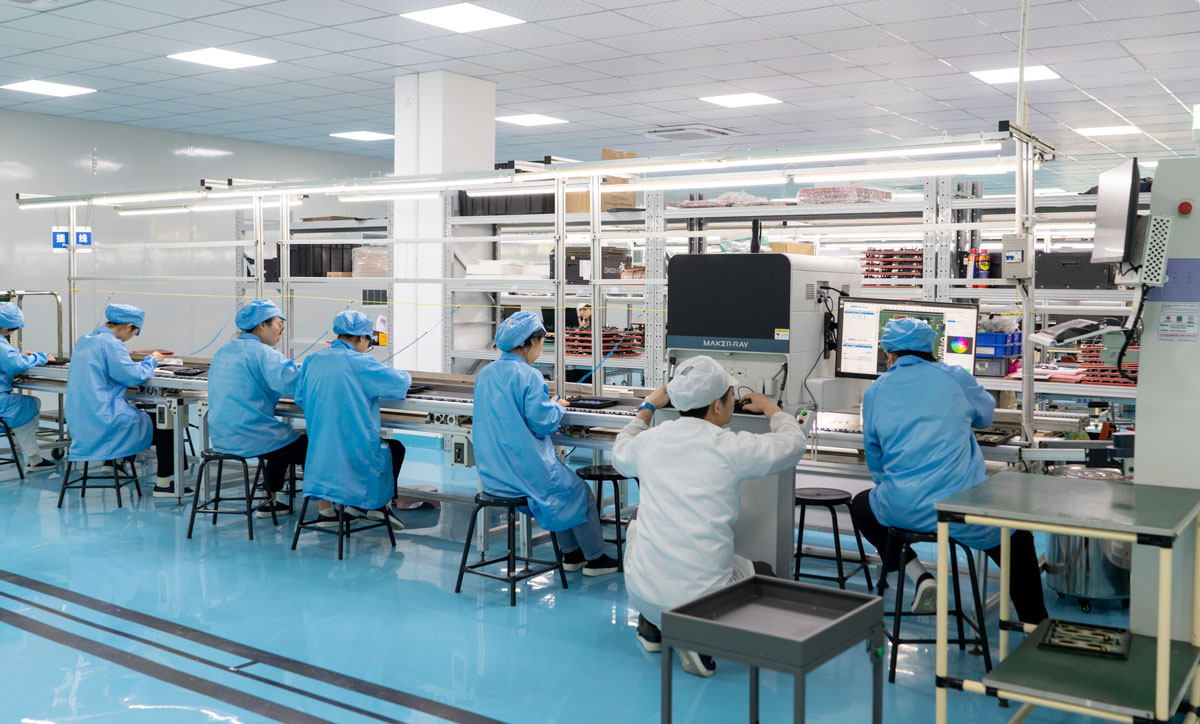
The Dewarping Process
Dewarping heats the board to a temperature below the glass transition of the laminate and holds it flat under a weight or in a fixture while it cools slowly. The heat releases the locked in stress and the fixture sets the new shape.
The dwell time and the temperature are the two variables. Enough heat is needed to soften the resin, and too much heat will damage the mask, the finish or the components.
The cooling has to be slow, because a fast cool re introduces a gradient and the board springs back. A controlled ramp down over a period of an hour or more is typical for a bare board.
The process is usually applied to a bare board rather than to an assembled one, because the components and the solder joints are exposed to the same temperature. Where an assembled board must be treated, the temperature is limited by the most sensitive part on it.
Temperature and Clamping
The temperature is chosen from the laminate and from the finish. A standard FR4 with a glass transition near a hundred and forty degrees is treated below that value, while a high glass transition material needs a higher temperature and tolerates it.
The clamp or the weight has to apply an even pressure over the whole board. A few point loads will create a new distortion rather than removing the old one, and a board that is clamped only at the corners will bow between them.
The fixture itself must be flat, and it is usually a thick metal plate or a set of parallel bars. The flatness of the fixture sets the flatness of the result, so a fixture that is out by a tenth of a millimetre will produce boards that are out by the same amount.
The board should be supported on both faces for a twist, since a twist needs a correction in two directions at once and a single plate cannot do it.
Limits and Risks
Dewarping is a stress relief, not a permanent change of material. A board that is flattened and then soldered may warp again, because the soldering reintroduces the conditions that released the stress in the first place.
The heat also ages the laminate. Every excursion above the glass transition advances the resin, and a board that is treated several times becomes brittle and loses its dimensional stability.
The mask and the finish can be damaged. A glossy mask can turn dull, and a finish that has an organic preservative can be driven off by the heat, which affects the solderability.
A board that has been dewarped should therefore be checked for the surface finish before it is used, and the quality check should include the flatness and the appearance.
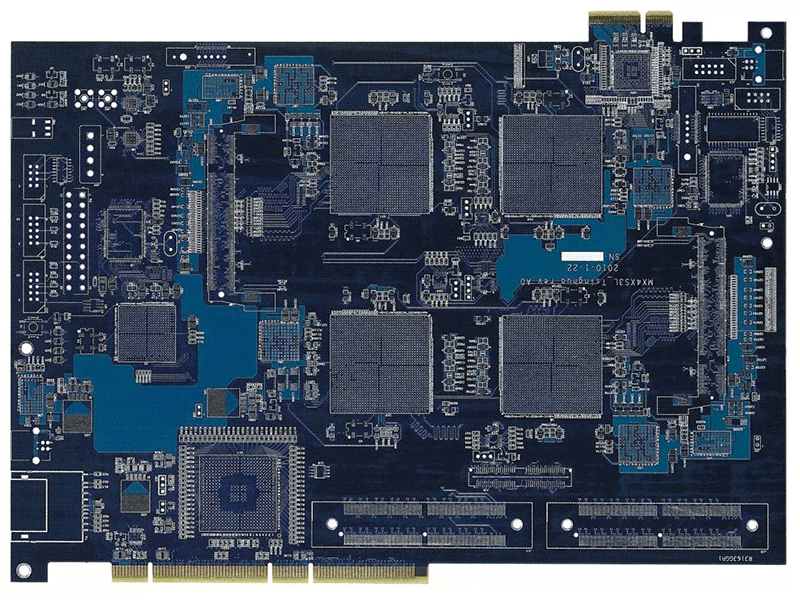
Prevention in Design
The better answer is a balanced stackup. Copper should be distributed evenly on every layer, and a layer that carries almost nothing should have a thieving pattern added to match the others.
The symmetry of the build matters as much as the balance. A stack that is not symmetric about the centre line will warp regardless of the copper distribution, and the effect grows with the thickness.
The panel design contributes as well. A panel with a small board repeated many times and a large rail has an unbalanced copper area, and the panel warps even when each board is balanced.
The thermal design of the assembly also matters, because an uneven heat distribution during reflow produces an uneven release of stress. The thermal management work covers the copper distribution from a different angle and reaches the same conclusion.
Practical Rules
Treat dewarping as a repair for a small number of boards, not as a process step. A batch that needs dewarping has a design or a lamination problem that will return.
Check the flatness before and after the assembly as well as after the dewarping, since a board that flattens on the bench and warps at reflow has not been fixed.
Keep the temperature below the limit of the most sensitive material on the board, and state that limit on the drawing so that the shop does not exceed it.
Record the treatment in the documentation, because a board that has been heat treated twice behaves differently from one that has been treated once.
FAQ
Can an assembled board be dewarped? Only at a temperature that the components can survive, which is usually much lower than the temperature the laminate would need. In practice it is done on bare boards.
Does dewarping change the electrical properties? It can, because the dielectric thickness changes slightly when the board is flattened. The change is small but it matters on a controlled impedance line.
What is an acceptable bow and twist? Around half a per cent of the board length for a surface mount board, and less for a fine pitch assembly. The interface standard for the product gives the figure.