Interconnect Stress Test: Method and Acceptance Limits
The interconnect stress test, usually shortened to IST, is a reliability method that heats a plated through hole with direct current and measures its resistance cycle by cycle. The coupon is its own heater and its own sensor, which is what makes the method faster and more repeatable than an oven-based test. A failure is detected as a permanent resistance change rather than as a visual defect. Because the coupon is small, the test is inexpensive to run and can be repeated on every production lot if the schedule allows it.
The test is used for laminate qualification, for process monitoring and for comparing a board design against a durability target. Its value comes from the fact that it produces a number of cycles to failure rather than a simple pass or fail, and that number can be compared across suppliers, materials and process changes. That comparability is the reason IST has become a standard tool in laminate selection, where two candidate materials have to be ranked rather than simply accepted or rejected.
What IST Measures
The method stresses the copper barrel and the resin around it by repeatedly raising the coupon to a set temperature and letting it fall. The copper expands far more than the laminate, so the barrel is placed under tension on every cycle. Over thousands of cycles that tension initiates a crack in the plating and eventually opens the connection.
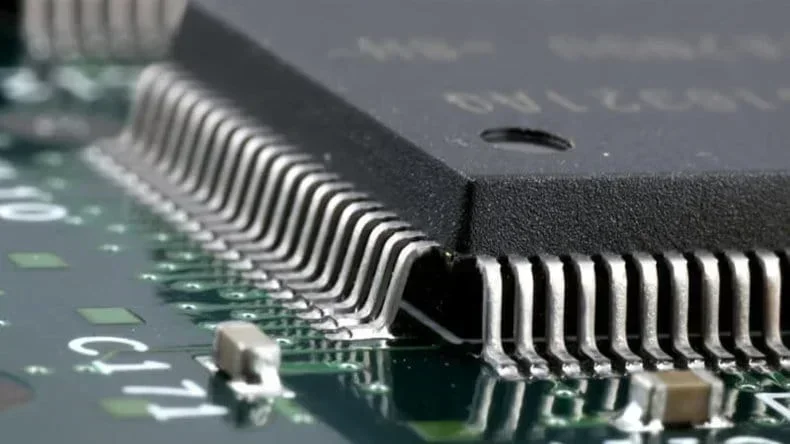
The resistance of the daisy-chained barrel is measured continuously, and the result shows the sequence of events rather than only the end point. A gradual rise indicates a crack growing around the barrel, while a sudden step indicates a complete separation of the copper. The trace also shows whether the resistance recovers between cycles, which separates a reversible contact problem from a genuine crack.
Coupon and Fixture
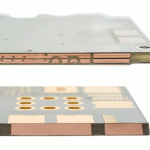
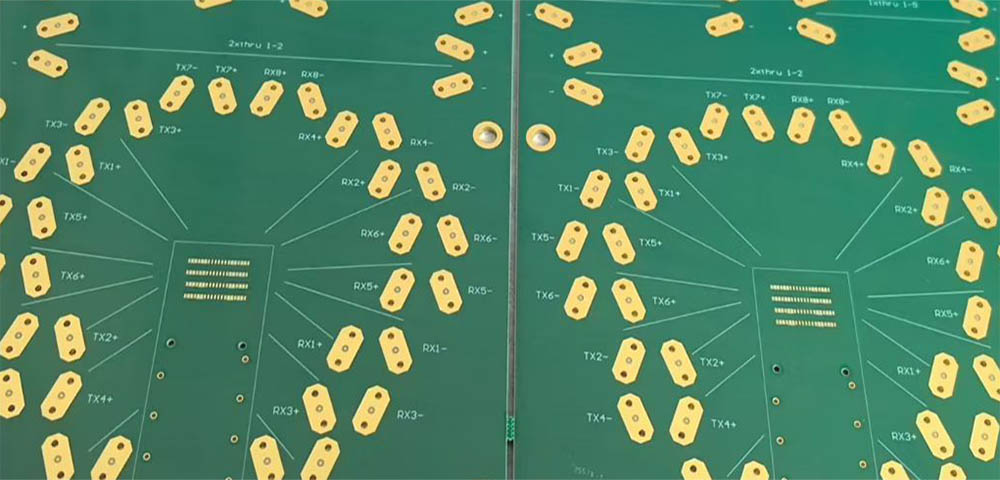
The coupon is a set of plated holes connected in series and brought out to pads that the fixture contacts. Coupons are normally built on the production panel so that they see the same drilling, plating and lamination as the working boards, and they are removed and tested separately.
The fixture clamps the coupon between heated and sensing contacts, and its condition matters more than most operators expect. Worn contacts add resistance that appears as a false change, and uneven clamping produces a temperature gradient that changes where the failure occurs. The fixture should be cleaned at the same interval as the contacts are replaced, because flux and oxide build-up on the contact faces behaves exactly like a resistance change.
Heating by Direct Current
Heating is produced by passing a current through the coupon itself, and the current is controlled to reach a defined temperature in a defined time. A typical cycle raises the coupon to around 230 degrees Celsius in a few seconds and then allows it to cool back to a low temperature before the next cycle begins.
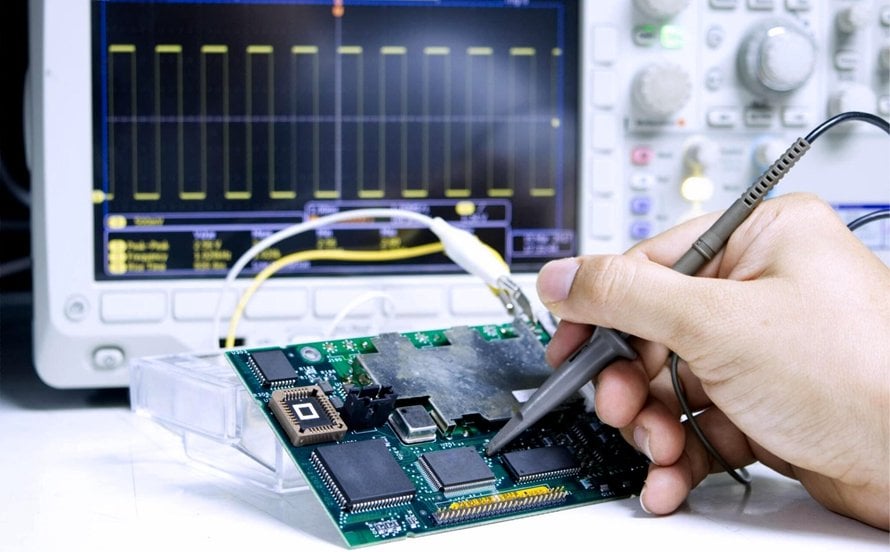
Because the heat is generated inside the copper, the coupon reaches temperature far faster than it would in an oven, and the thermal gradient across the coupon is small. That is the main reason IST packs more cycles into an hour than a chamber-based test manages in a day. Cooling is usually assisted by forced air, and the cooling rate becomes the limiting factor once the heating side has been optimised.
Cycle Definition and Duration
A cycle is defined by the upper and lower temperature limits and by the time allowed to reach each one. Changing any of those values changes the number of cycles to failure, so results are comparable only when the cycle definition is identical.
Typical programmes run from 150 to 1500 cycles depending on the durability target being demonstrated. A process monitor may run only a few hundred cycles and look for any resistance change at all, while a qualification for a harsh environment may run for several thousand. The number of cycles completed per hour should be recorded too, because a change in cycle time changes the stress per cycle even when the temperature limits look identical.
Resistance Monitoring and Failure Detection
The failure criterion is normally a permanent increase in resistance of ten percent above the initial value, confirmed by holding at the test temperature for a short period to exclude a transient reading. Some programmes also use an absolute limit to catch coupons that start with an unusually high resistance.
The initial resistance is measured before cycling begins, and it should be recorded together with the coupon geometry. A coupon that starts high because of a plating defect will fail early for a reason that has nothing to do with the material being evaluated. Recording the initial value also allows a coupon population to be screened before the run, so that a marginal coupon does not occupy a test position for several days.
Acceptance Limits in Practice
Acceptance is expressed either as a minimum number of cycles without failure or as a mean cycles to failure across a small population. The second form is more informative but needs more coupons, and it is usually reserved for qualification work rather than for routine monitoring.
A single coupon that fails early is treated as a warning and followed by a larger sample. Where several coupons fail in the same place, the plating process or the hole geometry is examined first, and the laminate is examined only after those have been excluded. Failure location is a useful guide, because failures at the barrel-to-pad transition point to plating adhesion while failures in the middle of the barrel point to ductility.
IST Versus Thermal Cycling and Thermal Shock
A thermal cycling chamber tests the whole assembly, including solder joints and components, and it takes hours or days per hundred cycles. Thermal shock adds a liquid-to-liquid transfer that produces very steep gradients and stresses different features of the board.
IST is narrower and much faster, and it is limited to the plated barrel. The three methods answer different questions, and a qualification programme normally uses IST for the interconnect and a chamber method for the assembly as a whole. Where a programme uses both, the IST result should be reported with the cycle definition attached, because a bare cycle count means very little on its own.
Process Factors That Change IST Results
Plating thickness and ductility dominate. A thin wall fails sooner regardless of the laminate, and a brittle deposit cracks long before a ductile one of the same thickness. Current density, bath chemistry and the agitation used during plating all influence those two properties.
Drilling quality takes second place, because a rough wall creates stress concentrations where a crack can start. The coupon results should be read together with hole wall roughness data and, where a failure occurs, with microsection evidence of the crack path.
FAQ
How many cycles should a board survive in IST? It depends on the durability target, but qualification programmes commonly require several hundred to a few thousand cycles without a ten percent resistance change.
Why is IST faster than an oven test? Because the coupon heats itself by direct current, so it reaches temperature in seconds rather than minutes and loses far less time per cycle.
Can IST replace thermal cycling? No. It evaluates the plated barrel only, while a chamber test also covers solder joints, components and the laminate as a whole.