Where PCB Lead Time Comes From: Tooling, Panels and Press Cycles
PCB manufacturing lead time is a sum of queue time, process time and inspection time, and only one of those is under the fabricator’s direct control. Engineers tend to picture a production line where a board enters at one end and leaves at the other, but most of the elapsed time is spent waiting between steps or waiting for a slot on a shared machine. Understanding where the waiting happens is what allows a schedule to be planned realistically.
This article breaks the lead time into its parts, identifies the design decisions that lengthen it, and describes how to plan a build so the dates hold.
Where the Time Actually Goes
Tooling is the first fixed cost in time. A quick turn prototype on two layers needs only a drill programme and a film set, which can be prepared in hours. A multilayer board needs inner-layer artwork, registration tooling and lamination fixtures, and if the design uses blind or buried vias it needs one set of tooling for every lamination cycle.
Process time is the next component. Imaging, etching, lamination, drilling and plating each take a defined number of hours, and lamination in particular involves a press cycle that cannot be accelerated. Inspection and electrical test add their own time, and the final surface finish may require a queue of its own if the chosen finish is not run every day.
Design Complexity and Layer Count
Layer count raises lead time in steps rather than smoothly. Moving from four to six layers adds one inner-layer imaging step and one lamination cycle. Moving beyond eight layers usually introduces sequential lamination, where the board is pressed, drilled and plated more than once, and each additional pass adds several days.
Aspect ratio and feature size add time in a different way. A board with a hole aspect ratio near the limit of the process will be run more slowly to achieve uniform plating, and a board with minimum features near the process limit will be inspected more carefully. Both are legitimate design choices, but they should be made with the schedule in mind. The manufacturable design rules give the dimensions that run at normal speed.

Panel Utilization and Order Quantity
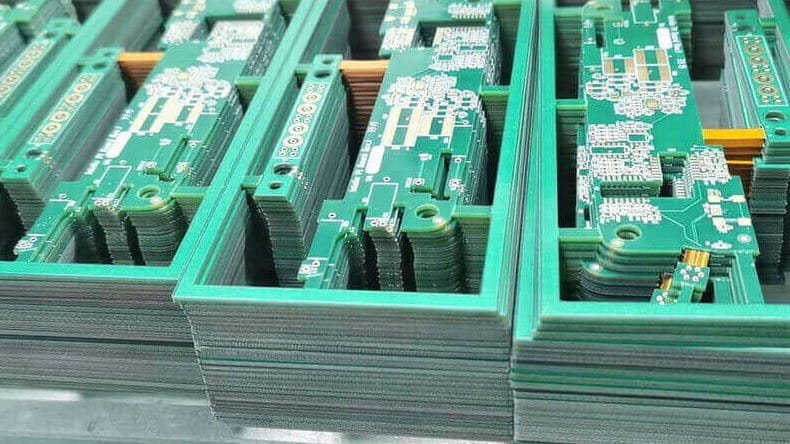
Boards are made on panels, and the fixed time in the process is per panel rather than per board. A design that tiles efficiently on a standard panel takes fewer panels for a given quantity, and fewer panels mean shorter queues, less handling and lower cost. Panel utilization is a strange thing to optimise for engineering reasons, but it has a direct effect on delivery.
Quantity works the same way. Small orders often wait until the line has other work to fill a panel, which adds queue time that has nothing to do with the board itself. Ordering a quantity that fills panels evenly, even if it is slightly larger than the immediate need, frequently produces a shorter delivery than a smaller order that leaves the panel half empty.
Material Availability
Standard FR-4 in common thicknesses and copper weights is a stock item at most fabricators, and its availability adds nothing to the lead time. Anything unusual changes that: a heavy copper weight, a low-loss laminate, a thick panel, or a specific brand of base material may have to be ordered from a distributor.
Material procurement is often the largest single contributor to an unexpected delay, and it appears without warning because the fabricator discovers it after the order is placed. Confirming the material early, or designing around a stocked thickness, removes the risk entirely and costs nothing but a conversation.
Tooling, Drilling and Lamination Cycles
Drilling dominates the process time in the middle of the flow. A board with several thousand holes takes hours on the drilling machines, and the drill programme has to be prepared and verified. Reducing the hole count, or using larger holes that can be drilled at a faster feed rate, shortens this step.
Lamination is the least compressible part. A press cycle runs for a fixed time to bring the resin to the right degree of cure, and stacking the press more deeply risks a temperature gradient that ruins the batch. A fabricator can run more shifts, but it cannot make the chemistry go faster, which is why the number of lamination cycles is the single best predictor of the total lead time.
Assembly and Component Sourcing
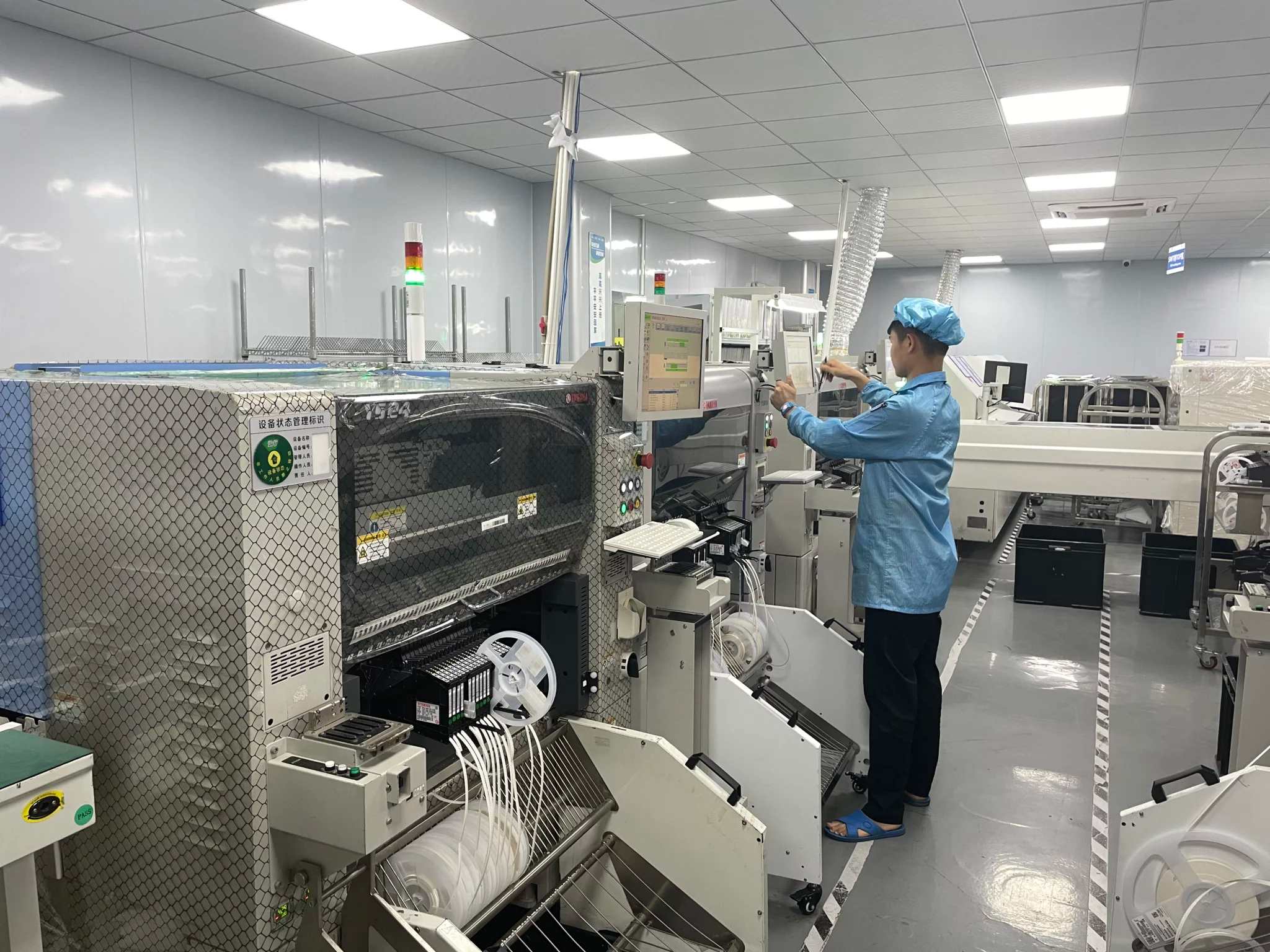
Assembly is a separate queue. Stencil fabrication, paste printing, placement, reflow and inspection each take time, and a double-sided assembly with a selective solder step takes longer than a single-sided one. The largest single risk, however, is component availability, which has nothing to do with the board and everything to do with the schedule.
Long-lead components should be identified before the board is released, and where they cannot be avoided, the assembly order should be placed in parallel with the fabrication order rather than after it. The prototype build requirements describe how to prepare a first article so that the fabrication and assembly stages do not wait on each other.
Design for Manufacturability Shortens the Queue
Every question the fabricator has to ask costs a day. A design that leaves the copper weight unstated, the impedance targets ambiguous or the stack-up inconsistent will be queried, and the query happens before production begins. A complete fabrication package is therefore one of the most effective schedule tools available.
The same applies to the drill file and the panel drawing. Where the design has already been planned for efficient fanout and panelisation, as described in the escape routing rules, the fabricator can start immediately rather than working through a list of engineering queries.
Planning a Schedule That Holds
A realistic plan works backwards from the product date and allocates the lead time in blocks: fabrication, assembly, test and shipment, with a contingency that reflects the novelty of the design. First articles of a new stack should be assumed to take longer than the second build of the same design, because the first build is where process questions are answered.
Where the schedule is tight, the compression should come from parallel work rather than from compressing the process. Ordering long-lead components early, running the prototype fabrication while the enclosure is being finalised, and reserving test capacity before the boards arrive all recover time without adding risk. Attempting to shorten the lamination cycle or skip inspection does the opposite.
FAQ
How long does a standard four-layer prototype take? A well-prepared four-layer order with stocked material typically runs in a few working days, plus transit. The same board with an unusual laminate, a heavy copper weight or a multilayer stack with blind vias can take several weeks, and most of that difference is procurement and lamination rather than machining.
Does a larger order always take longer? Not proportionally. The fixed time is per panel, so a larger order of the same design mostly adds drilling and inspection time. A larger order of a different design will queue behind other work and can take longer for reasons unrelated to its own size.
Can lead time be reduced by paying more? Expedited services shorten queues by reallocating capacity, which works well for standard processes. They cannot shorten a press cycle or a plating step, so the benefit falls away as the process becomes more complex, and the premium rises accordingly.