Outgassing: 6 Checks for Board Materials
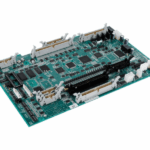
Outgassing is the release of trapped gas from a material as it is heated or placed under vacuum, and on a circuit board it comes from laminate, solder mask, legend ink, coating and even from the plating chemistry left in a hole. The gas has to go somewhere, and where it goes determines whether it causes a defect.
In an open assembly the release is harmless. Under a conformal coating, inside a sealed enclosure or in a vacuum application it is not, because the gas is trapped where it forms. Controlling outgassing is therefore a matter of removing the volatiles before the board is sealed rather than afterwards, and an outgassing control plan is the document that says how that is done for a given product.
Where Outgassing Comes From in a Board
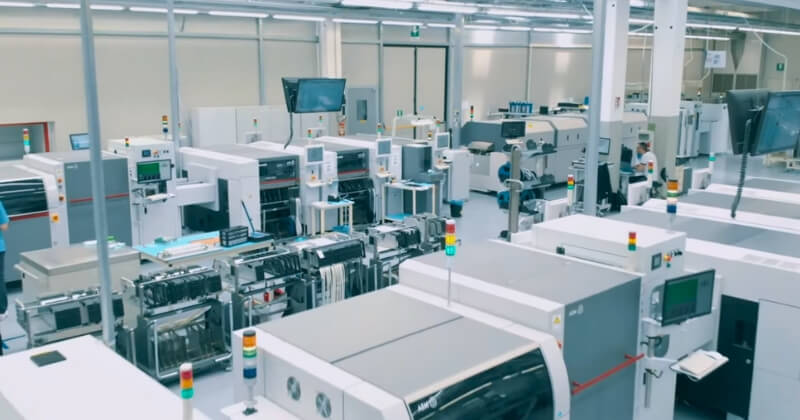
Every organic material in the stack contains something that can leave it. Laminate resin holds moisture and residual solvent, solder mask holds solvent from the coating process, and legend ink holds both. Plating and cleaning chemistry can also remain in a via or under a component.
The quantity depends on how well each step was cured and how the board has been stored since. A board that was cured properly and kept dry releases far less than one that was pulled from a humid store and coated the same day, which is why the storage history matters to the assembly process.
Volatiles in Laminate, Mask and Legend
Laminate absorbs water from the air, and the amount is a function of the resin system, the humidity and the time. Solder mask and legend inks can retain solvent if the cure was short, and the retained solvent leaves slowly at temperatures well below the reflow peak.
The practical test is a weight loss measurement on a sample, taken before and after a bake at a defined temperature. Suppliers quote a value for their material, and a shop that bakes its own boards should confirm that the result matches the expectation rather than assuming it does.
Vacuum Bake and Pre Assembly Drying
A vacuum bake lowers both the temperature needed and the time required, because the reduced pressure helps the vapour leave the material. The cycle has to be written with a ramp, a hold and a cool down, and the boards should be removed from the oven into a dry environment.
Baking a bare board before assembly is the standard control, and the schedule depends on thickness and on the moisture the board has absorbed. The principles and the scheduling rules are set out in the material on core baking, and they apply to finished panels as well as to cores.
Storage, Moisture and Absorbed Water
A board left in a humid room reabsorbs water, so the benefit of a bake is lost within days if the panels are returned to the same store. Dry storage, desiccant and sealed bags are what preserve the result, and the store conditions should be recorded rather than assumed.
The same logic applies to components on reels, where the moisture sensitivity rules are already familiar. The general approach in moisture control in SMT storage covers both materials and the tracking that makes it work.
Outgassing in Reflow and Voiding
During reflow the paste releases its own volatiles, and the board beneath releases moisture that was absorbed during storage. Where the release happens after the alloy has melted, the gas is trapped in the joint and appears as voiding.
The remedy is profile based as much as material based: a gentler preheat allows the vapour to leave before the paste becomes molten. Where voiding is measured on an X-ray image, the profile and the storage record should be reviewed together, because both contribute to the same result.
Outgassing Under Conformal Coating
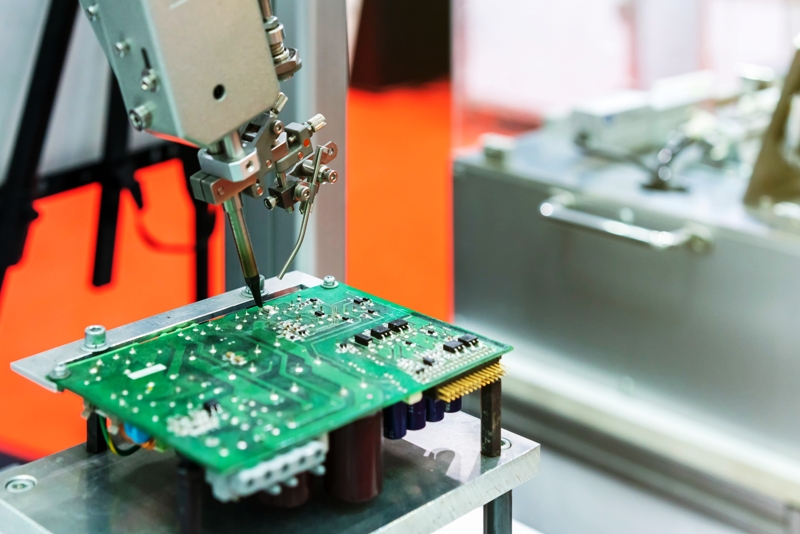
Coating is the classic trap. The film seals the surface, and any gas released afterwards has nowhere to go except into a bubble under the film. The bubbles appear during cure or later, during thermal cycling in the field, which makes them expensive to find.
Pre bake the assembly, control the coating thickness and cure the film slowly enough that residual solvent leaves before the skin closes. The keepout and masking rules in masking for coating also affect how easily a bubble can form, because a coated edge releases gas into the film above it.
Vacuum, Space and Sealed Enclosure Requirements
Applications that operate in vacuum set limits on total mass loss and on collected volatile condensable material, and they name the test method that produces those numbers. The limits are quoted per material, so the board, the coating and the stencil adhesive may each have to be qualified separately.
The usual reference for the test method comes from the ASTM standards, and the customer specification will name which of them applies. A board that meets a general industrial requirement may still fail a vacuum requirement, and the difference has to be identified at the design stage rather than at delivery.
Measuring Outgassing and Interpreting Results
The laboratory methods measure the mass lost by a sample under a defined heat and vacuum cycle, and they separate the total loss from the fraction that condenses on a cold surface. The second figure matters most in optics and in vacuum systems, because that is the material that deposits on a lens or a sensor.
Interpretation should stay close to the conditions of use. A value measured at one temperature on a bare coupon does not describe an assembled board under a coating, so the qualification should be run on a representative sample wherever the application is critical.
Process Controls, Records and Supplier Data
The outgassing controls are simple to state: bake before sealing, cure each organic layer fully, store the boards dry and record the conditions at every step. Each of those steps produces a record, and the record is what allows a bubble found in the field to be traced to a bake that was skipped or a store that was too humid.
Supplier data should be filed with the material lot rather than kept as a general reference, and the quality record should show which bake cycle applied to which build. Where a customer requires a certified test, the report belongs in that file along with the board serial numbers it covers.
FAQ
Does every board need a vacuum bake before assembly? No. Many builds are assembled and shipped without one, because the board is not sealed and the volatiles can escape freely. The bake is worth applying where a coating follows, where the assembly is sealed or where the application runs in vacuum.
How long should a bake be? The schedule comes from the board thickness, the moisture content and the oven type, and it should be qualified by a weight loss check. A time copied from a different thickness or a different laminate is a guess rather than a schedule.
Can outgassing be cured by a longer coating cure? A slow cure helps the solvent leave before the film skins over, but no cure schedule can remove water that has already been absorbed by the laminate during storage. The board has to be dried before the coating is applied, not afterwards.