Plasma Desmear: 5 Parameters for Clean Hole Walls
Plasma desmear uses a low-pressure gas discharge to remove resin smear from drilled holes without liquid chemistry. It reaches blind holes and small diameters that wet processes struggle to fill, and it leaves no effluent to treat. Five parameters decide whether the result is repeatable or whether panels pass on some days and fail on others.
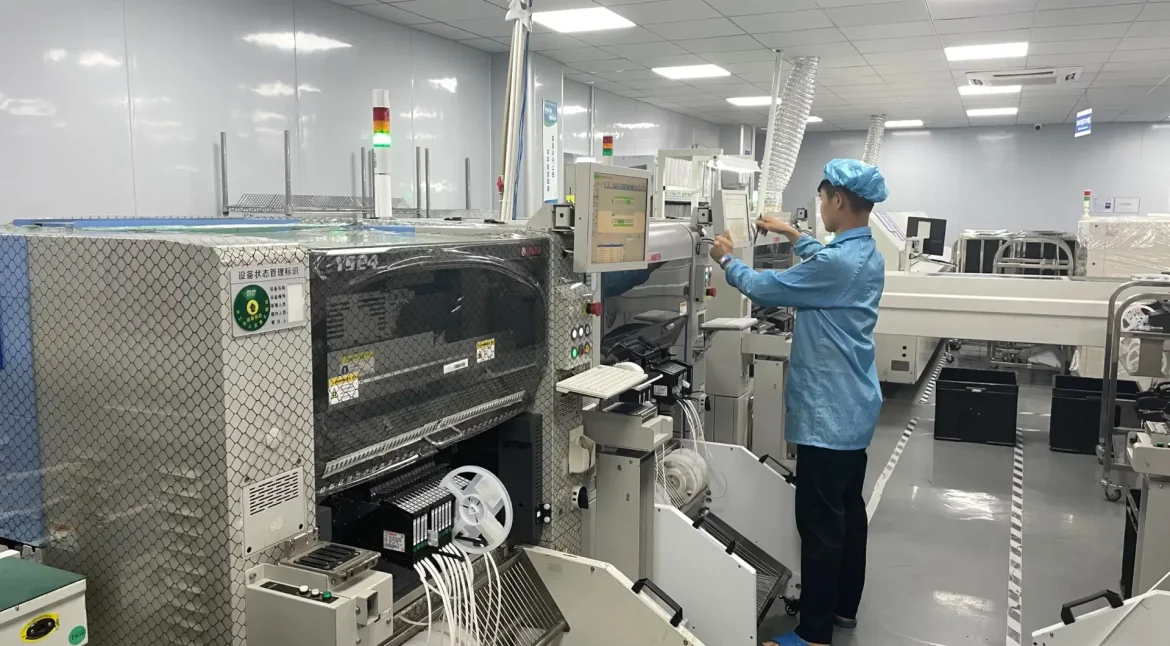
<img src="https://www.gopcba.com/wp-content/uploads/2026/04/PCB-Manufacturing.png" alt="Plasma desmear chamber loaded with panels for hole wall preparation” />
What Plasma Desmear Does to a Hole Wall
Drilling pushes the softened resin across the hole wall and leaves a smear that covers the glass fibres and the copper that the drill exposed. Plasma desmear attacks that layer with reactive species formed in the gas discharge, converting organic resin into volatile products that the vacuum pumps then remove from the chamber.
The treatment is different from permanganate desmear in an important way. A liquid process attacks the wall from the outside in, while the gas reaches the entire hole uniformly, which is why plasma is often chosen for high aspect ratio and blind via work. The result is a wall that PTH chemistry can wet evenly. Hole wall preparation is the goal of the whole step.
Gas Chemistry and Cycle Design
Most plasma desmear cycles use a two or three step recipe rather than a single gas mixture. An oxygen rich stage oxidises the resin, a nitrogen or oxygen mixture activates the surface, and an inert stage may be used to finish the wall with a defined chemistry.
Recipe design should match the laminate. High glass content and filled materials need longer or more energetic stages, while a thin flexible material may need a much shorter cycle to avoid damaging the resin system. The recipe is part of the product specification, not a machine setting. Copying a recipe between machines rarely transfers the result.
Gas Flow Control and Chamber Pressure
Gas flow control sets how much reactive species is available and how quickly the chamber is purged between stages. Flow that is too low starves the discharge, and flow that is too high shortens the residence time of the species before they can reach the wall. Gas flow control is therefore a rate question.
Pressure works together with flow to decide the mean free path of the ions. Low pressure gives a longer path and better penetration into small holes, while higher pressure increases the reaction rate at the surface but reduces reach. Both values belong on the cycle sheet. A gauge that reads low will mislead every cycle run on that machine.
Power, Frequency and Cycle Time
Power controls the density of the discharge, and therefore the rate at which resin is converted. More power is not automatically better: an aggressive discharge can roughen the wall unevenly or attack the resin deep into the barrel, which weakens the finished hole. Cycle time should be set from the coupon result.
Frequency and cycle time complete the picture. The three values are set together during qualification and should only be changed as a set after a coupon has been checked. Drifting one parameter to shorten a cycle is the fastest way to lose a qualified process. Desmear process control depends on the parameters staying together.
Loading the Chamber and Panel Position
A plasma chamber treats the gas rather than each panel individually, so the load changes the result. A chamber filled to capacity consumes reactive species faster than a light load, and the panels nearest the gas inlet can be treated more aggressively than those at the far end. Measure a coupon from both ends of the chamber.
Position matters for the same reason. Panels should be loaded in a repeatable pattern with defined spacing, and partial loads should use a dummy panel to hold the geometry. Load pattern and desmear result should be recorded together. A chamber photograph makes the pattern easy to repeat.
Smear Removal in Blind and Small Holes
Blind holes and small diameters are where plasma earns its place. The gas reaches a blind via that a liquid cannot wet reliably, and it treats a stack of panels at the same time, so the throughput can be higher than a wet line for these features. Smear removal inside a blind via is the strongest argument for plasma.
The limit is geometry. A via that is too deep for its diameter will always have a gradient from the opening to the bottom, and the process window has to be set from the worst feature on the panel rather than from the average. Qualification should always use the deepest hole in the product.
Interaction With Permanganate and PTH
Some lines run plasma as a pretreatment before permanganate desmear rather than as a replacement. In that arrangement the plasma removes the bulk of the smear and the wet stage handles the residue, which shortens the chemical cycle considerably. The split between the two stages should be fixed by coupon.
The following PTH sequence must suit the wall the plasma leaves. A wall that has been oxidised by a long oxygen stage can behave differently in the conditioner, so the two processes should be qualified together rather than separately, as described in permanganate desmear control. A wall left oxidised will not wet the same way.
Troubleshooting Incomplete Desmear
Incomplete smear removal shows up as voids or as a dark, non-conductive layer in microsection after plating. The first check is the load pattern and the cycle sheet, because a light or unevenly arranged load is the most common cause of a shift to shift difference. Check the load before opening the machine.
Where the load is correct, look at the machine. Gas supply pressure, a partly blocked inlet, a pump that is losing base pressure and worn chamber furniture all reduce the effective treatment. Changes to chamber furniture should be logged like any other process change. Gas supply and base pressure should be trended as well.
Safety, Maintenance and Records
Plasma equipment carries its own hazards: vacuum systems, high frequency power and reactive gases that leave the chamber. Maintenance should be scheduled with the chamber vented and locked out, and the exhaust treatment that serves the area should be checked on the same routine. Exhaust and scrubbing practice is described in exhaust scrubber maintenance.
Records should hold the recipe, the load pattern, the gas pressures, the power, the cycle time and the coupon result. Where a plasma is part of a desmear line, the sludge and rinse stages that follow need their own monitoring, as set out in desmear sludge control. Reference practice for the finished hole is published by IPC.

FAQ
Can plasma desmear replace permanganate entirely? On many rigid boards it can, provided the laminate and the aspect ratio suit it. Where a wet stage is retained it is usually because of the surface finish chemistry that follows. Whichever route is used, the result is verified the same way.
Why does desmear vary between batches with the same recipe? Because the load changes the effective treatment. Chamber fill level, spacing and the position of panels relative to the gas inlet all shift the result.
How often should the plasma chamber be cleaned? On a defined interval based on the number of cycles, not on appearance. Residue builds inside the chamber and on the furniture, and both affect the discharge. A clean chamber is part of desmear process control.