PCB Prototype Cost Breakdown: How to Understand Every Line on a PCB Quotation
When ordering a PCB Prototype, many engineers and purchasing teams find it difficult to understand a quotation. A typical PCB quote may contain numerous line items, technical terms, setup charges, and variable costs. Without understanding what each charge represents, it can be difficult to determine whether a quotation is competitive or whether unexpected costs may appear later.
In reality, PCB prototype pricing is not mysterious. It is generally based on several identifiable cost factors, including material selection, board layer count, copper thickness, drilling requirements, surface finish, order quantity, production lead time, testing, and special processing.
Understanding these factors can help you compare quotations more accurately, avoid unnecessary specifications, and select a cost-effective manufacturing solution.
1. Material Cost: The Foundation of PCB Pricing
The PCB substrate forms the physical foundation of the circuit board and is one of the most important components of the overall manufacturing cost.
Common PCB materials include FR-4, CEM-1, aluminum-based materials, and specialized high-frequency or high-temperature laminates. Each material offers different electrical, thermal, and mechanical characteristics, which directly affect the final price.
FR-4 is widely used for general electronic applications because it provides a good balance of insulation, thermal resistance, mechanical strength, and cost. Aluminum-based PCBs, on the other hand, provide better thermal dissipation and are commonly used in LED lighting and power electronics, but they generally cost more than standard FR-4 boards.
Material thickness and panel dimensions also influence the quotation. Standard thicknesses are usually more economical, while unusually thin or thick boards may require additional processing and tighter manufacturing controls.
For projects with demanding electrical or thermal requirements, it is important to select the material based on actual application needs rather than simply choosing the most expensive option.
For customers who need to understand the broader production process, Gopcba provides dedicated information about PCB Manufacturing.
2. Layer Count: Why Multilayer PCBs Cost More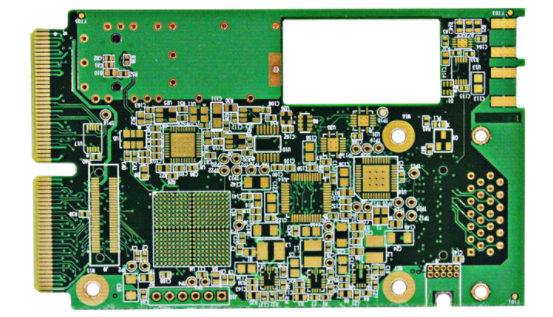
Layer count is another major factor in PCB Manufacturing Cost.
Single-sided and double-sided PCBs generally have simpler structures and fewer manufacturing steps. As the number of layers increases, additional inner-layer copper, dielectric materials, lamination processes, drilling operations, and registration requirements are introduced.
A multilayer PCB therefore requires considerably more process control than a simple two-layer board.
The quotation for a multilayer PCB may include costs associated with:
- Inner-layer fabrication
- Layer alignment and registration
- Lamination
- Additional drilling
- Plated through-holes
- Electrical testing
- Additional inspection and quality control
The actual price difference between two-, four-, six-, and higher-layer boards varies according to board size, material, copper weight, production volume, technology requirements, and manufacturer capabilities.
Therefore, layer count should be determined by circuit complexity, signal integrity, power distribution, and mechanical requirements rather than cost alone.
3. Copper Thickness: A Key Factor in PCB Cost and Performance
Copper foil is responsible for carrying electrical current throughout the PCB, making copper thickness an important technical and pricing factor.
Common copper weights include 1 oz, 2 oz, and 3 oz, corresponding approximately to 35 μm, 70 μm, and 105 μm of copper thickness before additional plating considerations.
Standard PCB quotations often use 1 oz copper as a baseline. If a design requires heavier copper, the manufacturing cost generally increases because more copper material is required and etching and plating become more challenging.
Heavier copper can be particularly useful for:
- High-current power circuits
- Power distribution networks
- Motor control boards
- Battery management systems
- Industrial power electronics
- Thermal management applications
However, increasing copper thickness is not always the best way to solve a current-carrying problem. PCB designers should also consider trace width, copper planes, thermal vias, component placement, and overall current-path optimization.
A good quotation should therefore specify the required copper thickness clearly, including whether the stated copper weight refers to base copper or finished copper.
4. Solder Mask and Silkscreen Costs
Solder mask and silkscreen are two visible elements of a PCB and can also affect the final quotation.
The solder mask protects exposed copper from oxidation and helps prevent unintended solder bridging between adjacent conductive areas. Green is the most commonly used solder mask color, while black, blue, red, white, and other colors are also available.
For standard prototype applications, changing the solder mask color may have only a limited effect on total cost. However, special colors or unusual processing requirements can increase material and production costs.
The silkscreen is used to print reference designators, polarity markings, logos, warnings, and other information onto the PCB surface.
Simple silkscreen designs are generally straightforward to manufacture. More complicated graphics, very small text, QR codes, or high-precision markings may require tighter process control.
When reviewing a PCB Quotation, make sure that special solder mask colors, silkscreen requirements, and other cosmetic specifications are clearly identified.
5. Drilling Cost: Hole Quantity, Diameter, and Precision
Drilling is another important part of PCB fabrication.
Through-holes, vias, mounting holes, and other mechanical openings are created during the drilling process. The number, diameter, aspect ratio, and positional tolerance of these holes can all influence manufacturing difficulty and cost.
Standard mechanical holes are generally easier and less expensive to process. Smaller holes and high-density via structures may require more advanced equipment and tighter process control.
Very small microvias, for example, may require laser drilling rather than conventional mechanical drilling. This adds processing complexity and can significantly affect the quotation.
Hole positional accuracy is also important. Designs with tight registration tolerances require more precise equipment, process monitoring, and inspection.
When comparing quotes, engineers should therefore look beyond the simple number of holes and consider:
- Minimum finished hole diameter
- Mechanical versus laser drilling
- Hole positional tolerance
- Aspect ratio
- Via structure
- Plated hole requirements
- Total drilling quantity
These specifications can have a significant impact on the final PCB Prototype Cost.
6. Order Quantity: How Volume Changes Unit Cost
Prototype orders are usually produced in relatively small quantities, such as 5, 10, 20, or 50 boards.
Small quantities often have a relatively high unit cost because fixed production expenses—including engineering preparation, tooling, programming, setup, and testing—must be distributed across fewer boards.
As order quantity increases, these fixed costs can be distributed across more units, reducing the average cost per PCB.
This is why the lowest unit price is not necessarily the most useful metric when evaluating a prototype quotation. For early-stage projects, a small prototype quantity may be more economical overall because it reduces inventory risk and allows engineers to validate the design before moving to larger production volumes.
For customers transitioning from prototypes to small production runs, Gopcba also offers Low-Volume PCB Assembly solutions.
7. Lead Time: The Cost of Faster Production
Production lead time can also affect the price of a PCB order.
Standard manufacturing schedules generally allow the factory to optimize production planning and combine orders efficiently. An expedited order may require production to be rearranged, additional shifts to be scheduled, or certain processes to receive priority.
As a result, expedited PCB manufacturing can carry additional charges.
When evaluating an urgent quotation, it is important to distinguish between:
- Standard production lead time
- Expedited PCB fabrication
- Weekend or holiday production
- Expedited component procurement
- Express shipping
These are different cost factors and should not be confused with the basic PCB manufacturing price.
If the project is still in the validation stage, choosing a realistic production schedule can often reduce costs without affecting development progress.
8. Testing and Inspection Costs
Testing requirements should also be considered when reviewing a PCB Prototype Price.
Depending on the application, PCB manufacturers may provide different inspection and testing methods, such as:
- Visual inspection
- Automated Optical Inspection (AOI)
- Electrical continuity testing
- Insulation testing
- Flying probe testing
- In-Circuit Test (ICT)
- Functional testing
- X-ray inspection for certain assembly applications
Not every prototype requires every test. The appropriate inspection method depends on board complexity, application risk, quantity, and customer requirements.
For a simple prototype, basic electrical testing and visual inspection may be sufficient. For safety-critical, industrial, medical, or high-reliability applications, more comprehensive testing may be justified.
The key is to match the testing strategy with the actual risk level of the product rather than paying for unnecessary inspection.
9. Surface Finish and Special Processing
Surface finish is another quotation item that should not be overlooked.
Common PCB surface finishes include HASL, lead-free HASL, ENIG, immersion tin, and other specialized finishes. The selection depends on solderability, component pitch, environmental requirements, storage requirements, and application conditions.
For example, ENIG can provide a relatively flat surface and is often selected for fine-pitch components and demanding assembly applications. However, it generally costs more than conventional HASL.
Other special manufacturing requirements may also increase the quotation, including:
- Controlled impedance
- Blind and buried vias
- HDI structures
- Edge plating
- Castellated holes
- Carbon printing
- Gold fingers
- Special materials
- Heavy copper
- Tight dimensional tolerances
These requirements should be specified clearly in the PCB fabrication documentation so that suppliers can provide accurate quotations.
10. Packaging, Shipping, and Other Additional Charges
In addition to manufacturing costs, a PCB quotation may include packaging, logistics, and other service-related charges.
Standard packaging is usually sufficient for many prototype projects. However, products that are sensitive to moisture, static electricity, contamination, or mechanical damage may require specialized packaging.
Possible additional costs include:
- ESD packaging
- Moisture-resistant packaging
- Vacuum packaging
- Special protective materials
- International shipping
- Expedited delivery
- Customs-related services
For overseas PCB buyers, shipping can represent a noticeable portion of the total landed cost. Therefore, it is better to compare the complete delivered cost rather than comparing PCB unit prices alone.
11. How to Compare PCB Quotations More Effectively
When comparing several PCB suppliers, do not focus only on the final number.
A reliable comparison should confirm whether all suppliers are quoting the same specifications, including:
- Board dimensions
- Layer count
- Material
- Board thickness
- Copper thickness
- Surface finish
- Minimum trace and spacing
- Minimum hole size
- Solder mask color
- Silkscreen requirements
- Quantity
- Testing requirements
- Production lead time
- Shipping method
A quotation that appears cheaper may actually exclude certain requirements and therefore may not represent the true project cost.
For prototype projects that also require component placement and soldering, integrating fabrication with assembly can simplify purchasing and reduce coordination between multiple suppliers. Gopcba provides Prototype PCB Assembly services for projects that need PCB assembly during the validation stage.
12. How to Reduce PCB Prototype Costs Without Sacrificing Quality
Reducing PCB cost does not necessarily mean choosing cheaper materials or lowering manufacturing standards.
A more effective approach is to optimize the design and manufacturing strategy.
Optimize the PCB Design
Avoid unnecessarily tight tolerances, extremely small holes, excessive layer counts, and overly complex structures when they are not required by the circuit.
A design that is easier to manufacture can often reduce both production cost and manufacturing risk.
Select Materials According to Application Requirements
FR-4 is sufficient for many standard electronic applications. Specialized high-frequency, high-temperature, or metal-core materials should be selected when their technical advantages are genuinely required.
Optimize Copper Usage
Use copper thickness according to actual current requirements. Increasing copper weight everywhere may unnecessarily increase cost. High-current areas can instead be optimized through wider traces, copper planes, and appropriate thermal design.
Consolidate PCB and Assembly Procurement
For projects requiring both fabrication and component assembly, using an integrated manufacturing and assembly supplier can simplify communication, logistics, quality control, and production management.
For designs using both surface-mount and through-hole components, Mixed Technology PCB Assembly can combine different assembly technologies within the same production process.
Conclusion
Understanding how a PCB quotation is calculated makes it much easier to control development and manufacturing costs.
The major factors behind a PCB Prototype Cost typically include material, layer count, copper thickness, drilling, surface finish, quantity, lead time, testing, and special processing. However, the cheapest quotation is not necessarily the most economical option.
For engineers and purchasing teams, the best approach is to compare quotations based on identical technical specifications and total project requirements. At the same time, optimizing the PCB design for manufacturability can help reduce unnecessary costs while maintaining electrical performance and product reliability.
Whether you are developing a first prototype or preparing for volume production, a transparent quotation and a capable manufacturing partner can make the transition from PCB design to finished electronic product much more efficient.