PCB Prototyping vs. Low-Volume vs. Mass Production: A Practical Manufacturing Guide
In PCB manufacturing, PCB Prototyping, low-volume production, and mass production represent different stages of product development and manufacturing. Although there is no single global quantity standard that applies to every PCB manufacturer, these production categories are commonly distinguished according to order volume, manufacturing objectives, process requirements, cost structure, and delivery expectations.
Understanding these differences is important for engineers, purchasing teams, and product developers. Selecting the appropriate production model can help control development costs, reduce manufacturing risks, improve production efficiency, and create a smoother transition from prototype validation to volume manufacturing.
For projects requiring a complete manufacturing workflow, PCB Manufacturing can cover the transition from prototype development through production, including multilayer, HDI, high-frequency, high-TG, rigid-flex, heavy-copper, and other advanced PCB technologies.
PCB Prototyping: The Validation-Focused Development Stage
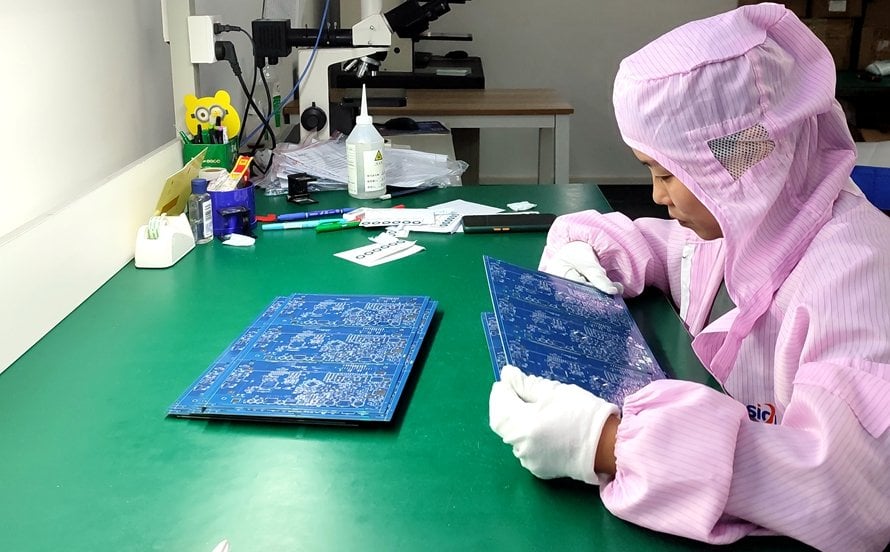
PCB Prototyping is primarily intended to verify a PCB design before it enters regular production. The key objective is not quantity, but validation.
Prototype production normally involves a relatively small number of boards. The exact quantity depends on the product, circuit complexity, manufacturing requirements, and development stage. Engineers use prototypes to verify electrical connectivity, mechanical dimensions, component placement, thermal behavior, signal integrity, and overall manufacturability.
Prototype PCBs are commonly required during the later stages of product development and before pilot or volume production. These orders often involve:
- Small quantities
- Customized specifications
- Frequent engineering changes
- Short development schedules
- High requirements for dimensional and electrical accuracy
Because the production quantity is limited, the manufacturing cost per board is generally higher than that of volume production. However, the higher unit cost is often justified because prototype manufacturing helps identify design or manufacturing problems before they become expensive production issues.
For advanced designs, engineering review and DFM analysis are particularly valuable. A professional manufacturer can review Gerber files, stack-up structures, manufacturing tolerances, and other design information before production begins. This helps identify potential manufacturing risks at an early stage.
Low-Volume PCB Production: The Bridge Between Prototype and Volume Manufacturing
Low-Volume PCB Production serves as an important transition between prototype development and mass manufacturing.
Unlike prototype production, low-volume manufacturing is not only intended to validate the design. It can also provide boards for limited market launches, field testing, customer evaluation, pilot production, specialized equipment, or early-stage commercial orders.
The production quantity is generally higher than a prototype order but lower than a typical mass-production order. There is no universal numerical threshold because the definition varies according to the PCB manufacturer, application, board complexity, and production capacity.
Low-volume manufacturing has two primary objectives.
1. Validate Production Readiness
Low-volume production provides an opportunity to verify whether the manufacturing process remains stable when the design is produced repeatedly.
Engineers and manufacturers can evaluate:
- Process stability
- Layer registration
- Lamination consistency
- Drilling accuracy
- Copper plating quality
- Surface finish
- Electrical performance
- Assembly compatibility
This stage can reveal manufacturing problems that may not become obvious when producing only a few prototype boards.
2. Support Limited Commercial Requirements
Low-volume production can also satisfy real customer demand without requiring the manufacturer to immediately commit to large-scale production.
Typical applications include:
- New product launches
- Industrial equipment
- Medical electronics
- Specialized communication equipment
- Engineering evaluation units
- Limited-market products
- Customized electronic systems
Compared with prototyping, low-volume production generally provides better unit economics while maintaining a degree of manufacturing flexibility.
For projects that also require component assembly, PCB Assembly can be integrated with PCB fabrication. This allows prototype and low-volume projects to progress from bare-board manufacturing to assembled electronic products through a coordinated manufacturing process.
Mass Production PCB: The Standardized Volume Manufacturing Stage
Mass Production PCB manufacturing focuses on standardized processes, high production efficiency, stable quality, and competitive unit costs.
At this stage, the PCB design and manufacturing parameters have normally been fully validated. The production process is therefore optimized for repeatability rather than frequent engineering changes.
Mass production typically relies on a standardized manufacturing workflow covering processes such as:
- Material preparation
- Inner-layer imaging
- Etching
- Layer alignment
- Lamination
- Mechanical and laser drilling
- Copper plating
- Outer-layer imaging and etching
- Surface finishing
- Electrical testing
- Final inspection
Large production quantities create economies of scale. Fixed manufacturing costs, engineering resources, tooling, and setup costs can be distributed across a larger number of boards, resulting in a lower average cost per PCB.
At the same time, mass production places greater emphasis on process consistency. Production parameters must remain stable throughout the manufacturing cycle to ensure that every batch meets the specified electrical, mechanical, and dimensional requirements.
Key Differences Between PCB Prototyping, Low Volume, and Mass Production
The three production models can be summarized according to their primary objectives.
PCB Prototyping
Primary objective: Design and manufacturing validation
Typical characteristics include:
- Very small quantities
- High customization
- Frequent engineering changes
- Fast development cycles
- Higher unit cost
- Strong focus on design verification
Low-Volume PCB Production
Primary objective: Pilot production and limited commercial supply
Typical characteristics include:
- Small to medium production quantities
- More stable designs
- Greater process standardization
- Moderate unit costs
- Production feasibility validation
- Flexible manufacturing requirements
Mass Production PCB
Primary objective: Large-scale commercial delivery
Typical characteristics include:
- High production quantities
- Fully validated designs
- Highly standardized processes
- Lower unit cost
- High production efficiency
- Strict batch-to-batch consistency
Why Production Quantity Is Not the Only Definition
It is important to understand that PCB production categories cannot be determined by quantity alone.
Two orders with the same quantity may require completely different manufacturing approaches depending on board complexity and application requirements.
For example, a simple two-layer PCB with a conventional FR-4 construction may be relatively straightforward to manufacture in large quantities. In contrast, a complex HDI PCB with microvias, sequential lamination, fine-line routing, and controlled impedance may require significantly more engineering and process control even when the order quantity is relatively small.
Material selection also affects the manufacturing strategy. Depending on the application, a PCB may require standard FR-4, high-TG materials, high-frequency laminates, flexible materials, rigid-flex construction, heavy copper, or other specialized materials.
For multilayer designs, material selection must be coordinated with stack-up design, dielectric thickness, copper thickness, thermal requirements, and electrical performance. A dedicated Multilayer PCB manufacturing approach can therefore be more appropriate for complex electronic products.
How the Production Process Evolves From Prototype to Mass Production
The transition from prototype to mass production is normally a gradual process rather than a single step.
Stage 1: Prototype Development
The initial prototype is manufactured to verify the basic design.
Engineers focus on:
- Electrical functionality
- Mechanical fit
- Component compatibility
- Signal integrity
- Thermal behavior
- Initial manufacturability
Design changes are relatively common during this stage.
Stage 2: Engineering Validation
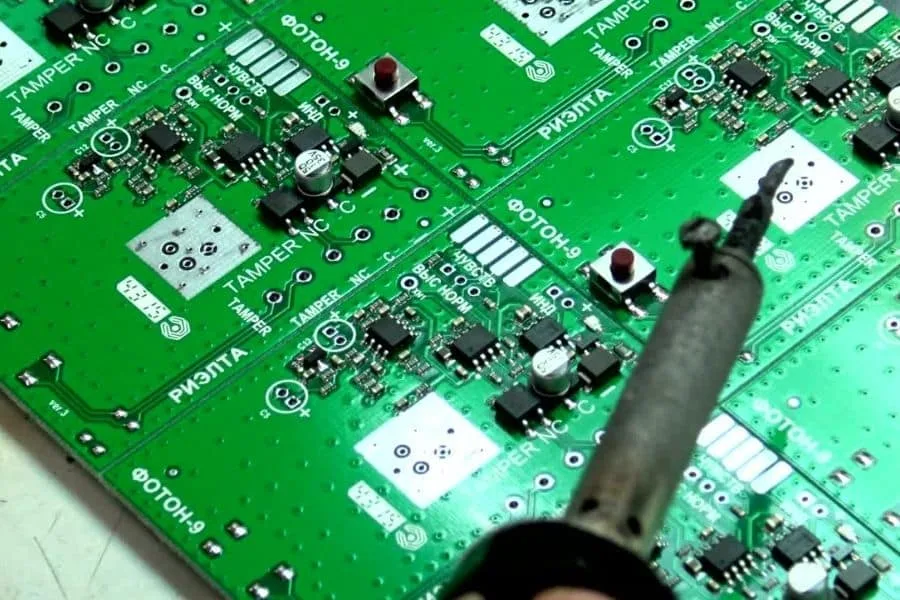
Once the basic design is confirmed, additional boards can be manufactured to verify production-related parameters.
The manufacturer may evaluate:
- Manufacturing tolerances
- Stack-up performance
- Material compatibility
- Lamination reliability
- Drilling requirements
- Surface finish
- Assembly requirements
Stage 3: Low-Volume Production
After the design becomes more stable, low-volume production can be used to confirm production consistency and support early customer or market requirements.
At this point, manufacturing processes become increasingly standardized.
Stage 4: Mass Production
After the design and process parameters have been fully validated, the product can transition into mass production.
The focus shifts toward:
- Production efficiency
- Cost optimization
- Process repeatability
- Quality consistency
- Capacity planning
- Supply-chain stability
A manufacturer capable of supporting all these stages can reduce the risks associated with transferring a PCB design between different suppliers.
How to Choose the Right PCB Production Model
The appropriate production model depends on the product’s development stage, expected demand, technical complexity, and delivery requirements.
Choose PCB Prototyping When:
- The PCB design is still being validated
- You need only a small number of boards
- Engineering changes are expected
- Electrical or mechanical performance needs verification
- The product has not yet entered commercial production
Choose Low-Volume PCB Production When:
- The design has already passed initial validation
- You need boards for pilot production
- Customer testing is required
- Market demand is still uncertain
- You need limited commercial quantities
- You want to validate production stability before scaling
Choose Mass Production When:
- The PCB design is fully validated
- Demand is relatively predictable
- Manufacturing parameters are established
- Large quantities are required
- Unit cost optimization is important
- Long-term supply stability is required
PCB Prototyping and Assembly Should Be Considered Together
For many electronic products, manufacturing the bare PCB is only one part of the development process.
Once the PCB is fabricated, components must be installed through SMT, through-hole, or mixed-technology assembly. Therefore, prototype development should consider the complete manufacturing workflow rather than evaluating PCB fabrication independently.
A manufacturing partner with integrated PCB Assembly capabilities can support prototype, low-volume, and mass-production requirements while also providing engineering services such as DFM review, BOM verification, component sourcing, and manufacturing documentation review.
This integrated approach can reduce communication gaps between PCB fabrication and assembly and make it easier to transition from engineering samples to production units.
The Importance of Selecting the Right PCB Manufacturing Partner
Choosing a suitable PCB Manufacturing partner is particularly important when a project is expected to move through multiple production stages.
A capable supplier should ideally provide:
- PCB prototyping
- Low-volume production
- Mass production
- Multilayer PCB manufacturing
- HDI PCB manufacturing
- High-frequency PCB manufacturing
- Rigid-flex PCB manufacturing
- Controlled-impedance PCB manufacturing
- DFM engineering support
- Electrical testing
- PCB assembly
GOPCBA’s published manufacturing capabilities cover prototype development through volume production, including multilayer, HDI, high-frequency, high-TG, rigid-flex, heavy-copper, metal-core, and controlled-impedance PCB technologies.
For projects requiring compact or mechanically flexible circuit structures, Rigid-Flex PCB technology can combine rigid sections with flexible interconnections and reduce the need for separate cables or connectors. This can be particularly useful in space-constrained electronic systems.
What to Confirm Before Production
These are the process and quality details worth confirming before release.
- PCB Prototyping: The Validation-Focused Development Stage: confirm the requirements, process settings and inspection records at first-article approval.
- Mass Production PCB: The Standardized Volume Manufacturing Stage: record the agreed limits and verify them again in the production lot.
- Why Production Quantity Is Not the Only Definition: check the drawing, process sheet and inspection plan before release.
- How the Production Process Evolves From Prototype to Mass Production: treat this as a repeat-order checkpoint and keep the result with the lot record.
- How to Choose the Right PCB Production Model: review the production data and close any deviation before the next build.
- PCB Prototyping and Assembly Should Be Considered Together: confirm the requirements, process settings and inspection records at first-article approval.
- The Importance of Selecting the Right PCB Manufacturing Partner: record the agreed limits and verify them again in the production lot.
Conclusion
PCB prototyping, low-volume production, and mass production are not simply different quantity levels. They represent different manufacturing objectives and stages in the product development lifecycle.
PCB Prototyping focuses on design verification and engineering validation. Low-Volume PCB Production bridges development and commercial manufacturing by validating production stability while supporting limited demand. Mass Production PCB focuses on standardized processes, high efficiency, consistent quality, and competitive unit costs.
The most effective production strategy is therefore to select the manufacturing model according to the actual development stage rather than relying solely on order quantity.
For companies developing new electronic products, working with a manufacturer capable of supporting the complete path from prototype to production can simplify supplier management, reduce manufacturing-transfer risks, and provide a more consistent transition from engineering validation to long-term volume production.