Special Lamination Process for Rigid-Flex PCBs
A Rigid-Flex PCB combines the mechanical stability of rigid circuit board sections with the flexibility of flexible circuit sections. This unique structure allows electronic designers to integrate rigid mounting areas and flexible interconnection areas into a single circuit board.
Compared with conventional rigid PCBs or flexible PCBs, rigid-flex boards require a more sophisticated manufacturing process because different materials must work together while maintaining dimensional stability, bonding strength, flexibility, and electrical performance.
Among all manufacturing stages, Rigid-Flex PCB Lamination is particularly important. The lamination process determines how effectively rigid and flexible sections are integrated and directly influences board flatness, layer adhesion, mechanical reliability, dimensional accuracy, and long-term service life.
A properly controlled PCB Lamination Process must account for differences in material thickness, thermal expansion, flexibility, moisture absorption, adhesive characteristics, and curing behavior. For this reason, rigid-flex lamination requires careful engineering preparation and precise process control.
Why Rigid-Flex PCB Lamination Requires Special Process Control
The fundamental challenge of rigid-flex lamination is the combination of materials with different physical and thermal characteristics.
Rigid sections commonly use FR-4 or other rigid laminate materials, while flexible sections typically use polyimide-based materials and flexible copper structures. These materials differ significantly in stiffness, coefficient of thermal expansion, thickness, moisture behavior, and thermal resistance.
During lamination, these differences can create internal mechanical stress. If temperature, pressure, bonding materials, or cooling conditions are not properly controlled, manufacturing defects may occur.
Typical defects include:
- Layer delamination
- Voids and air bubbles
- Board warpage
- Dimensional shift
- Resin overflow
- Poor bonding strength
- Flexible-area deformation
- Registration problems
- Cracking caused by excessive mechanical stress
Therefore, successful Rigid-Flex PCB Manufacturing depends on matching the materials and lamination parameters to the specific board structure.
For projects requiring integrated rigid and flexible circuit structures, GOPCBA provides dedicated Rigid-Flex PCB Manufacturing capabilities covering engineering review, material selection, fabrication, inspection, and assembly.
Pre-Lamination Preparation: Establishing a Reliable Foundation
Before the actual lamination process begins, all materials must be properly prepared. The quality of this preparation directly affects lamination yield and final board reliability.
Surface Cleaning and Preparation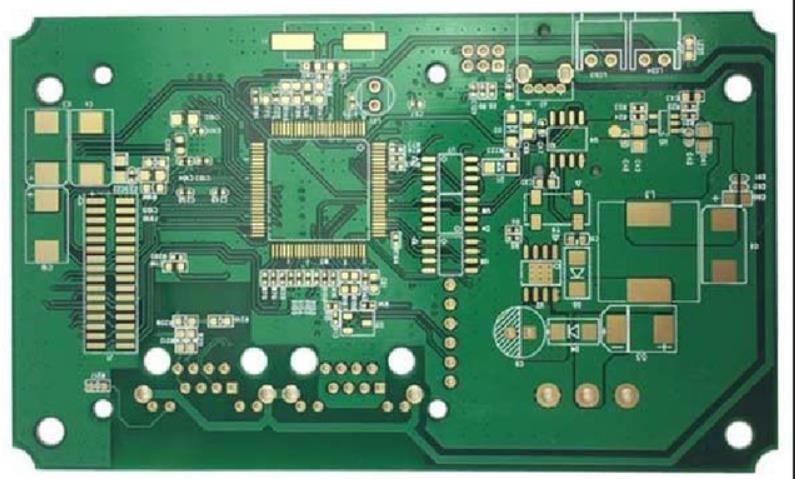
Rigid and flexible materials must be cleaned to remove dust, oil, oxidation, and other contaminants.
For rigid materials, appropriate surface treatment can improve bonding between copper, dielectric layers, and bonding materials.
Flexible materials require additional attention because contamination or surface damage can affect adhesive bonding and flexible-area reliability.
The preparation process should be carefully controlled to avoid introducing scratches, contamination, or excessive mechanical stress into the flexible sections.
Moisture Control
Moisture management is another important factor in rigid-flex lamination.
Flexible substrates, particularly polyimide-based materials, can absorb moisture during storage and handling. If moisture remains inside the material during heating, it may turn into vapor during lamination and create internal voids or bubbles.
Therefore, appropriate drying and material storage procedures should be implemented before lamination.
Dimensional Alignment
Rigid and flexible materials should also be checked for dimensional consistency before stacking.
Accurate registration is especially important for multilayer rigid-flex boards because small alignment errors can affect:
- Via positioning
- Layer-to-layer registration
- Component placement
- Flexible-section geometry
- Mechanical assembly
Proper pre-lamination inspection helps minimize dimensional variation before the materials enter the press.
Selecting Materials for Rigid-Flex Lamination
Material selection is one of the most important stages of Rigid-Flex PCB Lamination.
Different materials must be compatible with each other in terms of thermal behavior, mechanical properties, chemical resistance, and bonding characteristics.
Rigid PCB Materials
FR-4 is commonly used in rigid sections because of its mechanical stability, electrical insulation properties, and manufacturing compatibility.
Depending on the application, high-Tg materials may be selected when higher thermal resistance is required.
Flexible PCB Materials
Flexible sections commonly use polyimide-based materials because they provide good flexibility, thermal resistance, and dimensional stability.
The selection of Flexible PCB Materials should consider:
- Required bending radius
- Static or dynamic bending
- Operating temperature
- Copper thickness
- Layer count
- Mechanical stress
- Chemical environment
- Electrical requirements
For high-reliability applications, the flexible material must be selected together with the adhesive, coverlay, copper, and rigid laminate system rather than evaluated independently.
GOPCBA’s PCB Manufacturing Services cover rigid, flexible, rigid-flex, HDI, multilayer, high-frequency, heavy-copper, and other specialized PCB technologies.
Bonding Material Selection
Bonding materials are responsible for creating a stable connection between different sections of the rigid-flex structure.
Modified epoxy-based adhesive systems and specialized bonding films may be used depending on the board structure and material combination.
The bonding material should provide:
- Strong adhesion
- Suitable curing characteristics
- Thermal stability
- Chemical resistance
- Dimensional stability
- Compatibility with rigid and flexible substrates
The curing temperature and curing time must be compatible with the thermal limits of the flexible materials.
If the curing temperature is excessively high, flexible materials may experience unnecessary thermal stress or dimensional changes. Conversely, insufficient temperature or curing time can result in inadequate bonding strength.
The adhesive thickness is also important. It should be matched to the thickness differences between rigid and flexible sections to prevent excessive resin accumulation, local protrusions, or depressions after lamination.
Controlling Temperature During the Lamination Process
Temperature is one of the most important parameters in the PCB Lamination Process.
A controlled temperature profile is normally required rather than rapidly heating the entire stack to the final curing temperature.
Gradual Heating
A gradual heating profile allows the bonding material to soften and flow progressively.
This helps the material fill microscopic gaps between layers while allowing trapped air and moisture to escape.
Rapid temperature increases can create uneven thermal expansion and increase internal stress, particularly when rigid and flexible materials have significantly different thermal expansion characteristics.
Controlled Curing
Once the required lamination temperature is reached, the structure must remain within the appropriate temperature range for sufficient time to allow the bonding material to cure properly.
The exact temperature and time depend on:
- Laminate type
- Flexible substrate
- Adhesive system
- Board thickness
- Layer structure
- Copper distribution
- Manufacturing specifications
The process should therefore be established according to the material supplier’s recommended curing profile and the specific PCB stack-up.
GOPCBA’s published PCB Capabilities cover a wide range of multilayer, HDI, rigid-flex, high-TG, high-frequency, heavy-copper, and other advanced PCB manufacturing technologies.
Pressure Control During Rigid-Flex Lamination
Pressure is another critical parameter.
Applying excessive pressure too early may cause bonding material to flow into areas where it is not required. It can also place unnecessary mechanical stress on flexible sections.
A controlled pressure profile is therefore preferable.
Initial Pressure
During the early stage of lamination, a relatively controlled pressure level can allow air and moisture to escape while the bonding material begins to soften.
Progressive Pressure
As the bonding material becomes more fluid, pressure can be increased to bring the layers into close contact.
This helps improve bonding quality and reduce internal voids.
Final Pressure
During the final curing stage, stable pressure helps maintain the designed stack-up and minimize layer movement.
The appropriate pressure depends on the board structure, material combination, panel size, and adhesive system.
Vacuum Lamination for Improved Reliability
Vacuum lamination can be particularly valuable for complex rigid-flex structures.
By removing air and moisture from the lamination environment, vacuum processing can reduce the risk of trapped air and internal voids.
This is especially useful when the board contains:
- Multiple rigid and flexible sections
- Fine-pitch structures
- Complex layer transitions
- Thin dielectric materials
- High-density interconnections
- Large flexible areas
A properly controlled vacuum environment, combined with an appropriate temperature and pressure profile, can improve the consistency of the laminated structure.
Cooling and Post-Lamination Treatment
Lamination does not end when the curing temperature is reached.
The cooling stage is also important because rigid and flexible materials contract at different rates as temperature decreases.
Controlled Cooling
Rapid cooling can increase internal thermal stress and potentially cause:
- Warpage
- Layer separation
- Dimensional deformation
- Internal stress concentration
A controlled cooling process allows the laminated structure to stabilize gradually.
Edge Trimming
After cooling, excess bonding material and unwanted material around the panel edges can be removed.
Edge trimming should maintain the specified board dimensions without damaging flexible sections.
Surface Inspection
The laminated board should then be inspected for visible defects such as:
- Bubbles
- Delamination
- Surface deformation
- Resin overflow
- Misalignment
- Scratches
- Warpage
Additional inspection methods may be required for high-reliability or complex rigid-flex structures.
Quality Control After Lamination
Quality control should cover both dimensional and structural characteristics.
Depending on the application and board design, inspection may include:
- Visual inspection
- Dimensional inspection
- Layer registration inspection
- Cross-section analysis
- Copper thickness measurement
- Electrical testing
- AOI inspection
- X-ray inspection
- Adhesion evaluation
- Final reliability testing
For rigid-flex products, inspection should pay particular attention to the transition between rigid and flexible sections because this area is subject to different mechanical and thermal stresses.
GOPCBA also provides PCBA Capabilities for projects requiring PCB assembly, including rigid, flexible, and rigid-flex PCB assembly, SMT, through-hole assembly, inspection, and testing.
Common Problems in Rigid-Flex Lamination
Even when the basic lamination process is correctly established, several manufacturing problems may occur if process parameters are not properly controlled.
Delamination
Delamination can result from inadequate surface preparation, insufficient curing, contamination, excessive moisture, or incompatible material combinations.
Air Bubbles and Voids
Voids are commonly associated with trapped air, moisture, insufficient vacuum, or inappropriate pressure and temperature profiles.
Warpage
Warpage may be caused by uneven copper distribution, different thermal expansion coefficients, asymmetric structures, or uncontrolled cooling.
Dimensional Shift
Registration problems can occur when different materials expand or contract differently during heating and cooling.
Flexible-Area Damage
The flexible section can be damaged by excessive pressure, inappropriate handling, insufficient bend-radius design, or improper material selection.
Early engineering analysis can significantly reduce these risks.
How to Improve Rigid-Flex PCB Lamination Reliability
A reliable lamination process should be considered from the design stage rather than only during manufacturing.
Optimize the Stack-Up
The layer stack-up should balance electrical performance, mechanical flexibility, thermal behavior, and manufacturability.
Match Materials Carefully
Rigid laminates, flexible substrates, copper foils, bonding films, coverlays, and other materials should be selected as a compatible system.
Control Copper Distribution
Uneven copper distribution can contribute to thermal imbalance and board warpage. Designers should therefore consider copper balance across the board.
Define the Flexible Region Clearly
The flexible region should be protected from unnecessary mechanical stress. Bend radius, copper geometry, layer count, and component placement must be considered during design.
Perform DFM Review Before Production
A manufacturing review can identify potential issues involving:
- Layer registration
- Material compatibility
- Flexible-section geometry
- Via placement
- Bend radius
- Copper distribution
- Lamination thickness
- Manufacturing tolerances
This can reduce redesigns and improve production yield.
Future Trends in Rigid-Flex PCB Manufacturing
As electronic products become smaller, lighter, and more integrated, rigid-flex technology is becoming increasingly important.
Future development is expected to focus on:
- Thinner rigid-flex structures
- Higher interconnection density
- Improved flexible materials
- Better thermal performance
- Automated process monitoring
- More accurate registration
- Advanced inspection technologies
- Higher manufacturing consistency
Rigid-flex boards are particularly suitable for applications where conventional cables and connectors occupy too much space.
Potential applications include:
- Medical devices
- Automotive electronics
- Aerospace systems
- Industrial automation
- Wearable electronics
- Communication equipment
- Cameras
- Portable electronic products
- Robotics
Production Review Points
The points below collect the practical checks covered in this guide.
- Why Rigid-Flex PCB Lamination Requires Special Process Control: check the drawing, process sheet and inspection plan before release.
- Pre-Lamination Preparation: Establishing a Reliable Foundation: treat this as a repeat-order checkpoint and keep the result with the lot record.
- Selecting Materials for Rigid-Flex Lamination: review the production data and close any deviation before the next build.
- Bonding Material Selection: confirm the requirements, process settings and inspection records at first-article approval.
- Controlling Temperature During the Lamination Process: record the agreed limits and verify them again in the production lot.
- Pressure Control During Rigid-Flex Lamination: check the drawing, process sheet and inspection plan before release.
- Vacuum Lamination for Improved Reliability: treat this as a repeat-order checkpoint and keep the result with the lot record.
- Cooling and Post-Lamination Treatment: review the production data and close any deviation before the next build.
Conclusion
The lamination process is one of the most important manufacturing stages for rigid-flex circuit boards. Because rigid and flexible materials have different mechanical and thermal characteristics, the process requires careful control of material preparation, bonding materials, temperature, pressure, vacuum conditions, curing, cooling, and inspection.
A well-controlled Rigid-Flex PCB Lamination process can help improve dimensional stability, bonding strength, mechanical reliability, and long-term electrical performance.
For manufacturers and engineers, successful Rigid-Flex PCB Manufacturing begins with appropriate material selection and stack-up design and continues through precise lamination and comprehensive quality control.
As electronic systems continue to become smaller and more complex, rigid-flex technology provides an effective way to integrate flexible interconnections with rigid component-mounting areas while reducing cables, connectors, and assembly complexity.