PCB Routing vs V-Scoring vs Die Cutting: Choosing a Profile Method
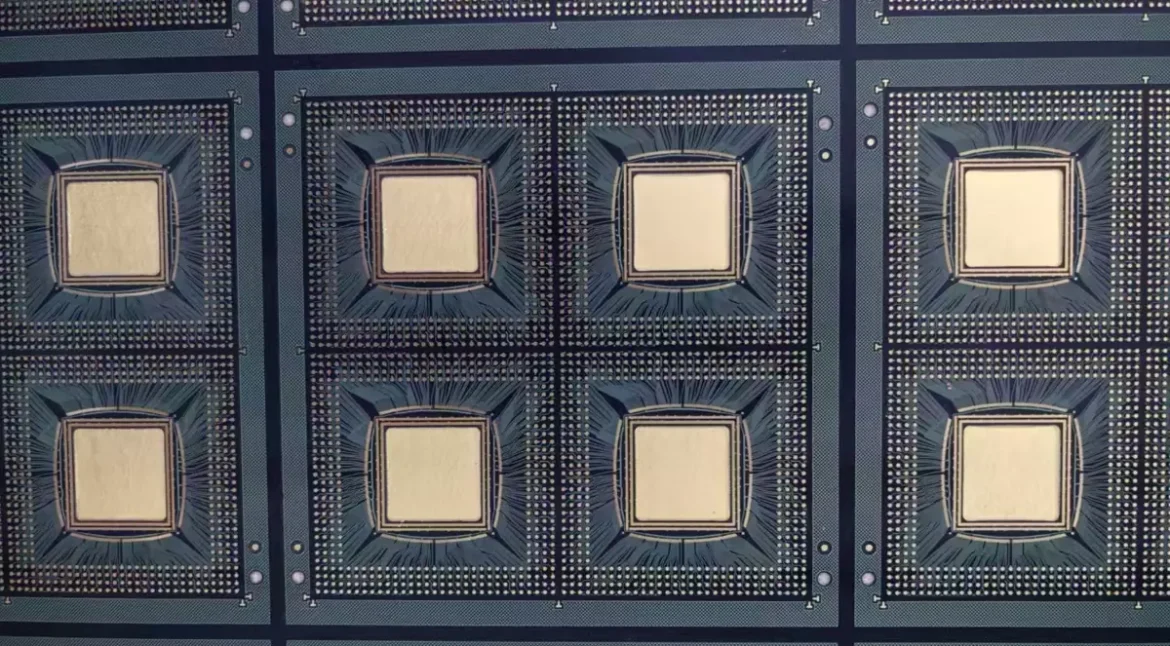
Every board leaves the factory inside a panel, and the way it is separated from that panel determines the edge quality, the tooling cost and how much stress the components see. The three production methods in common use are routing with a CNC spindle, V-scoring with a scoring blade and die cutting with a hardened punch. Each is the right answer for a particular combination of outline shape, volume and tolerance, and choosing badly is expensive in a way that only shows up after assembly.
What PCB Routing Does
PCB routing cuts the outline with a small carbide cutter following a programmed path, so it can follow any contour the designer draws. Curves, internal cut-outs, slots and irregular shapes are all produced on the same machine without new tooling, which is why routing dominates prototyping and small production runs. Boards are normally held in a panel by narrow tabs or by a row of small perforations known as mouse bites, and snapped out after assembly.
The trade is speed and cost per unit. The spindle moves along every millimetre of the outline, so cycle time scales with perimeter length rather than with quantity, and a panel of many small boards takes proportionally longer than a panel of a few large ones. Cutting debris has to be extracted, and the cutter wears, which is reflected in the per-panel price.
What V-Scoring Does
V-scoring runs a blade with a V-shaped profile along both faces of the panel, leaving a thin web of material in the centre. The boards remain rigidly connected through fabrication, assembly and test, then break apart along the score line with a light bending force. Because the blade travels in a straight line at high speed, scoring is the cheapest method per board once the panel is set up.
Its limits are geometric. Score lines must run edge to edge in a straight line, so any outline that curves, steps or needs an internal cut-out is out of scope, and the method depends on a consistent board thickness, typically between 0.8 and 3.2 mm. Components must also be kept clear of the score line, because the bending force travels a short distance into the board and a part placed too close can be cracked.
What Die Cutting Does
Die cutting punches the outline with a hardened steel tool in a press, one stroke per panel. Unit cost falls to the lowest of the three at high volume, cycle time is measured in fractions of a second and repeatability from panel to panel is excellent. It is the classic method for a stable, high volume design with a simple outline and no changes expected.
The barrier is the tool. A punch die costs hundreds to thousands of dollars and takes time to make, so the method only becomes economical once the volume amortises it. Any design change after the die is cut means a new tool, and the punching force imposes its own limits: thin laminates can distort, and brittle or very dense boards may crack rather than shear cleanly.
Comparing the Three Methods
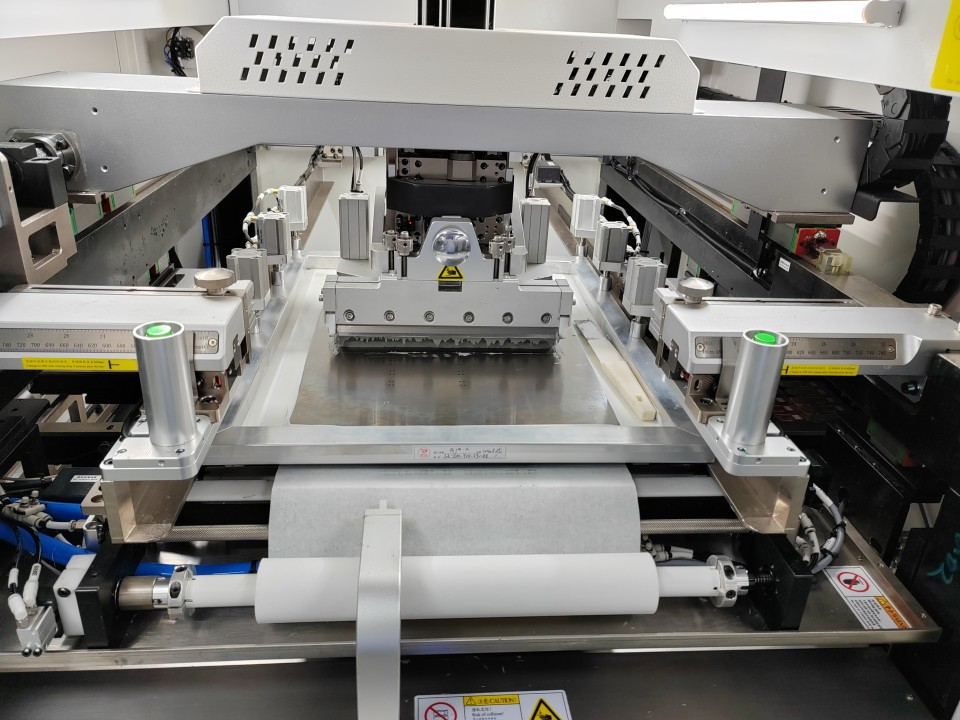
Routing gives the highest accuracy and the greatest design freedom, at the highest cost per board and the slowest cycle time. V-scoring gives a clean straight edge at very low cost with no tooling charge, but only for rectangular boards. Die cutting gives the lowest unit cost at volume with the shortest cycle time, at the price of a tool and almost no tolerance for change.
Edge quality is often the deciding factor in practice. A scored edge is smooth and flush; a routed edge is smooth but leaves a small radius from the cutter; a punched edge follows the tool and can show a slight burr or a shear mark that depends on tool wear. Where the edge is visible in the finished product, that difference matters. Where the board sits inside a housing, it usually does not.
Cost Structure at Different Volumes
At prototype quantities routing is effectively free of tooling and is priced per panel, so it is almost always the choice. Scoring adds nothing to the tooling bill either, but it needs a panel designed around straight score lines, and it becomes cheaper than routing as soon as the volume justifies the setup. Both methods fall into the same order of magnitude per board at moderate volumes.
Die cutting inverts the relationship. The tool is a fixed cost that dwarfs everything else at low volume, and a negligible one at high volume, so the decision turns on whether the design will stay fixed long enough to consume it. A design that is revised twice a year will never repay a punch die. A design that ships unchanged for three years usually will.
Design Rules for Each Method
For routing, keep internal corners rounded rather than sharp, because a cutter leaves a radius and a square corner has to be finished by hand or will concentrate stress. Leave enough web between adjacent boards for the cutter to pass, place mouse bites so that the remaining tab can be broken without tearing pads, and follow the usual outline and mounting practice for keep-out around the edge.
For scoring, keep every score line straight and parallel, hold the board thickness within the range the blade supports, and keep components and vias a defined distance from the line. For punching, simplify the outline as far as the product allows, avoid narrow necks that the tool cannot support, and account for the die tolerance in the outline dimensions rather than assuming a nominal cut. Slot geometry follows the same constraints, as set out in slot and edge routing rules.

Sources of Depaneling Damage
Most separation defects come from bending rather than cutting. A scored board broken by hand flexes the whole panel, and solder joints near the score line absorb the strain; the fix is a proper depaneling tool that supports the board on both sides of the line. Routed tabs have the same issue, which is why the tab is placed where the flexing does least harm and why the board is supported during snap-out.
The second source is debris. Routing leaves dust and fibre fragments that can lodge under a component or bridge a fine pitch pad, so panels are cleaned after depaneling rather than before. Where the assembly is dense, depaneling is often deferred until after reflow so the process can be handled on a rigid panel, at the cost of exposing the finished joints to the separation stress. Placement defects and their causes are described in component placement defects.
Selecting a Method
Start with the outline. If it is not a rectangle with straight edges all the way across, routing is the only option among the three, regardless of volume. If it is a rectangle, compare volume and expected design stability: scoring wins below the die cutting break-even point, and punching wins above it.
Then check the assembly. A design headed for an automated line benefits from the rigidity of a scored panel, while a dense board with parts close to the edge may prefer routing for the smaller separation stress even at a higher unit price. The decision is usually economic once those two filters have been applied, and it is worth revisiting whenever the annual volume changes by an order of magnitude, because the break-even point moves with it.
FAQ
Can V-scoring be used on a board with a curved outline? No. The blade travels in a straight line, so any curve, step or internal cut-out rules the method out. Those outlines are routed instead.
At what volume does die cutting become worthwhile? It depends on the tool cost and the board price, but the tool usually needs tens of thousands of boards to amortise. Below that, scoring and routing are cheaper overall even at a higher unit price.
Does depaneling stress really damage components? Yes, particularly with multilayer ceramic capacitors and large chip parts near the break line. Supporting the board during separation and keeping components clear of the line removes most of the risk.