PCB Solder Mask Color: Process and Inspection Effects
The color of a printed circuit board is the color of its solder mask, and it is the first thing anyone notices and the last thing that determines how the board performs. Green dominates for reasons that are almost entirely about process and inspection rather than electrical behavior, and the boards that use black, white, or blue usually do so for product identity rather than for any technical advantage. Understanding what solder mask color does and does not change makes it possible to choose deliberately.
What the Solder Mask Actually Does
The mask has two jobs. It keeps solder away from areas that should not be wetted, which prevents bridges between closely spaced pads during assembly. And it protects the copper beneath from oxidation and contamination, extending the life of the finished assembly. Its color is a pigment choice within those constraints, not a functional parameter.
Why Green Dominates
A green solder mask has been in production longer than any other color, so its process parameters are the best understood and its yield is the highest. That alone would keep it dominant, but three practical advantages reinforce it.
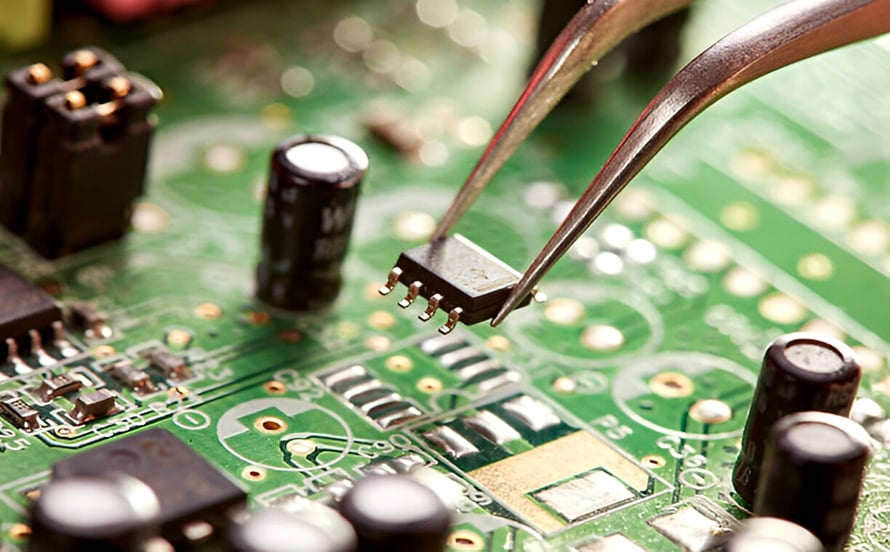
The first is optical contrast for automated equipment. Assembly lines locate fiducials, pads, and parts using machine vision, and the contrast between a green mask and the copper or the silver finish is well matched to the illumination and filtering used in those systems. Alternative colors, particularly dark ones, reduce that contrast and can force slower or less reliable vision performance, which is the practical meaning of AOI contrast.
The second is inspection ergonomics. Where human operators still examine boards under bright light, green is the least tiring of the common colors, and the copper features remain easy to trace by eye. That matters more on dense boards, where finding a single suspicious trace can take minutes.
The third is imaging behaviour during fabrication. Board shops expose and develop solder mask under the same kind of light used for imaging, and green ink responds best in that environment.
What Dark Colors Change
Black mask is the most common alternative and the most problematic. Two pigments are typically involved, and some formulations introduce a slight conductivity if the ink is not fully cured, which is a process risk rather than an inherent property. The more consistent problem is inspection: a black board makes fine traces difficult to follow visually, which lengthens fault-finding during bring-up and repair. Black ink is also less forgiving of small process variations, and color variation between lots is easier to see.
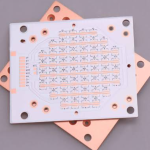
White mask exists largely because lighting products need a reflective surface. Blue and red are chosen for product identity. Purple and other colors are used to mark prototype or development builds, and some manufacturers use color to distinguish board revisions internally, which is a sensible use of the property.
What Color Does Not Change
Ink color has no meaningful effect on electrical performance. It does not change impedance, it does not change the dielectric behaviour of the laminate, and it does not affect signal integrity. What does affect impedance control is the thickness of the mask over the traces, because a coating with a different dielectric constant sitting on a microstrip changes the effective geometry. That sensitivity is real and applies to every color equally; it is one reason ink thickness has to be controlled on impedance-controlled boards, especially where an immersion finish is used and the thickness tolerance is tight.
Process capability is the other variable. Different pigments disperse differently in the resin, so some colors are easier to hold to a thickness target than others. Red and yellow inks tend to expose more consistently, white is the hardest to control, and formulations with poor pigment dispersion can produce bubbles or visible color variation. That is a manufacturing difficulty rather than a performance difference, but it shows up in yield and therefore in price.
Mask Thickness and Process Control
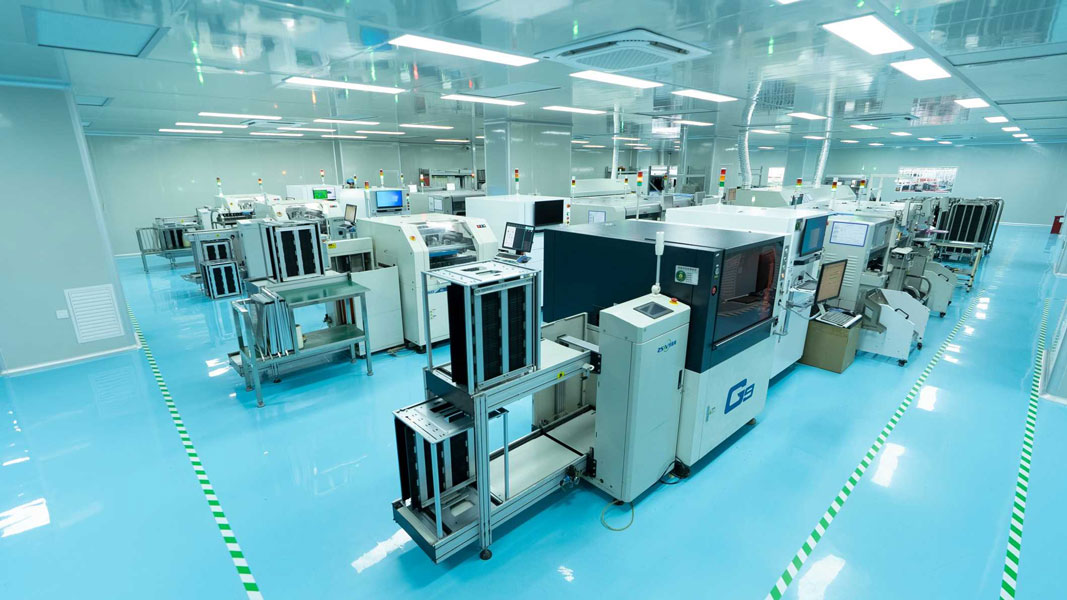
Thickness matters more than color. The ink has to cover the trace without being so thick that it flows onto pads or traps solvent that outgasses later. It is applied by screen printing, spray, or curtain coating depending on the shop and the volume, and each method has its own thickness distribution across the panel. On impedance-controlled boards the target is agreed between the laminate supplier and the fabricator, because the mask contributes to the effective dielectric constant of the outer layer.
The ink itself has to hold a stable viscosity through the print, which is a property of its thixotropy, and that behaviour is what the solder mask ink thixotropy discussion covers. Where the mask is used to define pad openings, the pad design standards set the clearance that keeps ink off the copper that has to be soldered.
Choosing a Color
The decision is straightforward once the priorities are separated. If the board will be inspected by automated equipment in volume and the product has no reason to prefer another color, use green. If the product is an LED lamp, the reflective properties of white matter and justify the harder control. If the color is part of the product identity, accept that inspection and troubleshooting will be slightly harder and that some shops will quote a premium.
What should not drive the choice is the assumption that color indicates quality. A black board is not more durable than a green one, and a green board is not inherently better made. Color is a specification, not a grade, and the quality characteristics that actually matter trace back to copper geometry, plating, and process control.
Color Choice and Rework
Mask color also shapes how a board behaves during rework. A black or matte finish absorbs more of the laser energy used by fiducial and depanel systems, so machine parameters tuned for green often need re-teaching before a dark run begins. Hand rework shows the same trend in reverse: under a bench microscope, the low contrast of a black surface makes a lifted pad and a good joint look alike, so operators lean on magnification and side lighting rather than color alone. Repair of a damaged mask is another factor. Touch-up ink rarely matches the original shade, and the mismatch is far more visible on a dark board than on a green one, which matters when a customer inspects cosmetic quality after a field return. None of this changes the electrical behavior of the circuit, but it does change the amount of training, lighting, and documentation a line needs before it can run a new color at the same yield as the shade it knows best.
FAQ
Does solder mask color affect electrical performance? No. Impedance and signal behaviour depend on the laminate, the copper geometry, and the mask thickness, not on the pigment.
Why is green used so widely? Its process is the most mature, it gives the best contrast for automated optical inspection, and it is the easiest color for operators to examine under bright light.
Is black mask inferior? Not electrically. It is harder to inspect, harder to control consistently, and can show a slight conductivity if the ink is under-cured, which is a process control issue.
Does mask thickness matter more than color? On an impedance-controlled board, yes. Thickness changes the effective dielectric behaviour of the outer layer, and it is specified and controlled accordingly.