



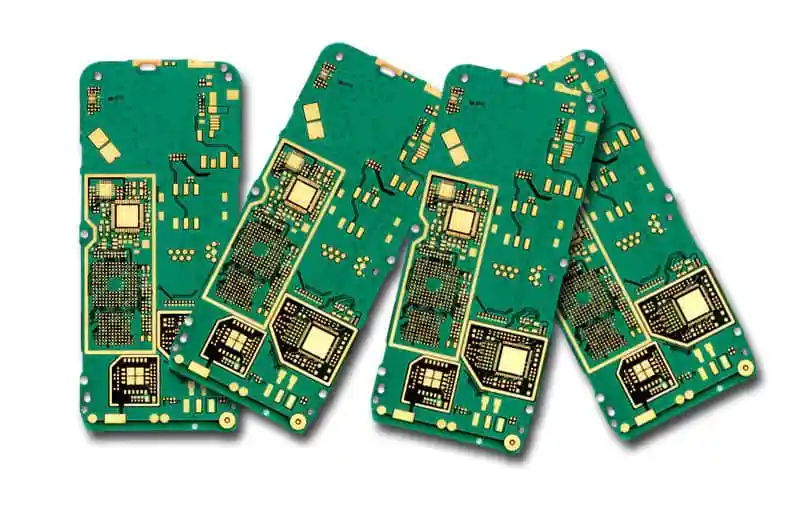
PCB Design Quality: The Characteristics That Matter
Two boards can satisfy the same schematic and behave completely differently in the field. The difference is design quality, and it is not a single property but a set of them, each of which can be assessed before the board is built. The characteristics below are the ones worth checking on every design, and they map closely to the reasons boards fail.
Electrical Performance Achieved Deliberately
The first characteristic is that the electrical requirements are met by design rather than by luck. Trace widths follow from the current they must carry and the impedance they must present. Spacing follows from the crosstalk that can be tolerated. Reference planes are continuous beneath the fast nets. And where the design carries a high-current path, the copper is sized for the current rather than inherited from a default width.
High-frequency nets receive different treatment from slow ones. A microstrip or stripline structure with a defined impedance, terminated appropriately at the source or the load, behaves predictably. The same net routed as an arbitrary trace with no reference beneath it does not, and the difference appears as reflections and emissions rather than as an obvious malfunction.

Manufacturability
The second characteristic is that the board can be built without argument. Component placement is arranged so that every part can be placed and soldered by the intended process. Pad sizes suit the components they carry, without being so small that bridging or insufficient solder becomes likely. Via dimensions are within the drilling and plating capability of the supplier. And the panel construction has been agreed rather than assumed.
Manufacturability is also a matter of communication. A design that has been reviewed against the fabricator”s published capability is different from one that has not, and the difference is usually visible in the fabrication notes and the drawing. Where a design pushes a process limit deliberately, that intent should be recorded so the fabricator knows it is intentional rather than accidental.
Mechanical Structure
The third characteristic is a board that survives its environment. The base material and thickness are chosen for the application, with FR-4 adequate for most products and aluminium or polyimide used where heat or flexibility demands it. Mounting holes are placed so their keepout regions are respected on every layer, and their positions avoid concentrating stress.
Component placement affects mechanical reliability as well. A board whose heavy parts are clustered on one side will bow, and the bowing stresses the solder joints of every part on the board. Distributing mass and supporting the board in fixtures during assembly addresses the same problem from the process side. The design constraints that mounting features impose are described in this article on board outline and mounting design.

Thermal Design
The fourth characteristic is that heat has somewhere to go. Components that dissipate power need a path to a larger copper area, to the other side of the board through thermal vias, or to a heatsink. The path is a design decision taken at layout time: a device whose thermal pad is connected to a small isolated island of copper will run hot regardless of the ambient conditions.
Thermal design also interacts with the surrounding components. A temperature-sensitive part placed next to a power device inherits its temperature rise, and an electrolytic capacitor placed near a hot component will age faster than its rating suggests. Grouping heat sources and keeping the sensitive parts away from them is a free improvement.
Testability
The fifth characteristic is that the board can be verified and, when it fails, diagnosed. Testability means that every net that must be probed is accessible, that probe clearance is available, and that the test method matches the volume. A prototype may be tested with a flying probe, while a production board needs a fixture, and the fixture needs access features designed in from the beginning.
Diagnostic access is the other half. A board with no test points can be tested but not diagnosed, and every failure becomes a scrap decision. Where a product will be produced in volume, the cost of the access features is almost always lower than the value of the boards they save.
Manufacturing Yield and Consistency
`r`n
A seventh characteristic, closely related to manufacturability, is consistency. A design that builds successfully once but produces a wide spread of results across a panel is not a good design, because the yield will fall as volume rises and the failures will be difficult to explain. Consistency comes from staying comfortably inside the process window rather than at its edge, and from avoiding features that depend on the interaction of two tight tolerances.
`r`n
The most common sources of inconsistency are marginal clearances, pads sized to the fabricator minimum, and thermal reliefs that are too narrow. Each of them works when the process is centred and fails when it drifts, and drift is a normal characteristic of any manufacturing line. Designing with margin converts a variable outcome into a predictable one, and it is the cheapest form of yield improvement available to a designer.
`r`n
Documentation and Review
The final characteristic is that the design can be understood by someone who did not create it. That means a current schematic, a layout that reflects the released version, fabrication and assembly drawings, a bill of materials with approved alternatives, and a record of any deliberate departures from standard practice. Documentation is what makes a design maintainable, and maintainability is what makes the second and third revisions cheaper than the first. A design that only its author can interpret is a design that will be redrawn rather than improved.
Review is the mechanism that makes all of these characteristics real. A checklist applied progressively, as described in this discussion of multilayer design rules, catches problems while they are still cheap to fix, and the same discipline applies to the manufacturing outputs, whose requirements are set out in this article on multilayer prototype requirements.
A design that satisfies the six characteristics above is not necessarily elegant, but it will be buildable, testable and reliable. Those three properties account for most of the difference between a product that reaches the market on schedule and one that does not.
FAQ
What matters more, electrical performance or manufacturability? Both are required, and neither can be traded away. A design that performs correctly but cannot be built at the quoted price will not be produced, and a design that is easy to build but does not meet its electrical requirements will not work. The two are addressed together, which is why the fabrication capability should be known before routing begins.
How is thermal design assessed at layout stage? By identifying the components that dissipate significant power, confirming that each has a copper area and a via path sized for its dissipation, and checking that temperature-sensitive parts are not placed next to the heat sources.
Why does testability count as a design characteristic? Because a board that cannot be tested or diagnosed has to be scrapped when it fails, and because the access features have to exist in the layout. They cannot be added after the design is released, so the test requirement has to be an input to the layout rather than a subject for later discussion.



3 Comments
Component Tolerance and Reliability Design
[…] rather than as fixed values. As a final check, the reliability characteristics captured in these PCB design quality characteristics provide a useful review […]
SMT Assembly Line Stages from Stencil to AOI
[…] not be the first time the board has been examined, because earlier detection is cheaper, and the quality characteristics defined at the design stage determine how much the inspection stages will have to […]
Aerospace PCB Assembly for the Space Environment
[…] structure shift with temperature. The principles of EMI suppression apply here as well, and the board quality characteristics used for commercial products have to be extended to cover the environmental range rather than only […]