PCB Solder Mask Color: Which One Should You Choose?
Ask two engineers why one board is green and another is blue and the answers will usually be tradition and appearance. The choice does affect something real, though: how light behaves at the surface, how easily an inspection system can see a defect and how much control the fabricator has over the coating thickness. A PCB solder mask color is a manufacturing parameter as well as an aesthetic one.
What the Mask Is For
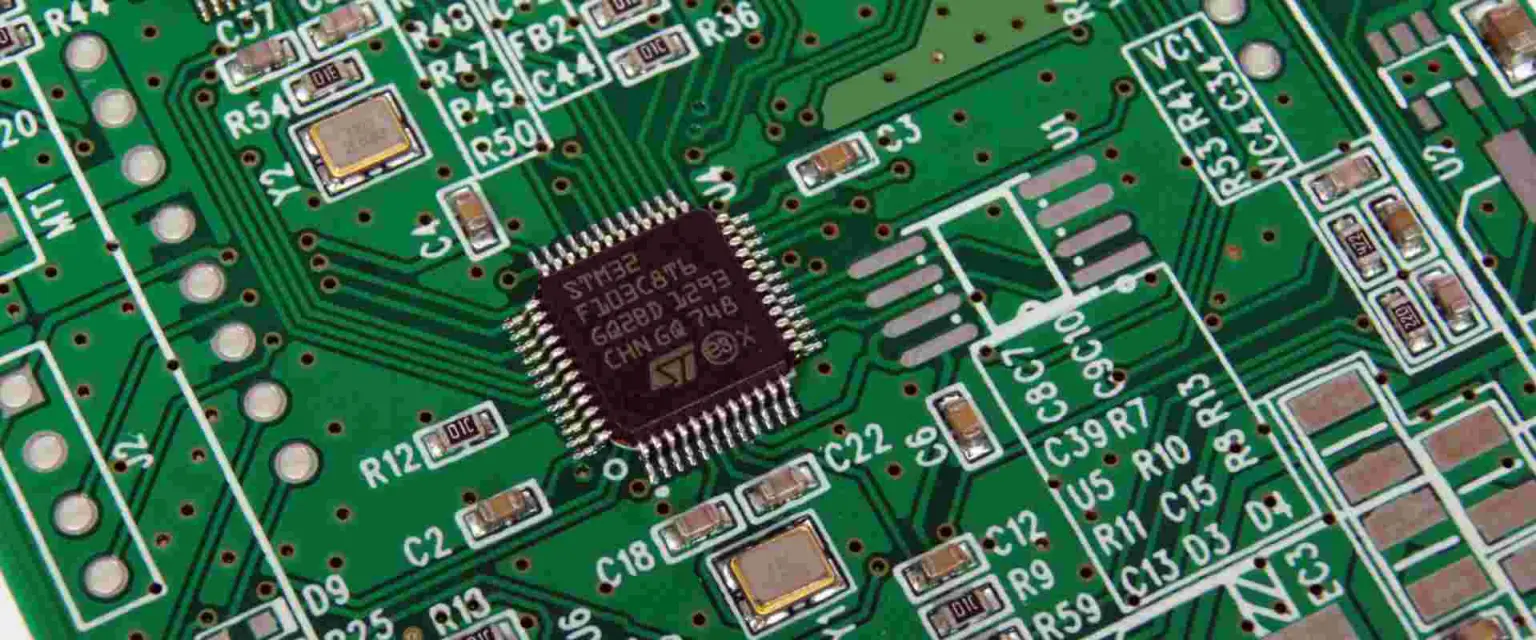
Solder mask is a polymer coating applied over the copper pattern, with openings where the solderable pads are. It prevents solder from bridging between adjacent pads during assembly, protects the copper from oxidation and mechanical damage, and provides electrical insulation between closely spaced features.
The mask is applied as a liquid photoimageable coating, exposed through a film and developed, then cured. That process, usually shortened to LPI, is what allows the openings to be registered accurately to the pads, and the accuracy of that registration is what sets the minimum pad spacing a board can use.
Why Green Became the Default
Green is traditional because it was the easiest colour to formulate with good resolution, and because inspection systems were developed and calibrated against it. The colour itself does not make a board work better, but the industry built its habits, its fixtures and its acceptance criteria around it.
Those habits persist for practical reasons. Equipment operators recognise defects on green more readily, the contrast between mask and copper is high, and any deviation from green requires the inspection process to be re-validated rather than simply re-run.

Reflectance and Inspection Contrast
White mask reflects most of the incident light, which raises the apparent brightness of a lighting product and reduces stray absorption. It also reflects into an optical inspection system, and it shows flux residue and handling marks very clearly, which is good for detection but demanding for cleanliness.
Black mask absorbs light and provides the highest contrast against the bright metal of the pads and the solder joints. Automated inspection systems often perform well with black for that reason, while manual inspection under a microscope is harder because the surface returns less light. Matt finishes reduce glare but also reduce contrast, and gloss finishes do the opposite.
Registration and Thickness Control
Colour is a pigment added to the resin, and different pigments change the exposure behaviour of the coating. Some colours have a narrower process window, which shows up as variation in the mask thickness over the trace edges and as a greater tendency to leave residue in the openings.
The practical consequence is that the smallest mask-defined feature becomes colour dependent. A board with tight pad spacing may be perfectly manufacturable in one colour and marginal in another, which is a conversation to have with the fabricator rather than a decision to make from a sample book. Ink behaviour of this kind is discussed in the material on solder mask ink thixotropy.
Effect on Assembly and Yield
The mask affects assembly through the accuracy of the openings. If the mask creeps onto a pad, the solderable area shrinks, and a reduced area changes the paste deposit and the joint. If the opening is too large, the gap between adjacent pads is reduced and bridging becomes more likely.
Dark colours also absorb more heat during reflow, which slightly changes the thermal profile of the board surface. The effect is small, but where a process is running at the edge of its window the change is enough to matter, and the profile should be validated for the colour in production.
Colour and Reliability
Pigments are not electrically active, so colour does not change the dielectric behaviour of the coating in any significant way. What it does change is the tendency of the surface to absorb or reflect radiant heat, and in a product exposed to sunlight, such as an outdoor luminaire or a camera module, that difference affects the surface temperature of the assembly.
Ultraviolet exposure is the other factor. Some pigments fade, and white mask in particular yellows under ultraviolet and heat, so a lighting fixture that relies on reflectance will lose some of it over the life of the product. The mechanical and protective functions of the coating are unaffected.
Special Cases
White mask is standard on lighting boards where reflectance matters, and on some medical products where cleanliness is easy to see. Black is common on audio products and on boards that sit behind a dark housing, and it is also used where optical contrast is more important than reflectivity.
Red, blue and purple appear where the board is visible and the product is styled around it. Whatever the choice, the requirements that matter are the same: adequate registration, consistent thickness, no residue in the openings and a finish compatible with the coating, as discussed in the material on PCB design guidelines for manufacturability.
Choosing in Practice
Start from function. If the board must reflect light, white is the answer. If it must be invisible inside a dark enclosure, black. If it will be inspected manually at high magnification, a lighter colour helps. If it will be inspected automatically, the system’s calibration decides.
Then confirm that the fabricator can hold the registration and thickness in that colour at the required feature size, and that the assembly profile has been validated. The surface finish interacts with all of this, because the mask openings expose the finish and the two are inspected together, as set out in conformal coating and board protection.
Interaction with the Surface Finish
The mask and the surface finish are seen together on the finished board, and the combination affects appearance and inspection. A gold finish under a black mask produces strong contrast, while the same finish under a white mask looks washed out. Opaque dark masks also hide the copper pattern beneath them, which makes visual inspection of the routing impossible and pushes the verification onto electrical test.
There is a practical limit to how thin a mask dam can be between two pads, and that limit is what sets the minimum pitch for a given colour and process. Designers who need a very narrow dam should confirm it with the fabricator in the chosen colour before finalising the pad geometry, because the difference between a manufacturable and a marginal board can be a few tens of micrometres.
Documentation and Change Control
Because colour interacts with process windows, a change of colour is a process change rather than a cosmetic one. The mask registration should be re-verified, the assembly profile re-validated if the change is significant, and the inspection programme re-checked against the new appearance.
The specification should state the colour, the finish, the minimum dam width and the registration tolerance, and it should be part of the controlled drawing. A note that says only the colour invites a supplier to choose the process window, and the result may not be the one the design assumed.
FAQ
Does the colour affect electrical performance? No, other than the small effect of surface temperature in sunlit products. The dielectric properties of the coating are essentially the same across colours.
Is green cheaper? Slightly, because the process is best established for it. The difference is small compared with the effect of mask registration on yield.
Can the mask be used as a functional layer? It can be specified for a minimum dam width between pads, but it is not a reliable insulator for safety isolation. Creepage and clearance distances must be met by the layout rather than by the coating.