PCB Solder Mask Touch-Up: The Complete Repair Guide
What Is PCB Solder Mask Touch-Up?
PCB solder mask touch-up, sometimes called solder mask repair or spot solder mask application, is the process of repairing small local defects in the solder mask layer without rebuilding the whole board. During fabrication, handling, SMT assembly, rework or machining, a board can pick up scratches, lifted mask, pinholes, exposed copper or burn marks. When those defects are confined to a small area, the standard engineering answer is to repair the mask locally rather than scrap an expensive multilayer or HDI board.
The repair restores the mask’s protection and insulation so the board meets its electrical and mechanical specification. Touch-up is most common on prototypes, high layer count boards and high reliability products, where the value of the panel makes scrapping the worst possible outcome. Performed correctly and verified against IPC criteria, a repaired board is functionally indistinguishable from a board that never had a defect.
This guide explains when touch-up is appropriate, how the repair is carried out, which materials and standards apply, and what it costs.
What the Solder Mask Actually Does
The solder mask is far more than a green cosmetic layer. It prevents solder from bridging between pads during reflow and wave soldering, protects copper traces from oxidation and corrosion, provides insulation between conductors, and resists chemicals, humidity and ionic contamination. It also gives the board a consistent appearance and extends its service life.
Because the mask carries so much of the board’s long term reliability, a defect that exposes copper or weakens insulation cannot simply be ignored. Touch-up exists to bring that local area back to the same protection level as the rest of the board, using mask materials that match the original color and performance.
Why Local Repair Is Used in Production
Touch-up earns its keep in three situations. During PCB prototyping, quantities are tiny and a single mask blemish can otherwise waste an entire expensive sample run. On high layer count products such as twenty layer, thirty-two layer, HDI, high speed and server backplane boards, the fabrication cost per panel is high enough that a small repair is dramatically cheaper than re-manufacturing. And on high reliability products for automotive, medical, industrial, aerospace and communications applications, the mask must keep its insulation performance for years, so a controlled repair with documented verification is preferable to a hidden blemish.
The economic logic is simple: a targeted repair that costs a few dollars can save a panel worth hundreds, while raising overall yield instead of sending good boards to scrap.
Common Causes of Solder Mask Damage
Knowing how mask damage happens makes prevention easier. Mechanical scratches occur during production and handling. CNC routing and profiling at the board edge can chip the mask. Laser processing with poor energy control can burn it. SMT rework, especially BGA removal and chip replacement, frequently damages the surrounding mask. Aggressive chemical cleaning can attack the mask, and friction during packing and shipping wears thin edges. Each of these failure modes leaves a characteristic defect that an experienced inspector can identify and classify for repair or scrap.
The Touch-Up Process Step by Step
A professional repair follows a controlled sequence. First the operator locates and evaluates the defect using AOI, a microscope, UV light or high resolution imaging, and confirms the area is suitable for repair rather than scrap. The surface is then cleaned with isopropyl alcohol, plasma or light micro-abrasion to remove oil, oxide and contamination so the new mask will adhere.
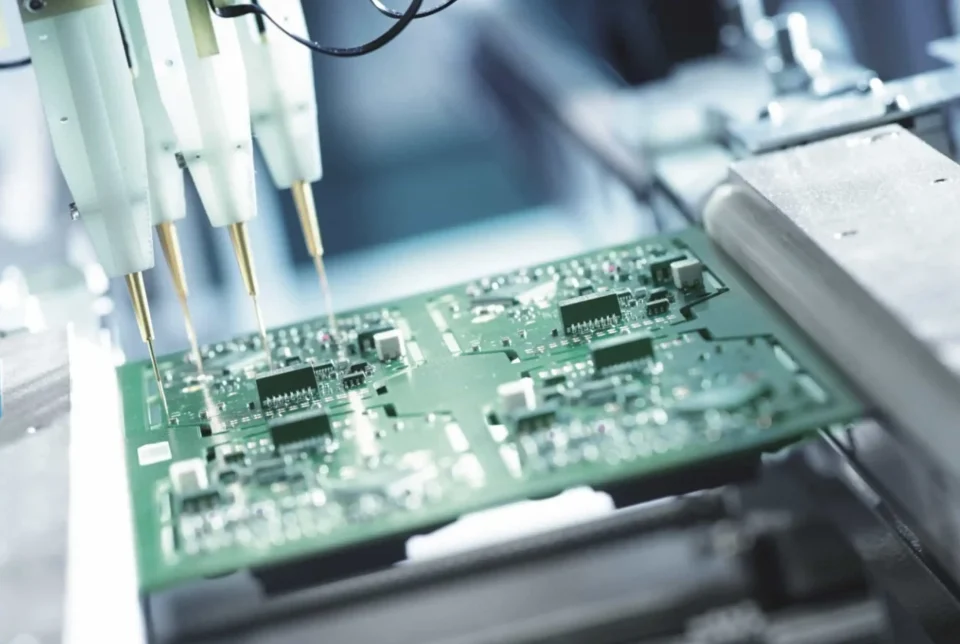
The damaged area is prepared by removing loose mask, cleaning the exposed copper and trimming ragged edges. Mask ink is then applied with a brush, dispensing needle or selective coating equipment, choosing from UV curing, thermal curing, liquid photoimageable or high Tg repair inks to match the board. The repair is cured with UV, hot air or infrared, and the finished area is inspected for color match, thickness uniformity, coverage, adhesion and insulation performance before the board continues down the line.

Materials and Equipment Used for Repair
Repair materials are selected to match the original mask system. Green, black, blue, white, red and yellow inks are all available for local repair, along with specialized flex board inks and high Tg repair compounds for high temperature laminates. The key is choosing an ink with the same cure chemistry and thermal class as the original so the repaired area behaves identically during subsequent assembly and in service.
The supporting equipment is equally important: UV curing units, precision dispensing equipment, microscopes, AOI systems, plasma cleaners, thickness gauges and adhesion testers. A repair station without proper curing and inspection tools cannot guarantee that the repaired mask will survive reflow and long term operation.
IPC Standards for Solder Mask Repair
Trustworthy repair work follows the IPC documentation set. IPC-A-600 defines the acceptance criteria for solder mask appearance. IPC-6012 states the quality requirements for rigid boards. IPC-7711 and IPC-7721 are the dedicated standards for PCB rework and repair processes, and IPC-SM-840 specifies the performance and reliability requirements of the solder mask materials themselves. Following these standards ensures the repaired board keeps its electrical, mechanical and long term reliability characteristics.
Quality Testing After Touch-Up
Repair is only finished when it is verified. Visual inspection confirms there is no color mismatch, pinhole, crack, bubble or incomplete coverage. Adhesion testing proves the repaired layer is firmly bonded to the substrate. Insulation resistance testing verifies that the restored area isolates conductors properly, and hipot testing adds voltage stress verification for power and industrial boards. On the most critical products, cross-sectioning shows the actual mask thickness and coverage under magnification.
Common Problems and How to Control Them
Poorly controlled touch-up creates its own defects: color mismatch, uneven thickness, weak adhesion, incomplete curing, bubbles and pinholes, surface contamination and reduced insulation. The remedies are procedural: defined process parameters, matched ink systems, disciplined cleaning, controlled curing and final electrical testing. A repair process that is not documented and verified is simply guesswork with expensive consequences.
DFM Tips That Reduce the Need for Repair
Most touch-up demand can be designed away. Set realistic solder mask web widths and leave adequate mask clearance around fine pitch pads instead of demanding impossible bridges. Optimize panelization so routing does not damage mask at the edges. Choose IPC compliant mask materials matched to the laminate. Use good quality copper clad laminates with clean surfaces for better mask adhesion, and complete a DFM review and design rule check before release. Boards designed for manufacturability simply need fewer repairs.
2026 Cost Reference for Solder Mask Touch-Up
Repair pricing depends on the damaged area, laminate type, mask color, layer count, verification level and quantity. During prototyping, a local touch-up typically costs 10 to 50 US dollars per board. For small batch production of fifty to five hundred boards, the added cost usually falls to 2 to 10 dollars per board. In volume production, where the repair is part of the normal quality flow, the average cost per board is only 0.2 to 2 dollars.
Compared with scrapping an HDI, multilayer or high speed board, even the upper end of these ranges is a bargain, which is why quality driven factories repair selectively and document every decision.
FAQ
Does solder mask touch-up affect electrical performance? When the repair follows IPC standards and passes insulation and adhesion testing, it does not noticeably change the board’s electrical or insulation performance.
Which solder mask colors can be repaired? Green, black, blue, white, red and yellow masks can all be touched up with color matched inks.
Which boards benefit most from repair? High layer count boards, HDI, high frequency and high speed PCBs, automotive, medical and industrial control boards benefit most because their fabrication cost makes local repair far more economical than scrapping.
Choosing a Factory That Repairs Correctly
Local mask repair is a precision operation, so choose a manufacturer that treats it as an engineering process rather than a quick cosmetic fix. The right partner repairs only where standards allow, documents the defect and the repair, and verifies the result electrically. gopcb provides high quality PCB manufacturing with controlled solder mask processes, professional touch-up capability, AOI, flying probe, X-ray, ICT and functional testing, and full DFM support for prototypes through high volume production. Send your board files for a free DFM review and receive a quotation that includes realistic yield and quality commitments.