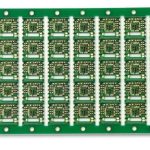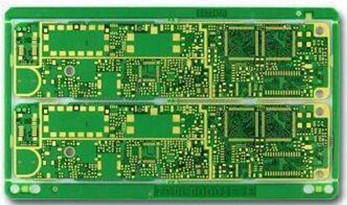
PCB Solutions Supplier for Diverse Electronic Applications
In industrial manufacturing, smart equipment, communications, automotive electronics, medical devices, energy systems, and other technology-driven industries, printed circuit boards are fundamental components that connect electronic components, transmit signals, and support system control.
Choosing the right PCB Solutions Supplier can have a direct impact on product development efficiency, manufacturing quality, production consistency, and delivery performance. A professional supplier should provide more than basic circuit board fabrication. It should offer engineering support, flexible manufacturing capabilities, quality control, and customized solutions that address different technical and application requirements.
GOPCBA provides comprehensive PCB manufacturing and electronic manufacturing capabilities for customers requiring standard and advanced circuit board technologies, from prototype development and engineering validation to volume production.
Diverse PCB Products for Different Applications
A professional PCB supplier needs to support a broad range of board structures and manufacturing technologies because different electronic products have different electrical, mechanical, thermal, and reliability requirements.
Industrial control equipment may require durable multilayer circuit boards, while telecommunications and high-speed computing systems may require controlled-impedance and high-frequency PCB technologies. Automotive and medical electronics may require additional reliability, traceability, and process control.
Standard and Multilayer PCB Solutions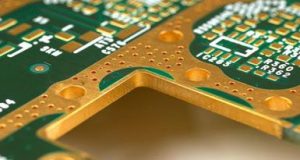
A Multilayer PCB allows multiple conductive layers to be integrated into a single circuit board. This structure provides greater routing capacity while helping designers reduce board size and improve circuit integration.
Multilayer boards are widely used in:
- Industrial automation equipment
- Communication systems
- Medical electronics
- Automotive electronics
- Power control systems
- Computer and AI hardware
- Consumer and smart electronic devices
For projects requiring complex multilayer structures, GOPCBA provides advanced PCB Manufacturing Services covering prototype and production requirements. The published capabilities include multilayer fabrication, HDI, high-TG materials, high-speed PCB, high-frequency PCB, rigid-flex, heavy copper, metal-core, and high-layer-count technologies.
HDI PCB Technology
For compact electronic products requiring high component density and advanced routing, HDI PCB technology provides additional design flexibility.
HDI boards can use microvias, blind vias, buried vias, fine-line routing, and sequential lamination to increase interconnection density without continuously increasing the physical dimensions of the board.
HDI technology is particularly suitable for:
- Compact communication equipment
- Mobile and portable electronics
- Advanced industrial controllers
- Medical instruments
- Automotive electronic modules
- High-performance computing equipment
- Miniaturized electronic systems
When selecting an HDI supplier, customers should evaluate not only design capability but also laser drilling, via filling, layer registration, lamination, copper plating, and inspection capabilities.
Flexible Manufacturing from Prototype to Production
Different stages of electronic product development require different production strategies. A prototype may require rapid engineering feedback and short production cycles, while volume production places greater emphasis on consistency, yield, cost control, and delivery stability.
A professional PCB supplier should therefore be able to support projects throughout the product lifecycle.
Rapid PCB Prototyping
During the development stage, engineers often need circuit boards quickly for functional verification, electrical testing, mechanical evaluation, and system integration.
Rapid prototyping allows engineering teams to identify design issues earlier and reduce development delays.
A well-organized prototype manufacturing process normally includes:
- Engineering review
- Design-for-manufacturing analysis
- Material confirmation
- Stack-up evaluation
- Manufacturing feasibility review
- PCB fabrication
- Electrical testing
- Final inspection
GOPCBA provides PCB fabrication from prototype to production and supports engineering review and DFM analysis before manufacturing.
Low-Volume and Volume Production
After a design has passed prototype validation, production requirements may transition to low-volume or mass production.
At this stage, manufacturing consistency becomes particularly important. The supplier should maintain stable material specifications, process parameters, equipment performance, inspection standards, and production documentation across different batches.
A reliable production workflow can help customers reduce manufacturing variation while improving delivery predictability.
Customized PCB Solutions for Specific Requirements
Electronic products often have requirements that cannot be addressed by standard PCB specifications. A capable PCB Solutions Supplier should therefore provide engineering support for customized board structures and manufacturing processes.
Customized Stack-Up Design
The PCB stack-up influences electrical performance, impedance, signal integrity, thermal behavior, and mechanical characteristics.
For multilayer and high-speed boards, engineers may need to optimize:
- Number of PCB layers
- Dielectric thickness
- Copper thickness
- Ground-plane arrangement
- Power-plane distribution
- Signal routing layers
- Impedance-controlled layers
- Material selection
A suitable stack-up should be developed according to the actual electrical and mechanical requirements rather than simply selecting a standard configuration.
Special PCB Manufacturing Technologies
Depending on the application, customers may require advanced technologies such as:
- Blind and buried vias
- Microvias
- Via-in-pad
- Heavy copper
- High-TG materials
- High-frequency laminates
- Rigid-flex structures
- Metal-core PCB
- Controlled-impedance PCB
- High-layer-count PCB
These technologies allow the PCB to meet more demanding requirements for electrical performance, thermal management, mechanical integration, and component density.
GOPCBA’s published PCB Capabilities include HDI, high-TG thick copper, high-frequency PCB, Rogers mixed lamination, blind and buried vias, metal-base PCB, impedance-controlled PCB, and other advanced technologies.
Quality Control Throughout PCB Manufacturing
Quality is one of the most important factors when selecting a PCB supplier. Manufacturing defects can affect electrical performance, assembly efficiency, product reliability, and overall development costs.
A professional supplier should establish quality controls throughout the entire production process rather than relying only on final inspection.
Engineering and Pre-Production Inspection
Before production begins, engineering teams should verify important PCB specifications, including:
- PCB material
- Board thickness
- Copper thickness
- Layer count
- Stack-up
- Trace width and spacing
- Surface finish
- Via structures
- Impedance requirements
- Manufacturing tolerances
Pre-production review can identify potential manufacturing risks before materials enter production.
PCB Manufacturing Inspection
During manufacturing, inspection and testing can include:
- Automated Optical Inspection (AOI)
- X-Ray inspection
- Electrical testing
- Dimensional inspection
- Cross-section analysis
- Copper thickness verification
- Visual inspection
- Final quality inspection
GOPCBA states that its PCB manufacturing process includes AOI, X-Ray inspection for complex structures, 100% electrical testing, process monitoring, and final inspection.
High-Reliability PCB Manufacturing
For medical electronics, automotive systems, industrial controls, energy equipment, telecommunications, and other mission-critical applications, standard PCB manufacturing may not be sufficient.
A High Reliability PCB requires careful control of materials, manufacturing processes, electrical characteristics, mechanical strength, and inspection procedures.
Material Selection
Different applications require different PCB materials.
FR-4 remains widely used for general electronic applications, while high-TG materials can be considered for applications requiring improved thermal performance. High-frequency materials such as Rogers laminates may be used when low-loss electrical performance is required.
Flexible and rigid-flex materials can provide additional mechanical flexibility for compact or dynamically constrained electronic assemblies.
Thermal and Mechanical Reliability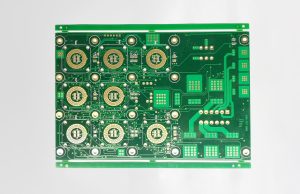
PCB reliability is also influenced by thermal cycling, mechanical stress, vibration, humidity, and long-term operation.
Factors such as copper distribution, board thickness, via construction, laminate selection, and layer structure should be considered during engineering design.
For high-reliability projects, manufacturing consistency is just as important as initial PCB design.
GOPCBA’s quality system emphasizes ISO 9001-based quality management, IPC-A-610E guidance, SPC process control, DFM checking, new product introduction, PCB manufacturing, testing, and supply-chain quality control.
Why Choose a Professional PCB Solutions Supplier?
The right PCB manufacturing partner can provide significant value beyond the physical production of circuit boards.
Engineering Support
Technical support can help customers evaluate manufacturability before production. DFM analysis can identify potential issues related to spacing, drilling, stack-up, impedance, material selection, and other manufacturing factors.
This can reduce redesign cycles and help improve production yield.
Flexible Production Capability
A supplier with broad manufacturing capabilities can support different PCB technologies and project stages through one manufacturing system.
This is particularly useful for customers developing multiple products or products that evolve from prototypes into larger-scale production.
Quality and Process Control
Consistent process control helps reduce variation between production batches. Material traceability, inspection records, electrical testing, and documented production procedures can provide additional confidence for customers with strict quality requirements.
One-Stop Electronic Manufacturing
For customers that require more than bare PCB fabrication, an integrated manufacturing partner can also provide PCB assembly, component sourcing, testing, and other electronic manufacturing services.
This approach can reduce communication between multiple suppliers and simplify project management.
GOPCBA provides one-stop PCBA capabilities covering PCB design, PCB manufacturing, component procurement, SMT, DIP, finished-product assembly, testing, and related services.
PCB Solutions for Multiple Industries
A professional PCB supplier should be able to adapt its manufacturing capabilities to different industries.
Industrial Electronics
Industrial control systems often require stable operation, long service life, and strong resistance to demanding operating environments.
PCB solutions may include multilayer boards, heavy copper PCBs, high-TG materials, and other high-reliability technologies.
Automotive Electronics
Automotive electronic systems can experience vibration, temperature changes, electrical noise, and long operating cycles. PCB manufacturing must therefore focus on material reliability, thermal management, electrical performance, and manufacturing consistency.
Medical Electronics
Medical equipment requires reliable electronic performance because circuit boards may support monitoring, diagnostic, imaging, or other critical functions.
Manufacturing quality, traceability, inspection, and process control are particularly important for these applications.
Telecommunications and High-Speed Electronics
Communication equipment requires stable signal transmission and controlled electrical characteristics.
High-speed, high-frequency, multilayer, and impedance-controlled PCB technologies can help meet the requirements of modern communication systems.
How to Select the Right PCB Solutions Supplier
Before selecting a PCB supplier, customers should evaluate several important factors.
Manufacturing Capability
Check whether the supplier can manufacture the required layer count, board thickness, copper weight, trace width, via structures, materials, and surface finishes.
Engineering Capability
A capable supplier should provide DFM review, manufacturing feasibility analysis, stack-up support, and technical communication.
Quality Management
Review the supplier’s inspection procedures, electrical testing capabilities, process controls, certifications, and quality management systems.
Production Flexibility
Consider whether the supplier can support prototypes, low-volume production, and volume manufacturing as the project develops.
Communication and Delivery
Clear technical communication and predictable production scheduling can reduce project risks, particularly for international customers and time-sensitive product launches.
Technical Summary
Use this short review when the design moves from quotation into production.
- Diverse PCB Products for Different Applications: treat this as a repeat-order checkpoint and keep the result with the lot record.
- Flexible Manufacturing from Prototype to Production: review the production data and close any deviation before the next build.
- Customized PCB Solutions for Specific Requirements: confirm the requirements, process settings and inspection records at first-article approval.
- Quality Control Throughout PCB Manufacturing: record the agreed limits and verify them again in the production lot.
- High-Reliability PCB Manufacturing: check the drawing, process sheet and inspection plan before release.
- Why Choose a Professional PCB Solutions Supplier: treat this as a repeat-order checkpoint and keep the result with the lot record.
- PCB Solutions for Multiple Industries: review the production data and close any deviation before the next build.
- How to Select the Right PCB Solutions Supplier: confirm the requirements, process settings and inspection records at first-article approval.
Conclusion
A professional PCB Solutions Supplier plays an important role in transforming electronic designs into reliable manufactured products. The right partner should combine advanced manufacturing technology, engineering expertise, quality control, flexible production capabilities, and responsive technical support.
From standard circuit boards to Multilayer PCB, HDI PCB, high-speed, high-frequency, rigid-flex, heavy-copper, and other advanced PCB technologies, modern electronic products require manufacturing solutions that can adapt to increasingly complex technical requirements.
For customers developing industrial, automotive, medical, telecommunications, energy, AI, and other electronic products, choosing a capable PCB manufacturing partner can improve development efficiency, manufacturing consistency, and long-term product reliability.
GOPCBA provides PCB fabrication and PCBA manufacturing services for projects ranging from prototypes to production. Customers can review the available PCB Manufacturing Services and contact the engineering team to discuss project-specific manufacturing requirements.