
PCB Storage and Shelf Life Before Assembly
A finished board that sits in a warehouse does not stay the same. The surface finish oxidises, the laminate absorbs moisture from the air, and the mask continues to cure slowly, and all three change how the board behaves when it reaches the assembly line. This article covers what actually changes, how shelf life is quoted by finish, and the tests that decide whether a stored batch can still be soldered.
What Changes During Storage
A stored board changes in three ways at once. The surface finish oxidises or is consumed, the laminate absorbs moisture from the air, and the solder mask continues to cure, which raises its crosslink density and reduces its adhesion to the copper beneath it.
The rate depends on the finish and on the environment. An organic finish protects copper through a chemical layer that is consumed by heat and time, while a nickel and gold finish changes much more slowly but still accumulates oxide and contamination on its surface.
Shelf Life by Finish
Shelf life is quoted per finish and measured under controlled conditions rather than in a general warehouse. OSP is commonly rated at six months, immersion silver at six to twelve, and ENIG at twelve, while a hot air levelled board is often limited more by the flatness of the alloy than by oxidation of the surface.
The ratings assume sealed packaging with desiccant and a humidity indicator. Once the bag is opened the clock changes, and the figure that matters becomes the floor life in the assembly environment rather than the shelf life in the store.
Moisture Absorption and Its Consequences
Laminate absorbs water at a rate that depends on the resin system, the humidity and the temperature. Storage at 30 degrees Celsius and 70 percent relative humidity for a month can raise the moisture content enough to produce blistering during reflow, particularly on a thick board.
The visible consequence is a blister or a measled area, and the invisible one is a change in dielectric constant that moves the impedance of a controlled net. Both are avoided by keeping the boards dry rather than by adjusting the reflow profile. The laminate side of this is covered in our laminate material notes.
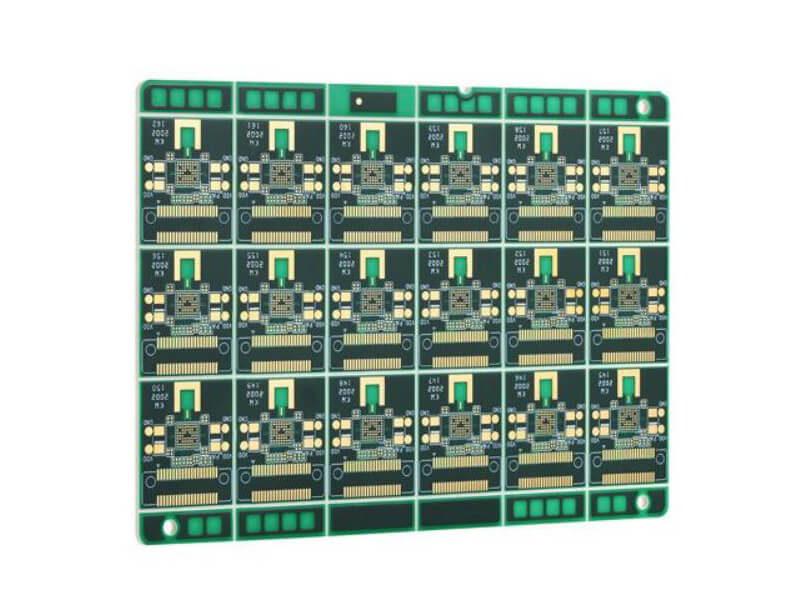
Moisture content is measured by weighing a sample before and after a bake, which gives the absorbed mass directly and is more useful than an appearance check.
Packaging, Desiccant and Indicators
The moisture barrier bag, the desiccant and the humidity indicator card form one system. A bag sealed with too little desiccant, or a card read a day after the bag was opened, gives a false sense of security about the condition of the boards.
The card is read at the moment of opening and the reading is recorded, because that is the only point at which it describes the inside of the package. A low reading on the ten percent spot usually means the boards can be used, while a change at the sixty percent spot means they should be baked first.
Storage Conditions and Their Control
A store for finished boards is held below 30 degrees Celsius and below 60 percent relative humidity, with the boards kept in their bags and off the floor. Temperature cycling is as damaging as the absolute value, because it pumps moisture into and out of the package.
Stock rotation matters as much as the environment. A first in first out rule, with the date written on every bag, prevents a batch from sitting for a year behind one that arrived later. The practice is one of the checks in our fabrication notes.
Baking Before Assembly
Baking removes absorbed moisture, and the schedule follows the laminate thickness and the supplier data. A typical schedule for a 1.6 mm board is four to six hours at 120 degrees Celsius, with thicker boards requiring longer times and higher temperatures.
Baking has side effects. It oxidises some finishes, it can discolour a mask, and repeated baking embrittles the laminate, so the number of bakes a board may receive should be limited and recorded. Baking is a correction for a storage failure, not a routine step.
Solderability Testing After Storage
Where a batch has been stored beyond its rating, the decision is made by a solderability test rather than by the date. A wetting balance test or a dip and look test on a sample establishes whether the finish still wets, and the result applies to the batch the sample came from.
The test is destructive and takes time, so it is reserved for batches near or past the limit. Where a wetting balance is available, the time to zero crossing and the maximum wetting force give a quantitative comparison against a reference board kept from the same delivery.
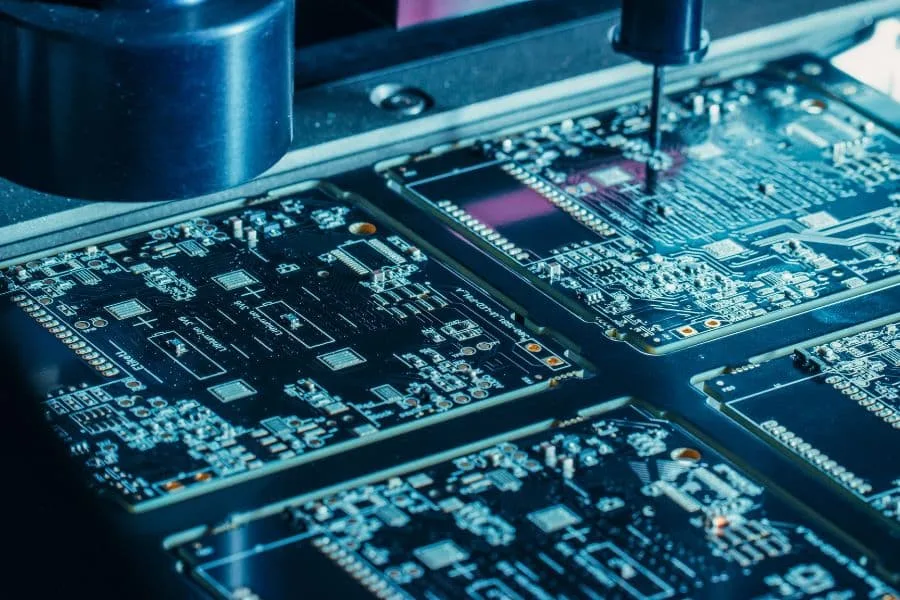
A reference board from the same delivery is what makes the comparison meaningful, because the finish, not the test method, is the variable being judged.
Handling and Contamination in Store
Boards stored without gloves pick up salts and oils from handling, and the contamination sits on the pads that have to be soldered. The residue is invisible and it is removed only by a cleaning step that most assembly flows do not include.
Edge handling, gloves and a defined storage location are cheap controls. Where boards return to store after partial assembly, the return should be recorded, because a partially assembled board has a different remaining life from a bare one.
Documentation and Traceability
The record that makes all of this workable is the date of manufacture, the finish, the bag seal date, the humidity card reading at opening and the bake history of the board. With those five items, a solderability problem is traced to a storage decision rather than to the assembly line.
The drawing and the purchase order should also state the shelf life the supplier has to deliver, because a board that arrives with a month left on its rating is a different product from one that arrives fresh. Judging the result is discussed in our board quality guide.
Boards are stored flat inside their packaging rather than stacked loose, because a stack of panels on a shelf takes the shape of whatever is beneath it after a warm day in an uncontrolled room.
Shelf life is counted from the date of fabrication rather than the date of delivery, so a supplier whose stock has already aged in its own store delivers less remaining life than the certificate suggests.
Where a bag has been opened and resealed, the remaining allowance is floor life rather than shelf life, because a resealed bag is a container and not a moisture barrier unless it has been vacuum sealed again.
Humidity in a store is logged rather than assumed, since a dehumidifier that fails over a weekend produces a month of out of specification storage in two days.
On a fine pitch finish the first sign of ageing is slow wetting rather than a skipped joint, and it appears first on the pads nearest the board edge, where the finish is thinnest.
FAQ
How long can boards be stored? The rating is per finish, typically six months for OSP and twelve for ENIG, and it applies inside a sealed bag with desiccant.
Does baking damage a board? It oxidises some finishes and embrittles the laminate a little at a time, so bakes are counted and limited rather than repeated as a habit.
Can a stored board be soldered without testing? Inside its rating, yes. Past it, the decision belongs to a solderability test on a sample from the batch.