For companies purchasing PCB mass production services, checking only the unit price is not enough to determine whether a quotation is truly cost-effective. Different PCB manufacturers may use different pricing structures, fixed-cost allocation methods, quantity tiers, tooling charges, testing fees, and value-added service charges.
As a result, two quotations with similar unit prices can produce significantly different final costs after all applicable charges are included.
A clear understanding of PCB volume pricing, quotation structures, and cost reconciliation can help procurement and engineering teams identify the real cost of a production order, compare suppliers more accurately, and avoid unexpected charges during final settlement.
This article explains the major components of bulk PCB pricing and provides a practical framework for calculating and reconciling PCB production costs.
1. Understanding the Basic Structure of PCB Volume Pricing
A typical PCB quotation can be understood using the following general cost structure:
Total Order Cost = Fixed Costs + Variable Cost per PCB × Quantity + Applicable Additional Charges
The exact calculation varies by manufacturer and contract, but the basic concept is widely applicable.
Fixed Costs
Fixed costs are expenses that do not necessarily increase proportionally with production quantity. They may include:
- Engineering or CAM processing
- Tooling or fixture charges
- Initial setup
- Special programming
- Production preparation
- Certain testing setup costs
When production volume increases, these costs can be distributed across more PCBs, reducing their contribution to the effective unit cost.
Variable Costs
Variable costs generally increase with production volume and may include:
- PCB laminate
- Copper foil
- Solder mask
- Surface finish
- Drilling and routing
- Plating
- Consumables
- Direct labor
- Energy consumption
- Inspection and testing
These costs normally form the primary component of the manufacturing price.
Additional or Optional Charges
Depending on the project, a quotation may also include:
- Expedited production
- Special testing
- Custom packaging
- Special materials
- Additional reliability testing
- Special surface finishes
- Regulatory or environmental requirements
These charges should be clearly identified so that procurement teams can distinguish mandatory manufacturing costs from optional services.
2. How Quantity Tiers Affect PCB Pricing
The main purpose of tiered PCB pricing models is to reflect the different cost structures associated with different production volumes.
For example, a manufacturer may offer different unit prices for:
- Prototype or low-volume production
- Small-batch production
- Medium-volume production
- High-volume production
As the quantity increases, fixed engineering and setup costs may be distributed across a larger number of boards. At the same time, manufacturers may achieve better material utilization, equipment efficiency, production scheduling, and purchasing economies of scale.
This can reduce the effective cost per PCB.
However, the unit price does not necessarily decrease in a perfectly linear manner. The actual pricing structure depends on material costs, production capacity, board complexity, order size, manufacturing yield, and the supplier’s commercial terms.
Therefore, procurement teams should compare both unit price and total order cost.
3. Common PCB Pricing Models
Different suppliers may use different approaches to calculate bulk PCB prices.
Model A: Quantity-Based Tier Pricing
Under this model, the entire order quantity is assigned to a specific pricing tier.
For example, a supplier may define:
- 100–499 pcs: Tier A
- 500–999 pcs: Tier B
- 1,000–4,999 pcs: Tier C
- 5,000+ pcs: Tier D
If an order contains 1,000 PCBs, the applicable unit price may be based on the 1,000-piece tier for the entire order.
This model is relatively straightforward because procurement teams can easily calculate the total order value.
Model B: Incremental or Segmented Pricing
Under an incremental pricing structure, different portions of the order may be charged at different rates.
For example, the first quantity segment may use one price while additional quantities use another.
This structure is not inherently incorrect, but it can produce a different effective unit cost from a whole-order tier model.
Procurement teams should therefore confirm exactly how quantity tiers are applied before comparing two quotations.
4. What Should Be Checked During PCB Quotation Reconciliation?
A reliable PCB quotation reconciliation process should compare the complete commercial structure rather than only the headline unit price.
Check 1: Quantity and Pricing Tier
Confirm that the quoted quantity corresponds to the correct pricing tier.
Also verify whether the tier applies to:
- Individual part numbers
- Combined purchase quantities
- Monthly demand
- Annual volume
- Individual production orders
These rules can significantly affect the final price.
Check 2: Fixed Charges
Identify all engineering, tooling, setup, fixture, and testing charges.
Determine whether these are one-time charges, recurring charges, or charges applicable only to specific production conditions.
Do not assume that a low unit price means the quotation has a low total cost.
Check 3: Material and Process Specifications
Confirm that the quotation is based on the correct:
- Layer count
- Board thickness
- Copper thickness
- Laminate type
- Surface finish
- Solder mask
- Minimum trace width and spacing
- Minimum hole diameter
- Via structure
- Impedance requirements
- Special reliability requirements
A quotation based on different technical specifications cannot be directly compared with another quotation.
Check 4: Testing and Inspection
Determine which testing activities are included in the base price.
Depending on the product, these may include:
- Electrical testing
- AOI
- Dimensional inspection
- Impedance testing
- Microsection analysis
- Reliability testing
Additional testing should be clearly identified as either included or separately charged.
5. Pay Attention to Additional Charges
One of the most common sources of quotation discrepancies is the difference between the quoted base price and the final invoice.
Potential additional charges may include:
- Expedited production
- Special packaging
- Engineering changes
- Tooling replacement
- Additional inspection
- Special materials
- Special surface treatment
- Low-volume surcharges
- Freight or logistics costs
Procurement teams should request a complete quotation breakdown before placing a large production order.
A transparent quotation makes it easier to compare suppliers and reduces disputes during final settlement.
6. Understand Material Yield and Scrap Policies
Material utilization and production yield are important components of PCB production cost.
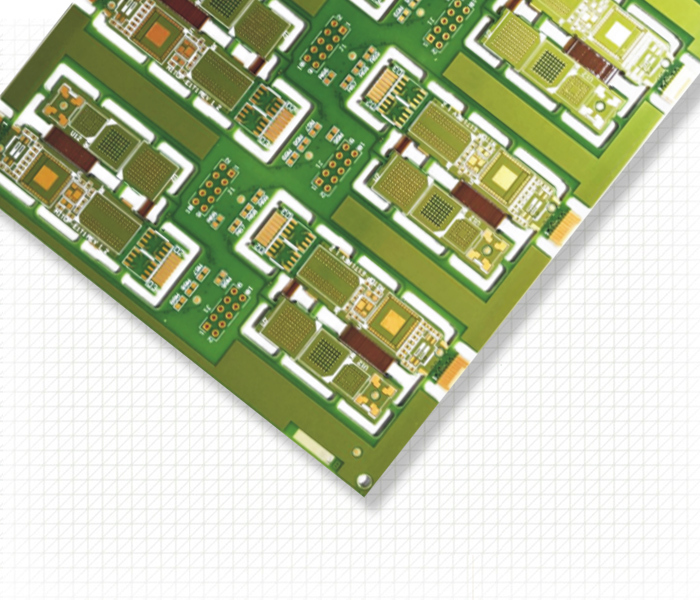
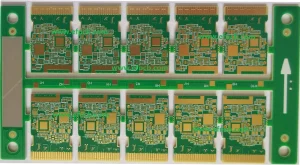
Large PCB panels are typically designed to accommodate multiple individual boards. The number of boards that can be efficiently arranged on a production panel directly affects material utilization.
In addition, manufacturing processes naturally involve some level of scrap and yield loss. The actual rate varies according to:
- PCB complexity
- Board size
- Material
- Layer count
- Production process
- Order quantity
- Manufacturing capability
- Quality requirements
Therefore, procurement teams should not assume a universal industry-wide scrap percentage.
Instead, the quotation should clearly specify whether the quoted quantity refers to:
- Ordered finished pieces
- Production quantity
- Shipped quantity
- Panel quantity
This distinction can prevent significant discrepancies during delivery reconciliation.
7. Compare Effective Unit Cost, Not Just Quoted Unit Price
A useful method of PCB cost analysis is to calculate the effective unit cost:
Effective Unit Cost = Total Payable Cost ÷ Accepted Quantity
For example, if the quotation includes tooling, testing, packaging, freight, or other additional charges, these costs should be included when calculating the actual cost per delivered PCB.
This provides a more meaningful comparison between suppliers.
A quotation with a slightly higher nominal unit price may have a lower effective cost if it includes more services and fewer additional charges.
Conversely, a low headline unit price may become less competitive after fixed and additional costs are added.
8. Cost Reconciliation for Different Production Volumes
Different order volumes require different reconciliation priorities.
Low-Volume and Prototype Orders
For prototype and low-volume orders, engineering, setup, tooling, and testing costs can represent a relatively large share of total expenditure.
Procurement teams should therefore focus on:
- Engineering fees
- Tooling charges
- Setup costs
- Prototype surcharges
- Expedited services
Medium-Volume Production
For medium-volume orders, material and manufacturing costs generally become more important.
The main focus should be:
- Quantity-tier pricing
- Material cost
- Manufacturing process cost
- Yield
- Testing requirements
- Logistics
High-Volume Production
For large PCB mass production orders, even a small difference in effective unit cost can have a significant impact on total annual spending.
Procurement teams should pay particular attention to:
- Contracted unit prices
- Quantity-tier rules
- Material price fluctuations
- Recurring additional charges
- Yield and accepted quantity
- Annual volume commitments
- Price adjustment mechanisms
9. Establish a Long-Term PCB Procurement Cost Database
For recurring PCB purchases, maintaining a historical quotation and cost database can significantly improve PCB procurement management.
Useful records include:
- Supplier
- Part number
- PCB specifications
- Order quantity
- Unit price
- Fixed charges
- Additional charges
- Material
- Surface finish
- Delivery time
- Accepted quantity
- Scrap or replacement quantity
- Freight cost
- Final effective unit cost
Comparing this information across multiple production batches can reveal unusual price changes and help procurement teams understand the factors driving cost fluctuations.
For long-term supply agreements, the contract can also define clear rules for material price adjustments, engineering changes, tooling replacement, expedited orders, and quantity changes.
10. A Practical PCB Cost Reconciliation Workflow
A structured PCB cost analysis process can follow these steps:
Step 1: Confirm the technical specification
Make sure all suppliers are quoting the same PCB design and manufacturing requirements.
Step 2: Confirm the quantity
Determine whether the quantity refers to individual boards, panels, or finished accepted pieces.
Step 3: Identify the pricing tier
Check how the supplier applies quantity-based pricing.
Step 4: Separate fixed and variable costs
List engineering, tooling, setup, manufacturing, testing, and other charges separately.
Step 5: Review additional charges
Confirm whether expedited production, packaging, testing, freight, or special materials are included.
Step 6: Calculate the total cost
Use the complete quotation rather than the nominal unit price.
Step 7: Calculate the effective unit cost
Divide the total payable amount by the actual accepted quantity.
Step 8: Compare historical data
Review previous orders to identify abnormal price movements.
Step 9: Reconcile the final invoice
Compare the quotation, purchase order, production quantity, shipment quantity, and final invoice.
Conclusion
Understanding PCB volume pricing is essential for controlling the real cost of high-volume PCB procurement. The most important point is to avoid evaluating a supplier solely on the quoted unit price.
A complete analysis should consider the pricing model, production quantity, fixed costs, variable manufacturing costs, testing, material specifications, additional charges, yield, logistics, and final accepted quantity.
By establishing a transparent PCB pricing model, calculating the effective unit cost, and maintaining historical cost records, engineering and procurement teams can make supplier quotations easier to compare and production costs easier to control.
Kingda can support PCB customers with transparent manufacturing quotations, mass-production planning, engineering coordination, and detailed cost evaluation based on PCB specifications and production requirements.