Precision PCB Manufacturing: Why Assembly Moves and Capability Stays
Assembly has been travelling for decades. It follows labour cost, logistics and tax incentives, and it can be replicated wherever capital and trained operators are available. Precision PCB manufacturing behaves very differently, because the thing being replicated is not a building but a body of process knowledge.
Reports that a growing share of smartphone assembly now takes place outside China illustrate the distinction clearly. While final assembly shifts, boards and other high technology components continue to come from established supply chains, because the capability behind them took years to accumulate.
What Actually Moves in a Supply Chain
Final assembly is a sequence of operations that can be documented, taught and duplicated. A new plant needs equipment, floor space, training and a period of learning, but the process itself travels without losing much fidelity.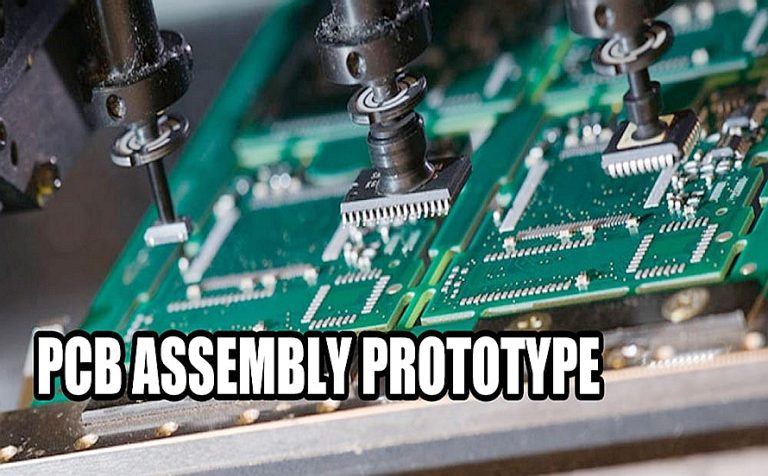
Component manufacturing is different. A printed circuit board is the product of thousands of interactions between material, chemistry, equipment and environment. Those interactions are captured in process windows that are discovered experimentally and refined over years of production.
Why Fabrication Resists Relocation
A new fabrication line can be purchased, but the recipes that make it productive cannot. Drill parameters for a specific laminate, lamination profiles for a particular stack, plating rates for a given aspect ratio and etch compensation for fine lines are all developed on real production lots.
That is why a factory can be copied in structure and not in output. The equipment is identical, the yield is not, and yield is what decides whether a product is manufacturable at a competitive price.
The Knowledge Inside a Process Recipe
A process recipe encodes far more than settings. It records how a material behaves when it is slightly out of specification, which defect patterns indicate a worn tool rather than a chemistry problem, and which corrective action has actually worked in the past.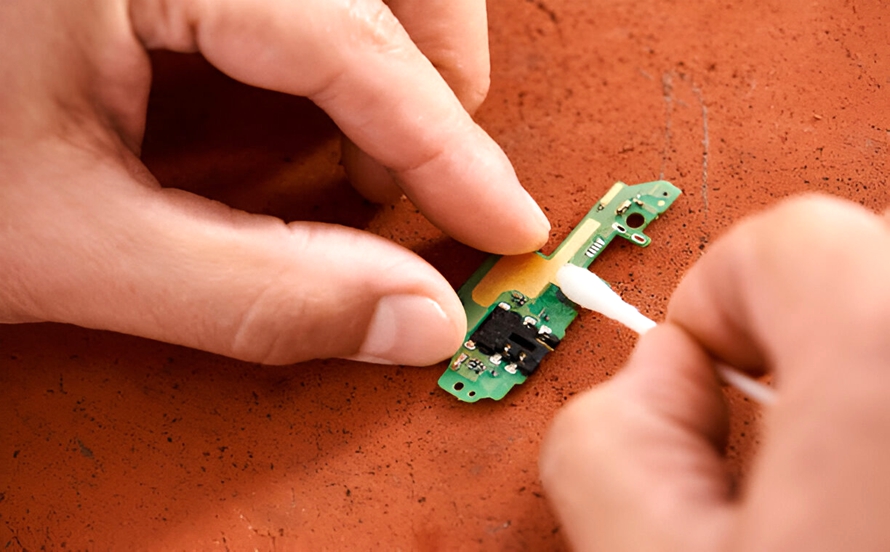
This knowledge accumulates only through volume. A factory that has produced millions of high density boards has seen more failure modes than one that has produced thousands, and it can therefore react to a new problem faster.
Materials and the Supply Chain Behind Them
Boards depend on laminates, prepregs, copper foils and specialty films that themselves come from a concentrated supplier base. Establishing a new manufacturing region requires not only a board factory but the logistics and service network that keeps specialised materials flowing.
Qualifying a new material source is slow work, because every change must be revalidated against performance and reliability requirements. That inertia protects existing supply chains, and it also explains why material shortages ripple through the industry so quickly.
Yield Records as an Asset
Yield data is an unusual asset because it cannot be bought. It is generated by production, and its value compounds: a factory that knows its true capability can quote accurately, schedule realistically and identify a drift before it becomes a scrap event.
Customers benefit directly. A supplier with reliable yield records can commit to a delivery date with confidence, while a supplier without them must either add margin to the schedule or accept a risk that eventually reaches the customer.
The Consumer Era Built the Toolbox
The smartphone age forced the industry to develop high density interconnect, flexible circuits, fine line etching and dense assembly at enormous scale. Those capabilities were created for consumer products, but they are not specific to them.
What remains is a toolbox: laser drilling, precision exposure, controlled plating, vacuum lamination, impedance testing and high density placement, all supported by data. Any industry that needs small, fast, dense electronics can draw on the same toolbox.
High Layer Counts for Compute
Data centre hardware has pushed layer counts from the conventional range into structures with dozens of layers. Server boards, switch boards and backplanes combine many high speed lanes with substantial power delivery, which demands lamination cycles and registration accuracy that consumer products never required.
The transition from an eight layer phone board to a board with several times that count is not simply a matter of repetition. Registration budgets tighten, drill depth control becomes critical and every lamination adds risk, so the advanced PCB capability involved is qualitatively different.
Optical Links and Fine Lines
Interconnect bandwidth has grown faster than any other part of the data centre, and optical modules have become a high value board category as a result. Their requirements pull the industry toward finer line formation, tighter impedance windows and better loss control.
These are the same skills the consumer era developed, applied at a higher difficulty. A region that has built fine line capability for phones is therefore well positioned to serve optical and compute hardware, which is exactly the migration now visible in the supply chain.
Automotive Domain Controllers
Vehicles have adopted the same centralised computing architecture as data centres. Cameras, radar and vehicle networks feed a small number of processors, and those processors sit on dense boards that must also survive vibration, thermal cycling and long service life.
Automotive work adds documentation and validation requirements on top of the manufacturing challenge. Suppliers who already operate rigorous process control systems can extend them into this market; those who rely on inspection at the end of the line usually cannot.
Flexible Circuits Outside the Phone
Flexible interconnect was perfected for handheld devices, where space and weight dominate. Robots, vehicles, medical instruments and drones place similar demands on space but harsher demands on endurance, adding vibration and repeated motion to the requirements.
Building flexible circuit assemblies that survive those conditions requires the same base capability plus a deeper understanding of fatigue, which is another case where accumulated production experience cannot be substituted quickly.
Heavy Copper and Power Electronics
Alongside the density story runs a power story. Battery management, inverters, power supplies and motor drives need copper weights far above those used in signal boards, and the processes that produce them are different from those that produce fine lines.
An industry that can serve both ends of that spectrum has an advantage, because modern products increasingly contain both. A single vehicle or robot may need dense digital boards, flexible interconnect and heavy copper power boards, all qualified to the same reliability standard.
Several Technology Paths at Once
The result is that board manufacturing is no longer a single market with a single capability ladder. High layer count, high density interconnect, flexible and rigid flex, and heavy copper are parallel paths, and companies differentiate by how many of them they can run well.
This is what makes broad manufacturing process coverage valuable. A customer building a complex product benefits from a partner who can move between these technologies without treating each one as a separate supplier relationship.
What Regional Diversification Does Not Move
Building capacity in a new region is possible and is happening. What is harder to move is the engineering depth that responds to an unexpected problem, the supplier network for specialised materials and the accumulated record of what works at volume.
Those attributes are not protected by geography alone. They can be developed anywhere over time, but the timescale is measured in years of production rather than in construction schedules, which is why the shift is gradual rather than abrupt.
Why Customers Still Value Continuity
Product teams value a supply chain that does not change underneath them. Redesigning a board for a new factory means new tooling, new qualification and a new set of process assumptions, all while the product timeline continues to run.
That cost is rarely reflected in a purchase price comparison, but it is real. Continuity of process between prototype and production is one of the main reasons customers stay with a supplier once a design has been qualified.
Skilled People Take Time to Develop
Equipment can be installed in months; process engineers are developed over years. The people who know why a plating line drifts on a humid afternoon, or which laminate needs a longer bake, are the ones who keep yield stable when conditions change.
New manufacturing regions face this constraint more than any other. Training programmes exist, but the tacit knowledge that comes from solving real production problems accumulates only when there is enough production to generate those problems in the first place.
Where Investment Shifts the Balance
Investment does move capability when it is sustained. A region that adds capacity, builds a material supply base and keeps engineers working on complex products for a decade will develop genuine capability, and customers will follow once the evidence exists.
The signal to watch is not capacity announcements but qualification records. The moment complex boards are being produced at volume with published board level testing and traceability data, the balance of capability has genuinely begun to move.
Capability as the Real Moat
The competitive advantage in this industry is not a factory building or a certification certificate. It is the ability to take a difficult specification and return a product that meets it at a stable yield, repeatedly, across several technologies.
Assembly will continue to move toward lower cost locations because it can. Fabrication capability will move more slowly, because it depends on knowledge that is developed rather than installed, and that asymmetry is the most reliable predictor of where board manufacturing will remain.