Rail Transit Control PCB for Modern Railway Systems
In modern rail transportation systems, every critical operation—from train startup, acceleration, and braking to signaling, traffic scheduling, and passenger flow management—depends on reliable electronic hardware. The Rail Transit Control PCB serves as an essential platform for signal transmission, data processing, and control commands, functioning much like the nervous system of a railway network.
The performance, environmental resistance, and long-term reliability of these circuit boards directly influence the stability and safety of railway equipment. As high-speed rail, metro systems, and intelligent transportation networks continue to develop, PCB technology must meet increasingly demanding electrical, mechanical, and environmental requirements.
GOPCBA provides advanced PCB manufacturing solutions for demanding transportation electronics, including multilayer, HDI, high-speed, high-frequency, controlled-impedance, rigid-flex, and other high-reliability PCB technologies.
Core Applications of Rail Transit Control PCBs
Railway control PCBs are used throughout both onboard train equipment and ground-based railway infrastructure. Their applications cover train control, signaling, communication, monitoring, passenger management, and safety systems.
Onboard Train Control Systems
Inside modern trains, the Rail Transit Control PCB is an important component of onboard control systems. It can support the processing and transmission of commands related to traction, braking, propulsion, monitoring, and other control functions.
The PCB must maintain stable operation while exposed to vibration, temperature changes, electromagnetic interference, and continuous operating cycles. Reliable circuit construction helps ensure that control signals are transmitted accurately and that equipment status information can be collected and processed in real time.
Railway Signaling and Traffic Control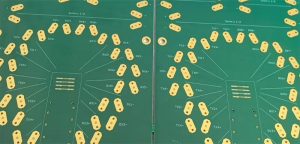
Railway signaling systems depend on precise communication between field equipment, control centers, and onboard systems. A Railway Signal PCB can support functions such as signal processing, train-position monitoring, communication, and control-command transmission.
In high-speed and urban rail environments, signal integrity is particularly important. Any degradation in communication quality can affect system response and operational reliability. For this reason, PCB manufacturing accuracy, controlled impedance, stable dielectric structures, and reliable interconnections must be considered during the engineering and manufacturing stages.
Platform and Passenger Management Systems
Rail transit PCBs are also used in platform screen doors, automatic fare collection systems, passenger information systems, access-control equipment, and other station infrastructure.
For example, control boards used in platform screen door systems must coordinate opening and closing operations while maintaining reliable communication with the overall station control system. Automatic fare collection equipment requires stable processing of ticket information, payment data, and access authorization.
These applications demonstrate that railway PCBs are not limited to train control. They form an important electronic foundation across the entire transportation infrastructure.
Special Requirements for Rail Transit Control PCBs
Compared with conventional consumer electronics, railway electronics typically operate under more demanding environmental and reliability conditions. A High Reliability PCB for rail transportation must balance electrical performance, mechanical strength, thermal stability, environmental resistance, and manufacturing consistency.
Long-Term Operational Stability
Railway systems are designed for continuous operation and long service cycles. Control PCBs must therefore maintain consistent electrical performance over extended periods without signal interruption, unstable connections, or significant degradation.
Material selection is particularly important. Suitable PCB laminates and controlled lamination processes can help maintain dimensional stability and reduce the risks of delamination, warpage, and interlayer separation.
For advanced PCB projects, GOPCBA supports multilayer structures and engineering evaluation through its PCB Manufacturing Services, helping customers select appropriate manufacturing technologies according to electrical and mechanical requirements.
Wide Temperature Resistance
Railway equipment may experience substantial temperature changes depending on climate, installation location, and operating conditions.
Onboard electronics may be exposed to temperature fluctuations during startup, continuous operation, braking, and parking. Outdoor signaling and communication equipment may experience even wider environmental variations.
The PCB structure should therefore provide adequate thermal stability. Proper laminate selection, copper distribution, stack-up design, and lamination control can help reduce dimensional changes and maintain reliable electrical performance.
Vibration and Mechanical Strength
Trains generate continuous mechanical vibration as they accelerate, decelerate, pass through curves, and travel over different track conditions.
Repeated mechanical stress can affect solder joints, plated through-holes, connectors, and PCB interlayer structures. The circuit board should therefore be designed and manufactured with appropriate mechanical strength and structural reliability.
Board thickness, copper distribution, mounting conditions, via structures, material selection, and interlayer bonding should all be evaluated according to the specific application.
Electromagnetic Compatibility
Railway environments contain multiple potential sources of electromagnetic interference, including traction systems, high-voltage power equipment, motors, converters, and communication systems.
A railway control PCB must not only withstand external electromagnetic interference but also minimize unwanted electromagnetic emissions from its own circuits.
Good PCB layout practices, controlled return-current paths, appropriate grounding, shielding strategies, stable reference planes, and controlled impedance can help improve electromagnetic compatibility.
Advanced PCB Technologies for Railway Applications
As railway systems become more intelligent and integrated, control electronics require higher circuit density, faster signal transmission, and greater functional integration.
Multilayer PCB Technology
Multilayer construction allows different circuit functions to be distributed across multiple copper layers. Power distribution, signal routing, ground planes, and high-speed interfaces can be arranged according to system requirements.
A well-designed multilayer stack-up can improve routing efficiency while providing stable reference planes for sensitive signals.
For complex railway control equipment, multilayer PCBs can also reduce board size while integrating more electronic functions into a limited installation area.
HDI PCB Technology
When railway control equipment requires high component density or compact dimensions, HDI PCB technology can provide additional routing flexibility.
HDI construction uses technologies such as microvias, blind vias, buried vias, fine-line routing, and sequential lamination to increase interconnection density.
This is particularly useful for compact control modules, communication equipment, onboard monitoring systems, and electronic systems containing fine-pitch BGA components.
GOPCBA supports advanced HDI structures, including microvias, stacked microvias, copper-filled microvias, and blind and buried via technologies. Detailed engineering information is available in the HDI PCB Design and Manufacturing Guide.
High-Speed PCB Technology
Modern railway systems increasingly rely on high-speed communication between control units, sensors, monitoring equipment, and centralized control systems.
A High-Speed PCB must carefully manage transmission-line impedance, return-current paths, reference planes, trace geometry, dielectric thickness, via structures, and signal spacing.
As signal rise times become faster, even relatively small changes in PCB geometry can affect signal quality. Therefore, high-speed PCB manufacturing requires close coordination between stack-up design, material selection, impedance calculation, and fabrication processes.
GOPCBA provides high-speed PCB manufacturing solutions covering multilayer structures, controlled impedance, high-frequency materials, HDI technologies, and other advanced requirements.
Signal Integrity Requirements for Railway Control Boards
Signal integrity is becoming increasingly important as railway communication and control systems move toward faster digital interfaces and greater data exchange.
Controlled Impedance
A controlled-impedance PCB maintains a defined electrical impedance along a transmission path.
Important factors include:
- Trace width
- Copper thickness
- Dielectric thickness
- Dielectric constant
- Reference-plane distance
- Copper surface characteristics
- Layer stack-up
Stable impedance helps reduce signal reflections, distortion, and transmission inconsistencies.
For high-speed railway electronics, impedance requirements should be established during the stack-up design stage rather than being considered only after routing is completed.
Stable Reference Planes
High-speed signals require predictable return-current paths. Continuous ground and power reference planes can help control electromagnetic behavior and reduce unwanted coupling.
A properly engineered multilayer stack-up can separate sensitive signal paths from noisy power circuits while maintaining appropriate reference structures.
GOPCBA provides PCB design and engineering support for complex high-speed, high-density, multilayer, HDI, impedance-controlled, and mixed-signal PCB projects through its PCB Design & Layout Services.
Via and Interconnection Design
Traditional through-hole vias may introduce unnecessary via stubs in high-speed signal paths. Depending on the application, blind vias, buried vias, microvias, or other advanced structures may be used to optimize electrical performance and routing density.
The appropriate via structure should be selected according to the PCB stack-up, signal speed, component pitch, manufacturing capability, and reliability requirements.
PCB Manufacturing and Quality Control for Rail Transit
Reliable railway electronics depend not only on PCB design but also on consistent manufacturing processes.
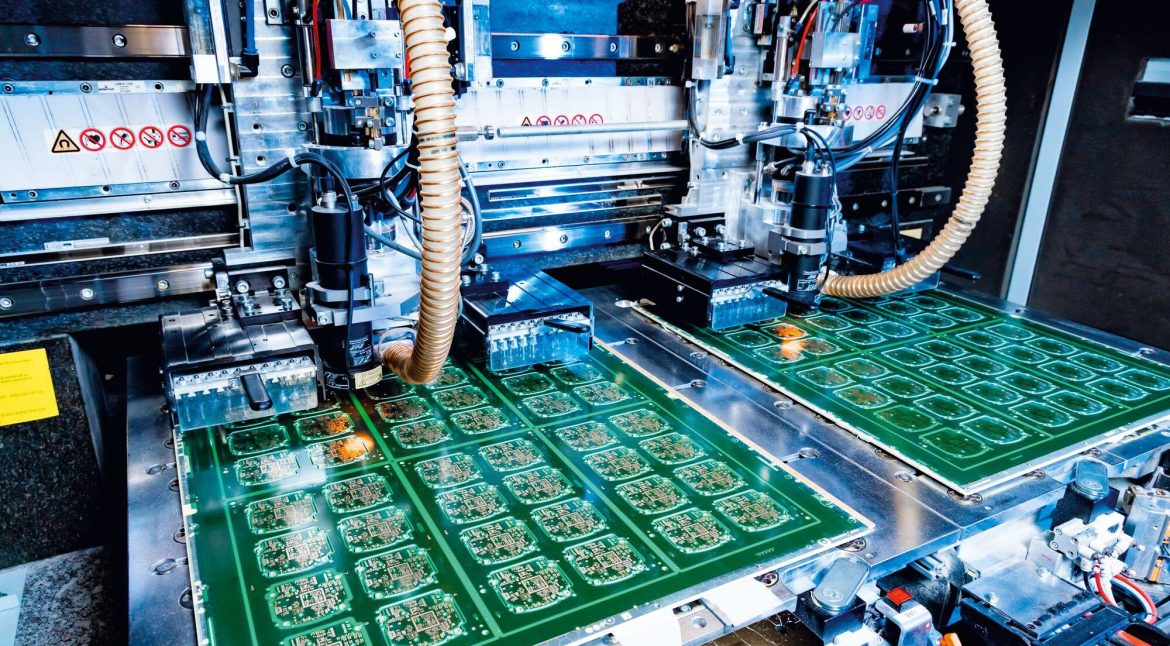
A suitable manufacturing process should control material quality, layer registration, drilling accuracy, copper plating, etching, lamination, solder mask, surface finish, electrical testing, and final inspection.
Comprehensive Inspection
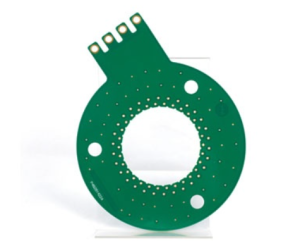
Depending on project requirements, quality control may include:
- Automated optical inspection
- Visual inspection
- Dimensional inspection
- Copper thickness measurement
- Cross-section analysis
- Electrical testing
- Impedance testing
- Material verification
- Finished-board inspection
- Process traceability
These controls help identify manufacturing defects before PCBs enter assembly or system integration.
Manufacturing Consistency
Railway applications often require long-term product consistency across multiple production batches. Manufacturing processes should therefore be stable and repeatable from prototype development to volume production.
Engineering review before production can help identify potential risks related to:
- PCB layer count
- Board thickness
- Material selection
- Copper weight
- Trace width and spacing
- Via structures
- Impedance requirements
- Component clearance
- Manufacturing tolerances
- Thermal requirements
Early DFM evaluation can reduce redesign risk and support a smoother transition from prototype to production.
Development Trends of Rail Transit Control PCBs
Railway electronics are evolving toward smaller, more integrated, and more intelligent systems. This development is driving several important PCB technology trends.
Miniaturization
Railway onboard equipment often has limited installation space. PCB designers must therefore achieve higher functional density without continuously increasing board dimensions.
HDI technology, fine-line routing, microvias, and optimized multilayer stack-ups can help integrate more circuitry into smaller areas.
Functional Integration
Traditional railway control systems may use several independent circuit boards for signal processing, communication, monitoring, and control.
Modern PCB architectures increasingly integrate multiple functions into fewer modules. This can reduce interconnection complexity, improve system response, and simplify equipment design.
Intelligent Monitoring
With the development of industrial IoT, data acquisition, and intelligent maintenance technologies, railway control electronics are becoming increasingly capable of monitoring system conditions.
Modern control boards can support the collection and processing of information such as speed, position, temperature, equipment status, and communication conditions.
Combined with intelligent software and centralized monitoring platforms, these functions can help identify abnormal operating conditions earlier and support predictive maintenance strategies.
Higher-Speed Communication
Railway networks increasingly depend on high-speed data transmission between onboard equipment, station infrastructure, and centralized control systems.
This trend increases the importance of high-speed PCB design, controlled impedance, low-loss materials, optimized stack-ups, and advanced interconnection structures.
Reliable PCB Solutions for Railway Transportation
Rail transportation systems require circuit boards that can balance electrical performance, mechanical strength, environmental resistance, manufacturability, and long-term reliability.
From onboard train control and railway signaling to communication, monitoring, passenger management, and safety systems, PCB technology plays a critical role throughout the transportation network.
GOPCBA supports advanced PCB manufacturing for demanding transportation applications, including multilayer, HDI, high-speed, high-frequency, high-TG, rigid-flex, heavy-copper, blind/buried-via, and controlled-impedance PCB technologies.
For railway projects requiring advanced high-speed structures, engineers can also evaluate the High-Speed PCB Stack-Up and Impedance Control Guide to better understand stack-up, reference planes, impedance, and manufacturing considerations.
Practical Checklist
Use this short review when the design moves from quotation into production.
- Core Applications of Rail Transit Control PCBs: review the production data and close any deviation before the next build.
- Special Requirements for Rail Transit Control PCBs: confirm the requirements, process settings and inspection records at first-article approval.
- Advanced PCB Technologies for Railway Applications: record the agreed limits and verify them again in the production lot.
- Signal Integrity Requirements for Railway Control Boards: check the drawing, process sheet and inspection plan before release.
- PCB Manufacturing and Quality Control for Rail Transit: treat this as a repeat-order checkpoint and keep the result with the lot record.
- Development Trends of Rail Transit Control PCBs: review the production data and close any deviation before the next build.
- Reliable PCB Solutions for Railway Transportation: confirm the requirements, process settings and inspection records at first-article approval.
Conclusion
The Rail Transit Control PCB is an essential hardware foundation for modern railway signaling, train control, communication, monitoring, and safety systems.
Reliable railway PCB performance depends on more than circuit design alone. Material selection, multilayer construction, HDI technology, controlled impedance, signal integrity, vibration resistance, thermal stability, electromagnetic compatibility, precision manufacturing, and comprehensive inspection all contribute to the final reliability of the product.
As rail transportation continues to develop toward higher speeds, greater connectivity, smaller equipment, and intelligent operation, PCB technology will continue to evolve. By combining advanced manufacturing capabilities with engineering support and rigorous process control, GOPCBA provides reliable PCB solutions for the next generation of railway electronics.