Security NVR PCB Design and Manufacturing Guide
A security NVR PCB is the main circuit board inside a network video recorder or security network integrated device. Modern surveillance systems combine video capture, encoding, network transmission, local storage, and intelligent analysis in one appliance. The PCB must support all of these functions at the same time while running continuously for long periods in environments that may be hot, humid, cold, or electrically noisy.
Because a security network recorder is expected to operate around the clock, the board needs strong signal integrity, stable power delivery, effective thermal management, and reliable materials. This guide explains how security NVR PCBs are designed and manufactured so that system integrators and security companies can select the right board and avoid common field failures.
What Is a Security NVR PCB?
A network video recorder stores and manages video streams from IP cameras. It may also run video analytics, user interfaces, alarm functions, and remote access services. The PCB inside an NVR carries the processor, memory, storage controllers, network interface, video input circuits, and power management components.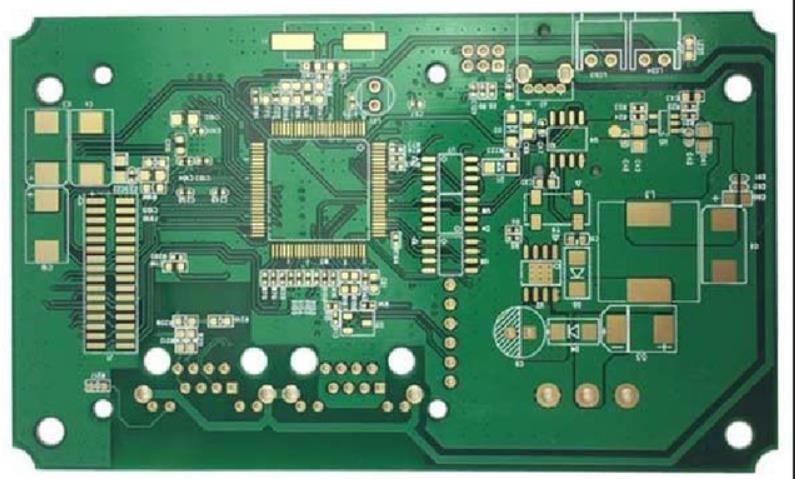
In compact designs, the recorder may be built as an all-in-one security network unit with cameras, storage, and analysis integrated into a single product. The PCB must then combine analog or digital video interfaces, Ethernet, USB, HDMI, SATA, and AI processing in one board. This level of integration requires a multilayer design with carefully planned routing.
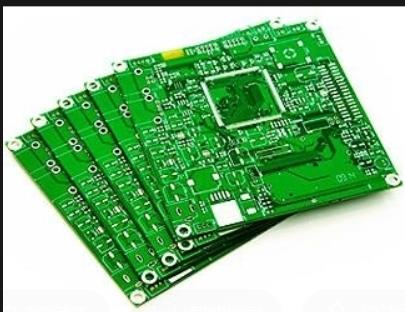
A security NVR PCB is often an eight-layer or ten-layer board. Outer layers carry high-speed video and data signals, while internal layers are used for power distribution and grounding. The separation between signal, power, and ground helps the recorder process large amounts of video without interference.
High-Speed Video Signal Requirements
Surveillance systems now support high-definition, ultra-high-definition, and even 4K or 8K video. A single camera stream can contain a very large amount of data, and an NVR may manage dozens of cameras at once. The PCB must move video data from the network interface to the processor, memory, storage, and display without errors.
Signal integrity is critical for these high-speed paths. The board must maintain controlled impedance on Ethernet, HDMI, USB, PCIe, and memory buses. Trace width, spacing, layer thickness, and reference planes must be designed together to keep reflections and crosstalk low.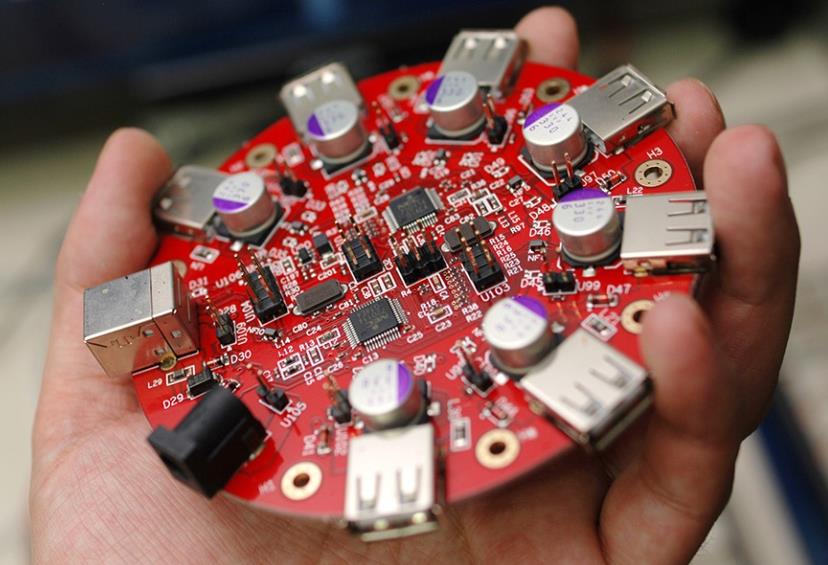
Poor routing can cause video frame loss, image corruption, flickering, or unreliable remote viewing. In a security installation, these problems are serious because the customer depends on the recording as evidence. A well-designed security NVR PCB prevents many of these issues before the product reaches the field.
Power and Ground Planning
An NVR contains multiple processors and peripherals that need different supply voltages. Hard drives and storage devices can create large current spikes when they start or wake up. The PCB must provide stable voltage to every circuit while isolating sensitive analog and digital sections from power noise.
Internal power planes reduce impedance and voltage drop across the board. Ground planes provide a low-resistance return path for signals. Decoupling capacitors placed close to power pins smooth out transient changes and prevent one circuit from affecting another.
Grounding strategy is especially important when analog video inputs, high-speed digital interfaces, and network magnetics are on the same board. A split or carefully connected ground design helps prevent ground bounce and reduces electromagnetic radiation that could interfere with cameras or other equipment.
Multilayer Design and Component Integration
A security NVR PCB must fit a large number of components in a compact chassis. High-density multilayer construction allows the designer to route processor buses, memory, storage, network, and display signals without using excessive board area. The board can also be produced as a single main unit that simplifies the final product.
High layer count is useful for separating different signal groups. High-speed video signals can be routed on dedicated layers, while control signals, power management, and low-speed interfaces use other layers. This reduces crosstalk and makes the design easier to manufacture and test.
Component placement should account for signal length, thermal coupling, and serviceability. Processors and memory are often placed close together to shorten bus traces. Storage connectors should be located where drive cables can be managed easily. The final layout must also allow airflow through the enclosure for cooling.
AI Processing and Advanced Analytics
Modern security products use artificial intelligence for face recognition, person detection, vehicle recognition, behavior analysis, and unusual event alerts. These functions require more computing power than traditional video recording. The security NVR PCB may need to support AI accelerators, GPU modules, or powerful SoCs.
The AI processor and memory interface place strict demands on the PCB. High-speed memory signals need consistent impedance and short, balanced traces. Power delivery to the AI chip must handle rapid changes in current as the processor begins new workloads.
Thermal design is also important because AI processing generates significant heat. The board layout should place the processor in an area with good airflow or a direct heat transfer path. Thermal pads, heat sinks, fans, and thermal vias are selected according to the expected processing load.
Storage and Data Reliability
A network video recorder must write video continuously to hard drives or solid-state drives. Storage reliability affects the ability to retrieve important recordings. The PCB connects the processor to storage through SATA or other high-speed interfaces, and the traces must carry data without corruption.
The power path to each drive should be stable because sudden voltage loss can damage data or reduce drive life. Designers may include additional capacitors or power protection circuits on the board. The firmware and hardware should also support drive health monitoring.
In some systems, video data is buffered in memory before being written to disk. The memory interface on the PCB must perform reliably at high speed for long periods. Good layout, proper termination, and controlled impedance reduce memory errors and improve system stability.
Environmental Resistance and Reliability
Security equipment is installed outdoors, in industrial facilities, in parking garages, and near electrical equipment. The recorder may be exposed to high temperature, humidity, salt air, dust, or strong electromagnetic interference. The PCB and its materials must be selected for these conditions.
High-Tg base materials help the board keep its dimensional and electrical properties when the internal temperature rises above 70 degrees Celsius. High-Tg laminates resist deformation and reduce the risk of cracking or delamination during extended operation.
Conformal coating or special protective finishing can improve resistance to moisture, mold, and salt. Coated boards are less likely to develop corrosion or electrical leakage on exposed traces. The protection level should match the planned installation environment.
Electromagnetic Compatibility
A security recorder often sits close to cameras, network switches, power supplies, and other electronic devices. It must not create interference that disrupts nearby equipment, and it must remain immune to noise from its surroundings. The PCB layout plays a large role in electromagnetic compatibility.
Return currents should flow directly beneath their signal traces, which keeps loop areas small. Filtering should be placed near connectors to reduce emissions entering or leaving the board. Power planes should be continuous, and high-speed signals should not cross noisy power circuits.
Shielding may be needed around the processor, clock circuits, or network magnetics. A metal enclosure can also reduce radiated emissions. EMC testing during development helps confirm that the final layout meets the standards required by the target market.
Applications in Smart Communities and Facilities
In a smart community, network video recorders manage cameras at entrances, parking areas, corridors, and common spaces. The recorder may identify residents and vehicles, monitor suspicious behavior, and send alerts to security staff. A reliable security NVR PCB supports continuous operation with minimal downtime.
In smart factories, video systems monitor production equipment and worker safety. The recorder may detect unsafe behavior, unauthorized access, or equipment failures. Because factory environments contain motors and high-power circuits, the PCB must tolerate electrical noise while processing video in real time.
Retail stores, offices, schools, hospitals, and public buildings use similar surveillance technology. In each case, the system must record clearly and remain available whenever an incident occurs.
Public Safety and Traffic Applications
City intersections, metro stations, and shopping areas generate very large amounts of video data. Security network recorders used in these locations must process many camera streams continuously. Face recognition can help trace suspects, while crowd density analysis can identify overcrowding and safety risks.
The recorder PCB must support enough network bandwidth and processing capacity to handle these workloads. It should also survive the temperature and humidity conditions of a traffic cabinet or public equipment room. Reliable power and storage are necessary because the system may need to operate for months without service.
Video quality is important for evidence and for automatic recognition. A high-quality security NVR PCB helps the system preserve details such as license plates, clothing, and movement patterns that support investigation and safety management.
Manufacturing and Testing Requirements
A security NVR PCB should be manufactured with controlled impedance, precise layer registration, and uniform plating. High-speed multilayer boards require careful lamination and inspection at every step. The factory must verify that the finished board matches the design before components are placed.
Automated optical inspection and electrical testing catch opens, shorts, and missing features. Impedance testing on coupons or the actual board confirms that high-speed traces meet the target. Boards intended for outdoor or industrial use may also need moisture, thermal, or salt spray testing.
During product development, PCB design and layout review helps optimize the stackup and routing. A capable PCB manufacturing partner can provide controlled impedance boards with reliable high-layer capability.
Choosing a PCB Supplier
When selecting a supplier for a security NVR PCB, ask about maximum layer count, minimum trace width, controlled impedance capability, and material options. The manufacturer should understand high-speed design and be able to provide test reports that confirm electrical performance.
For a new security product, prototype PCB assembly can help validate the full recorder with real processors, memory, and storage. When the product moves to volume, turnkey PCB assembly and component procurement improve supply chain control and traceability.
The supplier should also support the quality and environmental requirements of the security market, including reliable long-term performance in 24/7 installations.
Conclusion
A security NVR PCB is the foundation of modern intelligent surveillance equipment. It must handle high-speed video, AI analysis, local storage, and network communication while remaining stable in difficult environments.
By combining a well-planned multilayer stackup, controlled impedance, stable power, and reliable materials, manufacturers can produce security recorders that deliver clear, dependable recording around the clock. As security technology becomes more intelligent, the PCB will continue to play a central role in protecting people, property, and public spaces.