Shenzhen PCB Assembly: Capability, Process and Cost Factors
The concentration of electronics manufacturing in one region has practical consequences for a buyer, and not all of them are about price. Component availability, process breadth and the depth of the supplier base all shape how an assembly programme runs. This guide examines what Shenzhen pcb assembly offers in capability terms and which factors determine the delivered cost.
What the Region Offers
The main advantage is density. Bare board fabrication, component distribution, stencil suppliers, assembly houses and test services are all within a short distance of each other, which shortens the logistics chain between the stages of a build. Parts that are missing on a Monday can often be sourced locally by Tuesday.
The second advantage is process breadth. Because so many products are built in the region, a wide range of processes is available locally, from simple surface mount lines to fine-pitch placement, selective soldering and full box build. That breadth is what allows a programme to scale without changing location.
Component Sourcing and the Bill of Materials
The bill of materials is where most schedule risk lives. A distributor with local stock can supply immediately, while a part on allocation may have a lead time measured in months. The sourcing decision should therefore happen alongside the design, not after it.
Second sources should be qualified in advance. A layout that accommodates two package options, or a circuit that tolerates two tolerance grades, survives a supply interruption without a redesign. Recording which parts are substitutable and which are not turns a disruption into a manageable decision.
SMT Line Capability
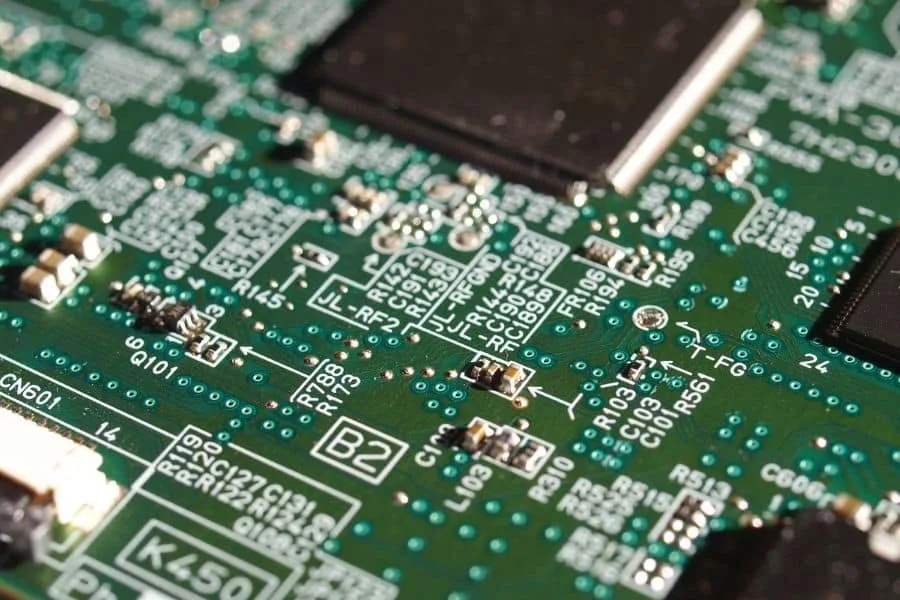
Surface mount capability is described by three numbers: the finest pitch that can be placed reliably, the smallest component that the feeder system handles, and the largest board that fits the conveyor. A line capable of fine-pitch placement also needs the paste deposition and reflow control to match it.
Placement accuracy matters most on area-array packages, where a small offset still produces a reliable joint but a rotation does not. Good placement order and pad positioning practice, combined with a verified stencil aperture, is what keeps the first-pass yield high.
Through-Hole, Selective Soldering and Box Build
Many products mix surface mount with through-hole connectors, and the through-hole portion requires either wave soldering with masking or a selective soldering process. Selective soldering is slower per board but avoids the thermal load of a full wave, which matters when the board carries temperature-sensitive parts.
Box build extends the scope to enclosure assembly, cable routing and final test. It reduces the number of suppliers a buyer has to manage, and it makes the final inspection the responsibility of the same organisation that built the board.
<img src="https://www.gopcba.com/wp-content/uploads/2026/08/pcb-2.jpg" alt="PCB assembly panel with selective soldering and functional test fixture” />
Test and Inspection
In-circuit test checks component presence and value, while functional test exercises the product. Both need access, which means test points and a fixture, and both should be specified before the layout is released rather than after the boards arrive.
Inspection complements test rather than replacing it. Automated optical inspection catches placement and joint defects, X-ray verifies the hidden joints under an area-array package, and a functional test at load catches the thermal and timing problems that neither inspection can see.
Documentation and Compliance
Documentation determines how quickly an order can start. A complete package contains the Gerber data, the drill file, the stackup drawing, the bill of materials with approved substitutes and the assembly drawing. Each missing item becomes a query, and a query costs a day.
Compliance requirements, such as material declarations and process records, should be agreed before the order rather than requested afterwards. A supplier who already maintains those records can supply them as a matter of routine, while one who does not will need to build the capability first.
Cost Factors Beyond the Unit Price
The unit price is not the delivered cost. Freight, duty, clearance and the inventory carried to cover lead time all belong in the comparison, and on a modest-value assembly they can represent a significant share of the total.
Test and fixture cost belongs in the same calculation. A first build carries a fixture, a programme and often a first-article inspection, and those fixed charges dominate a small order. Comparing a delivered cost that includes them is the only honest comparison.
Choosing and Qualifying a Partner
Qualification should be based on evidence rather than on a capability list. A supplier who can show a first-article report, an impedance or inspection record and a yield trend is describing a process, while one who shows only a certificate is describing a document.
The PCBA development process is easier to manage when the supplier is involved at design stage. Reviewing the component shift risks and the panel layout before release removes most of the changes that would otherwise appear after the first build.
Process Control and Verification
Reviewing the design before the data is released is far cheaper than correcting it after the panel is in the tank, because every step downstream inherits the decision made at the front end. Where a value sits close to a process limit, the drawing should say so, since the shop can then open the process window rather than working to a nominal figure that carries no tolerance.
The measurements that matter are the repeatable ones: conductor width and spacing, annular ring, finished hole size, plating thickness and surface finish are all verifiable on a coupon that travels with the panel. Documenting the assumption is part of the design work, and a short note on the drawing prevents a question that would otherwise arrive a day later and cost a day of schedule.
Where a value sits close to a process limit, the drawing should say so, since the shop can then open the process window rather than working to a nominal figure that carries no tolerance. Running a first article through the same checks as the production panel confirms that the two agree, and that comparison is the cheapest form of process control available at prototype stage.
Documenting the assumption is part of the design work, and a short note on the drawing prevents a question that would otherwise arrive a day later and cost a day of schedule. A stack-up that is drawn rather than described removes most of the ambiguity from a quotation, and it lets the fabricator price the board against the dielectric and copper weights that will actually be used.
Process Control and Verification
Reviewing the design before the data is released is far cheaper than correcting it after the panel is in the tank, because every step downstream inherits the decision made at the front end. Where a value sits close to a process limit, the drawing should say so, since the shop can then open the process window rather than working to a nominal figure that carries no tolerance.
FAQ
Why is assembly concentrated in one region? Because the supply chain is dense. Boards, components, stencils, fixtures and test services are all available locally, which shortens the logistics chain and reduces the time lost to a missing item.
Should components be sourced locally or supplied by the buyer? Either can work. Local sourcing is faster and usually cheaper, while buyer-supplied parts give control over the exact specification. The choice should follow the risk rather than the preference.
What most often delays a first assembly build? An incomplete documentation package or a component that is not in stock. Both are visible at review, and both are cheaper to resolve before the order than after it.