How to Reduce Small-Batch PCB Production Costs: 5 Practical Strategies
Small-batch PCB production is often associated with higher unit costs, limited process flexibility, and hidden expenses. For startups, engineering teams, and companies developing new electronic products, controlling these costs while maintaining reliable quality is an important part of project management.
The good news is that reducing small-batch PCB costs does not necessarily mean compromising on quality. Better order planning, appropriate process selection, supplier coordination, quality control, and logistics management can significantly improve overall cost efficiency.
This article explains five practical strategies for achieving more economical and predictable Small-Batch PCB Production.
1. Optimize Order Planning to Reduce Repeated Setup Costs
One of the biggest challenges in small-batch PCB production is the relatively high proportion of fixed setup costs.
Production preparation may involve tooling, machine setup, programming, stencil preparation, engineering review, and process adjustments. When very small orders are repeatedly produced as separate batches, these fixed costs are distributed across fewer boards, increasing the cost per unit.
Consolidate Similar PCB Requirements
If several PCB orders use similar materials, layer counts, dimensions, surface finishes, or manufacturing processes, consider combining them into a planned production schedule.
For example, instead of producing several small batches independently, compatible requirements can potentially be consolidated into a larger production run. This allows setup-related costs to be distributed across more boards.
The exact savings depend on the manufacturer’s production model, but the principle is straightforward: reduce unnecessary production setups whenever the project schedule allows it.
Separate Urgent and Non-Urgent Requirements
Not every PCB requirement needs expedited production.
If a project requires a small quantity immediately for engineering validation but expects additional quantities later, discuss the production schedule with the manufacturer. A staged production plan may help satisfy urgent development requirements while avoiding unnecessary repeated setups.
For projects that require fast development cycles, GOPCBA Rapid PCBA Prototyping can help engineers move from initial PCB development toward validated production more efficiently.
2. Choose Standard Processes Whenever Possible
Special PCB processes can increase production costs because they may require additional materials, equipment settings, process development, and inspection.
The key to PCB Cost Optimization is not to eliminate advanced processes, but to use them only when they provide a real technical benefit.
Use Standard Materials and Finishes When Appropriate
If an application does not require a specialized material or surface finish, a commonly available option may offer better cost efficiency.
For example, standard FR-4 materials are widely used for many general-purpose electronic applications. Similarly, commonly used surface finishes and standard board specifications may be more economical than highly specialized alternatives.
However, material and finish selection should always be based on electrical, thermal, mechanical, environmental, and assembly requirements.
Avoid Unnecessary Copper Thickness
Copper thickness has a direct relationship with current-carrying capability and manufacturing requirements.
If the circuit does not require higher current capacity, there may be little benefit in specifying unnecessarily thick copper across the entire board.
For high-current applications, however, thicker copper may be necessary. The objective is to select copper thickness based on actual electrical requirements rather than simply choosing the thickest available option.
Avoid Unnecessary Microvia or Special Drilling Requirements
Microvias, advanced via structures, unusual hole sizes, and other specialized manufacturing technologies can increase PCB fabrication complexity.
If standard through-hole or conventional via structures can satisfy the electrical and mechanical requirements, they may provide a more economical solution.
When advanced technology is genuinely required, the design should be optimized with the manufacturer early in the development process.
3. Build a Long-Term Supplier Relationship
Small production quantities generally provide less purchasing leverage than large-volume orders. Nevertheless, supplier selection and long-term cooperation can still have a meaningful impact on total project cost.
Choose a Manufacturer Experienced in Low-Volume Production
A manufacturer experienced in Low-Volume PCB Assembly and small-batch PCB production is more familiar with frequent design changes, mixed component requirements, prototype quantities, and short production runs.
This can help reduce engineering friction and make quotation, production scheduling, and material preparation more predictable.
For projects that require both PCB fabrication and assembly, GOPCBA low-volume PCB assembly services provide a suitable production model for smaller quantities and product-development stages.
Consider the Total Cost, Not Just the PCB Unit Price
The lowest quoted PCB price does not always result in the lowest overall project cost.
When comparing suppliers, consider:
- PCB fabrication cost
- Component procurement cost
- Engineering and setup fees
- Tooling or stencil costs
- Testing charges
- Shipping costs
- Production lead time
- Quality-related risks
- Rework or replacement costs
A supplier with a slightly higher unit price may still provide lower total project costs if it offers better quality consistency, engineering support, component sourcing, and delivery reliability.
Discuss Future Requirements
If a project is expected to progress from prototypes to recurring small batches and eventually higher-volume production, communicate the expected development roadmap to the supplier.
This can help the manufacturer recommend processes that remain practical as production quantities increase, reducing unnecessary redesign or process changes later.
4. Control Quality to Avoid Hidden Costs
Poor quality is one of the most expensive problems in small-batch PCB production.
A defective board may require replacement or rework, but the actual cost can extend far beyond the board itself. Delayed testing, postponed product launches, additional engineering work, and disrupted assembly schedules can all increase the total project cost.
Therefore, effective PCB Quality Control is also a cost-control strategy.
Confirm Specifications Before Production
Before manufacturing begins, clearly define:
- PCB material
- Layer count
- Board thickness
- Copper thickness
- Surface finish
- Solder mask requirements
- Hole specifications
- Impedance requirements, if applicable
- Dimensional tolerances
- Special environmental requirements
Clear documentation reduces the risk of miscommunication and incorrect manufacturing.
Validate the Design Before Ordering
Design problems discovered after production can be expensive to correct.
Before placing an order, review the PCB layout, component footprints, clearances, hole sizes, routing, stack-up, and manufacturing constraints.
For more complex designs, working with professional PCB design and layout services can help identify manufacturability problems before they become production issues.
Use Appropriate Inspection and Testing
Inspection and testing should be proportional to the product’s complexity and risk level.
Depending on the application, manufacturers may use methods such as:
- Visual inspection
- Automated Optical Inspection (AOI)
- Electrical testing
- In-Circuit Testing (ICT)
- Functional testing
- X-ray inspection for applicable assemblies
The goal is not simply to detect defects after production, but to prevent defective boards from moving into more expensive downstream processes.
5. Optimize Logistics and Inventory Management
Shipping and inventory costs are often overlooked when calculating the total cost of small-batch PCB production.
A low-cost PCB can become significantly more expensive if it requires repeated expedited shipments or remains in storage for long periods.
Select Shipping According to Project Urgency
Not every PCB shipment needs express delivery.
If the project schedule allows sufficient time, standard shipping can be more economical than expedited transportation. For multiple compatible orders, consolidated shipping may also reduce transportation costs.
However, delivery decisions should consider the cost of delay. Paying more for expedited delivery can sometimes be justified if it prevents a project milestone from being postponed.
Avoid Excessive Inventory
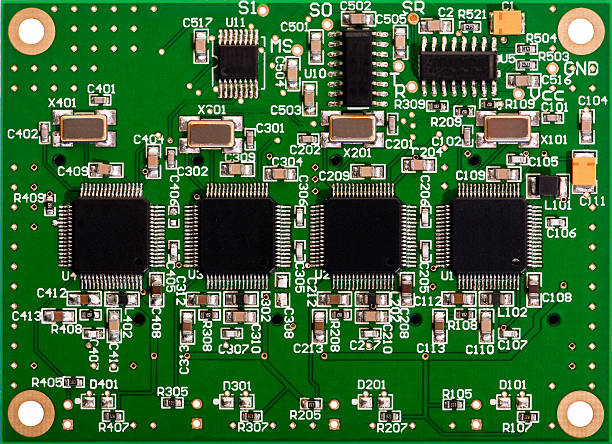
Over-purchasing small-batch PCBs can create additional storage costs and increase the risk of unused inventory.
PCB inventory should be planned according to expected project consumption, product lifecycle, engineering-change frequency, and storage conditions.
This is especially important for prototype and development projects because PCB designs may change frequently.
Coordinate PCB and Component Procurement
For assembled PCB projects, PCB fabrication and component procurement should be coordinated rather than treated as completely separate activities.
Component shortages can delay assembly even when the PCBs themselves are ready. On the other hand, purchasing excessive components for an uncertain design can create unnecessary inventory.
A coordinated component procurement service can help align material sourcing with the PCB assembly schedule and project requirements.
A Practical Framework for Small-Batch PCB Cost Control
The five strategies above can be summarized as follows:
| Cost Area | Recommended Strategy | Potential Benefit |
|---|---|---|
| Production setup | Consolidate compatible orders | Reduce repeated setup costs |
| PCB process | Use standard processes when appropriate | Reduce process premiums |
| Supplier management | Build long-term cooperation | Improve pricing and flexibility |
| Quality | Strengthen inspection and design review | Reduce rework and replacement |
| Logistics | Optimize shipping and inventory | Reduce transportation and storage costs |
The most effective approach is to evaluate these areas together rather than focusing only on the quoted PCB price.
Cost Reduction Does Not Mean Cutting Quality
It is important to distinguish between cost optimization and simply choosing the cheapest manufacturing option.
Removing necessary testing, selecting unsuitable materials, reducing copper thickness below the required level, or choosing an inexperienced supplier may reduce the initial quotation but create significantly higher costs later.
A better approach is to eliminate unnecessary expenses while preserving the technical requirements that directly affect product performance and reliability.
For example:
- Use standard materials when they meet the application requirements.
- Use advanced PCB technologies only where they provide measurable value.
- Consolidate compatible production requirements.
- Validate designs before manufacturing.
- Select suppliers according to total cost rather than unit price alone.
- Maintain appropriate inspection and testing.
- Coordinate PCB production, component sourcing, assembly, and logistics.
Conclusion
Controlling the cost of Small-Batch PCB Production requires more than negotiating a lower unit price. The most effective strategy is to manage the entire production process—from design and order planning to manufacturing, component sourcing, assembly, inspection, shipping, and inventory.
By consolidating compatible orders, selecting appropriate standard processes, developing strong supplier relationships, controlling quality risks, and optimizing logistics, companies can reduce unnecessary expenses while maintaining the performance and reliability their products require.
For companies developing new electronic products, a manufacturing partner capable of supporting both prototypes and production can make this process more efficient. A structured transition from prototype quantities to recurring production can reduce repeated engineering work and help establish a more predictable manufacturing cost structure.