SMT vs THT: How to Choose the Right PCB Assembly
Why the SMT vs THT Choice Matters
Choosing the right assembly process is one of the most important decisions in electronics manufacturing. It affects product performance, cost, reliability and how fast you can scale production. The two most widely used methods are surface mount technology and through hole technology. Whether you build consumer devices, industrial controls or automotive electronics, understanding the difference between SMT and THT helps you design smarter and lower your production cost. This guide compares them in plain engineering terms so you can pick the right one for your board.
What Is SMT Assembly?
SMT, or surface mount technology, places components directly onto pads on the surface of the board. There are no holes drilled for the component leads. Small surface mount devices such as chip resistors and capacitors, ICs like QFN and BGA, and tiny connectors are mounted with solder paste and reflow. Because there are no leads through the board, SMT supports very compact layouts and lets components sit on both sides of the panel.
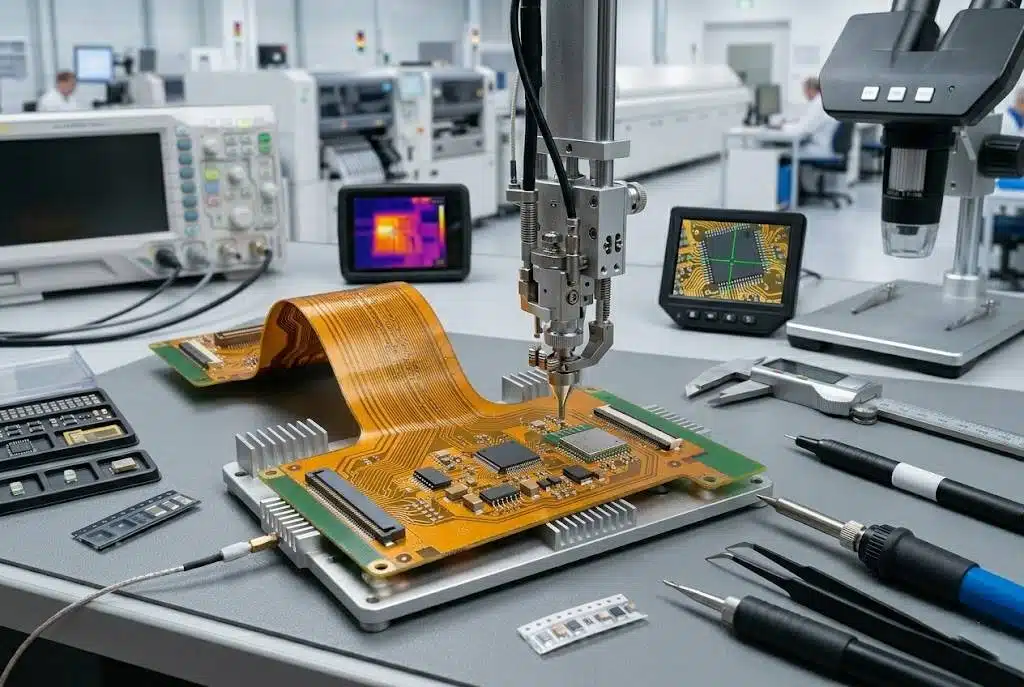
The SMT process is highly automated. Solder paste is printed onto the pads through a stencil, a pick and place machine sets each component in position, the board passes through a reflow oven where the paste melts and forms a solid joint, and an automated optical inspection system checks placement and solder quality. Automation gives SMT high repeatability and stable yield, which makes it the default choice for high density, miniaturized and high volume designs.
What Is THT Assembly?
THT, or through hole technology, is the traditional method. Component leads are inserted into plated holes in the board and soldered on the other side. Through hole parts include connectors, transformers, relays, large capacitors and power components that need a strong mechanical anchor. Because the lead passes through the board, the joint is physically robust and easy to service.
The process starts with drilling the vias, then inserting the components by manual assembly or automated insertion, then wave soldering or hand soldering to fix the leads, and finally inspection and test. Wave soldering is efficient for connectors and power parts, while hand soldering is still common for low volume or prototype work and for parts that are hard to automate.
Key Differences Between SMT and THT
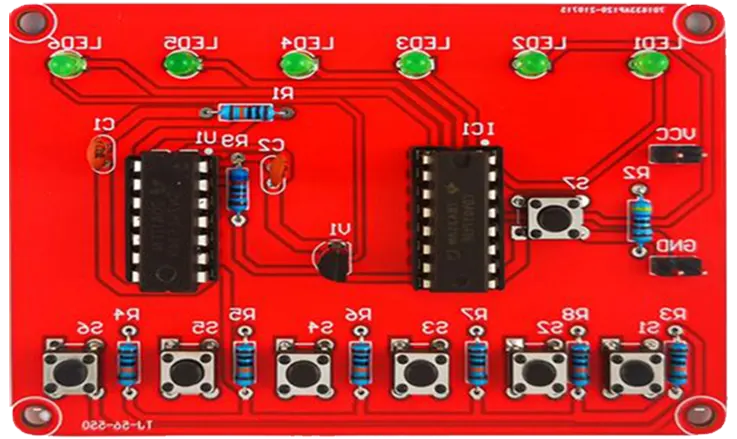
Mechanical strength. THT joints are stronger because the lead goes through the board, so through hole is better where parts face vibration and physical stress. SMT relies on the solder fillet on the surface, which is fine for most applications but not ideal for heavy or high stress components.
Density and size. SMT supports higher component density and smaller boards because components sit on both sides and no holes are needed. THT needs holes for every lead, taking up space on both sides and limiting how small the board can be, so it is harder to miniaturize.
Automation and cost. SMT is fully automated and cheaper at high volume, while THT often needs manual insertion or additional wave soldering, raising labor and cost per board. For large runs the automation advantage of SMT becomes very significant.
Electromagnetic performance. SMT has shorter leads and lower parasitic inductance, which matters for high frequency and high speed circuits. THT leads are longer and can add inductance and capacitance, so it is less suited to very fast signals and high frequency designs.
Advantages and Disadvantages of SMT
Advantages. SMT gives high component density, faster automated assembly, lower cost at volume, better high frequency performance and smaller boards. It also allows components on both sides, which a through hole design cannot do easily.
Disadvantages. SMT needs fine pitch handling and careful paste printing, which requires an advanced line. The joints are smaller and less visible, so inspection is more demanding, and heavy components may need adhesives or brackets because solder alone may not hold them under strong vibration.
Advantages and Disadvantages of THT
Advantages. THT joints are strong and easy to repair, components are easy to replace by hand and large, high power parts and connectors fit naturally. The strong joint suits automotive, industrial and aerospace products that face shock and vibration, and hand soldering makes rework straightforward.
Disadvantages. THT needs drilling and plating for every lead, uses more board area and materials, is harder to miniaturize and is slower and more expensive to scale than SMT. Drilling also adds cost and limits how small the board can be, and through hole parts cannot be placed on both sides.
SMT Process Steps
Solder paste printing. A stencil applies solder paste to the pads. Placement. A pick and place machine sets each component. Reflow. The board is heated so the paste melts and forms the joint. AOI. Automated optical inspection verifies placement and solder quality. SMT is fast, repeatable and ideal for mass production because every step can run without human touch.
THT Process Steps
Drilling. Holes are drilled and plated. Insertion. Components are placed by hand or by an auto inserter. Soldering. Wave soldering or hand soldering joins the leads. Inspection and test. The joints are checked before the board moves on. THT suits power and high reliability parts that must stay firmly attached and be easy to service.
How to Choose Between SMT and THT
Choose SMT when the design is dense and compact, the component count is high, the board needs to be cheap at volume or the circuit runs at high frequency. Choose THT when the components are large, high power or high reliability, when the board faces strong vibration or when manual repair and replacement are important.
In practice most boards use a mix. High density signal and control circuits go on SMT, while connectors, power parts and mechanical items stay on THT. This mixed technology approach gives the best balance of density, reliability and cost, and many manufacturers offer both under one roof so you do not need to split the build between vendors.
Cost Comparison in 2026
SMT generally costs less per board at volume because the process is automated and uses less material. THT costs more because of drilling, through hole plating, manual insertion and wave soldering, and it is slower to scale. For a low volume prototype, the setup cost matters more than per board cost, so SMT can still be competitive.
The real cost driver is the combination. A single sided SMT board is the least expensive, while a board with dense SMT plus many THT parts costs more due to the extra drilling and soldering steps. Product complexity, board area and layer count all move the price. A precise quote needs the BOM, the component count and the board size, and volume discounts usually apply as the quantity grows.
Mixed Technology Assembly
Most real products combine both processes. The standard approach runs SMT first, then reflow, then inserts the through hole components and wave solders or hand solders them. This lets designers use small, dense ICs alongside large connectors and power devices. The assembly partner must manage both processes and keep the solder mask, pads and plated holes within tolerance so both joint types hold.
FAQ
What is the difference between SMT and THT? SMT mounts components on the board surface without holes, while THT inserts component leads through plated holes and solders them.
Which is cheaper? SMT is usually cheaper at volume because it is automated, but a mixed design or a low volume run can change the picture.
Which is stronger? THT joints are mechanically stronger, so they suit connectors, power components and high vibration products.
Can I use both on one board? Yes. Mixed technology assembly runs SMT first then adds through hole parts, which is common in most products.
Get the Right Assembly Solution
The best choice is the one that fits your component types, density, volume and reliability target. Pair SMT with SMT PCB assembly, use through-hole PCB assembly for the parts that need it, and rely on turnkey PCB assembly to manage the whole build. Contact gopcb for a design review and a mixed technology assembly quotation for your project.