What Is a Halogen-Free PCB?
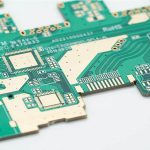
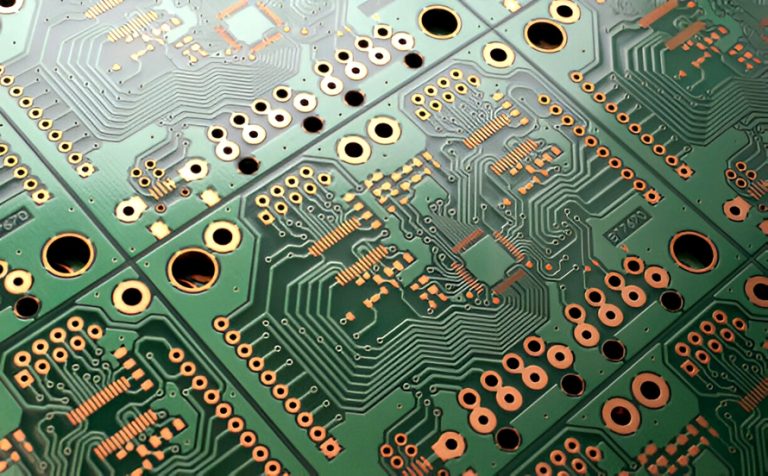
A Halogen-Free PCB is a printed circuit board manufactured without intentionally using halogen-based materials, particularly halogenated flame retardants. Halogens are a group of chemical elements that includes:
- Fluorine (F)
- Chlorine (Cl)
- Bromine (Br)
- Iodine (I)
- Astatine (At)
Traditional PCB materials may contain brominated flame retardants (BFRs) because of their excellent flame-retardant properties. These materials help improve fire resistance and meet safety requirements. However, concerns about toxic and corrosive emissions during combustion have encouraged the electronics industry to develop more environmentally friendly alternatives.
As environmental regulations become stricter and manufacturers place greater emphasis on sustainable electronics, Halogen-Free Circuit Board technology is becoming increasingly important. By replacing conventional halogen-containing materials with alternative resin systems and flame-retardant technologies, manufacturers can reduce the environmental impact of electronic products while maintaining the electrical, thermal, and mechanical performance required for modern applications.
Benefits of Halogen-Free PCBs
The use of halogen-free materials provides advantages from both environmental and technical perspectives.
Environmental Benefits
Reduced Toxic Emissions
When halogen-containing materials burn or are exposed to extremely high temperatures, they may generate corrosive and potentially hazardous gases. Halogen-free materials can reduce the formation of these substances during combustion, helping improve workplace and environmental safety.
Easier Recycling
A Halogen-Free Circuit Board can simplify end-of-life processing by reducing the presence of halogen-containing compounds. This can help lower the risk of hazardous emissions during recycling and disposal.
Regulatory Compliance
Halogen-free materials can help manufacturers meet increasingly strict environmental requirements and customer specifications. Depending on the application and market, PCB manufacturers may need to comply with regulations and standards such as RoHS and other restricted-substance requirements.
Technical Advantages
Excellent Thermal Stability
Many Halogen-Free PCB Materials are engineered for good thermal reliability. Advanced resin systems can provide stable performance under elevated temperatures, making them suitable for automotive electronics, industrial equipment, power electronics, and other demanding applications.
Improved High-Frequency Performance
Certain halogen-free laminate systems can offer controlled dielectric properties and low dissipation factors. These characteristics are particularly useful in high-speed and high-frequency applications where signal integrity is critical.
Good Mechanical Reliability
Modern halogen-free laminate technologies are designed to maintain mechanical strength, dimensional stability, and reliability throughout PCB fabrication and assembly. Proper material selection can also improve resistance to thermal cycling and other environmental stresses.
Types of Halogen-Free PCBs and Their Characteristics
Halogen-free PCBs can be classified according to their substrate materials, construction, performance requirements, and intended applications. Different material systems are selected to achieve the required balance between electrical performance, thermal reliability, mechanical strength, flexibility, and manufacturing cost.
Halogen-Free FR-4 PCB
The Halogen-Free FR-4 PCB is one of the most widely used halogen-free PCB types. It generally uses glass-fiber-reinforced epoxy laminate formulated with halogen-free flame-retardant systems.
Key characteristics:
- Material composition: Uses halogen-free epoxy resin and alternative flame-retardant systems, commonly based on phosphorus, nitrogen, or other non-halogen technologies.
- Thermal performance: Depending on the material grade, Tg can typically fall within the approximately 150°C to 180°C range.
- Electrical performance: Provides stable dielectric properties and is suitable for a wide range of general-purpose electronic applications.
- Applications: Commonly used in industrial controls, consumer electronics, communication equipment, and automotive electronics.
Halogen-Free High-Tg PCB
Halogen-free high-Tg PCBs are designed for applications exposed to elevated operating temperatures. Compared with standard FR-4 materials, these laminates provide higher glass transition temperatures and improved thermal reliability.
Key characteristics:
- Material composition: Uses high-Tg epoxy resin systems formulated without halogen-based flame retardants.
- Thermal performance: Depending on the material grade, Tg may range from approximately 170°C to above 200°C, with specialized materials offering even higher thermal performance.
- Electrical performance: Controlled dielectric properties make these materials suitable for demanding digital and high-speed applications.
- Applications: Used in automotive electronics, industrial control systems, power equipment, and high-reliability products.
Halogen-Free Polyimide PCB
Halogen-free polyimide PCBs are recognized for their excellent thermal stability, chemical resistance, and mechanical reliability. They are particularly suitable for demanding environments where conventional epoxy materials may not provide sufficient performance.
Key characteristics:
- Material composition: Uses polyimide-based materials formulated without halogen-containing additives.
- Thermal performance: Polyimide materials can provide excellent resistance to high temperatures, with certain grades supporting continuous operating temperatures around 200°C or higher.
- Mechanical performance: Offers high mechanical strength and dimensional stability.
- Applications: Suitable for aerospace, automotive, industrial, and other high-temperature applications.
Halogen-Free Flexible PCB
A flexible PCB is designed to bend, fold, or conform to complex three-dimensional structures. A Halogen-Free Flexible PCB combines this flexibility with halogen-free material technology.
Key characteristics:
- Material composition: Typically uses halogen-free polyimide or other suitable flexible film materials.
- Thermal performance: Provides good thermal resistance for applications involving repeated bending and temperature variations.
- Mechanical performance: Offers excellent flexibility, durability, and resistance to mechanical stress.
- Applications: Commonly used in wearable electronics, medical devices, cameras, automotive electronics, and compact consumer products.
Halogen-Free High-Frequency PCB
Halogen-free high-frequency PCBs are designed for applications requiring stable electrical performance at high operating frequencies.
Key characteristics:
- Material composition: May use PTFE-based, ceramic-filled, or other specialized high-frequency laminate systems.
- Thermal performance: Provides good thermal stability for high-frequency applications.
- Electrical performance: Low dielectric loss and controlled dielectric constant help reduce signal loss and maintain signal integrity.
- Applications: Used in RF communication systems, radar, wireless equipment, high-speed networking, and other high-frequency applications.
Halogen-Free Metal Core PCB
A metal core PCB incorporates a metal layer, commonly aluminum or copper, to improve heat dissipation. In a halogen-free version, the dielectric and other relevant material systems are selected to meet halogen-free requirements.
Key characteristics:
- Material composition: Commonly uses an aluminum or copper core with a halogen-free dielectric layer.
- Thermal performance: Provides excellent heat dissipation and is particularly suitable for thermal management applications.
- Mechanical performance: Offers good structural strength and mechanical stability.
- Applications: Widely used in LED lighting, automotive lighting, power electronics, and high-power applications.
Halogen-Free HDI PCB
A high-density interconnect PCB uses fine traces, microvias, and advanced interconnection structures to achieve higher wiring density within a limited board area. A Halogen-Free HDI PCB combines these advanced structural technologies with halogen-free material systems.
Key characteristics:
- Material composition: Uses advanced halogen-free laminate materials with controlled electrical and thermal properties.
- Thermal performance: Suitable for high-density electronic assemblies where heat generation and thermal reliability are important considerations.
- Electrical performance: Controlled dielectric properties and low loss can support high-speed signal transmission.
- Applications: Commonly used in smartphones, wearable devices, networking equipment, advanced automotive electronics, and compact electronic systems.
Applications of Halogen-Free PCBs
The combination of environmental advantages, electrical reliability, and material performance has expanded the use of Halogen-Free PCB technology across multiple industries.
Consumer Electronics
Consumer electronics manufacturers are increasingly adopting halogen-free materials as part of their environmental and product safety strategies. Smartphones, tablets, laptops, smart home devices, and other compact electronic products can benefit from halogen-free PCB technologies.
Companies such as Apple and Samsung have also placed greater emphasis on reducing hazardous substances and improving the environmental performance of electronic products.
Automotive Electronics
The automotive industry has increasingly demanding requirements for safety, reliability, thermal performance, and environmental durability. Halogen-free PCBs can be used in automotive control systems, infotainment systems, lighting modules, advanced driver-assistance systems, and other electronic assemblies.
Medical Electronics
Medical equipment requires high reliability and stable electrical performance because PCB failure can affect the operation of critical equipment. Halogen-free PCBs can be used in equipment such as ultrasound systems, CT scanners, monitoring equipment, and laser treatment devices.
Telecommunications and Networking
Telecommunication equipment requires excellent signal integrity, thermal performance, and long-term reliability. Halogen-free PCBs are used in networking products such as routers, switches, servers, communication modules, and other high-speed electronic systems.
LED Lighting
Halogen-free PCBs are widely used in LED lighting modules, particularly where thermal management and long-term reliability are important. Metal-core and other thermally optimized PCB structures can further improve heat dissipation.
Wearable Electronics
Wearable products are often small, lightweight, and in direct or close contact with users. Halogen-free PCB technologies can be used in smartwatches, fitness trackers, wearable ECG monitors, VR devices, wireless earbuds, and other compact electronic products.
Challenges in Implementing Halogen-Free PCB Technology
Although halogen-free PCBs are becoming increasingly common, manufacturers still need to address several challenges involving materials, manufacturing processes, performance, and cost.
Cost Considerations
Material Cost
Alternative flame-retardant systems and specialized resin formulations can be more expensive than some conventional halogen-containing materials. Material selection therefore has a direct influence on the overall PCB manufacturing cost.
Manufacturing Adjustments
Switching to halogen-free materials may require adjustments to lamination parameters, drilling conditions, desmear processes, plating, soldering, and other manufacturing steps. These process changes can increase initial production costs.
Performance Considerations
Flame Retardancy
Halogen-based flame retardants have historically provided highly effective flame-retardant performance. Developing halogen-free alternatives that meet the same safety and reliability requirements can be technically challenging.
Manufacturers must carefully evaluate flame resistance, thermal decomposition behavior, electrical reliability, and compatibility with the overall laminate system.
Material Properties
Alternative materials must provide a balanced combination of electrical, thermal, mechanical, and processing properties. A material that performs well in one area may require optimization in another. Therefore, extensive testing and process qualification are important before mass production.
Advances in Halogen-Free PCB Technology
To overcome these challenges, material suppliers and PCB manufacturers continue to improve halogen-free technologies through new materials, manufacturing processes, and quality-control methods.
Innovative Materials
Advanced Flame Retardants
Phosphorus-based and other non-halogen flame-retardant technologies are increasingly used in modern laminate systems. These materials can provide effective flame resistance while supporting environmental requirements.
Nanotechnology
Nanomaterials and advanced inorganic fillers are being investigated for PCB applications. Depending on the formulation, they can improve flame retardancy, thermal stability, mechanical strength, and other material properties.
Manufacturing Process Improvements
Advanced Lamination Technology
Modern lamination processes allow manufacturers to achieve better control of resin flow, layer bonding, dimensional stability, and thermal performance. Precise process control is particularly important for multilayer and HDI PCB manufacturing.
Enhanced Testing and Quality Control
Comprehensive testing is essential for verifying the reliability of halogen-free PCBs. Thermal, electrical, mechanical, dimensional, and environmental tests can be used to evaluate whether the finished board meets the required specifications.
For manufacturers such as Kingda, controlling material selection and production parameters throughout the PCB Manufacturing process is essential to maintaining consistent quality and reliability.
Replacing Brominated Flame Retardants
Brominated flame retardants have traditionally been used to improve the flame resistance of PCB laminates. In halogen-free PCB technology, these materials are replaced with alternative flame-retardant systems that do not rely on halogen-containing compounds.
Common alternatives include:
Phosphorus-Based Compounds
Phosphorus-based flame retardants are widely used in halogen-free PCB laminate systems. They can provide effective flame-retardant performance and are compatible with a variety of resin technologies.
Metal Hydroxides
Aluminum hydroxide and magnesium hydroxide are examples of inorganic flame retardants. When exposed to high temperatures, they can release water and absorb heat, helping reduce the temperature of the material and slow combustion.
Inorganic Fillers
Materials such as silica and alumina can be incorporated into certain PCB formulations to improve thermal and mechanical properties. They may also contribute to flame resistance when used as part of an appropriately engineered material system.
How Kingda Supports Halogen-Free PCB Manufacturing
As PCB applications become more demanding, selecting the appropriate material and manufacturing process is critical to achieving reliable performance. Kingda can support customers in evaluating PCB material requirements according to factors such as layer count, operating temperature, signal frequency, mechanical structure, thermal management, and application environment.
For halogen-free PCB projects, manufacturers should consider more than simply whether a laminate is labeled “halogen-free.” Material certification, dielectric properties, Tg, thermal decomposition characteristics, copper adhesion, moisture resistance, manufacturing compatibility, and final application requirements should all be evaluated.
By combining appropriate Halogen-Free PCB Materials with controlled fabrication processes and comprehensive quality management, manufacturers can produce reliable circuit boards for modern electronic applications while supporting environmental and regulatory objectives.
Conclusion
The transition toward Halogen-Free PCB technology reflects the electronics industry’s growing focus on environmental responsibility, product safety, and long-term reliability. From Halogen-Free FR-4 PCB and high-Tg materials to flexible, high-frequency, metal-core, and Halogen-Free HDI PCB solutions, manufacturers now have a broader range of material options for different applications.
Although higher material costs, manufacturing adjustments, and flame-retardant performance remain important challenges, continued advances in resin chemistry, flame-retardant systems, nanotechnology, lamination, and quality control are improving the overall performance of halogen-free PCBs.
For electronics manufacturers, selecting the right Halogen-Free Circuit Board is not only an environmental decision but also a technical one. Working with an experienced PCB manufacturer such as Kingda can help ensure that material selection, PCB design, fabrication, and quality requirements are properly coordinated for reliable end products.