What Is a Taconic PCB?
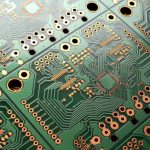
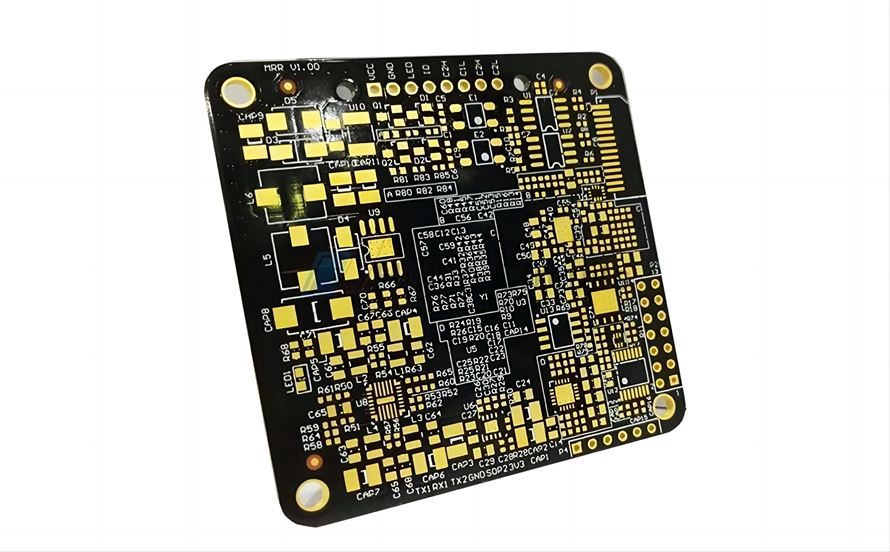
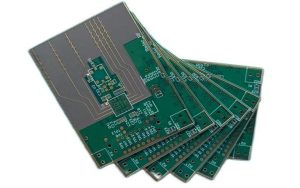
A Taconic PCB is a printed circuit board manufactured using high-performance laminate materials developed by Taconic’s Advanced Dielectric division. These materials are engineered primarily for demanding RF, microwave, and high-speed digital applications where conventional PCB materials may not provide sufficient electrical or thermal performance.
Taconic has developed a range of advanced dielectric materials designed to provide controlled dielectric properties, low signal loss, thermal stability, and reliable performance at high frequencies. As a result, Taconic PCB Materials are widely considered for applications where signal integrity, impedance control, and dimensional stability are critical.
Many Taconic laminates are based on PTFE or ceramic-filled PTFE systems. PTFE, or polytetrafluoroethylene, is a fluoropolymer known for its excellent electrical insulation, low dielectric loss, low friction, chemical resistance, and strong thermal stability. These characteristics make PTFE particularly useful for high-frequency circuit designs.
For engineers developing RF, microwave, radar, telecommunications, aerospace, and other high-speed electronic systems, selecting the appropriate Taconic material is an important part of achieving stable and predictable PCB performance.
Common Types of Taconic PCBs
Taconic offers a broad range of high-performance dielectric materials. The appropriate material depends on the operating frequency, dielectric constant, loss requirements, thermal environment, mechanical structure, and manufacturing process.
Taconic RF and Microwave PCB
A Taconic RF PCB is designed for radio-frequency applications where low dielectric loss and stable electrical characteristics are essential.
Taconic’s RF and microwave material families include several laminate options developed for different performance and cost requirements.
Common examples include:
- TLC Series: Designed as cost-effective materials for RF and microwave applications while maintaining suitable electrical performance.
- TLC-27: A low-cost RF laminate designed for applications requiring stable electrical characteristics at frequencies extending into the GHz range.
- TLC-30: A low-loss laminate that provides a balance of electrical performance, thermal properties, and cost efficiency.
When selecting an RF laminate, engineers should evaluate dielectric constant, dissipation factor, copper surface characteristics, thickness tolerance, and frequency-dependent performance rather than focusing on frequency rating alone.
Taconic High-Speed Digital PCB
High-speed digital designs require tight control of impedance, dielectric properties, transmission-line loss, and signal integrity. Taconic offers materials developed specifically for these applications.
Examples include:
- DS-TSM
- TSM-DS3
These materials can be considered for high-speed digital circuits where controlling insertion loss, propagation characteristics, and impedance is essential.
A High-Speed PCB using an appropriate low-loss laminate can help reduce transmission losses and maintain cleaner signal waveforms, particularly as data rates continue to increase.
Taconic PTFE PCB
A PTFE PCB uses polytetrafluoroethylene-based dielectric materials to achieve low dielectric loss and stable high-frequency performance.
Taconic offers several PTFE-based laminate families for RF and microwave applications. Examples include:
- RF-35
- RF-45
- TLY-5A
PTFE-based materials are particularly valuable when minimizing dielectric loss is a major design requirement. However, PTFE laminates may require more specialized fabrication processes than conventional FR-4 materials, so material selection and manufacturing capability should be evaluated together.
Specialized Taconic PCB Materials
In addition to conventional RF and microwave laminates, specialized material structures can be used to address particular thermal, mechanical, or dimensional requirements.
Metal-Core PCB
Metal-core constructions incorporate aluminum or copper to improve heat dissipation and mechanical stability. They can be considered for applications where thermal management is a major design requirement.
Ceramic-Filled PTFE Laminates
Ceramic fillers can be incorporated into PTFE-based materials to control dielectric properties, reduce the coefficient of thermal expansion (CTE), and improve dimensional stability.
These materials can be particularly useful in demanding RF and microwave designs where stable electrical characteristics must be maintained over temperature changes.
Applications of Taconic PCBs
The combination of low dielectric loss, controlled dielectric properties, thermal stability, and high-frequency performance makes Taconic PCB Materials suitable for a wide range of advanced electronic applications.
Telecommunications
Taconic materials are used in communication equipment where signal integrity and low transmission loss are important. Potential applications include:
- Routers
- Network switches
- Base-station equipment
- Communication modules
- High-frequency networking systems
Automotive Electronics
Automotive electronics increasingly rely on high-frequency technologies, particularly for sensing, communication, and advanced driver-assistance systems.
Taconic Microwave PCB materials can be considered for applications such as:
- Electronic control units (ECUs)
- Advanced driver-assistance systems (ADAS)
- Automotive radar
- Infotainment systems
- Vehicle communication systems
Medical Equipment
High-frequency and high-performance PCB materials are also used in specialized medical electronics. Potential applications include imaging and diagnostic equipment, RF systems, and other devices requiring stable electrical performance.
Consumer Electronics
Advanced wireless and high-speed electronic products may require low-loss PCB materials to maintain signal quality in compact designs. Applications can include wireless modules, high-speed communication devices, and other sophisticated consumer electronics.
Wireless Communication
Wireless communication systems operate across a broad range of frequencies and often require precise impedance control and low insertion loss. Taconic materials can therefore be considered for antennas, RF modules, wireless infrastructure, and other high-frequency circuits.
Aerospace and Defense
Aerospace and defense systems often require high reliability under demanding environmental conditions. RF and microwave circuits used in radar, satellite communications, navigation systems, and electronic warfare equipment may benefit from specialized high-frequency laminate materials.
High-Frequency Applications
High-Frequency PCB designs place greater demands on dielectric properties, conductor geometry, surface roughness, and impedance control than conventional low-frequency circuits.
Taconic materials can be used in applications such as:
- RF amplifiers
- Microwave filters
- Antenna circuits
- Radar systems
- Satellite communication
- Wireless infrastructure
Advantages of Taconic PCBs
Taconic materials are widely selected for demanding PCB applications because they provide a combination of electrical, thermal, and mechanical characteristics that can be difficult to achieve with standard materials.
High Electrical Performance
Taconic laminates are designed for applications requiring controlled dielectric characteristics and low signal loss. Their electrical properties make them suitable for RF, microwave, and high-speed digital circuits.
For high-frequency systems, maintaining predictable dielectric behavior is essential because even relatively small changes in material properties can affect impedance, phase response, propagation delay, and overall signal quality.
Excellent Signal Integrity
One of the primary advantages of Taconic RF PCB materials is their ability to support signal integrity at high frequencies.
Low dielectric loss helps reduce energy loss as signals travel through the transmission line. Combined with proper PCB stackup, trace geometry, impedance control, and connector design, low-loss materials can contribute to more reliable high-frequency signal transmission.
Effective Thermal Management
Some Taconic materials provide improved thermal characteristics compared with conventional low-cost PCB laminates. This can be beneficial when high-frequency circuits generate significant heat or operate continuously under demanding conditions.
However, thermal performance depends on the complete PCB structure, including copper thickness, dielectric thickness, thermal vias, heat sinks, and the enclosure.
Dimensional Stability
Dimensional stability is particularly important for multilayer RF and microwave circuits. Changes in board dimensions can affect trace geometry, layer registration, and impedance.
Appropriate Taconic laminate systems can provide stable dimensional characteristics under changes in temperature and humidity, helping manufacturers maintain consistent fabrication results.
Material Selection Flexibility
Taconic provides different laminate families with different dielectric constants, loss characteristics, thermal properties, thicknesses, and construction options.
This allows engineers to select a material according to the requirements of a specific application instead of using one material for every design.
Disadvantages and Considerations of Taconic PCBs
Although Taconic materials offer significant performance advantages, they are not always the best choice for every PCB project.
Higher Material Cost
Compared with conventional FR-4 PCB materials, specialized Taconic laminates are generally more expensive. The higher cost is primarily associated with their advanced electrical and thermal properties.
For simple, low-frequency electronic products, a conventional FR-4 material may provide sufficient performance at a lower cost.
More Complex Manufacturing
PTFE and other high-performance laminates can require specialized manufacturing techniques. Drilling, copper bonding, lamination, plating, and dimensional control may require additional process optimization.
Therefore, PCB manufacturers need appropriate equipment, process knowledge, and experience when fabricating complex high-frequency boards.
Material Availability
Specialized laminate materials may not always be as readily available as standard FR-4 materials. Depending on the material grade, thickness, copper configuration, and project quantity, procurement lead times may be longer.
Engineers should confirm material availability early in the design and production planning stages.
Assembly Compatibility
The different thermal and mechanical properties of high-frequency laminates can affect PCB assembly processes. Soldering, component attachment, thermal cycling, and multilayer construction should be evaluated during product development.
Handling and Storage
Some high-performance materials require careful handling and storage to prevent contamination, moisture-related problems, mechanical damage, or changes in material properties.
Proper material management is therefore an important part of maintaining PCB manufacturing consistency.
Key Factors in Taconic PCB Manufacturing
The fabrication of a Taconic board includes many standard PCB manufacturing processes, but high-frequency materials require tighter process control.
Substrate Selection
Material selection is one of the most important steps in PCB Manufacturing.
Engineers should consider:
- Operating frequency
- Dielectric constant
- Dissipation factor
- Required impedance
- Signal loss
- Thermal requirements
- CTE
- Board thickness
- Copper thickness
- Mechanical requirements
The selected laminate should match both the electrical requirements of the circuit and the manufacturer’s fabrication capabilities.
PCB Stackup Design
For multilayer RF and microwave boards, stackup design has a direct impact on electrical performance.
The thickness and dielectric properties of each layer influence impedance, coupling, propagation characteristics, and signal loss. Engineers should therefore define the stackup together with the selected material rather than treating material selection as a separate process.
Drilling and Via Design
High-frequency boards require careful control of via geometry. Excessive via stubs, uncontrolled parasitic capacitance, and unnecessary discontinuities can degrade signal integrity.
Microvias, blind vias, back-drilling, and other advanced interconnection techniques may be considered depending on the design requirements.
Copper Surface and Etching Control
At high frequencies, conductor surface roughness can contribute to additional signal loss due to the skin effect.
Precise copper etching and appropriate copper foil selection are therefore important for demanding RF and microwave applications. Trace width and spacing should also be controlled throughout manufacturing.
Lamination Process
Multilayer Taconic boards require controlled lamination parameters to achieve reliable bonding and consistent dielectric thickness.
Temperature, pressure, heating rate, resin flow, and cooling conditions should be carefully controlled according to the material system and stackup structure.
Testing and Quality Control
High-frequency PCB production requires comprehensive inspection and testing.
Depending on the application, manufacturers may evaluate:
- Dimensional accuracy
- Layer registration
- Copper thickness
- Via quality
- Impedance
- Dielectric characteristics
- Surface finish
- Electrical continuity
- Insulation resistance
- Thermal reliability
For advanced RF and microwave products, controlled impedance testing and detailed material traceability can be particularly important.
Taconic PCB vs. Conventional FR-4 PCB
Taconic and conventional FR-4 materials serve different design requirements.
FR-4 is suitable for a broad range of general-purpose electronic products because it offers a good balance between cost, mechanical strength, electrical performance, and manufacturability.
Taconic materials, by comparison, are primarily selected when low loss, stable dielectric performance, high-frequency operation, or specialized thermal characteristics are more important than minimizing material cost.
Therefore, the best material depends on the actual application. Using an expensive high-frequency laminate in a simple low-speed circuit may provide little practical benefit, while using standard FR-4 in a demanding microwave design may result in excessive signal loss or unstable electrical performance.
How to Select the Right Taconic PCB Material
Before selecting a Taconic material, engineers should evaluate the complete electrical and mechanical requirements of the product.
Key considerations include:
- Operating frequency: Determine the actual frequency range of the application.
- Signal-loss requirements: Evaluate insertion loss and dielectric loss requirements.
- Impedance control: Define single-ended and differential impedance targets.
- Thermal environment: Consider operating temperature, heat generation, and thermal cycling.
- Board structure: Determine the required layer count, dielectric thickness, and copper configuration.
- Manufacturing capability: Confirm that the PCB manufacturer can reliably process the selected material.
- Cost and availability: Consider material price, lead time, minimum order requirements, and long-term supply stability.
Material selection should ideally be completed in cooperation with the PCB manufacturer so that electrical performance and manufacturability can be evaluated simultaneously.
Kingda’s Approach to Taconic PCB Manufacturing
For high-frequency PCB projects, material selection alone does not guarantee reliable performance. The PCB manufacturer must also control the complete fabrication process, from engineering review and stackup development to lamination, drilling, plating, etching, surface treatment, and final testing.
Kingda can support Taconic-based PCB projects by evaluating material requirements according to the customer’s operating frequency, layer structure, impedance targets, thermal conditions, and application environment.
For demanding RF, microwave, and high-speed designs, Kingda focuses on coordinating Taconic PCB Materials with appropriate manufacturing processes. This helps ensure that material properties, PCB geometry, and production parameters work together to achieve stable and repeatable performance.
Conclusion
A Taconic PCB is designed for electronic applications where conventional PCB materials may not provide the required electrical or thermal performance. Taconic’s PTFE, ceramic-filled PTFE, and other advanced laminate technologies can provide low dielectric loss, controlled electrical properties, thermal stability, and reliable performance for demanding RF and microwave applications.
From telecommunications and automotive radar to aerospace, medical equipment, wireless communication, and high-speed digital systems, Taconic Microwave PCB and other high-performance solutions can support increasingly demanding electronic designs.
However, these advantages come with higher material costs and more demanding manufacturing requirements. Successful implementation therefore depends on selecting the appropriate laminate, designing the correct stackup, controlling impedance and conductor geometry, and working with a PCB manufacturer experienced in high-frequency materials.
By combining the right Taconic PCB Materials with precise design and controlled PCB Manufacturing processes, engineers can achieve reliable signal integrity and long-term performance in advanced electronic systems.