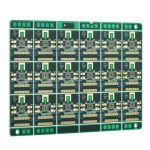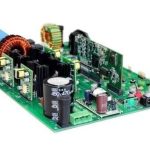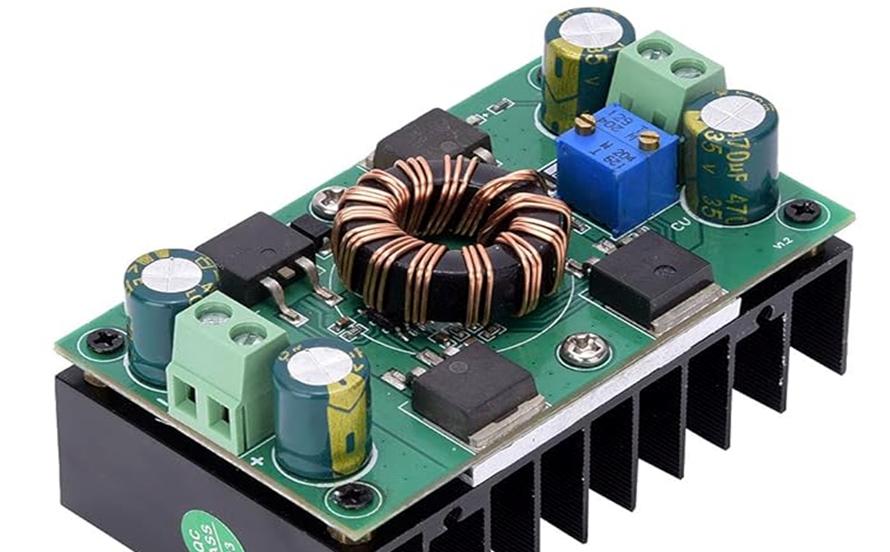
What Is a Power PCB?
A Power PCB is a printed circuit board specifically designed to handle relatively high currents, high voltages, or high power levels. Unlike conventional PCBs used primarily for low-power signal processing, power boards must efficiently manage current flow, heat generation, electrical isolation, and mechanical stress.
Depending on the application, a High-Power PCB may use thicker copper layers, larger copper areas, heavier copper weights, multilayer structures, thermally conductive materials, and specialized board constructions.
The primary objective is to provide reliable Power Distribution while minimizing electrical losses and maintaining safe operating temperatures.
Because high-current and high-voltage circuits can generate substantial heat and electromagnetic interference (EMI), the design and manufacturing requirements for a power PCB are generally more demanding than those for standard PCBs.
Modern power PCBs are widely used in power supplies, industrial automation, renewable-energy systems, electric vehicles, motor controllers, telecommunications infrastructure, medical equipment, LED lighting, robotics, and other power-intensive electronic systems.
Benefits of Using Power PCBs
A properly engineered Power PCB provides several important electrical, thermal, mechanical, and economic advantages.
Higher Current-Carrying Capacity and Efficiency
Power PCBs commonly use thicker copper conductors or larger copper areas to accommodate high current.
Compared with thin standard traces, heavier copper can reduce conductor resistance and minimize I²R losses. This helps improve overall energy efficiency and reduce unnecessary heat generation.
For high-current applications, trace width, copper thickness, temperature rise, and current density should be evaluated together rather than considering trace width alone.
Effective Thermal Management
Thermal Management is one of the most important considerations in power PCB design.
High-power components such as MOSFETs, IGBTs, rectifiers, regulators, and power modules can generate significant heat during operation.
Common thermal solutions include:
- Thermal vias
- Large copper planes
- Heavy copper layers
- Copper-filled vias
- Metal-core PCB structures
- Heat sinks
- Thermal interface materials
- Embedded copper structures
- Forced-air cooling
An effective thermal path helps transfer heat away from hot components and prevents excessive temperature rise.
Excellent Durability and Reliability
A High-Power PCB must withstand electrical and thermal stress over extended operating periods.
Appropriate materials, copper thickness, plating quality, solder-joint design, and thermal management can improve the board’s ability to withstand repeated heating and cooling cycles.
For demanding applications, designers should also consider CTE mismatch, mechanical vibration, moisture, contamination, and long-term thermal aging.
Space and Weight Optimization
A well-designed power PCB can integrate multiple power-management functions into a compact structure.
Instead of using several separate circuit boards, power conversion, protection, control, and monitoring functions can sometimes be integrated into one optimized PCB assembly.
This can reduce the overall system footprint and simplify mechanical integration.
Improved Electrical Protection
Power circuits often operate at significantly higher current or voltage levels than ordinary signal circuits.
The PCB layout must therefore provide appropriate clearance, creepage distance, insulation, isolation, and grounding.
Proper separation between high-voltage and low-voltage circuits helps reduce the risk of electrical arcing, short circuits, and insulation failure.
Applicable safety and PCB design standards should be considered according to the end application and market requirements.
Lower Total Operating Cost
Although a power PCB can cost more initially because of heavier copper, advanced materials, thermal structures, or additional manufacturing processes, improved efficiency and reliability can reduce long-term operating costs.
Lower power loss means less wasted energy, while effective thermal management can extend component life and reduce maintenance requirements.
Flexible Applications
Power PCBs can be designed for different current levels, voltage ranges, thermal conditions, and mechanical configurations.
This flexibility allows them to support applications ranging from compact consumer power supplies to large industrial power-conversion systems.
Stable Performance
A properly designed Power Electronics PCB can maintain stable electrical performance under high-load conditions.
Careful power routing, grounding, thermal design, component selection, and electromagnetic compatibility can improve system stability and reliability.
Power PCB Applications
The demand for Power PCB technology continues to grow as electronic systems become more electrified and energy-efficient.
Power Supply Units (PSUs)
Power supply units convert electrical energy from an input source into the voltage and current required by electronic equipment.
Power PCBs are widely used in AC/DC and DC/DC converters, adapters, industrial power supplies, computer power systems, and charging equipment.
The PCB must accommodate power switching devices, transformers or inductors, rectifiers, filtering components, and protection circuits while maintaining adequate thermal and electrical isolation.
Automotive Electronics
Automotive applications increasingly depend on high-current and high-voltage electronics.
Power PCBs are used in:
- Battery management systems (BMS)
- DC/DC converters
- On-board chargers
- Inverters
- Motor controllers
- Automotive lighting
- Infotainment systems
- Advanced driver-assistance systems (ADAS)
Electric and hybrid vehicles place particularly demanding requirements on Power Distribution, thermal performance, vibration resistance, and electrical reliability.
Renewable Energy Systems
Solar and wind energy systems require efficient power conversion and energy management.
Power PCBs are commonly found in solar inverters, energy-storage systems, charge controllers, and wind-power conversion equipment.
These boards manage energy conversion between generation systems, batteries, electrical grids, and loads.
Industrial Automation
Industrial equipment often operates continuously under high electrical and thermal loads.
Power PCBs are used in motor drives, servo controllers, industrial power supplies, robotic systems, PLC-related equipment, and machine-control systems.
The PCB must often operate reliably in environments involving vibration, dust, temperature variation, and electromagnetic noise.
Telecommunications Infrastructure
Telecommunications infrastructure requires stable power delivery for network equipment.
Power PCBs can be used in base-station power supplies, RF power amplifiers, networking equipment, communication systems, and backup power systems.
Reliable power conversion and Power Distribution are essential for maintaining continuous operation.
Medical Equipment
Medical systems such as imaging equipment, patient-monitoring systems, diagnostic equipment, and other electronic medical devices may require specialized power-management circuits.
Power PCBs must provide stable power while meeting the electrical safety, reliability, and thermal requirements associated with the specific medical application.
LED Lighting
LED systems require controlled current and voltage to operate efficiently.
Power PCBs are used in LED drivers, lighting controllers, architectural lighting systems, industrial lighting, and automotive lighting.
Efficient power conversion and good Thermal Management can help improve LED system efficiency and operating life.
Motor Control
Motor-control systems use power electronics to regulate motor speed, torque, acceleration, and direction.
Power PCBs are commonly used in motor drives, variable-frequency drives, servo controllers, pumps, fans, compressors, and industrial machinery.
The board must efficiently handle switching currents while controlling electromagnetic noise and heat.
Electrified Transportation
The growth of electric vehicles, electric industrial equipment, charging infrastructure, and other electrified transportation systems is increasing demand for advanced power electronics.
Power PCBs are critical for energy conversion, battery management, charging, motor control, and high-voltage distribution.
Robotics and Industrial Automation
Robotic systems require compact and reliable power-management solutions for motors, actuators, sensors, controllers, and communication modules.
A well-designed power PCB can integrate several of these functions while providing the current capacity and thermal performance required by robotic equipment.
Internet of Things (IoT)
Although many IoT devices consume relatively little power, efficient power management is essential for battery-powered products.
Power-management PCBs can regulate input voltage, control charging, manage battery discharge, and reduce unnecessary energy consumption.
5G Communication
5G infrastructure contains high-performance processors, RF circuits, power amplifiers, and network-management systems.
Power PCBs provide stable power conversion and distribution for these systems while helping manage the heat generated by high-power RF and processing components.
Challenges of Power PCB Design
Despite their advantages, power PCBs present several technical challenges.
Thermal Management
Heat is one of the biggest limitations in high-power electronic systems.
When component temperature exceeds the recommended operating range, efficiency can decrease and component lifetime can be significantly reduced.
Effective Thermal Management therefore needs to be incorporated at the PCB and system levels.
Designers should consider the complete thermal path from the semiconductor junction to the PCB, heat-spreading structure, heat sink, and surrounding environment.
Signal Integrity
Power circuits often contain rapidly switching currents and high dv/dt or di/dt transitions.
These switching events can generate EMI and interfere with nearby signal circuits.
Good Signal Integrity and EMC performance require careful consideration of:
- Current return paths
- Ground-plane design
- Switching-loop area
- Trace spacing
- Power-plane configuration
- Decoupling
- Shielding
- Differential routing
- Component placement
High-current switching loops should generally be kept as compact as possible to reduce parasitic inductance and unwanted radiation.
Complex PCB Layout
Power PCB layouts require simultaneous optimization of power paths, control signals, thermal structures, grounding, and mechanical constraints.
High-current traces should be designed according to current requirements and acceptable temperature rise, while sensitive control circuits should be isolated from noisy switching nodes whenever possible.
High-Voltage Isolation
High-voltage power boards require appropriate creepage and clearance distances.
The required spacing depends on factors such as operating voltage, pollution degree, insulation category, material properties, and applicable safety standards.
Designers should define these requirements before routing the PCB rather than attempting to increase spacing after the layout is complete.
Manufacturing Complexity
Heavy copper, thick boards, large copper areas, thermal structures, and specialized materials can make Power PCB Manufacturing more challenging.
For example, large copper areas can affect etching uniformity and thermal balance during fabrication. Heavy copper can also influence via filling, plating, soldering, and lamination processes.
Therefore, the PCB design should be reviewed against the manufacturer’s actual production capabilities.
Key Design Considerations for Power PCBs
A reliable Power PCB requires close coordination between electrical design, thermal engineering, mechanical design, and manufacturing.
Copper Thickness
Copper thickness is one of the most important parameters in high-current PCB design.
Increasing copper thickness can improve current-carrying capability and reduce resistance, but it can also increase manufacturing complexity and cost.
The appropriate copper weight should therefore be determined based on current, temperature rise, trace geometry, available space, and manufacturing capability.
Power Distribution
The Power Distribution network should minimize voltage drop and unwanted parasitic effects.
High-current paths should be kept short and wide where practical, while power and ground structures should be designed to provide low-impedance paths.
Switching Loop Optimization
In switching power supplies and motor-control circuits, high di/dt loops should be minimized.
A smaller loop area generally helps reduce parasitic inductance and electromagnetic radiation.
Thermal Vias and Copper Planes
Thermal vias can transfer heat from surface-mounted components into internal copper layers.
Large copper planes can then distribute the heat across a greater area.
For very high-power applications, additional thermal structures such as heat sinks, metal cores, or embedded copper may be necessary.
Material Selection
Material selection should consider:
- Tg
- CTE
- Thermal conductivity
- Dielectric constant
- Dielectric loss
- Copper thickness
- Moisture resistance
- Mechanical strength
For demanding applications, high-Tg or thermally enhanced materials may be preferred.
Power PCB Manufacturing Process
Power PCB Manufacturing requires careful process control from material preparation through final testing.
A typical process includes:
- Material preparation
- Inner-layer imaging
- Circuit etching
- Lamination
- Drilling
- Desmear
- Copper plating
- Outer-layer circuit formation
- Solder mask application
- Surface finishing
- Electrical testing
- Thermal and dimensional inspection
- Final quality inspection
For heavy-copper boards, additional process controls may be required to maintain consistent copper thickness, plating quality, line geometry, and dimensional stability.
DFM analysis is particularly important before production because power PCB designs often contain large copper areas, different copper weights, high-current vias, and specialized thermal structures.
Why Choose Kingda for Power PCB Manufacturing?
Manufacturing a reliable Power PCB requires more than simply increasing copper thickness. The manufacturer must understand the relationship between electrical performance, thermal management, material selection, PCB construction, and production processes.
Kingda provides PCB manufacturing solutions for projects requiring high-current capability, multilayer structures, thermal management, and demanding reliability requirements.
Our engineering approach focuses on aligning the PCB design with realistic manufacturing capabilities while considering current capacity, thermal performance, Power Distribution, Signal Integrity, and production efficiency.
When selecting a Power PCB Manufacturing partner, customers should evaluate:
- Experience with high-current and multilayer PCB structures
- Heavy-copper manufacturing capabilities
- Stable plating and etching processes
- Thermal-management solutions
- Controlled impedance capability where required
- Reliable electrical testing
- DFM engineering support
- Material-selection assistance
- Prototype and volume-production support
- Consistent quality and delivery
Kingda can work with customers to review PCB construction, copper thickness, thermal structures, isolation requirements, and manufacturing constraints before production begins.
Conclusion
A Power PCB is designed specifically to manage high current, high voltage, or high power while maintaining reliable electrical and thermal performance.
Compared with conventional PCBs, power boards often require thicker copper, larger conductive areas, specialized materials, stronger thermal structures, and more carefully controlled manufacturing processes.
The most important design considerations include Power Distribution, copper thickness, thermal paths, high-voltage isolation, switching-loop optimization, EMI control, and Signal Integrity.
As electric vehicles, renewable energy, industrial automation, robotics, telecommunications, and advanced Power Electronics continue to develop, the demand for reliable high-power PCB technology will continue to grow.
With appropriate design optimization and controlled Power PCB Manufacturing, Kingda can help customers develop reliable PCB solutions that balance electrical performance, thermal management, manufacturability, cost, and long-term reliability.