8 Common PCB Materials and Their Applications: From FR-4 to Rogers
Selecting the right material is one of the most important decisions in PCB design and manufacturing. The substrate affects electrical performance, thermal management, mechanical strength, signal integrity, reliability, manufacturability, and overall cost.
There is no single PCB material that is ideal for every application. A material that works well for a consumer electronics product may not be suitable for a high-frequency RF system, high-power application, flexible device, or high-temperature environment.
From widely used FR-4 laminates to specialized Rogers, PTFE, ceramic, polyimide, and metal-core materials, understanding the characteristics and application areas of different PCB Materials can help engineers and purchasing teams make better decisions.
1. FR-4: The Versatile Choice for General Electronics
FR-4 is one of the most widely used PCB substrate systems in the electronics industry. It combines good electrical insulation, mechanical strength, thermal performance, manufacturability, and cost efficiency, making it suitable for a broad range of electronic products.
Typical Applications of FR-4 PCBs
FR-4 is commonly used in:
- Consumer electronics
- Industrial control systems
- Computer peripherals
- Household appliances
- General-purpose controllers
- Sensors
- Embedded electronic systems
- Communication equipment
Smartphones, tablets, wearable electronics, control boards, appliances, and many industrial products can use FR-4 when their electrical and environmental requirements are within the material’s capabilities.
Different FR-4 grades are available, so designers should consider factors such as Tg, Td, dielectric properties, thermal reliability, layer count, copper weight, and operating temperature rather than treating all FR-4 materials as identical.
For cost-sensitive, high-volume products with conventional electrical requirements, FR-4 often provides an effective balance between performance and manufacturing cost.
2. Rogers Materials: Designed for High-Frequency and RF Applications
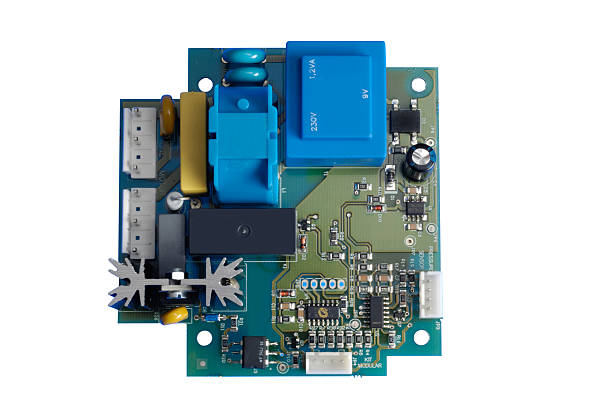
Rogers is widely associated with high-frequency PCB laminates used in demanding RF and microwave applications.
Compared with conventional FR-4, specialized Rogers materials can provide controlled dielectric characteristics and low-loss performance that are valuable for high-frequency signal transmission.
Where Are Rogers PCBs Used?
Typical applications include:
- 5G and wireless communication equipment
- RF modules
- Radar systems
- Antenna circuits
- Satellite communication
- Microwave equipment
- RF test instruments
- High-frequency sensors
At higher frequencies, dielectric loss, impedance control, transmission-line geometry, and material consistency become increasingly important. Choosing an appropriate high-frequency laminate can help engineers control insertion loss and maintain predictable signal behavior.
However, not every high-frequency PCB needs Rogers material. Material selection should be based on operating frequency, loss requirements, dielectric properties, stack-up design, fabrication capability, and cost.
For mixed-material designs, hybrid PCB constructions may also combine high-frequency laminates with conventional materials when technically appropriate.
3. Polyimide: Flexible and High-Temperature Applications
Polyimide, commonly referred to as PI, is an important substrate material for flexible printed circuits. Its combination of flexibility, thermal stability, and electrical insulation makes it suitable for applications where conventional rigid PCB materials are unsuitable.
Flexible PCB Applications
Polyimide is commonly found in:
- Flexible PCB assemblies
- Foldable electronics
- Wearable devices
- Compact interconnects
- Cameras and display modules
- Automotive flexible circuits
- Aerospace electronics
The material can support dynamic or static bending applications when the complete flexible PCB structure—including copper type, thickness, coverlay, bend radius, and layer construction—is properly designed.
High-Temperature Applications
Polyimide-based materials can also be considered where higher temperature performance is required. However, the actual temperature capability depends on the specific laminate system, copper construction, adhesive system, soldering process, and operating conditions.
Therefore, designers should evaluate the complete material system rather than assuming that every PI PCB automatically supports extreme temperatures.
For applications requiring flexible circuits, Gopcba provides dedicated assembly capabilities:
4. Metal-Core PCBs: Effective Thermal Management for High-Power Electronics
Metal-core PCBs, including aluminum-core and copper-core constructions, are designed to improve heat dissipation.
Instead of relying only on conventional FR-4 to conduct heat away from high-power components, metal-core structures provide a more direct thermal path toward a heat sink or chassis.
Common Metal-Core PCB Applications
Metal-core PCBs are widely considered for:
- LED lighting
- Power electronics
- Automotive lighting
- Motor control
- Power converters
- Industrial equipment
- High-power modules
Aluminum-core PCBs are popular because they provide a practical balance between thermal performance, weight, manufacturability, and cost.
Copper-core constructions can offer higher thermal conductivity but are generally more demanding in terms of cost and manufacturing.
For high-power designs, material selection should be evaluated together with copper thickness, thermal vias, component placement, heat spreaders, and the enclosure’s thermal architecture.
5. High-Frequency and High-Speed Materials: Supporting Signal Integrity
Modern networking and computing equipment increasingly requires PCB materials with controlled high-frequency and high-speed electrical characteristics.
Specialized laminate families from manufacturers such as Isola and others are available for applications where conventional FR-4 may not provide the desired loss, dielectric stability, or signal-integrity performance.
Typical Applications
These materials can be used in:
- Data center switches
- High-speed routers
- Servers
- Storage systems
- High-performance computing equipment
- Networking backplanes
- High-speed communication systems
As data rates increase, PCB designers need to consider:
- Dielectric constant and its consistency
- Dissipation factor
- Insertion loss
- Trace geometry
- Impedance control
- Crosstalk
- Via structures
- Stack-up configuration
The material alone does not guarantee signal integrity. PCB layout, fabrication tolerances, stack-up design, connectors, vias, and component selection all contribute to high-speed performance.
6. Ceramic PCBs: High Thermal Performance and Electrical Insulation
Ceramic PCB substrates, including alumina and aluminum nitride, are specialized materials designed for applications requiring a combination of thermal performance, electrical insulation, and environmental stability.
Alumina and Aluminum Nitride
Alumina is widely used because it provides good electrical insulation and thermal stability.
Aluminum nitride offers substantially higher thermal conductivity than many conventional ceramic materials and can be valuable in applications where efficient heat removal is a priority.
Typical Applications
Ceramic PCBs can be considered for:
- High-power electronics
- Power semiconductor modules
- High-temperature sensors
- LED and laser systems
- Automotive power electronics
- Aerospace electronics
- Specialized industrial equipment
Ceramic materials are particularly useful when thermal expansion compatibility and thermal management are important design factors.
However, ceramic substrates are generally more specialized and may have different mechanical and processing considerations compared with conventional organic laminates.
7. PTFE: Low-Loss Materials for RF and Microwave Applications
PTFE-based PCB materials are widely used in demanding RF and microwave applications because of their low-loss electrical characteristics.
They can be formulated and reinforced for improved mechanical stability while retaining the electrical properties needed for high-frequency designs.
Typical PTFE PCB Applications
Potential applications include:
- RF communication systems
- Microwave circuits
- Radar
- Antenna systems
- Aerospace electronics
- Satellite communication
- Specialized sensors
For high-frequency applications, designers may prioritize low dielectric loss, stable dielectric properties, and predictable impedance.
Although PTFE has excellent chemical resistance, PCB material selection should still consider the actual environmental exposure. It would be misleading to choose PTFE solely because an electronic device may encounter chemicals or seawater; the complete PCB construction, enclosure, coatings, connectors, and environmental protection system also matter.
8. Paper-Based Copper-Clad Laminates: Cost-Oriented Applications
Paper-based copper-clad laminates have historically been used in cost-sensitive electronic products where electrical and mechanical requirements are relatively modest.
They may be considered for:
- Simple consumer electronics
- Basic control boards
- Low-cost household products
- Simple lighting products
- Low-complexity electronic devices
Their main advantage is cost efficiency, but they generally do not offer the same thermal, mechanical, moisture-resistance, or reliability performance as higher-grade materials.
For modern products requiring higher reliability, multilayer construction, fine-line routing, high-temperature operation, or demanding environmental performance, engineers will often choose more capable laminate systems.
PCB Material Comparison at a Glance
| PCB Material | Main Strength | Typical Applications | Key Consideration |
|---|---|---|---|
| FR-4 | Balanced performance and cost | Consumer, industrial, general electronics | Choose grade based on Tg, loss, and reliability |
| Rogers | High-frequency performance | RF, microwave, 5G, radar | Higher material cost and specialized processing |
| Polyimide | Flexibility and thermal stability | Flex circuits, wearables, automotive | Bend requirements and complete flex construction |
| Metal Core | Heat dissipation | LED, power electronics, automotive | Thermal path and mechanical integration |
| High-Speed Laminate | Signal integrity | Servers, switches, data centers | Loss, Dk consistency, impedance control |
| Ceramic | Thermal performance and insulation | Power, aerospace, high-temperature electronics | Brittleness and specialized fabrication |
| PTFE | Low RF/microwave loss | Radar, antennas, RF systems | Mechanical stability and processing |
| Paper-Based CCL | Low cost | Simple, cost-sensitive electronics | Limited performance and environmental capability |
How to Choose the Right PCB Substrate
Choosing a PCB Substrate should begin with the application’s actual requirements rather than the material’s reputation or popularity.
1. Define the Operating Frequency
For low- and moderate-frequency electronics, standard FR-4 may be sufficient.
For RF and microwave systems, dielectric loss, dielectric constant, impedance stability, and transmission-line performance become much more important.
2. Evaluate Thermal Requirements
If the board contains high-power components, evaluate:
- Total heat generation
- Local power density
- Thermal resistance
- Copper thickness
- Thermal vias
- Heat sinks
- Metal-core options
- Enclosure cooling
A thermally optimized material cannot compensate for poor overall thermal design.
3. Consider Mechanical Requirements
Flexible electronics may require polyimide or other flexible materials, while rigid products may use conventional laminates.
For harsh mechanical environments, designers should also evaluate vibration, shock, board thickness, mounting points, and connector stress.
4. Consider Environmental Conditions
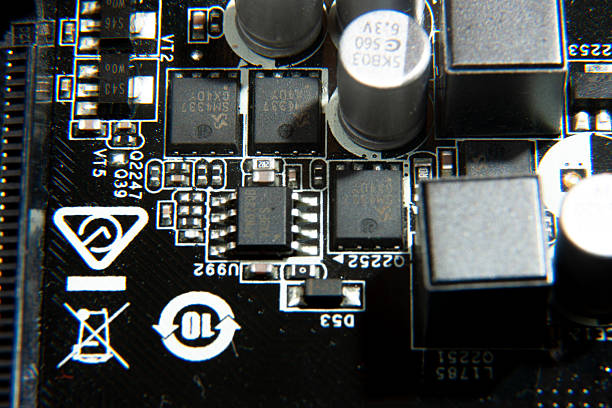
Temperature, humidity, chemicals, vibration, pressure, and other environmental conditions can all influence material selection.
A PCB used in a stable indoor environment may require a very different substrate from one used in an automotive, aerospace, industrial, or outdoor application.
5. Balance Performance and Cost
Advanced materials can provide substantial technical benefits, but they may also increase PCB fabrication costs.
The best material is therefore not necessarily the most expensive one. The objective should be to select the lowest-cost material that reliably meets the electrical, thermal, mechanical, environmental, and manufacturing requirements of the application.
PCB Material Selection Should Start at the Design Stage
Material selection should not be treated as an isolated purchasing decision. The PCB material affects stack-up design, trace geometry, impedance, drilling, lamination, thermal management, component selection, and assembly.
For example, switching from a conventional FR-4 laminate to a high-frequency material may require changes to the stack-up and impedance calculations. Similarly, choosing a flexible substrate requires the PCB layout to account for bending and mechanical movement from the beginning.
For prototypes, validating the selected material and manufacturing process before volume production can help identify problems related to signal integrity, thermal behavior, manufacturability, and reliability.
How Gopcba Supports Different PCB Material Requirements
Different applications require different PCB technologies. Gopcba can support projects involving conventional rigid PCBs, multilayer boards, flexible circuits, high-frequency applications, and other specialized PCB requirements.
From initial design review to PCB manufacturing and assembly, material selection should be evaluated together with the complete production process.
For projects that require both fabrication and assembly, integrating these stages can simplify supplier communication and improve consistency between the PCB design and the final electronic assembly.
Conclusion
The choice of PCB Materials directly influences the performance, reliability, manufacturability, and cost of an electronic product.
FR-4 remains an excellent general-purpose option for a wide range of electronics. Rogers and PTFE materials are more suitable for demanding RF and microwave applications, while high-speed laminates can help address signal-integrity challenges in modern computing and networking systems. Polyimide supports flexible electronics, metal-core PCBs improve thermal management, and ceramic substrates provide specialized thermal and electrical performance.
The right material is ultimately determined by the application—not simply by material grade or brand name.
When selecting a PCB Substrate, engineers and procurement teams should evaluate frequency, signal integrity, temperature, power density, mechanical requirements, environmental conditions, manufacturing capability, reliability targets, and total cost together.
A well-matched material provides a stronger foundation for reliable PCB manufacturing and helps ensure that the finished electronic product performs as intended throughout its service life.