PCB Demand Is Becoming More Application-Specific
The global electronics industry is undergoing a major shift in how printed circuit boards are designed, manufactured, and purchased. Instead of simply looking for general-purpose circuit boards, electronics manufacturers increasingly expect PCB suppliers to provide solutions that match specific application requirements.
Across automotive electronics, medical devices, industrial control systems, consumer electronics, AI infrastructure, and communication equipment, buyers are paying greater attention to reliability, signal integrity, thermal performance, miniaturization, customization, and manufacturing consistency.
These changes are reshaping PCB Demand Trends and influencing how engineering teams evaluate PCB suppliers.
For product developers and procurement teams, understanding these trends can help them select appropriate materials, manufacturing processes, and assembly solutions at an earlier stage of development.
1. Application Requirements Are Becoming More Specialized
One of the most important changes in the PCB market is the transition from general-purpose boards toward application-specific solutions.
Different industries operate under very different electrical, mechanical, thermal, and environmental conditions. As a result, PCB requirements can vary significantly depending on the final application.
Automotive Electronics: Reliability Comes First
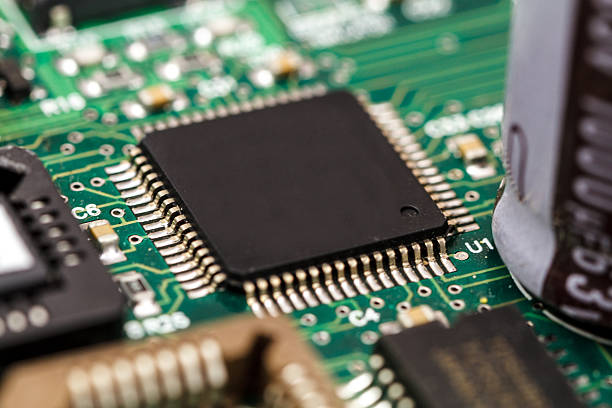
Automotive electronics represent one of the most demanding PCB applications. Boards used in battery management systems, vehicle control units, infotainment systems, ADAS equipment, sensors, and power electronics may be exposed to temperature cycling, vibration, humidity, electrical transients, and long operating periods.
Therefore, automotive customers increasingly evaluate:
- Thermal and environmental reliability
- Material selection and stack-up design
- Vibration and mechanical durability
- Controlled impedance where required
- Copper thickness and current-carrying capability
- Manufacturing consistency and traceability
- Appropriate automotive quality and validation requirements
However, requirements vary by application. A PCB for an in-cabin controller does not necessarily face the same conditions as a board used in a high-temperature powertrain environment.
This makes application-specific engineering particularly important when developing an Automotive PCB.
For projects requiring consistent fabrication quality, working with an experienced manufacturer is important. Gopcba provides professional PCB Manufacturing capabilities for different board structures and application requirements.
Medical Electronics: Miniaturization and Manufacturing Control
Medical electronics are another area where PCB requirements continue to evolve.
Portable diagnostic equipment, monitoring systems, laboratory instruments, imaging equipment, and other medical electronics increasingly require smaller form factors while integrating more functionality.
This creates several design and manufacturing challenges:
- Higher component density
- Smaller PCB dimensions
- More complex routing
- Better thermal management
- Strict contamination and process controls
- High manufacturing consistency
- Reliable electrical and mechanical performance
It is also important to distinguish between PCB requirements and medical-device regulatory requirements. Standards and regulations such as IEC 60601 and applicable medical-device quality or regulatory frameworks generally concern the equipment or manufacturing system rather than acting as a universal certification for every individual PCB.
Consequently, PCB specifications should be determined according to the complete medical-device application and its applicable regulatory requirements.
Consumer Electronics: Balancing Cost, Performance, and Customization
Consumer electronics manufacturers face a different challenge: achieving the right balance between performance, product differentiation, production cost, and development speed.
As product lifecycles become more competitive, customers may request customized PCB solutions for:
- Smart home products
- Wearable devices
- Gaming equipment
- Portable electronics
- IoT products
- Consumer control systems
Depending on the product, customization may involve board dimensions, layer count, component density, surface finish, appearance, or mechanical integration.
For these applications, selecting an unnecessarily expensive PCB technology can increase manufacturing costs without providing meaningful benefits. A better approach is to match the PCB structure and material system to the actual electrical and mechanical requirements.
2. PCB Performance Requirements Are Becoming More Comprehensive
Another major development in PCB Demand Trends is the move away from evaluating PCBs based only on basic electrical continuity and insulation performance.
Modern electronics often require multiple performance characteristics to work together.
These may include:
- Signal integrity
- Thermal management
- Electromagnetic compatibility
- Mechanical reliability
- High-current performance
- Environmental durability
- Dimensional stability
- Manufacturing consistency
The exact combination depends on the application.
3. Industrial Control PCB Requirements: Electromagnetic Compatibility
Industrial environments can contain motors, inverters, relays, switching power supplies, and other sources of electromagnetic interference.
For industrial control equipment, poor PCB layout or inadequate system-level EMC design can contribute to communication errors, unstable control signals, or incorrect sensor readings.
PCB design teams therefore need to consider factors such as:
- Grounding strategy
- Power and signal routing
- Return-current paths
- Separation of sensitive and noisy circuits
- Filtering
- Shielding where appropriate
- Controlled impedance for relevant interfaces
These requirements cannot be solved simply by selecting an “anti-interference” PCB material. EMC performance is strongly influenced by the complete system design, including the schematic, stack-up, layout, enclosure, cables, grounding, filtering, and operating environment.
This is why professional PCB Design Layout is an important part of high-reliability electronics development.
4. AI and Server Electronics: High-Speed Signaling and Thermal Management
The growth of AI computing, data centers, networking equipment, and high-performance servers is creating increasingly demanding PCB requirements.
As data rates increase, PCB designers must pay closer attention to signal integrity. Factors such as dielectric properties, trace geometry, reference planes, impedance control, via structures, connector transitions, and overall stack-up design can all affect high-speed signal performance.
For a High-Speed PCB, material selection is therefore only one part of the solution.
Key considerations include:
- Controlled impedance
- Low-loss dielectric materials when required
- Stable dielectric properties
- Appropriate copper surface characteristics
- Optimized stack-up
- High-quality via structures
- Short and well-controlled high-speed signal paths
- Power distribution design
- Manufacturing tolerances
At the same time, AI and server systems generate substantial heat because of high processor and power density.
PCB thermal design may therefore require:
- Larger copper areas
- Thermal vias
- Appropriate copper thickness
- Heat-spreading structures
- Thermally suitable materials
- Effective component placement
High-speed performance and thermal management must often be considered together rather than treated as separate problems.
5. Miniaturization Is Increasing PCB Manufacturing Complexity
Electronic products continue to become smaller while offering more functions. This trend increases the demand for high-density PCB technologies.
Depending on the application, manufacturers may need to work with:
- Fine-pitch components
- Smaller vias
- Higher layer counts
- HDI structures
- Microvias
- Tighter spacing
- More complex routing
- Rigid-flex structures
Miniaturization also increases the importance of design-for-manufacturing (DFM).
A PCB design that looks electrically feasible may still create manufacturing risks if the traces, vias, component footprints, tolerances, or stack-up are not compatible with the selected production process.
Early engineering review can therefore reduce unnecessary redesigns and production delays.
6. Procurement Is Moving Toward More Flexible Production Models
PCB buyers are also changing how they evaluate suppliers.
Instead of focusing only on the unit price of a circuit board, procurement teams increasingly consider the complete development and production process.
Important factors can include:
| Evaluation Factor | Why It Matters |
|---|---|
| Manufacturing capability | Determines whether the supplier can support the required PCB structure |
| Engineering support | Helps identify potential design and production risks |
| Material selection | Influences electrical, thermal, and mechanical performance |
| Quality control | Helps maintain consistency between production batches |
| Lead time | Important for prototypes and time-sensitive projects |
| Production flexibility | Supports different volumes and product lifecycles |
| Assembly capability | Simplifies the transition from bare PCB to finished PCBA |
| Communication | Reduces misunderstandings during engineering changes |
For startups and engineering teams, flexible production is particularly useful because project quantities can change significantly between prototype development, pilot production, and mass production.
Gopcba supports different project stages through solutions such as Prototype PCB Assembly and production-oriented assembly services.
7. PCB Assembly Is Becoming an Important Part of Supplier Selection
PCB buyers are increasingly looking beyond bare-board fabrication.
For many projects, obtaining PCB fabrication and assembly from coordinated manufacturing partners can simplify the supply chain and reduce communication problems.
A complete PCB Assembly process may include:
- Component sourcing
- PCB fabrication
- SMT placement
- Through-hole assembly when required
- Reflow soldering
- Inspection
- Functional or electrical testing
- Final assembly and packaging
For prototype and low-volume projects, this integrated approach can be particularly useful because engineering changes can be managed more efficiently between the PCB and assembly stages.
When component sourcing is also required, Components Procurement can help integrate component supply into the overall manufacturing workflow.
8. What These PCB Demand Trends Mean for Buyers
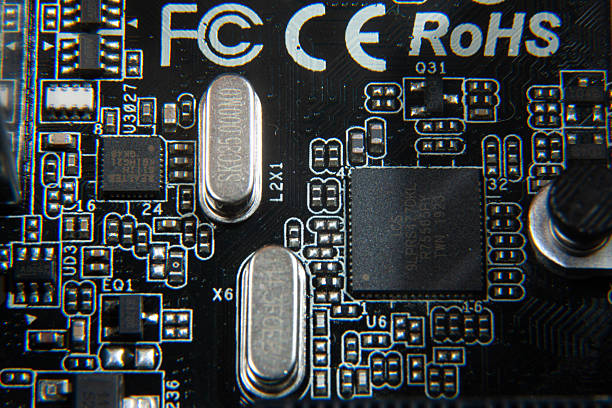
The changing PCB market suggests that buyers should reconsider how they evaluate PCB suppliers.
Rather than asking only:
“How much does this PCB cost?”
A more effective procurement process considers several questions:
Does the manufacturer understand the application?
A supplier should be able to understand the electrical, mechanical, thermal, and environmental requirements of the finished product.
Can the supplier support the required PCB technology?
Depending on the project, this may include multilayer boards, high-speed structures, HDI, flexible or rigid-flex PCBs, heavy copper, controlled impedance, or other specialized constructions.
Can the manufacturer support both prototypes and production?
A reliable supplier should ideally be able to support the product through multiple development stages, from initial prototypes to small-batch or larger-volume production.
Is quality control consistent?
Consistent material control, process management, inspection, and documentation are important for maintaining PCB quality across production batches.
Can PCB fabrication and assembly be coordinated?
Integrating manufacturing and assembly can simplify project management and reduce unnecessary supplier communication.
9. How Gopcba Supports Evolving PCB Requirements
As electronics become more specialized, PCB suppliers need to provide more than basic board fabrication.
Gopcba focuses on helping electronics companies manage PCB development and production requirements across different project stages.
Its services can support customers with:
- PCB manufacturing
- PCB design and layout
- Prototype PCB assembly
- Low-volume production
- SMT assembly
- Through-hole assembly
- Mixed-technology assembly
- Component procurement
- Specialized PCB assembly requirements
For projects that need flexible production quantities, Low-Volume PCB Assembly can help bridge the gap between prototype validation and larger-scale manufacturing.
The goal is not simply to produce a circuit board, but to help customers develop a manufacturing approach that matches their product requirements, expected volumes, quality expectations, and development timeline.
Conclusion: PCB Demand Is Becoming More Precise and Application-Driven
The latest PCB Demand Trends show a clear shift toward specialization.
Automotive electronics emphasize reliability and environmental durability. Medical electronics increasingly require miniaturization and manufacturing control. Industrial systems place greater emphasis on EMC and reliable operation. AI and server applications demand high-speed signal integrity and effective thermal management. Consumer electronics continue to balance cost, performance, customization, and development speed.
At the same time, procurement teams are increasingly evaluating suppliers based on engineering support, production flexibility, quality consistency, lead time, assembly capabilities, and supply-chain coordination—not simply PCB unit price.
For electronics manufacturers, the best PCB supplier is therefore not necessarily the one offering the lowest quotation. It is the supplier capable of matching manufacturing technology, engineering requirements, quality control, and production flexibility to the specific needs of the product.
As electronics continue to become smaller, faster, smarter, and more specialized, these factors will play an increasingly important role in PCB sourcing and manufacturing decisions.