Finding a reliable low-cost PCB manufacturer is essential for companies looking to control electronics manufacturing costs while maintaining consistent quality, reliability, and delivery performance. Whether you are developing prototypes, producing small batches, or preparing for high-volume production, the right PCB supplier can significantly reduce total manufacturing costs.
However, choosing a PCB manufacturer based only on the lowest quotation can create hidden costs through poor quality, component shortages, production delays, and excessive rework. A better approach is to evaluate PCB manufacturing capabilities, engineering support, quality control, production flexibility, and overall supply chain efficiency.
This guide explains what to look for when selecting a low-cost PCB manufacturer and highlights Kingda as a comprehensive PCB manufacturing and assembly partner.
What to Look for in a Low-Cost PCB Manufacturer
Before selecting a low-cost PCB manufacturer, consider the following factors:
1. Competitive Pricing and Volume Discounts
PCB pricing depends on board size, layer count, material, copper thickness, surface finish, order quantity, and manufacturing complexity. A professional supplier should provide competitive pricing for prototypes, low-volume production, and larger orders.
Volume pricing can also reduce the average cost per board as production quantities increase.
2. Turnaround Time
Production speed is particularly important for prototypes, product development, and time-sensitive projects. Look for a manufacturer that can provide efficient PCB prototyping, quick-turn production, and predictable delivery schedules.
3. Quality Standards
Low-cost does not have to mean low quality. A reliable manufacturer should have an established quality management system and appropriate certifications such as ISO 9001, UL, and RoHS compliance where applicable.
Quality control should cover raw materials, PCB fabrication, assembly, soldering, inspection, and final testing.
4. Customization Capabilities
Different electronic products require different PCB structures. Check whether the manufacturer can support:
- Single-sided and double-sided PCBs
- Multilayer PCBs
- HDI PCBs
- Flexible PCBs
- Rigid-flex PCBs
- High-frequency PCBs
- High-speed PCBs
- Heavy copper PCBs
- Metal-core PCBs
- Customized PCB materials and finishes
A manufacturer with broader capabilities can reduce the need to work with multiple suppliers.
5. PCB Assembly and Additional Services
A full-service supplier can provide more than bare PCB fabrication. Integrated services may include PCB assembly (PCBA), component sourcing, SMT assembly, THT assembly, testing, prototyping, and engineering support.
Using one supplier for multiple manufacturing stages can simplify supply chain management and reduce logistics costs.
9 Best Low-Cost PCB Manufacturers
1. Kingda – Cost-Effective PCB Manufacturing and Assembly Solutions
Overview
Kingda provides comprehensive PCB manufacturing and assembly solutions for customers requiring a balance between cost, quality, flexibility, and delivery efficiency.
Rather than focusing solely on the lowest unit price, Kingda emphasizes total manufacturing value by combining PCB fabrication, component sourcing, assembly, testing, and engineering support.
The company can support projects ranging from PCB prototypes and small-batch production to larger-volume manufacturing, making it suitable for startups, OEMs, electronics developers, and industrial customers.
Key Features
- Cost-effective PCB manufacturing
- PCB assembly (PCBA) services
- SMT and THT assembly capabilities
- PCB prototyping and small-batch production
- Multilayer PCB manufacturing
- HDI PCB solutions
- Flexible and rigid-flex PCB capabilities
- High-frequency and high-speed PCB solutions
- Component sourcing and BOM management
- DFM/DFA engineering support
- AOI, X-ray, and functional testing
- Customized PCB materials and surface finishes
- Production support from prototype to volume manufacturing
Why Choose Kingda?
Kingda focuses on reducing the total cost of PCB manufacturing, rather than simply offering a low initial quotation.
Through design optimization, component sourcing, manufacturing process control, production integration, and quality inspection, Kingda helps customers reduce unnecessary production expenses while maintaining reliable PCB performance.
For customers looking for a low-cost PCB manufacturer with broader manufacturing capabilities, Kingda can provide a practical one-stop solution.
2. PCB Prototype Manufacturing
For new electronic products, PCB prototyping is an important step before mass production.
A professional PCB prototype manufacturer should help customers identify potential design and manufacturing problems at an early stage.
Kingda supports prototype PCB production to help customers:
- Validate PCB designs
- Identify manufacturing problems
- Test component compatibility
- Verify assembly processes
- Reduce design revisions
- Prepare products for volume production
Producing prototypes before mass production can significantly reduce the risk of expensive redesigns and production failures.
3. Low-Volume PCB Manufacturing
Low-volume PCB production is particularly important for startups, research projects, industrial equipment, medical electronics, and new product development.
Kingda provides flexible low-volume PCB manufacturing solutions that allow customers to produce the required quantity without committing to large production volumes.
This approach helps reduce:
- Excess inventory
- Initial investment
- Component waste
- Production risks
- Product development costs
Low-volume production can also provide a practical bridge between prototyping and mass production.
4. Multilayer PCB Manufacturing
Multilayer PCBs allow engineers to integrate more circuits into a smaller board area.
Depending on the product requirements, multilayer PCB designs may incorporate multiple signal layers, power planes, and ground planes to improve electrical performance and reduce board size.
Kingda supports customized multilayer PCB manufacturing for applications requiring:
- Higher circuit density
- Compact designs
- Controlled impedance
- Improved signal integrity
- Power and ground plane integration
- More complex electronic functions
By optimizing the layer structure and manufacturing process, customers can achieve the required electrical performance while controlling PCB costs.
5. HDI PCB Manufacturing
HDI PCBs are increasingly used in compact and high-performance electronic products.
HDI technology can use microvias, blind vias, fine lines, and high-density routing to increase circuit density while reducing PCB size.
Kingda provides HDI PCB solutions for applications where conventional PCB structures cannot provide sufficient routing density.
Typical applications include:
- Consumer electronics
- Communication equipment
- Automotive electronics
- Medical devices
- Industrial electronics
- High-speed electronic systems
Proper HDI stackup design and DFM analysis can also help control manufacturing costs and improve production yield.
6. Flexible and Rigid-Flex PCB Manufacturing
Flexible PCBs are designed to bend and conform to limited installation spaces, while rigid-flex PCBs combine rigid and flexible sections in one integrated structure.
These PCB technologies can reduce wiring, connectors, and assembly complexity in compact electronic products.
Kingda can provide customized flexible and rigid-flex PCB solutions according to application requirements, including:
- Single-layer flexible PCBs
- Double-layer flexible PCBs
- Multilayer flexible PCBs
- Rigid-flex PCBs
- Customized flexible PCB structures
These solutions are suitable for applications such as medical electronics, automotive systems, sensors, wearable devices, industrial controls, and compact electronic equipment.
7. High-Frequency and High-Speed PCB Solutions
Modern electronic products increasingly require high-speed signal transmission and stable electrical performance.
For these applications, PCB material selection, impedance control, stackup design, trace geometry, and manufacturing precision are particularly important.
Kingda can provide high-frequency PCB and high-speed PCB solutions based on specific electrical requirements.
Engineering considerations may include:
- Controlled impedance
- Low-loss dielectric materials
- Signal integrity
- Crosstalk control
- Differential-pair routing
- Material selection
- Stackup optimization
- High-frequency surface finishes
Selecting the correct material and PCB structure at the design stage can help avoid unnecessary manufacturing costs later.
8. One-Stop PCB Assembly Services
PCB manufacturing is only one part of the electronics production process. For customers requiring finished electronic assemblies, integrating PCB fabrication and assembly can provide significant advantages.
Kingda offers integrated PCB assembly services, including:
- SMT assembly
- THT assembly
- Mixed technology assembly
- Component sourcing
- Solder paste printing
- Pick-and-place
- Reflow soldering
- Wave soldering
- AOI inspection
- X-ray inspection
- Functional testing
A one-stop manufacturing model can simplify supplier management and reduce transportation between different production facilities.
It can also improve production traceability because PCB fabrication, component procurement, assembly, and testing can be coordinated within one supply chain.
9. Cost-Effective PCB Manufacturing for Volume Production
For medium- and high-volume projects, manufacturing efficiency becomes increasingly important.
The total PCB cost is influenced by more than the PCB quotation itself. Other factors include:
- Component pricing
- Tooling
- Labor
- Setup costs
- Production yield
- Testing
- Packaging
- Logistics
- Inventory
- Rework and scrap
Kingda helps customers control these factors through production planning, BOM optimization, process management, and integrated manufacturing services.
For stable production programs, increasing order quantities and optimizing panelization can further reduce the average manufacturing cost per board.
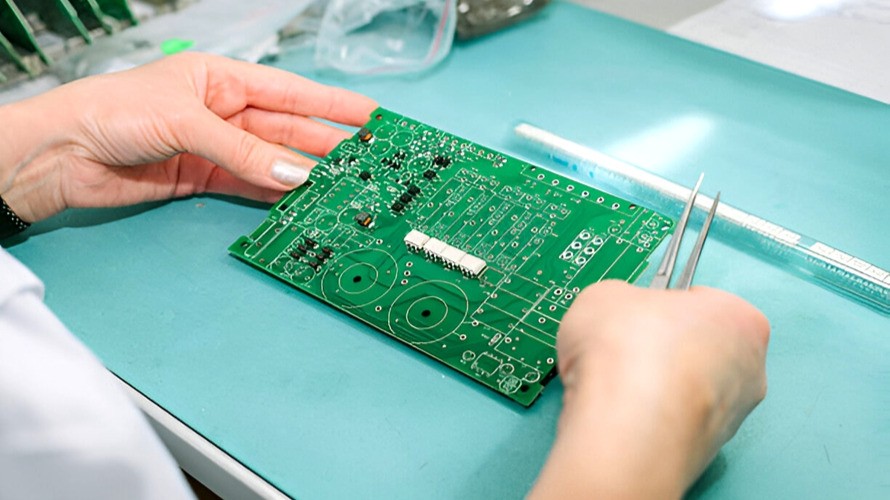
Kingda PCB Manufacturing Advantages
When selecting a low-cost PCB manufacturer, customers should evaluate the complete manufacturing solution rather than comparing PCB unit prices alone.
Kingda provides several advantages for customers looking for cost-effective PCB production.
One-Stop PCB Solutions
Kingda can integrate PCB fabrication, component sourcing, PCB assembly, testing, and related engineering services into one manufacturing workflow.
This reduces the complexity of managing multiple suppliers.
Engineering and DFM Support
Before production, engineering analysis can identify potential manufacturing problems.
DFM support helps optimize:
- Trace width and spacing
- Component footprints
- Hole sizes
- PCB stackup
- Panelization
- Component placement
- Soldering requirements
Early design optimization can reduce production defects and unnecessary manufacturing expenses.
Flexible Production Volumes
Different customers have different production requirements. Kingda can support projects ranging from prototypes and low-volume production to larger-volume orders.
This makes it easier for customers to scale production as their products move from development to commercialization.
Comprehensive Quality Control
Cost reduction should never come at the expense of PCB reliability.
Kingda applies quality control throughout the manufacturing process, including incoming material inspection, process inspection, assembly inspection, and final testing.
Depending on project requirements, inspection methods can include:
- AOI
- X-ray inspection
- Electrical testing
- Functional testing
- Visual inspection
- Solder joint inspection
Component Sourcing Support
Component cost can represent a significant portion of total PCBA cost.
Kingda can support BOM evaluation and component sourcing to help customers identify suitable components, manage availability, and reduce procurement risks.
Using commonly available components where appropriate can also help reduce lead times and purchasing costs.
How to Reduce PCB Assembly Costs Without Sacrificing Quality
Choosing a low-cost PCB manufacturer is only one part of cost optimization. Customers can also reduce PCB manufacturing costs through better design and production planning.
Optimize the PCB Design
A manufacturable design can reduce production complexity.
Engineers should consider:
- Standard PCB materials
- Standard component packages
- Appropriate trace widths
- Standard hole sizes
- Efficient component placement
- Reduced unnecessary vias
- Optimized layer count
- Proper panelization
Optimize the BOM
Component selection directly affects PCBA cost.
Where technically appropriate, designers should prioritize components with stable supply, competitive pricing, and multiple sourcing options.
Use Panelization
Panelization combines multiple PCB units into a manufacturing panel.
This can improve production efficiency and distribute setup costs across multiple boards, particularly for small PCB designs.
Choose the Appropriate Testing Strategy
Testing is essential for maintaining product reliability, but the testing strategy should correspond to the product’s risk level and application.
For example, AOI may be appropriate for detecting component placement and soldering defects, while X-ray inspection may be valuable for hidden solder joints such as BGA connections.
Summary: Choosing the Right Low-Cost PCB Manufacturer
A good low-cost PCB manufacturer should provide more than inexpensive PCB fabrication.
The ideal supplier should combine:
| Evaluation Factor | What to Look For |
|---|---|
| Pricing | Competitive unit pricing and volume discounts |
| PCB Capability | Rigid, multilayer, HDI, flex, rigid-flex, etc. |
| Assembly | SMT, THT, mixed assembly |
| Engineering | DFM/DFA and design support |
| Components | Reliable sourcing and BOM management |
| Quality | AOI, X-ray, electrical and functional testing |
| Production | Prototype, low-volume and volume production |
| Delivery | Stable lead times and production planning |
| Service | Technical support and project communication |
For companies seeking an affordable and reliable PCB manufacturing and assembly partner, Kingda provides an integrated approach that combines manufacturing capability, engineering support, quality control, component sourcing, and flexible production.
The objective is not simply to find the cheapest PCB supplier, but to find a manufacturing partner that delivers the lowest total cost while maintaining quality, reliability, and delivery performance.
FAQs About Low-Cost PCB Manufacturing
1. What is a low-cost PCB manufacturer?
A low-cost PCB manufacturer provides PCB fabrication or assembly services at competitive prices while maintaining appropriate quality and reliability standards. Cost efficiency can come from optimized manufacturing processes, material sourcing, automation, production volume, and supply chain management.
2. How can I reduce PCB manufacturing costs?
You can reduce costs through DFM optimization, BOM management, standard materials, component sourcing, panelization, appropriate testing, and selecting a manufacturer capable of integrating PCB fabrication and assembly.
3. Is a low-cost PCB manufacturer suitable for mass production?
Yes. A competitive PCB manufacturer can support mass production when it has sufficient manufacturing capacity, process control, quality management, component sourcing capability, and production scalability.
4. Is cheap PCB assembly the same as low-quality PCB assembly?
No. A lower price does not necessarily mean lower quality. Efficient manufacturing processes, automation, optimized sourcing, and high production yields can reduce costs without compromising product quality.
5. Why choose Kingda for low-cost PCB manufacturing?
Kingda combines PCB fabrication, PCB assembly, component sourcing, engineering support, DFM analysis, testing, and flexible production into an integrated solution. This allows customers to optimize both manufacturing costs and production efficiency while maintaining consistent quality.