Electromechanical Assembly Services for Complete Electronic Systems
From PCB assembly and component sourcing to mechanical integration, wiring, testing, and final packaging, Electromechanical Assembly Services provide a complete manufacturing solution for products that combine electrical and mechanical components.
GOPCBA provides integrated manufacturing support for prototype, low-volume, and production requirements. Our capabilities cover PCB fabrication, electronic assembly, mechanical integration, cable and wire harness assembly, system integration, inspection, and functional testing.
This integrated approach helps customers reduce supplier coordination, simplify production management, improve quality consistency, and accelerate time to market.
What Is Electromechanical Assembly?
Electromechanical Assembly is the process of integrating electronic and mechanical components into a complete, functional product or system. Unlike PCB assembly alone, electromechanical assembly combines the electrical, mechanical, and interconnection elements required for final product operation.
A typical electromechanical system may include:
- Printed circuit boards and PCB assemblies
- Electronic and mechanical components
- Custom cables and wire harnesses
- Connectors and terminals
- Power supplies
- Switches and sensors
- Relays and safety components
- DIN rails and mounting frames
- Metal or plastic enclosures
- Pneumatic components
- Displays and input/output devices
- Motors, actuators, and gears
- Programmable logic controllers (PLCs)
- Firmware and software
For example, an industrial control unit may combine a PCB assembly, power supply, sensors, connectors, cable harnesses, control switches, and a custom enclosure. These components must be mechanically secured and electrically connected to create a fully functional system.
For projects that require complete integration, GOPCBA can combine [PCB Assembly], component sourcing, wiring, mechanical assembly, testing, and final product preparation within one manufacturing workflow.
Electromechanical Assembly Process
A reliable Electromechanical Assembly Service requires controlled processes, experienced technicians, appropriate equipment, and systematic quality inspection. The typical production workflow includes the following stages.
1. PCB Manufacturing and PCB Assembly
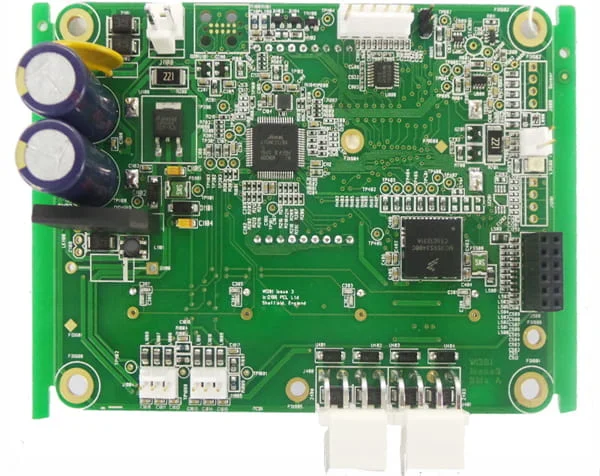
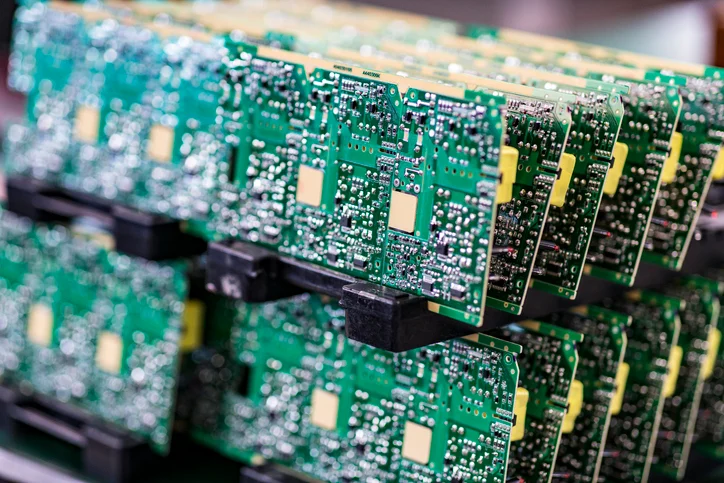
The process begins with PCB fabrication, component sourcing, and PCB assembly. Depending on the product design, assembly may use SMT, through-hole, or mixed-technology processes.
Each assembled PCB should be inspected and tested before being integrated into the final electromechanical product. This helps prevent defective electronic assemblies from entering subsequent production stages.
For projects requiring fast development cycles, [Prototype PCB Assembly] can support prototype validation and low-volume production before the product moves into larger-scale manufacturing.
2. Component Sourcing and Preparation
Mechanical and electrical components that are not manufactured internally must be sourced according to approved specifications and drawings.
Typical components include:
- Metal and plastic enclosures
- DIN rails and mounting frames
- Power supplies
- Connectors
- Switches
- Sensors
- Relays
- Mechanical hardware
- Cables and wires
- Pneumatic components
Incoming materials should be checked for dimensions, specifications, appearance, and quantity before assembly. Early inspection helps identify potential problems before they affect the production schedule.
3. Cable and Wire Harness Assembly
Cable and wire harnesses provide electrical connections between PCBs, power supplies, sensors, switches, motors, and other system components.
Cable assemblies must be manufactured according to the approved drawings and wiring requirements. Cable routing, connector orientation, wire identification, bend radius, fixation, and electrical continuity should all be considered during assembly.
GOPCBA also provides [Wire & Cable Harness Assembly] to support products requiring organized and reliable electrical interconnections.
4. Mechanical and Electrical Integration
After individual components have passed inspection, electrical and mechanical parts are integrated into the final system.
The assembly process may include:
- Installing PCBs
- Mounting power supplies
- Installing connectors and switches
- Securing DIN rails
- Routing and fixing cables
- Installing sensors and relays
- Mounting mechanical components
- Connecting electrical interfaces
- Installing covers and enclosures
- Programming firmware or control devices
Depending on production volume and product complexity, assembly may be performed manually, semi-automatically, or through automated processes.
Manual assembly is particularly suitable for prototypes, customized products, and high-mix, low-volume production because it provides greater flexibility for frequent design changes and product variations.
5. Box Build and System Integration
For products that require complete enclosure-level integration, Box Build Assembly combines PCB assemblies, mechanical components, wiring, cables, power supplies, controls, and enclosures into a finished product.
Box build production may include mechanical fastening, cable routing, electrical connections, firmware programming, labeling, configuration, and final inspection.
[Box Build Assembly] is particularly suitable for control units, industrial electronics, instrumentation, communication equipment, power systems, and other finished electronic products.
6. Inspection and Functional Testing
Testing is an essential part of Electromechanical Assembly because the final product must operate correctly as an integrated system rather than simply as a collection of individual components.
Depending on the product, testing may include:
- Visual inspection
- Dimensional inspection
- Electrical continuity testing
- Insulation testing
- Functional testing
- Power-up testing
- Programming verification
- Signal testing
- Communication testing
- Environmental testing
- Reliability or aging testing
Automated inspection systems can use cameras, measurement software, sensors, and other equipment to identify assembly defects and verify production specifications.
Key Elements of Electromechanical Assemblies
A complete electromechanical product can contain dozens or even hundreds of individual components. Proper integration of each element is essential for system reliability.
1. Cable and Wire Assemblies
Cable and wire assemblies transfer electrical power and signals between different components and subsystems. They are widely used in industrial automation, automotive electronics, telecommunications, aerospace equipment, medical devices, and instrumentation.
Proper cable routing can reduce assembly errors, simplify maintenance, and improve overall system reliability.
2. Power Supplies
Power supplies convert electrical energy into the voltage and current required by electronic circuits and mechanical components.
A power supply assembly may include transformers, rectifiers, regulators, filters, protection circuits, connectors, and mounting hardware. Correct power selection is essential to ensure stable operation and prevent overheating or electrical failures.
3. Switches and Sensors
Switches control electrical circuits through physical or electronic activation, while sensors convert physical conditions such as temperature, light, pressure, sound, position, or movement into electrical signals.
Proper positioning, mounting, wiring, and protection of switches and sensors are essential for accurate system operation.
4. PCB Assemblies
PCBs provide the electrical platform for electronic components. Components are mounted and soldered onto conductive pads and interconnected through copper traces and vias.
PCB assemblies may use SMT, through-hole, or mixed technologies depending on the application.
For advanced applications, GOPCBA supports different PCB technologies and manufacturing requirements through its [PCB Manufacturing] capabilities.
5. DIN Rails, Frames, and Enclosures
DIN rails, mounting frames, and enclosures provide the mechanical structure needed to organize and protect electronic components.
Depending on the application, enclosures may be manufactured from metal or plastic and customized according to product dimensions, thermal requirements, environmental conditions, and installation methods.
During final assembly, components such as PCBs, power supplies, relays, switches, cable harnesses, sensors, and pneumatic devices can be securely installed inside the enclosure.
Electromechanical Assembly from Design to Production
Successful Electromechanical Assembly Services begin long before the first component is installed. Product requirements, mechanical design, electrical architecture, component selection, manufacturing processes, and testing requirements should be considered during the engineering stage.
1. Design and Engineering
The design stage establishes product functionality, dimensions, tolerances, electrical requirements, mechanical interfaces, materials, and assembly methods.
CAD software and simulation tools can be used to evaluate mechanical geometry, component positioning, thermal behavior, clearances, and tolerance relationships.
Design documentation should include drawings, BOMs, wiring diagrams, assembly instructions, and testing specifications.
2. Parts Procurement
All components must be sourced according to approved specifications. Lead times, availability, cost, quality, and supplier reliability can directly affect the production schedule.
Incoming materials should be inspected before assembly to confirm that components meet the required specifications.
Using qualified suppliers and standardized components where possible can reduce procurement risks and improve production continuity.
3. Electrical and Mechanical Assembly
Electrical components may first be assembled onto PCBs using SMT or through-hole technology. Completed PCBAs should then undergo appropriate inspection and testing before final integration.
Mechanical assembly may include fastening, inserting, mounting, routing, soldering, crimping, connecting, and securing components.
For high-volume products with stable designs, automation can improve production efficiency and repeatability. For prototypes and high-mix products, manual assembly often provides greater flexibility.
GOPCBA also supports [SMT PCB Assembly] for electronic assemblies requiring automated surface-mount production.
4. Inspection and Testing
Quality control should be incorporated throughout the manufacturing process rather than performed only at the end.
PCB assemblies can be inspected using AOI, X-ray inspection, visual inspection, electrical testing, and functional testing where applicable. Final electromechanical products can then undergo system-level testing to verify electrical connections, mechanical operation, programming, and overall functionality.
Why Electromechanical Assembly Is Important
Modern electronic products increasingly combine electronics, mechanical structures, sensors, motors, controls, and communication systems.
Examples include:
- Industrial automation equipment
- Robotics
- Motor control systems
- Test and measurement equipment
- Medical electronics
- Telecommunications equipment
- IoT devices
- Power electronics
- Automotive electronics
- Consumer electronics
- Machine control systems
The integration of these components into one manufacturing process can simplify the supply chain and reduce the risks associated with coordinating multiple suppliers.
For customers requiring complete manufacturing rather than PCB production alone, [Turnkey PCB Assembly] can combine PCB fabrication, component procurement, assembly, inspection, testing, and downstream integration.
Key Design Considerations for Electromechanical Assembly
1. Define Product Requirements
Clear product requirements should be established before manufacturing begins. These requirements may include electrical specifications, mechanical dimensions, operating conditions, reliability targets, safety requirements, environmental conditions, and production volumes.
Complete technical documentation helps engineers and manufacturers maintain consistency throughout the project.
2. Select Appropriate Materials
Material selection affects mechanical strength, thermal performance, corrosion resistance, electrical performance, weight, cost, and manufacturability.
Materials and components should also comply with applicable regulatory requirements, such as RoHS and REACH, where required by the target market.
3. Consider Thermal Management
Heat generation should be considered during the design stage, particularly for power electronics, motors, high-current components, and densely populated enclosures.
Important thermal properties include thermal conductivity, heat capacity, and thermal expansion. Differences in thermal expansion between materials can cause mechanical stress, deformation, or reliability problems.
4. Design for Manufacturability
Design for Manufacturability (DFM) helps ensure that a product can be manufactured and assembled efficiently.
A practical DFM strategy considers:
- Component accessibility
- Fastener selection
- Cable routing
- Assembly sequence
- Tolerances
- Connector orientation
- Test access
- Serviceability
- Component availability
- Manufacturing cost
A design that is easy to manufacture and assemble can reduce production time, defects, labor requirements, and overall cost.
How to Choose a Reliable Electromechanical Assembly Supplier
Selecting the right supplier is essential for product quality, delivery performance, and long-term manufacturing stability.
1. Technical Capability
A qualified supplier should have experience with PCB assembly, component sourcing, wiring, mechanical integration, system testing, and final assembly.
The supplier should also be able to support engineering communication during prototype development, design changes, production preparation, and product improvement.
2. Manufacturing Capability
Evaluate the supplier’s equipment, production capacity, inspection systems, assembly processes, and ability to support both prototype and production requirements.
A capable manufacturer should have the flexibility to handle different component types, assembly technologies, product configurations, and production volumes.
3. Quality Management
Quality should be controlled throughout the entire manufacturing process.
Important quality practices may include incoming material inspection, process inspection, AOI, X-ray inspection, electrical testing, functional testing, traceability, and final inspection.
Relevant certifications and industry standards should also be evaluated according to the product’s application and target market.
4. Cost and Supply Chain Management
Total manufacturing cost depends on component prices, PCB fabrication, assembly labor, tooling, testing, packaging, logistics, and production volume.
A supplier with strong component sourcing and supply-chain management capabilities can help control costs while maintaining component quality and availability.
5. Communication and Responsiveness
Electromechanical projects typically involve continuous communication between the customer, engineering team, procurement team, production team, and quality department.
A responsive supplier should provide timely technical feedback, clearly communicate production risks, and support design changes throughout the product lifecycle.
Electromechanical Assembly for Prototype to Production
A complete manufacturing partner can simplify the transition from prototype to production by keeping engineering, PCB manufacturing, component sourcing, assembly, testing, and final integration within a coordinated workflow.
GOPCBA provides integrated electronic manufacturing capabilities for prototype development, low-volume production, and scalable manufacturing. Our services cover PCB manufacturing, PCB assembly, component procurement, cable and wire harness assembly, box build, inspection, and testing.
This integrated approach helps customers reduce supply-chain complexity while maintaining better control over quality, cost, and delivery.
Frequently Asked Questions
What is electromechanical assembly?
Electromechanical assembly is the integration of electronic and mechanical components into a complete functional product or system. It can include PCB assemblies, cables, connectors, power supplies, sensors, mechanical structures, enclosures, and control components.
What components are commonly used in electromechanical assemblies?
Common components include PCBs, electronic components, power supplies, connectors, cables, wire harnesses, sensors, switches, relays, motors, actuators, DIN rails, frames, and metal or plastic enclosures.
What is the difference between PCB assembly and electromechanical assembly?
PCB assembly focuses primarily on mounting and soldering electronic components onto a printed circuit board. Electromechanical assembly goes further by integrating PCB assemblies with cables, mechanical components, enclosures, power supplies, controls, and other system-level components.
What is box build assembly?
Box build assembly is the complete integration of electronic and mechanical components into a finished enclosure or system. It can include PCB assembly, mechanical assembly, cable routing, wiring, programming, testing, labeling, and packaging.
Is electromechanical assembly suitable for low-volume production?
Yes. Manual and semi-automated assembly methods are well suited to prototypes, customized products, and low-volume, high-mix production because they provide flexibility for different product configurations and frequent engineering changes.
How long does electromechanical assembly take?
Production time depends on product complexity, component availability, assembly volume, testing requirements, and whether custom mechanical or cable components are required. A complete schedule is normally established after reviewing the BOM, drawings, specifications, and production quantity.
Start Your Electromechanical Assembly Project
GOPCBA provides integrated manufacturing support for electronic products requiring PCB assembly, component sourcing, wiring, mechanical integration, system testing, and final assembly.
Whether you are developing a prototype, launching a new product, or scaling an established design, a coordinated manufacturing process can help reduce production complexity and improve consistency.
Contact GOPCBA to discuss your project requirements, submit your design files, and request a quotation for your next Electromechanical Assembly, Electromechanical Assembly Services, PCB Assembly, Box Build Assembly, or Cable Assembly project.