LED PCB Manufacturer
High-Performance LED PCBs for Lighting and Electronic Applications
LED technology requires circuit boards that provide reliable electrical connections while efficiently managing the heat generated during operation. A properly designed LED PCB provides a stable platform for LED components, improves thermal performance, and supports consistent electrical and optical performance.
As an experienced PCB manufacturing partner, GOPCBA provides PCB fabrication and assembly solutions for LED lighting, automotive electronics, displays, industrial equipment, consumer electronics, and other applications. Our manufacturing capabilities cover standard and advanced PCB structures, including metal-core, multilayer, flexible, rigid-flex, and high-reliability circuit boards.
For projects requiring different PCB structures and materials, our PCB Manufacturing services support prototype development through production manufacturing.
What Is an LED PCB?
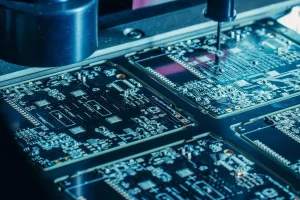
An LED Circuit Board is a printed circuit board specifically designed to electrically connect, mechanically support, and thermally manage LED components.
An LED, or light-emitting diode, is a semiconductor device that produces light when current passes through its junction. Compared with conventional lighting technologies, LEDs offer high energy efficiency, compact dimensions, fast switching, and long operating life.
The PCB supporting the LED system must therefore do more than simply provide electrical connections. It needs to maintain stable current distribution, control heat accumulation, provide sufficient mechanical support, and accommodate the required LED layout.
Depending on the application, an LED PCB may use FR-4, aluminum, copper, ceramic, flexible materials, or specialized multilayer constructions. Material selection should be based on thermal requirements, electrical performance, mechanical constraints, operating environment, and production cost.
LED PCB Applications
LED circuit boards are used across a wide range of lighting and electronic applications. The appropriate PCB construction depends on the power level, thermal load, environmental conditions, required board geometry, and assembly requirements.
Architectural and Commercial Lighting
LED PCBs are widely used in architectural lighting, commercial fixtures, decorative lighting, signage, and building illumination. These applications often require compact circuit layouts, reliable thermal management, and consistent light output.
Automotive Lighting
Automotive LED applications include headlights, daytime running lights, taillights, interior lighting, instrument lighting, and other vehicle lighting systems.
Automotive applications place additional demands on PCB reliability because boards may experience vibration, temperature cycling, moisture, and electrical fluctuations. PCB material, copper thickness, thermal design, and assembly quality must therefore be carefully controlled.
LED Display and Signage
LED displays and digital signage require precisely positioned LEDs and stable electrical connections. PCB layout influences pixel spacing, current distribution, heat dissipation, and overall display reliability.
Horticultural Lighting
LED grow lights require specific light wavelengths and stable thermal performance. PCBs used in horticultural lighting must efficiently dissipate heat while supporting high-density LED arrays.
Consumer Electronics
LED circuit boards are also used in televisions, smart devices, wearables, appliances, indicators, portable electronics, and other consumer products. Compact board structures and reliable assembly are particularly important where available installation space is limited.
For applications requiring integrated component placement and production assembly, PCB Assembly can combine PCB fabrication with SMT, through-hole, and other assembly technologies.
Advantages of LED PCBs
High Energy Efficiency
LED technology converts a high proportion of electrical energy into light, helping reduce energy consumption compared with many traditional lighting technologies.
Long Operating Life
LEDs can operate for many thousands of hours when properly designed and thermally managed. A suitable PCB helps maintain stable operating conditions and supports long-term system reliability.
Effective Thermal Management
Heat is one of the most important considerations in high-power LED applications. Excessive junction temperature can reduce LED efficiency and shorten component life.
Metal-core PCB structures, thermal vias, copper planes, and appropriate heat-spreading materials can help transfer heat away from LED components.
For thermally demanding designs, Aluminum PCB materials are available as part of the PCB manufacturing capability. The published material options include aluminum-backed PCB materials suitable for thermal-management applications.
Compact Design
LEDs are inherently compact, allowing designers to create smaller lighting systems and electronic products. PCB layouts can be optimized for high-density LED arrangements while maintaining appropriate electrical and thermal clearances.
Fast Response
LEDs illuminate almost immediately when power is applied, making them suitable for applications requiring fast switching and precise control.
Design Flexibility
A Custom LED PCB can be designed around the required LED arrangement, electrical architecture, mechanical dimensions, thermal requirements, and assembly process.
Rigid, flexible, rigid-flex, and multilayer PCB technologies provide additional design options for products with unusual form factors or limited installation space.
Limitations and Design Challenges of LED PCBs
Initial Manufacturing Cost
Specialized materials and thermal-management structures can increase the initial cost of an LED PCB compared with a conventional FR-4 circuit board.
However, the total cost should be evaluated according to the complete product lifecycle, including energy consumption, thermal performance, reliability, maintenance, and expected service life.
Thermal Management
High-power LEDs generate significant heat. Without an appropriate thermal path, excessive temperature can reduce LED efficiency, change color characteristics, and shorten operating life.
Designers should consider thermal vias, copper thickness, metal-core structures, heat spreaders, thermal interface materials, and external heatsinks where appropriate.
Voltage and Current Control
LEDs are sensitive to electrical operating conditions. Excessive current or unstable voltage can cause overheating, brightness variation, flickering, or premature component failure.
The PCB layout should therefore provide appropriate current paths and sufficient copper capacity for the intended LED load.
Manufacturing Complexity
High-density LED layouts require accurate component placement, controlled soldering processes, and consistent PCB fabrication. Fine-pitch components and compact LED packages can also increase assembly requirements.
For production projects, PCB Capabilities should be reviewed before finalizing the board design to ensure that trace width, spacing, hole size, copper thickness, layer structure, and other parameters are compatible with the manufacturing process.
LED PCB Design Principles
Material Selection
Selecting the correct PCB material is one of the most important decisions in LED board design.
FR-4 may be suitable for lower-power applications where thermal requirements are moderate. Aluminum-backed or other metal-core structures can provide improved heat spreading for higher-power LED applications.
For specialized designs, material selection can also include high-Tg materials, flexible substrates, high-frequency materials, or other engineered PCB materials depending on the electrical and environmental requirements.
Thermal Management
Thermal design should begin during the PCB layout stage rather than being added after fabrication.
Important considerations include:
- Thermal conductivity of the substrate
- Copper thickness
- Copper area beneath LED packages
- Thermal vias
- Thermal pads
- Heat spreaders
- PCB-to-heatsink interface
- Ambient operating temperature
A good thermal design creates a continuous heat path from the LED package into the PCB and, where necessary, into an external heatsink or enclosure.
Electrical Layout
The electrical layout should provide stable power distribution to the LED array. Designers need to consider current capacity, voltage drop, trace width, copper thickness, grounding, driver connections, and protection circuits.
High-current LED designs may require wider traces, heavier copper, larger copper planes, or dedicated power distribution structures.
Optical Considerations
Although the PCB does not normally determine the complete optical system, its mechanical and electrical design can influence LED positioning and optical consistency.
LED placement should be coordinated with lenses, reflectors, diffusers, and other optical components to achieve the desired beam angle, uniformity, color mixing, and light distribution.
Component Placement and Assembly
Accurate LED placement is critical for applications involving dense arrays or precise optical alignment. SMT assembly provides repeatable component placement and is commonly used for LED PCB production.
For more complex products, mixed-technology assembly can combine surface-mount and through-hole components. Mixed Technology PCB Assembly supports applications that require both SMT and through-hole components.
LED PCB Manufacturing Process
A reliable LED PCB Manufacturer should control both PCB fabrication and assembly requirements from the beginning of the project.
1. Engineering Review
The manufacturing process begins with reviewing the Gerber files, PCB drawings, BOM, stack-up, material specifications, and technical requirements.
Engineering review helps identify potential manufacturing issues before production.
2. Material Preparation
The PCB manufacturer selects and prepares the specified substrate, copper foil, prepreg, and other materials according to the board construction.
3. PCB Fabrication
Depending on the design, the manufacturing process may include inner-layer imaging, etching, lamination, drilling, copper plating, outer-layer imaging, solder mask application, surface finishing, and final routing.
Modern PCB manufacturing can support advanced structures such as multilayer boards, HDI, blind and buried vias, controlled impedance, heavy copper, and metal-core construction.
4. Surface Finishing
Surface finishes such as ENIG, HASL, OSP, immersion tin, immersion silver, and ENEPIG may be selected according to component requirements, solderability, reliability, and cost.
5. PCB Assembly
After fabrication, components can be installed using SMT, through-hole, or mixed-technology processes.
For projects requiring components sourcing, PCB fabrication, assembly, inspection, and testing from one supplier, Turnkey PCB Assembly can simplify procurement and production management.
6. Inspection and Testing
Quality control may include automated optical inspection, X-ray inspection, electrical testing, solder inspection, and functional testing depending on the product requirements.
Electrical testing is particularly important for LED boards because open circuits, shorts, incorrect component placement, or poor solder joints can affect an entire LED array.
How to Choose an LED PCB Manufacturer
Choosing the right LED PCB Manufacturer requires more than comparing unit prices.
Consider the following factors:
- PCB material options
- Thermal-management capabilities
- Layer count and copper thickness
- Manufacturing tolerances
- Surface-finish options
- SMT and through-hole assembly capability
- DFM/DFA engineering support
- Quality inspection and testing
- Prototype and production capacity
- Component sourcing capability
- Delivery performance
- Experience with the target application
A manufacturer capable of supporting both fabrication and assembly can also reduce communication gaps between PCB production and PCBA production.
For lower-volume product development, Low Volume PCB Assembly supports prototype and low-volume manufacturing while providing engineering and inspection support.
LED PCB Design Tools
PCB Design Software
EDA software is used to create schematics, PCB layouts, component footprints, stack-ups, and manufacturing files.
Common PCB design platforms include Altium Designer, Cadence OrCAD, KiCad, and other professional EDA systems.
The final design package generally includes Gerber files, drill files, fabrication drawings, BOM data, and pick-and-place information when assembly is required.
Simulation and Analysis
Simulation tools can be used to evaluate electrical behavior, power distribution, signal integrity, and thermal performance.
For more demanding LED systems, thermal analysis can help identify areas of excessive heat concentration before physical prototypes are manufactured.
Prototype and Testing Equipment
Prototype testing helps verify electrical performance, thermal behavior, mechanical fit, LED brightness, and optical consistency.
A prototype should be evaluated under realistic operating conditions before moving to larger production quantities.
The Future of LED PCB Technology
LED PCB technology continues to evolve alongside LED lighting, smart electronics, automotive systems, and connected devices.
Future development is likely to focus on higher power density, improved thermal management, smaller form factors, more efficient materials, intelligent lighting control, and greater integration with IoT systems.
Flexible and rigid-flex PCB technologies can also enable new product shapes and three-dimensional electronic integration. For applications where conventional rigid boards cannot accommodate the required mechanical structure, Flex and Rigid-Flex PCB Assembly provides additional design possibilities.
As LED systems become more intelligent, the PCB will increasingly serve as part of an integrated electronic platform rather than simply a mounting surface for LEDs.
Why Choose GOPCBA for LED PCB Manufacturing?
GOPCBA provides integrated PCB manufacturing and PCB assembly services for customers developing electronic products from prototypes through production.
Our manufacturing capabilities cover a broad range of PCB technologies, including multilayer, HDI, high-TG, high-frequency, rigid-flex, heavy copper, and metal-core PCBs. Engineering support includes PCB design review, DFM/DFA analysis, stack-up optimization, manufacturing feasibility evaluation, and signal-integrity considerations.
For LED applications, the manufacturing approach can be adapted according to thermal performance, electrical requirements, mechanical dimensions, component density, and production volume.
If you are developing a new LED lighting product or require a reliable source for custom circuit boards, prepare your Gerber files, BOM, drawings, stack-up information, and technical requirements for engineering review.
Request a PCB Quote to discuss your LED PCB project, manufacturing requirements, and production plan.
Frequently Asked Questions
What is an LED PCB?
An LED PCB is a printed circuit board designed to electrically connect and mechanically support LED components while helping manage the heat generated during operation.
What material is best for LED PCBs?
The best material depends on power level, thermal requirements, electrical performance, mechanical design, and cost. FR-4 may be suitable for lower-power designs, while aluminum or other metal-core PCB structures are often considered for higher-power applications.
What is an aluminum LED PCB?
An aluminum LED PCB is a circuit board constructed with an aluminum-based substrate designed to improve heat spreading and thermal management. It is commonly considered for LED lighting and other applications where heat dissipation is important.
Can LED PCBs be customized?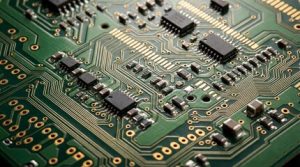
Yes. A Custom LED PCB can be designed according to the required dimensions, LED arrangement, layer count, copper thickness, material, surface finish, thermal structure, and assembly requirements.
Can LED PCBs be assembled with components?
Yes. LED PCBs can be assembled using SMT, through-hole, or mixed-technology processes depending on the component types and product architecture.
How do I choose the right LED PCB manufacturer?
Evaluate manufacturing capability, material options, thermal-management expertise, engineering support, quality-control processes, assembly capability, production volume, and delivery performance rather than focusing only on the quoted PCB price.
GOPCBA provides PCB fabrication and PCBA manufacturing solutions for electronic products requiring reliable circuit performance, thermal management, precise assembly, and scalable production. From PCB prototypes to production manufacturing, an integrated engineering and manufacturing process can help reduce development risks and improve product reliability.