Control PCB Manufacturer for Reliable Custom Control Boards
A reliable control board is the electronic core of many modern products and automated systems. From industrial machinery and robotics to automotive electronics, medical equipment, HVAC systems, and smart appliances, a well-designed Control PCB coordinates signals, processes inputs, manages outputs, and enables precise system operation.
As a professional Control PCB Manufacturer, GOPCBA provides customized PCB fabrication and assembly solutions for applications requiring stable electrical performance, compact layouts, reliable interconnections, and consistent production quality. Depending on the electrical and mechanical requirements, control boards can be manufactured as single-sided, double-sided, multilayer, rigid, flexible, rigid-flex, HDI, high-frequency, or other specialized PCB structures.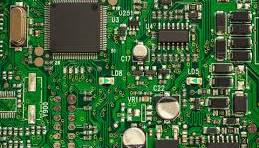
For projects requiring a complete manufacturing solution, customers can combine PCB fabrication with PCB Assembly services to simplify sourcing, assembly, testing, and production management.
What Is a Control PCB?
A Control PCB is a printed circuit board designed to manage, regulate, monitor, or coordinate the operation of an electronic or electromechanical system.
Unlike a simple interconnection board, a controller board may integrate microcontrollers, processors, sensors, communication interfaces, power-management circuits, relays, drivers, memory, connectors, and protection circuits on the same PCB.
The basic operating principle is straightforward:
- Sensors or external devices provide input signals.
- The controller processes these signals.
- Embedded logic determines the required response.
- Output circuits activate motors, relays, valves, displays, communication devices, or other system components.
- Feedback signals are continuously monitored to maintain stable operation.
The complexity of a Controller PCB depends on the application. A simple appliance control board may use a two-layer PCB, while advanced industrial equipment, medical systems, automotive electronics, and communication products may require multilayer construction, controlled impedance, HDI technology, or specialized materials.
For complex electronic products, PCB Manufacturing should be evaluated together with electrical, mechanical, thermal, and production requirements from the beginning of the project.
Key Advantages of Control PCBs
Improved System Reliability
A properly engineered Control PCB integrates critical circuits into a controlled and organized electrical structure. Appropriate material selection, trace geometry, grounding, thermal management, and component placement can help improve long-term system stability.
Manufacturing controls are equally important. PCB fabrication should include appropriate inspection, electrical testing, and process control to reduce the possibility of open circuits, shorts, dimensional problems, and other production defects.
Lower Power Consumption
Modern control systems often need to operate continuously while minimizing energy consumption. Efficient circuit architecture, appropriate power-management components, optimized copper distribution, and intelligent control logic can help reduce unnecessary power loss.
For power-intensive applications, PCB thickness, copper weight, thermal vias, heat dissipation, and component placement should be considered during the design stage.
Better Functional Integration
A Controller PCB can combine processing, communication, sensing, power management, and control functions on one compact circuit board.
This integration can reduce wiring complexity and improve system packaging. It also makes it easier to develop standardized control modules for different product configurations.
Greater Design Flexibility
A Custom Control PCB can be engineered around the specific electrical and mechanical requirements of a product instead of forcing the system to adapt to an off-the-shelf board.
Custom designs can address:
- Board dimensions
- Layer count
- Component density
- Connector positions
- Voltage and current requirements
- Communication interfaces
- Thermal requirements
- Mounting holes
- Environmental conditions
- Mechanical clearances
Control PCB Types and Manufacturing Options
Different applications require different PCB structures. Choosing the appropriate construction is essential for achieving the required performance and production cost.
Single-Sided and Double-Sided Control PCBs
Single-sided boards are suitable for relatively simple control circuits with lower component density. Double-sided PCBs provide additional routing space and are commonly used for more sophisticated electronic control systems.
These structures are often appropriate for appliances, simple industrial controllers, basic automation equipment, and other cost-sensitive applications.
Multilayer Control PCBs
When a control system contains many components, high-speed interfaces, power circuits, or complex routing requirements, multilayer construction can provide additional routing and reference-plane capacity.
A multilayer Control PCB can separate power, ground, digital signals, and sensitive circuits more effectively while supporting higher component density.
For advanced control systems, Multilayer PCB technology can be considered when routing density, signal integrity, and space limitations exceed the capabilities of conventional two-layer construction.
HDI Control PCBs
High-density interconnect technology can be useful when a control board must accommodate fine-pitch components or a large number of connections within a limited footprint.
HDI structures can use microvias, blind vias, buried vias, fine traces, and sequential buildup technology to increase routing density.
This makes HDI particularly relevant to compact medical electronics, automotive controllers, communication equipment, smart devices, and advanced industrial systems.
For high-density applications, HDI PCB manufacturing can provide greater layout flexibility while supporting compact product architectures.
Flexible and Rigid-Flex Control PCBs
Some products require the control circuit to fit into curved, moving, or space-constrained structures.
Flexible PCBs can reduce wiring and connector requirements, while rigid-flex construction combines rigid component-mounting sections with flexible interconnections.
These technologies are particularly useful for compact equipment, automotive electronics, medical devices, robotics, portable electronics, and applications requiring three-dimensional electrical integration.
Control PCB Applications
A Control PCB Manufacturer must understand the specific operating environment of the target application because control boards can face very different electrical, thermal, mechanical, and environmental requirements.
Automotive Electronics
Automotive control boards are used in numerous vehicle systems, including:
- Engine management
- Transmission control
- Battery management
- Lighting control
- Body electronics
- Sensor interfaces
- Charging systems
- Safety systems
- Infotainment
- Driver-assistance electronics
Automotive Controller PCB designs may need to withstand vibration, thermal cycling, electrical transients, humidity, and long operating periods.
Industrial Automation
Industrial equipment depends heavily on electronic control systems for monitoring and automation.
Industrial Control PCB applications include:
- PLC-related systems
- Motor controllers
- Robotic equipment
- Motion-control systems
- Industrial sensors
- Machine interfaces
- Process-control equipment
- Industrial communication gateways
- Automated production equipment
Industrial applications often require reliable operation under vibration, temperature variation, dust, moisture, and electromagnetic interference.
Consumer Electronics
Control boards are found throughout modern consumer products, including:
- Smart home equipment
- Washing machines
- Refrigerators
- Air conditioners
- Televisions
- Gaming equipment
- Smart appliances
- Wearable electronics
- Personal electronics
For consumer products, a Custom Control PCB can help manufacturers optimize board dimensions, component placement, functionality, and manufacturing cost.
Medical Electronics
Medical equipment requires dependable electronic control and monitoring functions.
Control boards can be incorporated into:
- Diagnostic equipment
- Patient monitoring systems
- Imaging systems
- Infusion equipment
- Laboratory instruments
- Portable medical devices
- Healthcare automation equipment
Medical applications require careful attention to component quality, PCB materials, traceability, electrical testing, cleanliness, and manufacturing consistency.
HVAC and Building Automation
Heating, ventilation, and air-conditioning systems rely on control electronics to monitor temperature, humidity, airflow, pressure, and other operating parameters.
A Controller PCB can coordinate sensors, compressors, fans, valves, displays, communication interfaces, and protection circuits.
Control boards are also widely applicable to building automation, energy management, access control, security systems, and environmental monitoring.
Robotics and Motion Control
Robotic systems require precise communication between processors, sensors, motors, drivers, and feedback systems.
A properly designed Industrial Control PCB can integrate motor-control circuits, communication interfaces, sensor inputs, power-management functions, and processing capabilities into a compact architecture.
For applications involving high-density layouts or complex electronic integration, early engineering review is particularly important.
Important Control PCB Design Considerations
1. Electrical Requirements
Before PCB design begins, engineers should define:
- Operating voltage
- Maximum current
- Signal types
- Digital and analog interfaces
- Communication protocols
- Switching frequency
- Protection requirements
- Isolation requirements
- Impedance requirements
Power and signal circuits should be arranged according to their electrical characteristics to minimize interference and improve system stability.
2. Layer Stack-Up
The layer structure has a direct influence on routing, power distribution, signal integrity, thermal performance, and manufacturing cost.
A multilayer board may use dedicated signal, ground, and power layers to provide controlled return paths and improve electromagnetic performance.
3. Thermal Management
Power devices, regulators, processors, MOSFETs, drivers, and other high-dissipation components can create localized heat.
Thermal design may include:
- Large copper areas
- Thermal vias
- Heat sinks
- Copper planes
- Appropriate component spacing
- Optimized airflow
- Thermal interface structures
Thermal performance should be considered during PCB layout rather than treated as a final-stage correction.
4. EMI and EMC Control
Control boards frequently contain switching power supplies, motors, clocks, communication interfaces, and high-speed digital circuits that can generate electromagnetic interference.
Good PCB design should consider:
- Continuous ground planes
- Short return paths
- Proper decoupling
- Signal separation
- Controlled impedance
- Appropriate filtering
- Reduced loop areas
- Proper shielding
These measures can help reduce unwanted noise and improve overall system stability.
5. Mechanical Requirements
The PCB must fit correctly inside the final enclosure.
Mechanical requirements may include:
- Overall board dimensions
- Mounting holes
- Connector locations
- Component height
- Keep-out areas
- Heat-sink clearance
- Cable routing
- Housing interfaces
For a Custom Control PCB, mechanical constraints should be included in the engineering review before fabrication.
6. Manufacturability
A circuit that works in simulation may still be difficult or expensive to manufacture.
Designers should evaluate trace width, spacing, via dimensions, solder-mask openings, component clearances, panelization, copper distribution, and assembly requirements before releasing manufacturing files.
Professional DFM review can identify potential production problems before they become costly prototype revisions.
Control PCB Manufacturing Process
A reliable Control PCB Manufacturer should maintain consistent control throughout the entire fabrication process.
1. Engineering and DFM Review
The manufacturing team reviews Gerber files, drill files, drawings, stack-up information, material requirements, and other production data.
Potential manufacturing risks should be identified before fabrication begins.
2. Material Preparation
PCB materials are selected according to electrical, thermal, mechanical, and environmental requirements.
Common materials include standard FR-4, high-Tg materials, high-frequency laminates, flexible materials, and specialized metal-core substrates.
3. Imaging and Etching
The circuit pattern is transferred onto the copper layers and unwanted copper is removed through controlled etching.
Trace width, spacing, registration, and copper geometry must remain within the specified manufacturing tolerances.
4. Drilling and Via Formation
Mechanical or laser drilling may be used depending on the PCB structure.
Through vias, blind vias, buried vias, and microvias can be selected according to the electrical and mechanical requirements of the board.
5. Copper Plating
Copper plating creates conductive connections between PCB layers and establishes the required electrical pathways through vias and plated holes.
6. Solder Mask and Surface Finish
Solder mask protects exposed copper and reduces the risk of solder bridges.
Surface finishes such as ENIG, HASL, OSP, immersion tin, or immersion silver may be selected according to component and assembly requirements.
7. Electrical Testing and Inspection
Finished boards can undergo automated optical inspection and electrical testing to identify potential manufacturing defects.
For assembled control boards, additional inspection and testing may include SPI, AOI, X-ray, ICT, functional testing, and other customer-specific validation procedures.
Control PCB Assembly
Fabrication is only one part of a complete control-board manufacturing project. Many applications require components to be installed, soldered, inspected, and electrically tested before delivery.
A complete PCB Assembly process can include SMT assembly, through-hole assembly, mixed-technology assembly, component sourcing, soldering, inspection, and functional testing.
For complex control systems, assembly considerations should be incorporated into the PCB design from the beginning.
Component placement, pad design, solder-mask openings, thermal characteristics, BGA requirements, connector installation, and test-point locations can all affect manufacturing efficiency and reliability.
How to Choose a Control PCB Manufacturer
Selecting the right manufacturing partner can have a significant impact on product quality, development time, and production cost.
Engineering Capability
The supplier should understand PCB fabrication as well as practical design requirements such as DFM, stack-up, impedance, thermal management, component placement, and manufacturability.
A supplier with engineering support can identify potential production issues before fabrication begins.
Manufacturing Capability
Evaluate whether the manufacturer can support the PCB technologies required by your application, including:
- Rigid PCB
- Flexible PCB
- Rigid-flex PCB
- Multilayer PCB
- HDI PCB
- High-Tg PCB
- High-frequency PCB
- Heavy copper PCB
- Controlled-impedance PCB
A broad manufacturing capability makes it easier to scale a project as technical requirements evolve.
Assembly and Testing
For customers requiring finished electronic assemblies, integrated fabrication and assembly can simplify the supply chain.
A qualified supplier should be able to support component procurement, SMT, THT, inspection, electrical testing, and functional validation according to project requirements.
Quality Management
Quality control should cover incoming materials, fabrication processes, assembly, inspection, electrical testing, and final shipment.
Relevant quality procedures should be defined according to the application’s industry, regulatory, and reliability requirements.
Why Choose GOPCBA for Custom Control PCB Manufacturing?
GOPCBA provides integrated PCB manufacturing and assembly solutions for electronic products requiring reliable and customized circuit-board production.
The manufacturing approach can support projects from prototype development through production, with engineering assistance for PCB design review, DFM analysis, fabrication, component sourcing, assembly, inspection, and testing.
For customers developing a new Custom Control PCB, early communication between the design and manufacturing teams can help optimize:
- PCB structure
- Material selection
- Layer count
- Routing density
- Component placement
- Thermal performance
- Assembly process
- Production yield
- Overall manufacturing cost
For projects requiring specialized PCB structures, the PCB Capabilities page provides additional information about available fabrication technologies and engineering capabilities.
Customers can also use PCB Design & Layout support when a project requires assistance with stack-up design, impedance calculation, PCB layout, EMC considerations, or manufacturability optimization.
Get a Custom Control PCB Quote
Whether you are developing an industrial controller, automotive electronic module, medical device, HVAC controller, robotic system, smart appliance, or another electronic product, selecting the appropriate PCB structure and manufacturing process is essential.
A professional Control PCB Manufacturer should be able to evaluate your electrical specifications, mechanical requirements, PCB files, component data, production quantity, and testing requirements before recommending a manufacturing solution.
To request a quotation, prepare the relevant Gerber files, BOM, pick-and-place files, PCB drawings, stack-up information, specifications, and assembly requirements.
With the right engineering and manufacturing process, a reliable Control PCB can provide the electrical stability, functional integration, and long-term performance required by modern electronic systems.
Frequently Asked Questions About Control PCBs
What is a Control PCB?
A Control PCB is a printed circuit board designed to monitor inputs, process information, and control outputs within an electronic or electromechanical system.
What is a Controller PCB used for?
A Controller PCB can be used in industrial machinery, automotive systems, medical equipment, consumer electronics, HVAC systems, robotics, smart appliances, security systems, and building automation.
What is the difference between a Control PCB and a standard PCB?
A standard PCB may primarily provide electrical interconnections, while a Control PCB is generally designed around specific control, processing, monitoring, communication, or regulation functions.
How do I choose the right Control PCB?
Consider operating voltage, current, signal requirements, component density, layer count, environmental conditions, thermal requirements, mechanical dimensions, communication interfaces, production quantity, and testing requirements.
Can control boards be customized?
Yes. A Custom Control PCB can be designed around specific electrical, mechanical, thermal, communication, and assembly requirements.
Can a Control PCB include SMT and through-hole components?
Yes. Depending on the design, a Controller PCB can use SMT components, through-hole components, or a combination of both technologies.
Are multilayer PCBs suitable for industrial control systems?
Yes. Multilayer construction can provide additional routing capacity, power and ground planes, improved signal integrity, and higher component density, making it suitable for many advanced industrial applications.
What information is required for a Control PCB quotation?
Typical quotation information includes Gerber or ODB++ files, BOM, drill files, PCB drawings, stack-up information, material specifications, surface-finish requirements, assembly files, required quantity, and testing requirements.