Immersion Gold vs. Immersion Silver for Multilayer PCBs
Surface finishing is a critical step in multilayer PCB surface finish manufacturing. It protects exposed copper from oxidation and corrosion while helping maintain solderability, electrical performance, and long-term reliability. Among the commonly used options, immersion gold PCB and immersion silver PCB are both widely applied, but they differ significantly in deposition principles, corrosion resistance, electrical characteristics, durability, environmental adaptability, and cost.
Selecting the right PCB surface treatment should therefore be based on the board’s operating environment, signal requirements, assembly process, expected service life, and budget rather than simply choosing the more expensive option. For broader fabrication requirements, manufacturers should also consider the available PCB manufacturing capabilities, including materials, via structures, copper thickness, and testing.
1. Process Principles: Two Different Deposition Methods
The fundamental difference between ENIG PCB and immersion silver lies in how the surface layer is deposited. This difference directly influences their subsequent electrical, mechanical, and environmental performance.
Electroless Nickel Immersion Gold (ENIG)
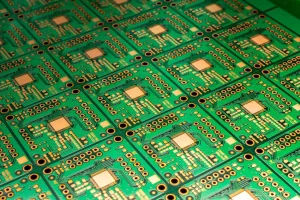
Immersion gold, commonly referred to as ENIG, is a two-stage surface treatment. First, an electroless nickel layer is deposited onto the exposed copper surface. A thin gold layer is then deposited over the nickel layer.
The nickel layer acts as a barrier between the copper and gold while providing mechanical support and improving surface stability. The outer gold layer offers excellent chemical stability and protects the underlying structure against oxidation and corrosion.
This combination makes ENIG particularly attractive for fine-pitch components, BGA packages, contact surfaces, and applications requiring long-term reliability. The flat surface produced by ENIG is also advantageous for high-density assembly.
Immersion Silver
Immersion silver uses a chemical displacement reaction to deposit a thin silver layer directly onto the exposed copper surface. Unlike ENIG, it does not require an electroless nickel barrier layer.
The relatively simple deposition structure can provide excellent surface flatness and electrical conductivity. This makes immersion silver an attractive option for applications where high-frequency electrical performance and cost efficiency are important.
For projects involving complex layer structures, surface finish selection should be considered together with multilayer PCB manufacturing and the overall stack-up design rather than treated as an isolated manufacturing step.
2. Key Performance Differences Between Immersion Gold and Silver
Corrosion Resistance: Long-Term Protection vs. Standard Protection
Corrosion resistance is one of the most important considerations when selecting a PCB surface treatment.
With ENIG, the nickel layer provides a physical barrier that helps prevent the copper conductor from directly contacting the external environment. The gold layer is chemically stable and provides additional protection against oxidation and corrosion. As a result, ENIG generally offers strong long-term environmental stability.
Immersion silver also protects the copper surface, but silver is more chemically reactive than gold. Exposure to sulfur-containing compounds and certain contaminants can cause silver sulfide formation, resulting in discoloration and potentially affecting surface performance.
Therefore, ENIG is generally better suited to demanding industrial environments, long-term storage, and applications where environmental reliability is a major concern.
Electrical Performance: High-Frequency Considerations
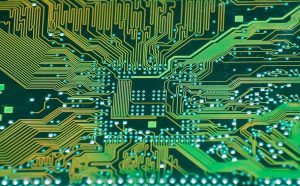
Electrical performance is another important factor for multilayer boards, particularly those used for high-speed and RF signal transmission.
Silver has very high electrical conductivity, and immersion silver provides a relatively smooth conductive surface. This can make it attractive for designs where conductor surface characteristics and signal integrity are important.
ENIG also provides good electrical performance, but its nickel layer has different electrical characteristics from copper and silver. For high-frequency applications, designers should evaluate the complete conductor structure, surface roughness, dielectric material, impedance requirements, and signal frequency rather than selecting a finish based only on bulk metal conductivity.
For high-speed designs, high-speed PCB manufacturing requires coordinated control of stack-up, materials, impedance, registration, plating, and surface finish.
Surface Flatness and Wear Resistance
Surface flatness is particularly important for fine-pitch SMT and BGA assembly.
ENIG provides a relatively flat and uniform surface, making it well suited to high-density component placement. The nickel layer also provides a harder substrate beneath the gold, giving the surface good wear resistance.
Immersion silver can also provide a smooth surface and is compatible with fine-pitch assembly. However, the silver layer is relatively soft and can be more susceptible to scratching or surface damage during handling.
Consequently, ENIG is often preferred when the board requires durable contact surfaces, repeated handling, or long-term mechanical stability.
3. Environmental Adaptability
Different electronic products operate under very different environmental conditions, making environmental compatibility an important part of multilayer PCB surface finish selection.
ENIG generally provides strong environmental stability because the nickel and gold layers protect the underlying copper from oxidation and external contamination. It is therefore suitable for industrial control equipment, automotive electronics, communication equipment, and other applications where reliability over a long service life is important.
Immersion silver requires more careful environmental control. Sulfur-containing substances can accelerate silver tarnishing, so storage, packaging, transportation, and production environments should be appropriately controlled.
For high-frequency or RF applications, however, the choice should also be evaluated alongside the PCB substrate. Material selection directly affects signal loss, impedance, and thermal behavior. High-frequency PCB materials such as Rogers and PTFE-based laminates may be required when operating frequency and insertion-loss requirements exceed the practical range of conventional FR-4.
4. Manufacturing Efficiency and Cost
Manufacturing complexity is another major difference between ENIG and immersion silver.
Immersion silver has a relatively straightforward deposition process because it does not require the additional electroless nickel layer used by ENIG. This can contribute to efficient production and competitive processing costs.
ENIG involves multiple chemical treatment stages and tighter process control. Gold is also a relatively expensive material, so the overall manufacturing cost is generally higher than immersion silver.
However, surface-finish cost should not be evaluated independently. The total PCB cost also depends on layer count, material, copper thickness, via technology, board dimensions, testing requirements, and production volume. A lower-cost surface finish may not necessarily provide the best total value if it increases storage or reliability requirements.
For prototype and production projects, rapid PCB prototyping can help engineers evaluate different surface-finish options before committing to larger production volumes.
5. How to Choose Between Immersion Gold and Immersion Silver
There is no universally superior surface finish. The correct choice depends on the PCB’s technical requirements and operating environment.
Choose ENIG When:
- Long-term corrosion resistance is important.
- The PCB will operate in demanding environments.
- Fine-pitch SMT or BGA components are used.
- A flat and durable surface is required.
- The board requires reliable contact or repeated handling.
- Long storage life is expected.
- Overall product reliability is more important than minimizing initial surface-finish cost.
Choose Immersion Silver When:
- High electrical conductivity is important.
- High-frequency signal performance is a major consideration.
- The product operates in a relatively controlled environment.
- Cost efficiency is important.
- Long-term storage requirements are limited.
- A flat surface finish is required without the additional nickel layer.
The final decision should consider the complete PCB design, including material, stack-up, copper thickness, impedance, assembly technology, environmental conditions, and expected service life.
6. ENIG vs. Immersion Silver: Quick Comparison
| Characteristic | ENIG / Immersion Gold | Immersion Silver |
|---|---|---|
| Deposition structure | Nickel + Gold | Silver |
| Surface flatness | Excellent | Excellent |
| Corrosion resistance | Excellent | Good |
| Tarnish resistance | Excellent | More sensitive to sulfur |
| Wear resistance | High | Moderate |
| Electrical conductivity | Good | Excellent |
| Fine-pitch SMT | Excellent | Excellent |
| BGA applications | Excellent | Good |
| High-frequency applications | Good, application dependent | Very good, application dependent |
| Storage requirements | Relatively flexible | More demanding |
| Processing complexity | Higher | Lower |
| Relative cost | Higher | Lower |
| Typical applications | Automotive, industrial, high-reliability electronics | Consumer electronics, high-frequency and cost-sensitive designs |
7. Final Selection Recommendations
Immersion gold PCB and immersion silver PCB each offer distinct advantages. ENIG provides excellent corrosion resistance, surface durability, flatness, and long-term stability, making it a strong choice for high-reliability and demanding electronic products.
Immersion silver offers excellent electrical conductivity, a smooth surface, relatively simple processing, and competitive cost. It can be a practical choice for high-frequency designs and cost-sensitive products operating in controlled environments.
The best PCB surface treatment should therefore be selected by balancing electrical requirements, environmental conditions, assembly technology, reliability targets, storage requirements, and manufacturing cost.
As PCB technology continues to evolve toward higher density, higher frequencies, and greater functional integration, surface-finish selection will increasingly need to be coordinated with materials, stack-up design, impedance control, plating, and assembly processes. A comprehensive manufacturing approach can help ensure that the selected surface finish supports the overall electrical and mechanical performance of the multilayer PCB.