2026 PCB Membrane Switch Panel Cost: Prices, Influencing Factors & Manufacturing Guide
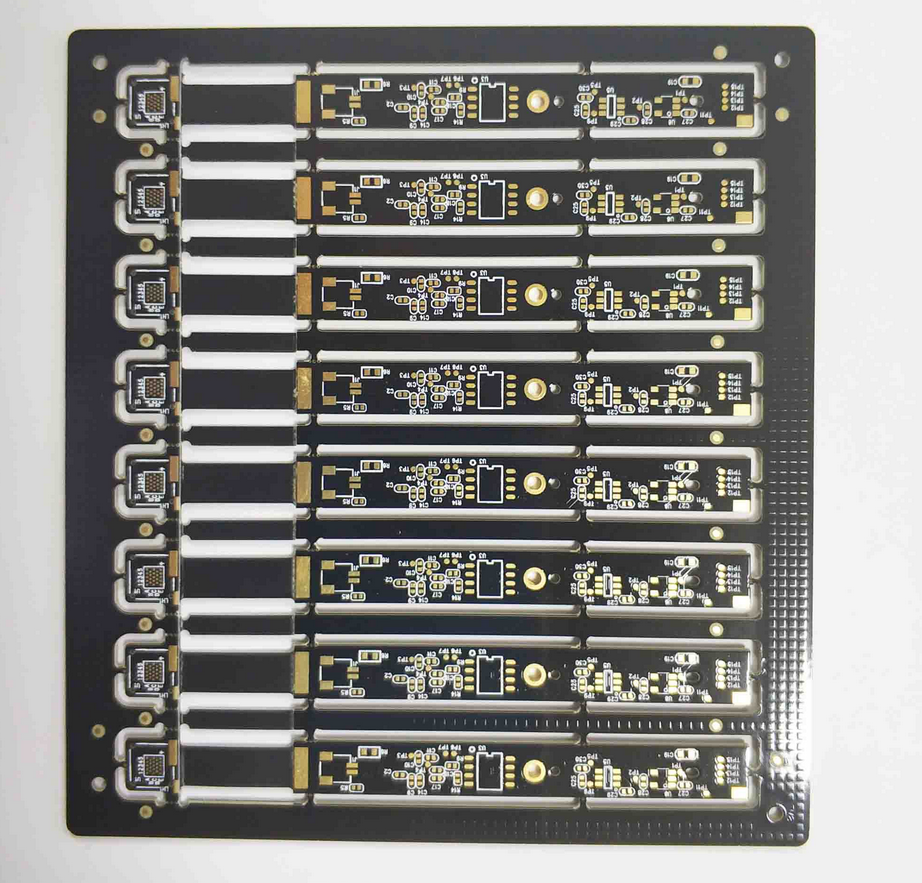
A PCB membrane switch panel is an electronic control component that combines a membrane switch human-machine interface with a PCB circuit board. It is widely used in industrial control equipment, medical devices, instrumentation, consumer electronics, automotive electronics, smart devices, and more.
For OEMs and electronics manufacturers, the price of a PCB membrane switch panel is not a fixed number. Factors such as PCB layer count, substrate material, panel size, number of keys, membrane material, graphic printing, backlighting, tactile feedback, electronic components, tooling, production volume, and testing requirements all directly impact the final cost.
In the 2026 market, a simple PCB membrane switch panel prototype may cost only a few dozen dollars, while complex custom low-volume products can exceed $30 per unit or more. As order quantities increase, the unit manufacturing cost typically decreases significantly.
This guide provides a detailed overview of 2026 PCB membrane switch panel pricing ranges, cost breakdown, key price-influencing factors, differences between prototype and production pricing, manufacturing processes, and practical strategies to reduce costs—helping engineers and procurement professionals budget more accurately.
What Is a PCB Membrane Switch Panel?
A PCB membrane switch panel is a low-profile human-machine interface that transmits operator signals to electronic devices when users press keys or functional areas on the panel. Compared to traditional mechanical buttons, membrane switches offer a thin structure, lightweight design, customizable appearance, good sealing performance, and are well-suited for volume production.
When combined with a PCB, the circuit board not only handles switch signal transmission but can also integrate:
- LED indicators
- Connectors
- Resistors, capacitors, and other electronic components
- Sensor interfaces
- Display interfaces
- Control circuits
- Microcontrollers
- Backlight circuits
- Communication interfaces
A typical PCB membrane switch panel structure may include a graphic overlay, membrane circuit layer, spacer layer, conductive traces, adhesive layer, metal domes, PCB, LEDs, connectors or FPC tails, backlight structures, and a protective coating. The exact configuration depends on product functionality, mounting requirements, environmental conditions, and expected service life. For example, a standard industrial control panel might only need simple membrane keys, LEDs, and a 2-layer FR-4 PCB, while a medical device control panel may require chemical-resistant materials, UV-stable overlays, tactile feedback, backlighting, and more stringent electrical and reliability testing.
2026 PCB Membrane Switch Panel Price Ranges
There is no standard price for PCB membrane switch panels, as project requirements vary widely in structure and manufacturing complexity. The following price ranges serve as a preliminary reference for 2026 project budgeting.
Prototype Pricing
For small-batch custom samples, PCB membrane switch panels typically range from roughly $10–$50 per unit or higher, and if only a few pieces are ordered, the actual price may exceed this range. Prototype costs are higher due to fixed costs that must be absorbed, including engineering design fees, PCB prototyping, film artwork preparation, tooling or fixture costs, laser cutting, screen printing, PCB manufacturing, component placement, and electrical testing.
100–500 Units (Small-Batch Production)
When order quantities reach around 100–500 pieces, custom PCB membrane switch panels generally fall in the range of $8–$30 per unit, depending on PCB size, layer count, number of keys, LED count, component complexity, membrane material, surface finish, connector type, backlight method, and assembly complexity. This is a common pilot-run range for industrial control and instrumentation products.
1,000–5,000 Units (Medium-Batch Production)
As quantities increase to 1,000–5,000 pieces, unit costs typically drop further, with budgets often falling between $4–$15 per unit. Higher volumes allow tooling, engineering setup, and production preparation costs to be spread across more units, significantly reducing per-unit cost.
10,000+ Units (High-Volume Production)
For orders exceeding 10,000 pieces, relatively simple PCB membrane switch panels may reach $2–$8 per unit or more. However, complex industrial control panels, medical panels, automotive panels, or products with many integrated electronic components will still cost significantly more.
These prices are for budget reference only and are not fixed quotes. Final pricing requires manufacturer evaluation based on Gerber files, BOM, PCB drawings, membrane panel designs, material specifications, quantities, tolerances, test requirements, and application environment.
Cost Breakdown of PCB Membrane Switch Panels
The total price of a custom PCB membrane switch panel includes more than just PCB fabrication. Key cost components include:
1. PCB Manufacturing Cost
The PCB itself is often a major cost component. Factors affecting PCB pricing include size, layer count, copper weight, board thickness, substrate material, minimum trace/space, minimum via diameter, via structure, surface finish, solder mask requirements, impedance control, and order quantity. A standard 2-layer FR-4 PCB is relatively cost-effective, while 4-layer or 6-layer boards with fine-pitch traces, blind/buried vias, impedance control, or specialty materials add significant cost.
2. Membrane Panel Material Cost
The graphic overlay of a membrane switch typically uses PET (polyester), PC (polycarbonate), acrylic, or other specialty films. Material selection impacts mechanical strength, abrasion resistance, chemical resistance, temperature tolerance, UV stability, appearance, service life, and cost. Standard PET offers good value for industrial controls, while high-temperature or chemical-resistant materials increase cost.
3. Graphic Printing Cost
Printing graphics, text, symbols, and logos on the membrane panel involves screen printing, digital printing, multi-color registration, transparent windows, translucent keys, metallic effects, textures, and protective coatings. Simple one- or two-color designs are more economical, while complex multicolor artwork, tight registration, and transparent windows increase cost.
4. Tactile Feedback Components
Many industrial control panels require distinct key feel, achieved through metal domes, polyester domes, or embossed keys. Metal domes provide crisp tactile feedback and a better user experience but cost more than non-tactile designs. High-cycle-life applications may require additional dome-life testing.
5. LED Backlighting
For products used in low-light environments, backlighting is common. Backlight systems may include LEDs, light-guide structures, diffuser films, light-blocking layers, resistors, and optical designs. More LEDs, larger backlit areas, and independently controlled zones all drive up cost.
6. Adhesives and Spacer Layers
Membrane switches are constructed from multiple laminated layers, requiring different adhesives selected based on operating temperature, humidity, chemical exposure, surface materials, bond strength, and service life. Choosing low-cost adhesives that don’t meet environmental requirements can lead to delamination, blistering, or edge lifting in the field.
Key Factors Affecting PCB Membrane Switch Panel Pricing
Panel Size
Larger panels require more membrane material, printing area, adhesive, cutting time, and assembly time, directly increasing cost.
Number of Keys
More keys increase graphic design complexity, circuit routing, conductive traces, metal dome count, assembly time, and testing effort. A 30-key panel will not cost the same as a simple 5-key design.
PCB Circuit Complexity
A simple membrane switch PCB may only handle switch and LED signals, while complex designs may integrate key matrices, LED arrays, display modules, sensors, MCUs, communication interfaces, multiple connectors, and power management circuits. Greater complexity drives up design, component count, SMT placement, and functional testing costs.
PCB Layer Count
In general: 2-layer PCB < 4-layer PCB < 6-layer PCB. Higher layer counts require more material, lamination cycles, drilling, registration precision, and manufacturing steps. For simple membrane switch functions, 2 layers are often sufficient, but high-density routing, EMI control, high-speed signals, or advanced electronics may demand multilayer boards.
PCB Surface Finish
Common surface finishes include HASL, lead-free HASL, ENIG, immersion silver, and OSP. ENIG costs more than standard HASL but provides better surface flatness for fine-pitch components and high-reliability applications.
Backlighting Requirements
Non-backlit membrane switches are structurally simpler. Backlit designs add LEDs, light-guide materials, diffuser structures, additional PCB circuitry, optical design, and assembly steps, increasing cost.
Environmental Requirements
Industrial, medical, automotive, or outdoor applications may require waterproofing, dustproofing, UV protection, chemical resistance, abrasion resistance, high/low temperature tolerance, thermal cycling, and humidity resistance—all of which add material, design, and testing costs.
PCB Cost vs. Membrane Panel Cost: What’s the Difference?
It is important to recognize that PCB price ≠ total PCB membrane switch panel price. A complete product includes PCB + membrane switch + graphic overlay + electronic components + assembly + testing. For simple products, the membrane panel and PCB costs may be comparable; for complex electronic controls, the PCB and PCBA costs are often the dominant factors. Comparing only PCB quotes from different suppliers does not accurately reflect total manufacturing cost. The meaningful comparison is total BOM, manufacturing processes, test standards, and final delivered product cost.
Prototype vs. Production Pricing Differences
There can be a substantial price gap between prototypes and production units. For example, if a project requires $500 in engineering and tooling costs:
- 10 units: $500 ÷ 10 = $50 per unit
- 10,000 units: $500 ÷ 10,000 = $0.05 per unit
The same fixed cost spread over more units dramatically lowers per-unit cost. When requesting quotes, it’s helpful to provide not only sample quantity but also estimated annual volume, order frequency, project lifecycle, and future production forecasts so that suppliers can optimize their manufacturing plan and pricing.
Custom Membrane Switch Tooling Costs
Tooling and fixtures are an important cost factor for custom membrane switches. Depending on the manufacturing method, costs may include cutting dies, embossing dies, graphic registration fixtures, film forming tools, metal dome placement fixtures, and special window machining tools. Simple tooling may range from $50–$300, while complex structures, special sizes, and tight tolerances can cost more. For high-volume production, tooling costs are amortized across many units, reducing their impact on per-unit cost.
How to Reduce PCB Membrane Switch Panel Costs
Cost reduction is not about choosing the cheapest materials; it’s about smart design and DFM (Design for Manufacturing) optimization.
Simplify PCB Design Where Possible
Use the minimum layer count that meets electrical requirements. Avoid unnecessary vias, ultra-fine traces, specialty materials, extremely small vias, overly tight tolerances, and complex routing. If a 2-layer PCB works, there is no need to specify 4 layers.
Use Standard Components
Select widely available LEDs, connectors, resistors, capacitors, switches, and ICs to reduce procurement risk and lead times.
Optimize Panel Size
Where user experience and mechanical mounting permit, reduce panel dimensions to lower material, adhesive, printing, and cutting costs—but avoid compressing key spacing to the point of poor usability.
Increase Production Volume
For designs that have already been validated, larger order quantities are one of the most direct ways to reduce unit cost, especially when tooling and engineering setup costs are significant.
Apply DFM Principles Early
Check PCB trace/space, pad sizes, via diameters, film tolerances, key spacing, graphic registration, adhesive areas, connector placement, and PCB-to-panel alignment during the design phase. Catching issues early avoids costly revisions later.
PCB Membrane Switch Panel Manufacturing Process
A complete manufacturing process typically follows these steps:
- Engineering Design Review: Manufacturer reviews Gerber files, PCB drawings, BOM, membrane artwork, mechanical drawings, electrical specifications, and test requirements to ensure PCB and membrane switch match in dimensions, electrical connection, and mechanical fit.
- PCB Fabrication: PCB production includes material preparation, inner-layer imaging, lamination, drilling, electroless copper/plating, pattern transfer, etching, solder mask, surface finish, and electrical testing. Multilayer boards require tighter layer registration and impedance control.
- Membrane Panel Production: Membrane panels are produced from approved artwork: film cutting, graphic printing, circuit printing, curing, die-cutting, embossing, adhesive layer application, and multi-layer lamination. Dimensional matching between graphics and PCB is critical.
- Component Assembly (PCBA): If the PCB requires components, SMT placement, THT insertion, LED mounting, connector installation, and other assembly steps are performed. PCBA quality directly affects final product reliability.
- Membrane Panel to PCB Integration: The membrane switch panel is combined with the PCB per design, with careful attention to key positions, PCB registration, connector alignment, circuit continuity, panel flatness, and bonding accuracy. Mechanical misalignment can cause key malfunction.
- Functional Testing: Final products are tested for key actuation, continuity, LED function, connector integrity, visual inspection, dimensional check, bond strength, and where required, life-cycle and environmental testing for medical, automotive, and industrial applications.
How to Choose a PCB Membrane Switch Panel Manufacturer
When selecting a supplier, avoid comparing unit price alone. A qualified manufacturer should have capabilities in PCB manufacturing, membrane switch fabrication, PCBA assembly, graphic overlay production, flexible circuit technology, custom HMI design, electrical testing, and quality control. For OEM customers, key evaluation criteria include:
- Engineering expertise: Can the supplier identify potential PCB, membrane, and mechanical issues before production?
- Production capability: Can they support prototyping, small-batch, and high-volume production?
- Quality management: Do they have a robust quality system and can they provide traceability records?
- Material supply: Are PCB materials, films, adhesives, and components sourced from stable supply chains?
- Communication: Can their engineering team quickly address design changes and technical questions?
- Lead time control: Can they meet delivery requirements for both samples and production orders?
Why Choose gopcb for Custom PCB Membrane Switch Panels?
For industrial controls, medical devices, instrumentation, consumer electronics, and other OEM projects, gopcb offers custom PCB manufacturing solutions tailored to your PCB design, electronic functionality, and application needs. A complete PCB membrane switch project may involve PCB fabrication, prototyping, PCBA, membrane switch integration, engineering review, functional testing, custom production, and OEM/ODM support.
To receive an accurate quote for your PCB membrane switch panel, we recommend providing the following information: PCB dimensions, layer count, material, copper weight, surface finish, membrane panel size, number of keys, membrane artwork, LED requirements, connector type, BOM, Gerber files, annual quantity, certification requirements, and application environment. The more complete your documentation, the more precisely we can calculate material, PCB fabrication, tooling, assembly, and testing costs.
With expertise inturnkey PCB assembly, SMT assembly, and prototype PCB assembly, gopcb is your trusted partner for high-quality PCB membrane switch panels. For projects requiring low-volume PCB assembly or high-volume production, we offer flexible solutions to meet your needs.
FAQ: PCB Membrane Switch Panels
How much does a PCB membrane switch panel cost?
Custom PCB membrane switch panels typically range from roughly $2–$50 per unit or more. Prototypes cost more due to fixed engineering and tooling costs, while high-volume production significantly reduces per-unit cost. Actual pricing depends on PCB layer count, dimensions, membrane material, key count, backlighting, components, quantity, and testing requirements.
What type of membrane switch panel is the least expensive?
The most cost-effective configuration typically uses a standard 2-layer FR-4 PCB, simple PET overlay, few keys, no backlighting, standard connectors, and basic graphic printing.
Are membrane switches cheaper than touchscreens?
For relatively simple human-machine interfaces, membrane switches generally offer a more cost-effective solution. They also provide a simple structure, low power consumption, durability, and suitability for harsh industrial environments.
Does PCB thickness affect membrane switch panel price?
Yes. Standard thicknesses are generally easier to manufacture, while special thicknesses may add material and processing costs. The actual impact depends on layer count, copper weight, material, and order quantity.
Does the number of keys affect price?
Yes. More keys increase circuit traces, metal dome count, graphic printing, assembly time, and testing effort, making key count an important cost driver.
How can I get an accurate quote for a PCB membrane switch panel?
Provide the manufacturer with: Gerber files + BOM + PCB drawings + membrane artwork + mechanical drawings + quantities + technical specifications + application environment. This enables accurate assessment of PCB fabrication, membrane panel, tooling, components, assembly, and testing costs.
Conclusion
In 2026, PCB membrane switch panel costs are influenced by PCB size, layer count, material, copper weight, surface finish, membrane material, key count, graphic printing, tactile feedback, LED backlighting, tooling, assembly, testing, and order quantity. As a preliminary budget reference:
- Prototypes: ~$10–$50+/unit
- 100–500 units: ~$8–$30/unit
- 1,000–5,000 units: ~$4–$15/unit
- 10,000+ units: ~$2–$8+/unit
These ranges are for early-stage budgeting only. Actual pricing depends on specific design files and manufacturing requirements. For OEM buyers, the key to cost reduction is not simply choosing the lowest quote, but applying DFM optimization, material optimization, structural optimization, and volume planning from the design stage—and selecting a supplier with integrated capabilities in PCB fabrication, PCBA, and membrane switch integration.
If you are developing a custom PCB membrane switch panel, industrial control membrane switch, medical device membrane switch, or LED-backlit PCB membrane switch assembly, submit your Gerber files, BOM, panel drawings, and volume requirements to gopcb for engineering evaluation and a competitive quote.