Castellation PCB Cost Analysis 2026 – How Materials, Layer Count & Process Affect Pricing
With the rapid growth of IoT, wireless communication modules, smart home devices, medical electronics, and industrial control equipment, castellation PCBs (also known as stamp-hole or half-hole PCBs) have become a critical enabler for modular electronic products.
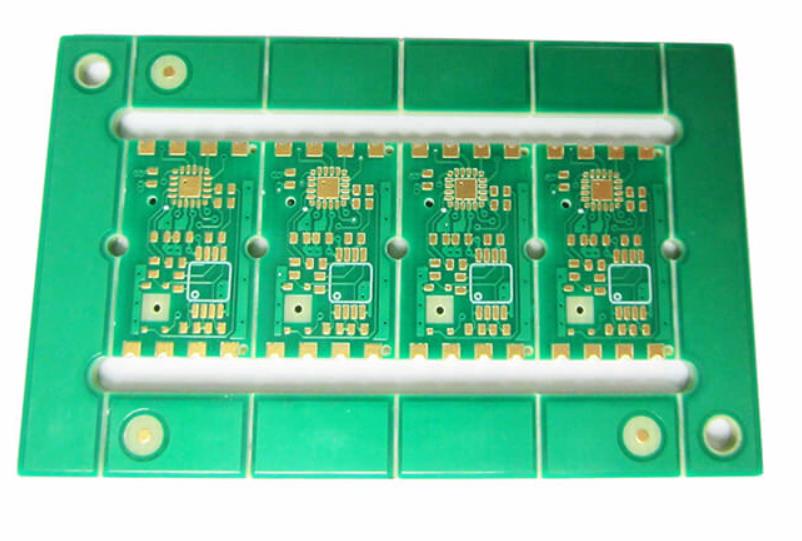
Unlike standard PCBs, castellation PCBs feature plated half‑holes on the board edge, allowing direct soldering to a main board without connectors or pin headers. This significantly reduces product size and assembly costs. However, because the manufacturing process is more complex, castellation PCBs generally cost more than ordinary boards. So, what is the actual price of a castellation PCB in 2026? This article breaks down the cost structure from multiple angles and provides real USD price references to help procurement engineers and hardware developers accurately estimate project budgets.
1. Market Price Reference for Castellation PCBs (2026)
Typical pricing for standard FR4 castellation PCBs (common sizes and processes) is as follows:
- 2-layer prototype (5 pcs): $35–80
- 2-layer low volume (100 pcs): $180–450
- 4-layer prototype: $90–180
- 4-layer production: $600–1500
- 6-layer RF PCB: $1200–3500
- Rogers high-frequency PCB: $2000–8000
- Flexible castellation PCB: $800–5000
Prices vary with board size, layer count, material brand, and order quantity.
2. Impact of PCB Material on Price
The base substrate is a major cost driver.
FR4
FR4 is the most widely used and cost‑effective option, with mature processing and suitability for consumer electronics and most IoT devices. Prototype pricing: $35–120. Ideal for Bluetooth, Wi‑Fi, GPS, and smart home modules.
High‑Tg FR4
Offers better heat resistance, adding about 10–20% to the cost compared to standard FR4. Used in automotive, LED drivers, and industrial controls.
Rogers High‑Frequency Materials
Required for RF products, costing 2–5 times more than FR4. For example, a 2‑layer Rogers castellation PCB prototype ranges from $180–600, while volume production often exceeds $2000.
Ceramic PCBs
Used in high‑power and high‑temperature environments, costing 3–8 times more than FR4. AlN ceramic prototypes can reach $1000–5000 even in small batches.
3. How Layer Count Affects Manufacturing Cost
More layers mean more complex lamination, alignment, drilling, and inspection steps. Typical prototype prices by layer count:
- 2-layer: $35–80
- 4-layer: $90–180
- 6-layer: $180–350
- 8-layer: $300–700
- 10-layer: $600–1500
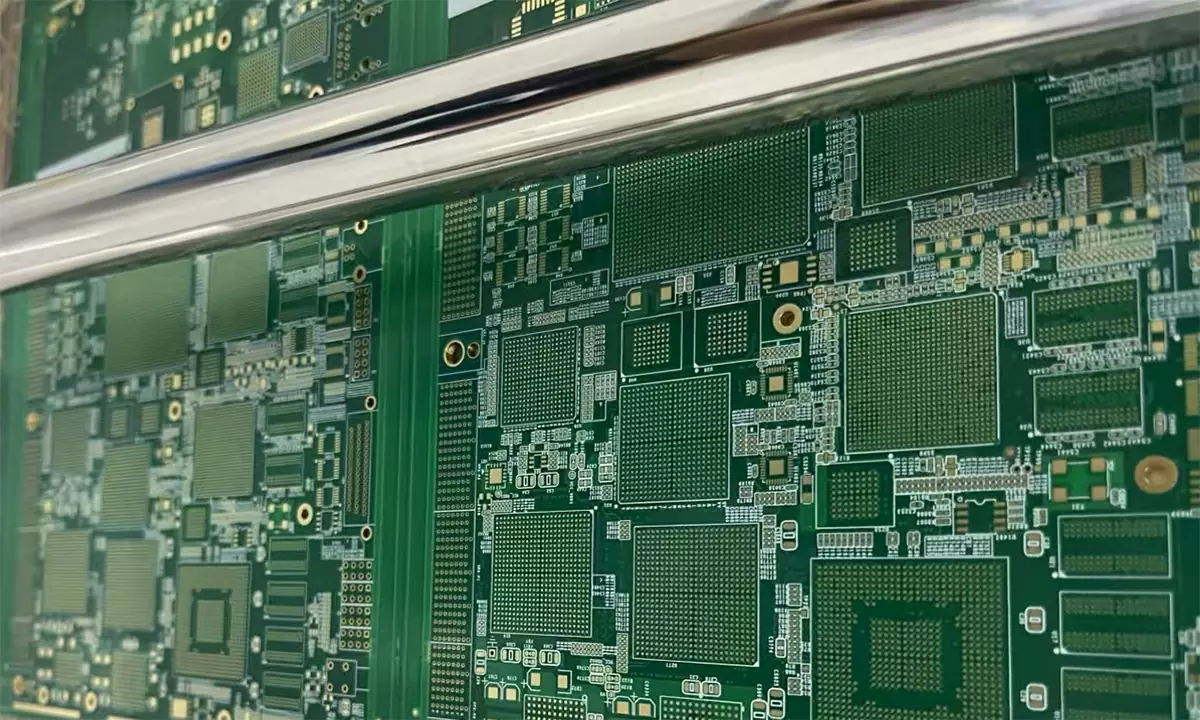
Each additional lamination cycle increases alignment difficulty, lamination cost, drilling count, and AOI inspection time, making multilayer castellation PCBs significantly more expensive than standard boards.
4. Special Process Costs for Castellation PCBs
Compared to standard PCBs, castellation boards require several extra steps:
- Precision drilling: Holes must be precisely located at the board edge, adding 5–10% cost.
- Hole copper plating: All castellation holes require full plated through‑hole (PTH) process, adding $20–100.
- CNC routing (edge profiling): The final cut splits the plated holes in half – the core operation, adding 10–15% cost.
- Visual inspection: Checks for complete half‑holes, continuous copper, burrs, and edge flatness – additional labor cost.
- AOI + electrical test: Most castellation PCBs require AOI, flying probe, and electrical performance testing – $50–300 extra.
5. Surface Finish Cost Comparison
The surface finish directly affects solderability and cost. Relative cost levels:
- HASL (hot air solder leveling) – baseline
- Lead‑free HASL – low
- OSP – low (~+5%)
- Immersion tin – moderate
- Immersion silver – moderate (~+8%)
- ENIG (electroless nickel immersion gold) – higher (~+10–20%)
- Hard gold – highest (~+30–60%)
For wireless modules, ENIG is the most common choice due to its flatness, excellent solderability, and corrosion resistance.
6. Effect of Board Thickness and Copper Weight
Thicker boards require more material and longer processing times. Price variations relative to standard 1.6mm thickness:
- 0.8mm – baseline
- 1.0mm – +5%
- 1.6mm – standard
- 2.0mm – +10%
- 3.2mm – +20%
Copper weight (1oz baseline):
- 1oz – baseline
- 2oz – +10%
- 3oz – +20%
- 4oz – +35%
For industrial control and power modules requiring high current, thicker copper improves reliability but increases cost.
7. Quantity Dictates Unit Price
Larger volumes reduce per‑unit cost. Examples for a typical 4‑layer FR4 castellation PCB:
- 5 pcs: ~$12–18 per board
- 100 pcs: ~$3–6 per board
- 1000 pcs: ~$0.8–2.5 per board
- 10,000 pcs: as low as $0.3–1.2 per board
Costs drop due to amortized engineering fees, better panel utilization, and automated production. For long‑term projects, volume purchasing yields significant savings.
8. Hidden Costs Often Overlooked
Beyond the bare PCB quote, consider these additional expenses:
- DFM analysis: $30–200
- Test fixtures: $100–500
- SMT stencils: $25–120
- Functional testing: $100–800
- X‑ray inspection (for BGA): $80–500
- International shipping: $40–300
- Import duties/taxes (varies by country)
Including these in your project budget prevents unexpected overruns.
9. How to Reduce Castellation PCB Manufacturing Costs
Without compromising quality, you can lower costs by:
- Choosing standard FR4 material when possible.
- Limiting layer count to what is strictly needed.
- Reducing the number of castellation holes and avoiding complex odd‑shaped outlines.
- Using standard board thickness (e.g., 1.6mm).
- Optimizing panel utilization through panelization.
- Increasing order quantity to spread fixed costs.
- Selecting the most cost‑effective surface finish for your application.
- Performing DFM optimization early in the design phase to reduce rework and scrap.
- Partnering with a manufacturer experienced in castellation PCBs to minimise process risks.
For expert guidance on PCB design and manufacturing, visit our PCB design & layout and PCB manufacturing pages.
10. Why Choose gopcb for Castellation PCB Production?
As a professional PCB manufacturer, gopcb has extensive experience in producing high‑quality, reliable castellation PCBs for customers worldwide. Our strengths include:
- High‑precision castellation hole drilling and CNC routing
- Stable and reliable half‑hole plating process
- Support for 2–20+ layer multilayer boards
- Wide material selection: FR4, High‑Tg, Rogers, aluminium, ceramic, and hybrid
- Multiple surface finishes: ENIG, OSP, HASL, immersion silver, hard gold, etc.
- Prototyping, low‑volume, and high‑volume production
- Complete inspection system: AOI, flying probe, electrical test, X‑ray
- Fast delivery and professional DFM engineering support
- Competitive pricing and comprehensive after‑sales service
Whether you need wireless communication modules, industrial controls, medical devices, or smart home products, gopcb delivers cost‑effective castellation PCB solutions.
11. Conclusion
The cost of a castellation PCB depends not only on board size but also on material type, layer count, number of half‑holes, board thickness, copper weight, surface finish, process complexity, testing requirements, and order volume.
For a simple 2‑layer FR4 design, prototype pricing starts around $35–80; complex multilayer designs with Rogers materials can exceed $8000 in volume. By balancing performance, reliability, and manufacturing costs, and by optimizing design and choosing an experienced manufacturer like gopcb, you can achieve the best cost‑performance ratio for your project.
Explore our full range of assembly services – including prototype PCB assembly, low‑volume assembly, and high‑volume assembly – to streamline your entire production cycle.