2026 Hybrid Multilayer PCB Cost Guide – Latest Pricing & Key Factors
With the rapid growth of AI servers, 800G/1.6T switches, 5G base stations, automotive millimeter-wave radar, satellite communications, and high-speed data centers, hybrid multilayer PCBs have become the mainstream solution for high-frequency, high-speed electronic designs.
Compared to traditional FR4 multilayer boards, hybrid PCBs combine different dielectric materials (FR4, Rogers, PTFE, Megtron, Isola, etc.) in a single stack-up, ensuring signal integrity while significantly reducing overall material cost. This makes them ideal for high-end applications in telecommunications, automotive electronics, aerospace, and medical devices.
For procurement professionals, hardware engineers, and OEM customers, the most pressing question is: How much does a hybrid multilayer PCB cost in 2026? In reality, there is no fixed price – quotes depend on materials, layer count, board size, process complexity, impedance control, HDI structures, order volume, and more.
This article provides a comprehensive breakdown of 2026 hybrid multilayer PCB pricing, cost drivers, and practical ways to reduce manufacturing expenses – helping you make informed budgeting decisions.
1. What is a Hybrid Multilayer PCB?
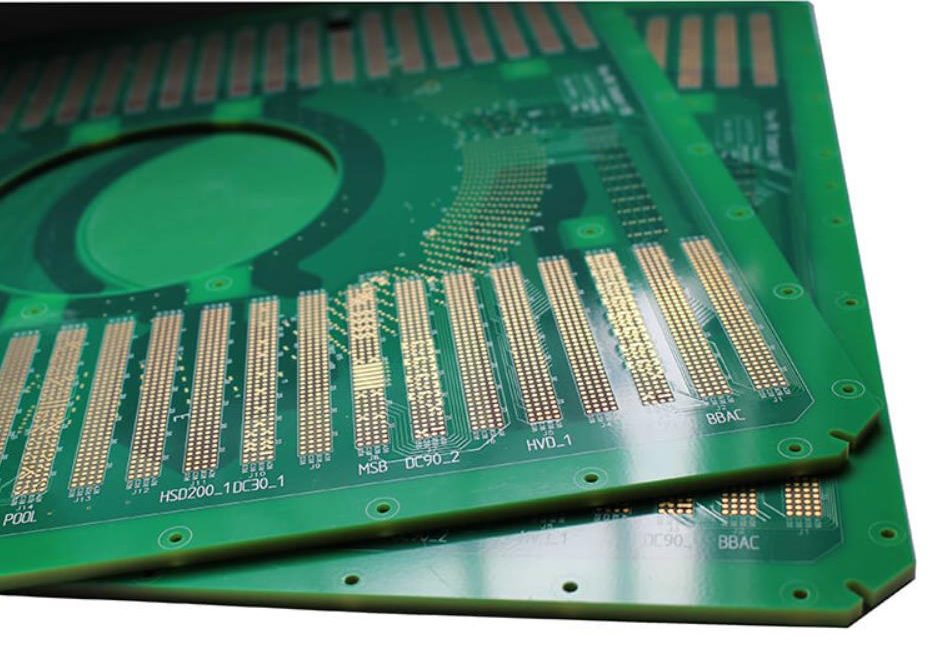
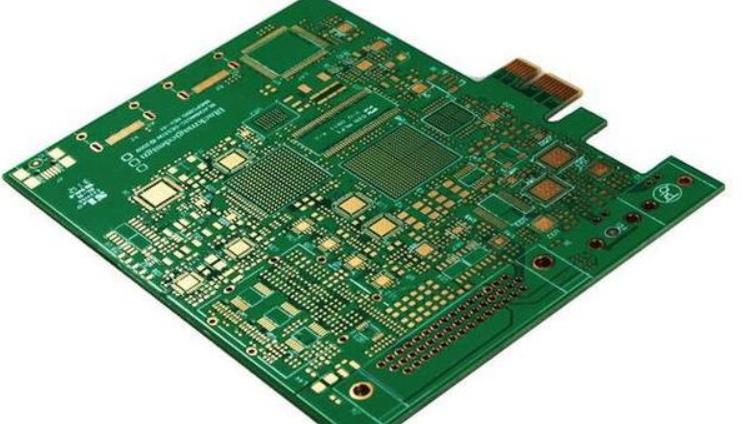
A hybrid multilayer PCB uses two or more different dielectric materials laminated together in one board. Common combinations include FR4 + Rogers 4350B, FR4 + Rogers 4003C, FR4 + PTFE, FR4 + Megtron 6, Rogers + PTFE, and FR4 + high-frequency ceramic-filled materials.
This design approach places high-frequency, high-speed signal layers on low-loss materials while keeping control circuits on lower-cost FR4 – achieving an optimal performance-to-cost balance. Hybrid designs typically save 20%–50% in material cost compared to all-Rogers boards.
2. 2026 Hybrid Multilayer PCB Price Reference
The following are typical price ranges (USD) based on industry data; actual quotes depend on Gerber files and specific process requirements.
- 4-layer hybrid: prototype $120–250, medium volume $35–70, high volume $12–25
- 6-layer hybrid: prototype $220–450, medium $60–120, high $20–40
- 8-layer hybrid: prototype $450–900, medium $120–260, high $40–85
- 10-layer hybrid: prototype $700–1500, medium $220–450, high $75–150
- 12-layer hybrid: prototype $1200–2500, medium $350–700, high $120–250
- 16+ layers: prototype from $2000+, quoted per project
Note: These estimates are for standard processes. Additional features like high-Tg materials, HDI, laser blind vias, buried vias, back drilling, heavy copper, ENEPIG, etc., will increase the price.
3. Factors Affecting Hybrid Multilayer PCB Pricing
3.1 Material Cost
Materials account for 30%–60% of total manufacturing cost. Prices vary widely: standard FR4 (lowest) < high-Tg FR4 < Isola high-speed < Megtron < Rogers 4003C < Rogers 4350B < PTFE < ceramic-filled materials (highest). For most high-speed communication PCBs, FR4+Rogers hybrid is the most common and cost-effective choice.
3.2 Layer Count
More layers mean higher cost due to additional lamination cycles, more drilling, tighter alignment, increased AOI inspection, and lower yield. Generally: 4–6 layers are standard; 8–12 are mid-to-high end; 14–20 are complex; 20+ are advanced.
3.3 Stack-up Complexity
Simple hybrids (FR4+Rogers) are easier and cheaper. Complex designs involving FR4 + Rogers + PTFE + heavy copper + multiple laminations require careful CTE matching and higher process control, increasing cost significantly.
3.4 Impedance Control Requirements
High-speed PCBs often require single-ended or differential impedance with tolerances of ±5% or ±10%. This demands impedance calculation, test coupons, and verification, adding to the cost.
3.5 HDI and Special Via Structures
Laser blind vias, buried vias, via-in-pad, filled plating, resin plugging, and sequential lamination all increase cost. HDI hybrid boards can be 30–80% more expensive than standard multilayer boards.
3.6 Board Thickness
Thicker boards require longer drilling times, tighter copper uniformity control, and higher lamination pressure. Common thicknesses: 1.0mm, 1.6mm, 2.0mm, 3.2mm, 5mm, and 8mm+ for aerospace/industrial uses.
3.7 Copper Weight
Standard copper weights are 0.5oz and 1oz. Heavy copper (2oz, 3oz, 4oz, 6oz) increases etching, plating, and lamination difficulty, raising cost.
3.8 Surface Finish
Options include HASL, lead-free HASL, ENIG, immersion silver, immersion tin, hard gold, and ENEPIG. ENEPIG and hard gold are most expensive, used for high-reliability products.
3.9 Order Quantity
Larger volumes lower unit price. For example, a 6-layer hybrid prototype (5 pcs) might cost ~$280/board, while 5000 pcs can drop to ~$35/board because engineering costs, material procurement, panel utilization, and yield all improve with scale.
4. Prototype vs. Production Pricing
Prototypes (for R&D, functional verification, signal/EMC testing, high-frequency tuning) have higher unit cost but faster turnaround and more engineering support. Volume production (for automotive, telecom, medical, AI servers, industrial control) offers lower unit prices, higher yield, and stable delivery – ideal for long-term procurement.
5. How to Reduce Hybrid Multilayer PCB Manufacturing Costs
- Optimize high-frequency material area: Use Rogers only where needed (RF/high-speed zones), not the entire board – saving 20–40% material cost.
- Simplify stack-up: Minimize unnecessary core and prepreg layers to reduce lamination cycles and improve yield.
- Reduce HDI complexity: If performance allows, prefer mechanical drilling over laser microvias to cut costs.
- Optimize panel utilization: Design board sizes to maximize standard panel usage and reduce waste.
- Use standard thicknesses: Stick to 1.6mm or 2.0mm to avoid extra fees.
- Increase order quantity: Spread engineering and setup costs over more units to lower per-board price.
For expert assistance in design optimization, visit our PCB design & layout service.
6. Main Application Fields
Hybrid PCBs are widely used in AI server motherboards, GPU accelerators, 5G base stations, high-frequency antenna modules, automotive mmWave radar, ADAS, satellite communications, data center switches, optical communication equipment, industrial automation, medical imaging, aerospace, and defense electronics.
7. Why Choose gopcb for Hybrid Multilayer PCB Manufacturing?
As a professional high-end PCB manufacturer, gopcb specializes in high-reliability hybrid multilayer boards, serving global clients in telecom, automotive, medical, and industrial control.
- Up to 40+ layers, FR4+Rogers, PTFE, Megtron, and other hybrid combinations
- Precise impedance control, HDI laser microvias, sequential lamination, blind/buried vias, via-in-pad
- Full inspection: AOI, flying probe, ICT, X-Ray
- Certifications: ISO9001, IATF16949, UL, RoHS
- Prototyping, quick-turn, and volume production with global delivery
- Competitive pricing and dedicated engineering support
Explore our PCB manufacturing capabilities and turnkey assembly services for a complete solution.
8. Frequently Asked Questions
Q1: Why are hybrid multilayer PCBs more expensive than standard FR4?
They require multiple high-performance materials, complex lamination, precise impedance control, and tighter process controls – all adding cost.
Q2: Can a hybrid PCB really reduce overall system cost?
Yes. By using Rogers only in critical high-speed/RF areas and FR4 elsewhere, you can achieve similar performance at a much lower cost than an all-Rogers board – this is the industry standard approach.
Q3: Which industries benefit most from hybrid PCBs?
5G, AI servers, automotive radar, aerospace, satellite communications, medical imaging, high-speed switches, and industrial automation – all demanding high-speed/high-frequency performance.
Q4: What information is needed for an accurate quote?
Gerber files, stack-up, material types, layer count, thickness, copper weight, surface finish, impedance requirements, via structure, order quantity, and any special process needs.
9. Conclusion
In 2026, hybrid multilayer PCBs are the go-to choice for high-frequency, high-speed designs. The cost is driven by material combination, layer count, stack-up complexity, impedance control, HDI features, and production volume. Although the per-board price is higher than standard FR4, a well-designed hybrid approach can significantly lower overall project cost while maintaining signal integrity and long-term reliability.
For high-end applications like AI, 5G, automotive, aerospace, and industrial control, partnering with an experienced manufacturer like gopcb ensures quality, performance, and cost-effectiveness. We offer one-stop services from prototyping to mass production, helping you achieve faster time‑to‑market and better value.
Get started with our prototype PCB assembly or high-volume assembly services to bring your hybrid designs to life.