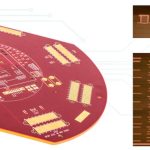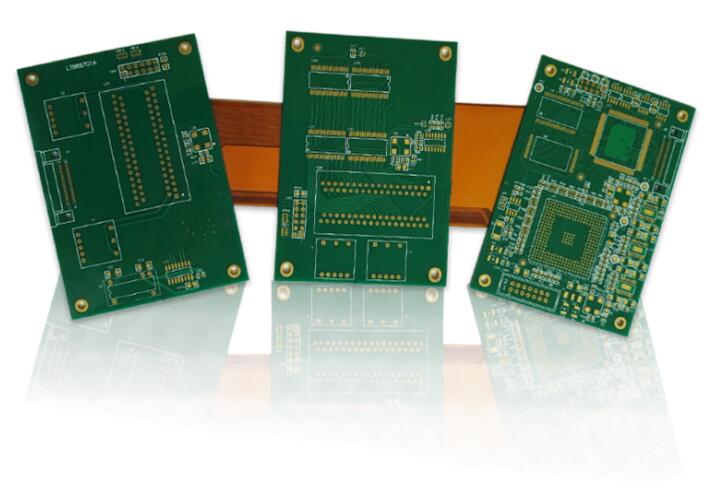
Printed circuit boards can generally be divided into two major categories: rigid PCB and flexible PCB. As their names suggest, rigid PCBs maintain a fixed shape, while flexible PCBs can bend, fold, or conform to three-dimensional structures according to the requirements of the end product.
Both technologies remain widely used because they offer different advantages. A rigid PCB is often preferred for applications requiring mechanical stability, cost efficiency, and straightforward assembly, while a flexible PCB provides greater design freedom, reduced weight, improved space utilization, and dynamic bending capability.
With the rapid development of wearable electronics, foldable devices, medical equipment, automotive electronics, and compact consumer products, flexible circuits have become increasingly important.
The following are some of the major reasons engineers choose a flexible circuit instead of a conventional rigid board.
1. Excellent Flexibility
The most obvious advantage of a flexible PCB is its ability to bend and conform to different mechanical structures.
Unlike a rigid PCB, a flexible circuit can be bent, folded, or shaped to fit limited spaces inside an electronic device. This gives designers greater freedom when developing compact products because the PCB does not necessarily need to occupy a flat, fixed area.
Depending on the construction and material system, flexible circuits can also support repeated dynamic bending. However, the allowable bend radius and bending cycles must be carefully considered during design.
Key design factors include:
- Minimum bend radius
- Copper thickness
- Number of layers
- Flexing direction
- Bend frequency
- Stiffener placement
- Coverlay structure
- Dynamic or static bending requirements
This flexibility makes FPC technology particularly suitable for wearable electronics, medical devices, foldable displays, sensors, cameras, and compact electronic modules.
2. Improved Electrical and Mechanical Connectivity
A major advantage of a flexible circuit is that it can replace multiple rigid boards, wires, and connectors in certain applications.
A flexible PCB can provide direct electrical connections between different circuit boards, electronic modules, displays, sensors, and components. By integrating the interconnection into the PCB itself, designers can reduce the number of conventional connectors and cable assemblies.
This can provide several benefits:
- Fewer mechanical connections
- Reduced assembly complexity
- Lower interconnection weight
- Better space utilization
- Reduced potential points of mechanical failure
- Greater freedom in three-dimensional product design
For example, FPCs are commonly used to connect displays, cameras, batteries, control boards, and other modules in compact electronic devices.
When the circuit must repeatedly move during normal operation, a properly designed flexible PCB can provide a more reliable interconnection than conventional rigid cables or wire assemblies.
3. Lightweight Construction
Weight reduction is another important advantage of flexible PCB technology.
A flexible circuit is generally thinner and lighter than a comparable rigid PCB. Its lightweight construction can contribute to overall product weight reduction, which is particularly valuable in portable and wearable electronics.
Reducing PCB weight can also help manufacturers optimize the mechanical structure of the final product.
Applications that can benefit from lightweight flexible circuits include:
- Wearable electronics
- Portable medical devices
- Cameras
- Drones
- Automotive electronics
- Portable instruments
- Aerospace electronics
For products where every gram and millimeter matters, the weight and thickness advantages of FPCs can provide significant design value.
4. Good Resistance to Mechanical Stress
Although a flexible PCB is physically thinner than many rigid boards, its flexible structure can provide excellent resistance to certain types of mechanical stress.
Rigid boards may experience mechanical stress when exposed to repeated movement, vibration, or bending. A flexible circuit can absorb or accommodate some of this movement instead of transferring all of the stress directly to solder joints or connectors.
This characteristic can improve PCB reliability when the flexible circuit is properly designed for the mechanical environment.
However, flexibility does not mean that an FPC is immune to mechanical damage. Excessive bending, bending below the recommended radius, sharp folding, or repeated flexing beyond the specified cycle life can damage copper conductors.
Therefore, mechanical reliability should be considered together with the electrical design.
5. Excellent Environmental Adaptability
Flexible circuits can also provide good performance in demanding environments when the appropriate materials and construction methods are selected.
Polyimide is one of the most widely used materials for flexible circuits because it offers good thermal stability, dimensional stability, and mechanical performance.
A properly designed FPC can be used in applications exposed to:
- Temperature variations
- Continuous vibration
- Mechanical movement
- Limited installation space
- Repeated flexing
- Certain chemical environments
However, environmental resistance depends on the complete material system, including the base film, copper foil, coverlay, adhesive system, stiffeners, and surface finish.
Therefore, engineers should select materials based on the actual operating temperature, humidity, chemical exposure, bending requirements, and expected service life rather than assuming that every flexible PCB has the same environmental resistance.
6. Support for Product Miniaturization
The demand for smaller electronic products continues to increase across almost every major electronics market.
Modern products increasingly require:
- Smaller packages
- Lower weight
- Higher functional density
- Reduced power consumption
- More compact mechanical structures
- Greater integration
A flexible PCB can help designers overcome some of these limitations because it can occupy irregular spaces and follow the shape of the product.
Unlike a conventional rigid PCB, an FPC can be routed around mechanical components, folded into unused spaces, or positioned along curved surfaces.
This makes flexible circuits particularly useful for smartphones, wearable devices, cameras, medical equipment, automotive systems, and other compact electronic products.
In many cases, the benefit is not simply reducing PCB size but optimizing the entire internal architecture of the product.
7. Resistance to Shock and Vibration
Electronic products used in high-vibration environments require reliable electrical connections and mechanically stable structures.
Because a flexible circuit can accommodate movement, it can reduce certain mechanical stresses transferred to connectors and solder joints.
This makes FPC technology useful for applications involving:
- Continuous vibration
- Repeated movement
- Mechanical shock
- Rotating or moving assemblies
- Compact automotive modules
- Industrial equipment
- Aerospace systems
For example, flexible circuits can be used to connect components mounted on different moving or mechanically separated sections of a product.
Nevertheless, the reliability of an FPC under vibration depends heavily on its construction and installation. Proper bend-radius control, strain relief, stiffener design, and connector selection are essential.
8. High-Temperature and High-Density Applications
Flexible circuits are also suitable for certain high-temperature and high-density applications.
Polyimide is widely used as the base material for FPCs because of its excellent thermal stability and flexibility. Compared with some conventional PCB materials, polyimide-based flexible circuits can provide better performance in applications involving repeated thermal cycling or elevated operating temperatures.
Flexible circuits are therefore used in demanding applications such as automotive electronics, medical equipment, industrial instrumentation, aerospace electronics, and specialized sensing systems.
In high-density applications, flexible circuits can also combine fine traces with compact multilayer structures.
However, high-temperature capability should always be evaluated based on the complete FPC construction. Copper foil, adhesive, coverlay, solder, connectors, and other materials may have different temperature limitations.
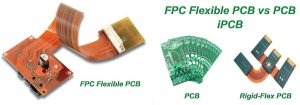
9. Will Flexible PCBs Completely Replace Rigid PCBs?
Despite their many advantages, flexible PCB technology will not completely replace rigid boards.
Each PCB technology has its own strengths.
Rigid PCBs are generally preferred when the product requires:
- High mechanical rigidity
- Large board areas
- Cost-efficient mass production
- Conventional component assembly
- Simple mechanical structures
- Stable flat mounting surfaces
Flexible circuits are more suitable when the design requires:
- Bending or folding
- Three-dimensional routing
- Weight reduction
- Space optimization
- Dynamic movement
- Compact interconnections
For many modern products, the best solution is not choosing between rigid and flexible technology but combining them.
10. Rigid-Flex PCB: Combining the Advantages of Both Technologies
A rigid-flex PCB combines rigid board sections with flexible circuit sections in a single integrated PCB structure.
This approach allows rigid sections to provide mechanical support for components while flexible sections provide electrical connections between different areas.
Compared with using multiple rigid PCBs connected by cables or connectors, rigid-flex construction can reduce:
- Connector count
- Cable assemblies
- Assembly steps
- Product weight
- Internal installation space
Rigid-flex PCBs are widely used in applications where reliability, compactness, and three-dimensional packaging are important.
They can be especially useful when multiple circuit sections need to be connected within a restricted mechanical envelope.
11. Cost Considerations for Flexible PCB
Cost is one of the main factors that must be considered when selecting between flexible and rigid PCB technology.
In general, a flexible circuit can have a higher manufacturing cost than a simple rigid PCB because its construction and manufacturing process may require additional engineering and specialized materials.
Depending on the design, an FPC may require:
- Polyimide base materials
- Coverlay
- Stiffeners
- Specialized adhesives
- Special copper foils
- Additional tooling
- Customized manufacturing processes
- Additional inspection and testing
The number of layers, circuit density, material selection, surface finish, via structure, bending requirements, and production volume can all affect the final cost.
However, comparing only the PCB unit price can be misleading.
A flexible PCB may eliminate cables, connectors, brackets, and assembly operations. As a result, the total system cost may be competitive even when the individual FPC is more expensive than a conventional rigid board.
For this reason, engineers should evaluate the total cost of the complete assembly rather than comparing PCB prices alone.
12. How to Choose Between Flexible and Rigid PCBs
The decision should be based on the requirements of the complete product.
A rigid PCB may be the better choice when mechanical stability, low cost, and conventional assembly are the primary priorities.
A flexible PCB is generally more appropriate when the design requires bending, weight reduction, space optimization, or three-dimensional interconnection.
A rigid-flex PCB can be considered when both mechanical rigidity and flexible interconnection are required.
Before selecting the technology, engineers should evaluate:
- Mechanical requirements
- Bend radius
- Bending cycles
- Operating temperature
- Vibration and shock
- Available installation space
- Layer count
- Circuit density
- Assembly method
- Production volume
- Material requirements
- Target product life
- Total system cost
Conclusion
Flexible PCB technology has become an important part of modern electronic product design. Its flexibility, lightweight construction, compact interconnection capability, and ability to conform to complex mechanical structures make it particularly valuable for miniaturized and high-density electronic products.
At the same time, rigid PCBs remain an essential solution for applications requiring mechanical stability, cost efficiency, and conventional assembly.
Rather than replacing one technology with another, modern PCB design increasingly combines the advantages of rigid and flexible technologies. Flexible PCB, FPC, and rigid-flex PCB solutions can each provide unique advantages when correctly matched to the application’s electrical, mechanical, environmental, and manufacturing requirements.
Kingda provides PCB manufacturing solutions covering rigid, flexible, and rigid-flex technologies, helping customers select appropriate PCB structures and manufacturing processes for compact, reliable, and high-performance electronic products.