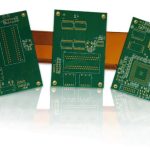
Printed circuit boards (PCBs) are an essential part of modern electronic devices, providing reliable electrical interconnections between components, sub-boards, and mainboards. Depending on their construction and application requirements, PCBs can generally be categorized into rigid PCB, rigid-flex PCB, and flexible PCB.
Among these technologies, flexible PCB solutions have become increasingly popular because of their ability to bend, fold, and conform to complex three-dimensional structures while maintaining reliable electrical performance. They are widely used in smartphones, wearable devices, medical equipment, automotive electronics, industrial systems, cameras, and other compact electronic products.
However, choosing the right flexible PCB manufacturer is just as important as selecting the appropriate PCB technology. A manufacturer’s equipment, technical expertise, quality management system, testing capabilities, certifications, customization capability, and cost control can all directly affect the performance and reliability of the final product.
So, what should you consider when selecting a reliable flexible PCB manufacturer?
Does the Manufacturer Have Advanced Flexible PCB Manufacturing Facilities?
A reliable flexible PCB manufacturer should have advanced production equipment and well-established manufacturing facilities capable of handling the specific requirements of flexible circuits.
Compared with conventional rigid boards, flexible circuits require specialized materials, processing methods, and manufacturing controls. The manufacturing process may involve precision drilling, circuit imaging, copper plating, coverlay processing, surface finishing, electrical testing, and dimensional inspection.
When evaluating a manufacturer, consider whether it has appropriate equipment for:
- Precision drilling and microvia processing
- Circuit imaging and pattern transfer
- Copper plating
- Flexible material processing
- Coverlay application
- Surface finishing
- Automated optical inspection (AOI)
- Electrical testing
- Dimensional and visual inspection
Modern equipment alone does not guarantee quality, but a manufacturer that continuously invests in advanced equipment demonstrates its commitment to process capability, production efficiency, and quality consistency.
Kingda focuses on establishing stable manufacturing processes and appropriate production capabilities to support different flexible PCB manufacturing requirements.
Does the Manufacturer Have Experienced Technical Engineers?
The manufacturing of a flexible PCB involves considerably more than simply processing a conventional PCB using flexible materials.
Flexible circuits must be designed and manufactured according to mechanical requirements as well as electrical requirements. Factors such as minimum bend radius, bending cycles, copper thickness, layer count, stiffener placement, coverlay design, material selection, and connector configuration can all influence product reliability.
Experienced technical engineers should be able to evaluate these factors before production and identify potential manufacturing risks.
A professional flexible PCB manufacturer should have an experienced engineering team capable of supporting:
- DFM (Design for Manufacturability) analysis
- Material selection
- Stack-up design
- Bend-radius evaluation
- Layer and circuit design
- Via and pad optimization
- Manufacturing process development
- Prototype evaluation
- Reliability improvement
A technically capable manufacturer can identify potential problems at the design stage rather than waiting until mass production.
Evaluate Flexible PCB Quality
Quality should be one of the most important factors when selecting a flexible circuit supplier.
A high-quality flexible circuit should provide stable electrical performance, appropriate mechanical flexibility, dimensional accuracy, and sufficient long-term reliability for its intended application.
Depending on the product requirements, important quality considerations may include:
- Trace width and spacing
- Copper thickness
- Dimensional accuracy
- Registration accuracy
- Via reliability
- Surface finish quality
- Coverlay adhesion
- Solderability
- Bend performance
- Electrical continuity
- Insulation resistance
- Thermal performance
For high-density or high-speed applications, additional requirements such as impedance control and signal integrity may also need to be considered.
A reliable manufacturer should have a comprehensive PCB quality management system covering incoming materials, production processes, inspection, testing, and final shipment.
Check PCB Certifications and Industry Standards
Certifications and industry standards provide an important reference when evaluating a flexible PCB manufacturer.
Professional PCB manufacturers should follow internationally recognized industry standards and maintain appropriate quality management systems. Depending on the target market and application, customers may require compliance with standards from organizations such as IPC, UL, and ISO.
For example, customers may consider:
- IPC standards for PCB manufacturing and acceptance
- UL certification for safety requirements
- ISO quality management certification
- RoHS compliance
- REACH compliance where applicable
- Application-specific quality requirements
UL 94 flammability classifications may also be relevant when selecting PCB materials, although the applicable requirement depends on the material system and final product.
Instead of choosing a supplier solely based on whether it has a particular certificate, customers should also verify whether the manufacturer’s actual production processes and quality controls are consistent with the requirements of the certification.
Can the Manufacturer Produce Customized Flexible PCBs?
One of the major advantages of a flexible PCB is its ability to adapt to different mechanical structures.
Flexible circuits can be manufactured in different shapes, sizes, layer configurations, and mechanical constructions according to product requirements.
For example, flexible circuits used in medical equipment may have different requirements from those used in automotive electronics, cameras, wearable devices, or industrial equipment.
A capable flexible PCB manufacturer should be able to support customized designs, including:
- Single-sided flexible PCBs
- Double-sided flexible PCBs
- Multilayer flexible PCBs
- Flexible circuits with stiffeners
- Fine-pitch flexible circuits
- High-density flexible circuits
- Customized connector areas
- Rigid-flex PCB structures
The manufacturer should also be able to recommend suitable materials and construction methods based on the application’s mechanical, electrical, thermal, and environmental requirements.
Consider Flexible PCB Manufacturing Cost
Cost is another important consideration when selecting a flexible PCB manufacturer, but the lowest unit price should not necessarily be the deciding factor.
The cost of a flexible circuit can be affected by many variables, including:
- Material type
- Copper thickness
- Number of layers
- Circuit density
- Board dimensions
- Coverlay structure
- Stiffeners
- Surface finish
- Via technology
- Tooling requirements
- Testing requirements
- Production volume
Compared with a simple rigid PCB, a flexible circuit may have a higher unit manufacturing cost because it often requires specialized materials and additional processing.
However, evaluating only the PCB price can provide an incomplete picture.
A flexible PCB may eliminate conventional cables, connectors, brackets, and additional assembly operations. This can reduce the overall system complexity and potentially lower total product costs.
Therefore, customers should evaluate the total cost of ownership rather than comparing PCB unit prices alone.
An experienced flexible PCB manufacturer can also help optimize the design, materials, layer structure, and manufacturing process to achieve a better balance between performance and cost.
Does the Manufacturer Provide Prototypes Before Mass Production?
Prototype production is an important step before moving into full-scale manufacturing.
A PCB may become an integral part of an electronic product, so discovering a design or manufacturing problem after mass production can result in significant costs and delays.
A professional manufacturer should be able to provide prototype or small-batch production before mass production. This allows customers to verify:
- Mechanical dimensions
- Electrical performance
- Assembly compatibility
- Bend performance
- Connector fit
- Component placement
- Signal performance
- Overall product integration
Prototype evaluation also allows engineering teams to identify potential design problems at an early stage.
This approach reduces the risk of expensive production changes and helps ensure that the final flexible circuit meets the customer’s requirements.
Can the Manufacturer Provide Different Flexible PCB Structures?
Different applications require different flexible circuit structures.
A qualified flexible PCB manufacturer should have experience producing a variety of PCB configurations rather than being limited to one standard construction.
Common options include:
Single-Sided Flexible PCB
A single-sided flexible PCB contains one conductive copper layer and is suitable for relatively simple circuits and cost-sensitive applications.
Double-Sided Flexible PCB
A double-sided flexible PCB contains copper layers on both sides of the flexible substrate and can provide greater circuit density than a single-sided design.
Multilayer Flexible PCB
Multilayer flexible circuits use multiple conductive layers separated by insulating materials. They are suitable for applications requiring higher routing density and more complex electrical functionality.
Rigid-Flex PCB
A rigid-flex PCB combines rigid sections with flexible sections in one integrated structure. This can reduce the need for cables and connectors while providing both mechanical support and flexible interconnection.
The manufacturer’s ability to support multiple structures gives designers greater freedom when selecting the most appropriate solution.
Does the Manufacturer Have Comprehensive PCB Testing Capabilities?
PCB testing is essential for verifying the electrical and manufacturing integrity of flexible circuits.
Without appropriate testing, defects may remain undetected until the PCB is assembled into the final product, potentially increasing rework, warranty, and failure costs.
Depending on the product requirements, common testing methods may include:
- Electrical continuity testing
- Insulation resistance testing
- Flying probe testing
- In-circuit testing (ICT)
- Functional testing
- Automated optical inspection (AOI)
- Dimensional inspection
- Visual inspection
For high-reliability applications, additional reliability tests may also be required, such as thermal cycling, environmental testing, bending-cycle testing, or other application-specific evaluations.
An effective PCB testing process should not simply identify defective products. It should also provide manufacturing feedback that helps engineers identify the root causes of recurring defects and continuously improve the production process.
Evaluate Production Capacity and Delivery Capability
Production capacity is another factor that should not be overlooked.
A manufacturer may be able to produce excellent prototypes but struggle to maintain consistent quality during mass production. Therefore, customers should evaluate whether the supplier can support the required production volume and delivery schedule.
Important considerations include:
- Prototype capability
- Small-batch production
- Mass-production capacity
- Production lead time
- Material availability
- Process stability
- Quality consistency
- Capacity expansion capability
For long-term projects, a stable manufacturing partner should be able to support the product throughout different stages of its lifecycle, from prototype development to volume production.
Why Consider a Chinese Flexible PCB Manufacturer?
China has developed a mature electronics manufacturing ecosystem and has become one of the world’s major PCB manufacturing centers.
The country’s extensive supply chain, manufacturing infrastructure, engineering resources, and electronics industry ecosystem provide significant advantages for PCB production.
Working with an experienced Chinese flexible PCB manufacturer can offer several potential benefits:
- Competitive manufacturing costs
- Strong supply-chain support
- Broad material availability
- Advanced manufacturing capabilities
- Experienced engineering teams
- Flexible production volumes
- Efficient logistics
- Integrated PCB and electronics manufacturing resources
However, geographical location should not be the only consideration. Customers should evaluate the manufacturer’s technical capability, quality management, communication efficiency, certifications, production capacity, and ability to provide long-term support.
How to Choose the Best Flexible PCB Manufacturer
Selecting the right flexible PCB manufacturer requires a comprehensive evaluation rather than focusing on a single factor.
Before placing an order, consider the following checklist:
- Manufacturing capability – Does the supplier have suitable equipment for your PCB structure and technology requirements?
- Engineering expertise – Can its engineers provide DFM analysis and technical support?
- PCB quality – Does the company have reliable process controls and inspection systems?
- PCB certifications – Does it meet the applicable IPC, UL, ISO, RoHS, or other requirements?
- Customization capability – Can it manufacture the required shape, size, layer count, and mechanical structure?
- PCB testing – Does it provide appropriate electrical, visual, and reliability testing?
- Prototype capability – Can it provide prototypes before mass production?
- Production capacity – Can it consistently meet your volume and delivery requirements?
- Cost control – Can it optimize materials and processes without compromising quality?
- Technical communication – Can its engineering team respond quickly and accurately to technical issues?
Conclusion
Choosing the right flexible PCB manufacturer is critical to the success of an electronic product. A reliable supplier should provide more than competitive pricing. It should combine advanced flexible PCB manufacturing capabilities, experienced engineers, strict PCB quality control, comprehensive PCB testing, relevant certifications, and strong production capacity.
Customers should also consider prototype support, customization capabilities, material selection, production scalability, and total manufacturing cost before making a final decision.
With the continued development of miniaturized, lightweight, and highly integrated electronic products, the demand for flexible PCB and rigid-flex PCB solutions will continue to grow.
By selecting an experienced and technically capable manufacturing partner such as Kingda, product developers can better manage manufacturing risks, optimize PCB performance, and achieve reliable results from prototype development through mass production.