Flexible Polyimide Cost: High-Temperature Circuit Pricing
Polyimide is the substrate of last resort on a cost sheet and the first choice on an environmental one. When a board has to survive 260 degrees Celsius, bend around a housing, resist solvents and keep working for a decade, the material stops being optional. That is why a polyimide PCB price is typically two to four times an FR-4 equivalent, and why the cost structure behaves differently from an ordinary laminate.
What a Polyimide Board Is Used For
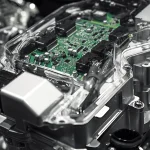
Polyimide boards appear wherever the environment is hostile or the shape is not flat. Aerospace control modules, implantable and wearable medical devices, engine control units and instrument clusters all use the material for the same reason: it holds its mechanical and electrical properties far beyond the range where FR-4 becomes unreliable.
Three construction types cover most of the demand. A rigid polyimide board behaves like a conventional board but tolerates higher temperature; a flexible polyimide circuit replaces cable assemblies and fits a curved housing; and a rigid-flex board combines both so a single part can carry rigid component areas and a moving flex tail without a connector in between.
Why Polyimide Costs More Than FR-4
Heat is usually the deciding factor rather than flexibility. A board that runs continuously at 150 degrees Celsius loses mechanical strength in an epoxy laminate long before it fails electrically, while a polyimide board holds its properties to a much higher temperature. That convergence is why engine bay electronics, downhole instruments and medical sterilisation equipment arrive at the same material even when their circuits have nothing else in common.
The base film is the first cost. Polyimide resin is more expensive than epoxy, and the raw film is supplied in limited widths, so the panel utilisation is worse and the scrap rate is higher. Lamination is also slower, because a polyimide stack needs higher temperature and pressure and a longer cycle to reach full cure.
Processing is the second cost. Polyimide absorbs moisture, so it needs a baking step before lamination and before assembly. It is also tougher, which shortens drill life and forces lower hit counts per bit. Those process penalties are charged per panel regardless of how simple the circuit is, which is why even a single-sided board carries a high base price.
Layer Count and Construction Type
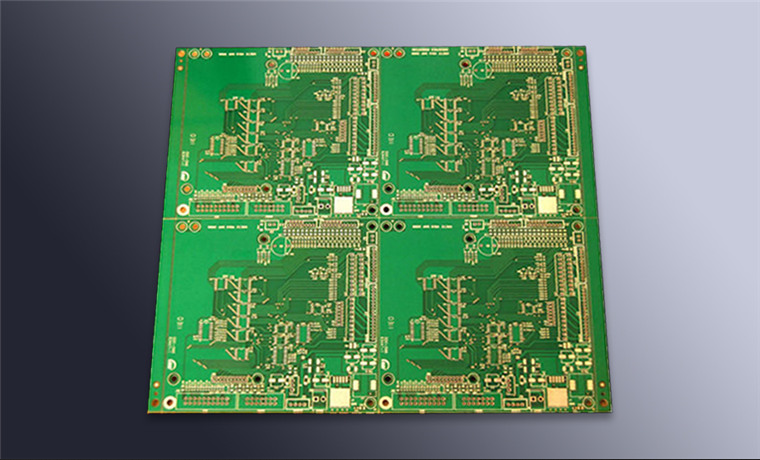
Layer count multiplies the base cost in the same way as on FR-4, but from a much higher starting point. A single-sided flexible circuit is the entry level; a four-layer rigid polyimide board with a controlled stackup is a mid-range product; and a six or eight layer rigid-flex construction with mixed dielectric thickness is the top of the range.
Adhesive-based and adhesiveless constructions are priced differently as well. An adhesiveless stack is thinner, bends better and holds its dimensions more tightly, but it costs more because the copper is cast directly onto the film. For a flex that has to survive many bend cycles, that premium is usually justified; for a static flex it often is not.
Copper, Thickness and Stiffeners
Copper weight affects flexible materials more than rigid ones, because heavy copper reduces flexibility. Rolled annealed copper is the normal choice for a dynamic bend, since it withstands repeated flexing far better than electrodeposited copper. It costs more, and it also changes the etch process, so the decision should follow the bend requirement rather than the price list.
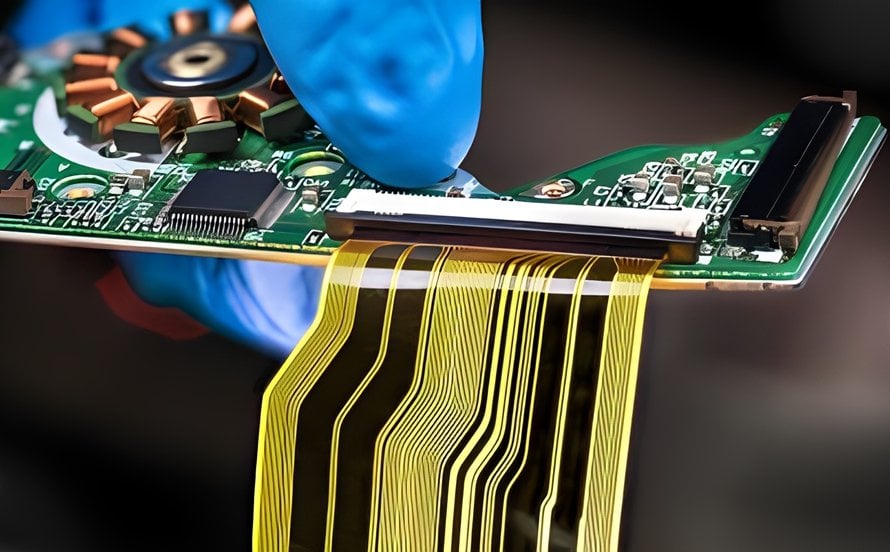
Stiffeners are the other mechanical cost. A flex tail that plugs into a connector needs a stiffener behind the contact area, and the stiffener adds material, a bonding step and thickness control. Every stiffener is effectively a second part on the panel, so their number and size should be kept to the minimum that satisfies the connector and the handling.
Finish, Vias and Impedance Control
Coverlay selection belongs in the same discussion. A photoimageable cover layer gives tighter openings and registers more easily on a dense circuit, while a laminated coverlay is cheaper and more robust on a simple one. The choice sets the minimum pad opening that can be held, which in turn limits the component pitch the finished flex can accept, so it is worth reviewing manufacturable design guidelines before the artwork is released.
Surface finish follows the application. ENIG is common because it is flat and survives the baking cycles that polyimide requires, while hard gold is used on flex tails that are inserted repeatedly. HASL is rarely specified on a flexible circuit because the thermal shock is unkind to a thin film, and OSP has a shelf life problem when the board is stored before assembly.
Vias are the third cost centre. A flexible circuit with through-holes only is straightforward; adding blind and buried vias means sequential lamination on a material that is already harder to laminate. Impedance control adds a defined stackup and test coupons, and on a flex it also requires a dielectric thickness tolerance that few suppliers quote without being asked.
Prototype versus Volume Pricing
The pcb prototype cost of a polyimide board is driven by setup rather than by material. Tooling for a flexible circuit includes a coverlay or photoimageable cover layer, a stiffener programme and a forming or bend-radius check. On a small sample order those charges dominate, and the unit price can look alarming even when the volume rate is reasonable.
Volume pricing then follows panel utilisation and yield. Polyimide films come in narrower rolls than FR-4 panels, so nesting several circuits on one panel has a larger effect here than on a rigid board. A design that packs efficiently can move the unit price by a substantial margin without changing anything electrical.
Regional Pricing and Certifications
Regional differences are significant for polyimide work because the processing is specialised and the qualified supplier base is smaller. Cost-oriented sourcing exists, but the documentation and traceability that high-reliability applications demand are not equally available everywhere, and that asymmetry is what a certification-driven buyer is really paying for.
Certification is a line item in its own right. Class 3 acceptance, medical quality system documentation, material declarations and first-article reports all require records that a standard production line does not generate by default. Those records are produced once per design but verified per lot, so their cost is partly fixed and partly variable.
Reducing Cost Without Losing Reliability
Lead time belongs in the same calculation as unit price. Polyimide work is scheduled less frequently than standard FR-4 production, so the queue can add a week before any process time is counted. Building a little schedule slack into the plan is usually cheaper than paying for expedited handling, and it avoids the yield risk that rushed lamination introduces on a moisture-sensitive material.
The largest savings come from choosing the right construction. Use a static flex where the board does not have to bend in service, keep blind and buried via structures for the circuits that genuinely need them, and add stiffeners only where the connector or the assembly demands them. Each decision removes a process step rather than a capability.
Standardising helps as well. Reusing one flex stackup, one coverlay construction and one connector footprint across several products lets a supplier hold a single process window, and the protective coating decision can often be made once for the whole family. What should not be trimmed is copper type on a dynamic bend, the bend radius allowance, or the baking and handling steps that keep moisture out of the laminate.
FAQ
Why is a polyimide board so much more expensive than FR-4? Three reasons: the base film costs more and comes in narrower widths, lamination runs at higher temperature for longer, and the material needs baking and gentler drilling. Those penalties are charged per panel even when the circuit is simple.
Do I need adhesiveless construction? Only when the flex is dynamic or the thickness and dimensional tolerance are tight. A static flex with an adhesive-based stack performs well and costs noticeably less, so the requirement should be derived from the bend duty rather than assumed.
Can a flexible circuit use impedance control? Yes, but it needs a defined stackup, a dielectric thickness tolerance and test coupons. Because the material is thin and the cover layer is bonded rather than laminated, the tolerance must be confirmed with the supplier before the layout is frozen.