AI in PCB Design: What Can Be Automated and What Cannot
Until recently the role of artificial intelligence in electronics was advisory. It answered questions about how to route a differential pair, what to check in a power layout, or why a signal was noisy, and the engineer applied the answer by hand. What has changed is that AI is now being connected directly to EDA tools, where it can create and modify geometry rather than describe it. That shift is the reason AI in PCB design has become a practical topic rather than a speculative one.
The reaction in the industry has ranged from dismissal to anxiety, but neither position is useful for planning a career or a design flow. The productive question is narrower: which parts of the work are rule-clear enough to delegate, which parts depend on judgement that has not been written down anywhere, and what changes when the first category gets automated.
Tasks That Are Ready to Automate
The work that automates first is work whose rules can be stated explicitly. Basic placement and routing of non-critical nets, repetitive edits such as a component change that has to be propagated across a design, geometric design rule checking, documentation generation and version-to-version adjustments all fall into this group. These activities are execution-heavy: once the rules are clear, the correct result is largely mechanical, and a machine can apply it consistently without fatigue.
The exposure is real for anyone whose main value is tool fluency. Being fast in a particular layout package, or being the person who takes a finished schematic and turns it into copper, describes a skill that is directly comparable to what an automated system can already do for well-behaved circuits. The tasks that are left are the ones where the correct rules are not obvious in advance.
<img src="https://www.gopcba.com/wp-content/uploads/2026/09/24-2.jpg" alt="Engineer reviewing generated copper against placement constraints” />
What Still Needs Engineering Judgment
The hardest part of a real project is usually not operating the software. It is deciding what the rules should be in the first place. A mechanical envelope, a thermal limit, an EMC requirement, a cost target and a production volume all constrain the layout, and none of them arrives as a machine-readable constraint. Someone has to translate an enclosure drawing and a compliance requirement into a set of stackup, spacing and routing decisions, and that translation is where engineering judgment currently lives.
The same applies to the interface with manufacturing. Choosing a laminate, deciding whether a via should be back-drilled, understanding what a fabricator can hold on a heavy copper layer, and knowing why a particular solder joint failed after thermal cycling are all judgements built from experience with the process rather than with the tool. An automated layout engine does not attend the design review where the assembler explains that a component orientation will cause tombstoning.
Why Autorouting Depends on Constraints
An autorouter does not produce a good layout; it produces the best layout that satisfies the constraints it was given. If a net has no impedance target, no length window and no keep-out, the router is free to choose a path that is geometrically valid and electrically poor. Failures that are blamed on automation are often failures of constraint specification, with the machine faithfully optimising the wrong objective.
That makes constraint quality the real limit on automation. A design with well-defined net classes, explicit keep-outs, a documented stackup and measured impedance targets gives any tool, human or automated, enough information to succeed. A design whose intent exists only in the layout engineer’s head cannot be delegated to anything, because there is nothing to delegate.
Placement Constraints Are the Interface
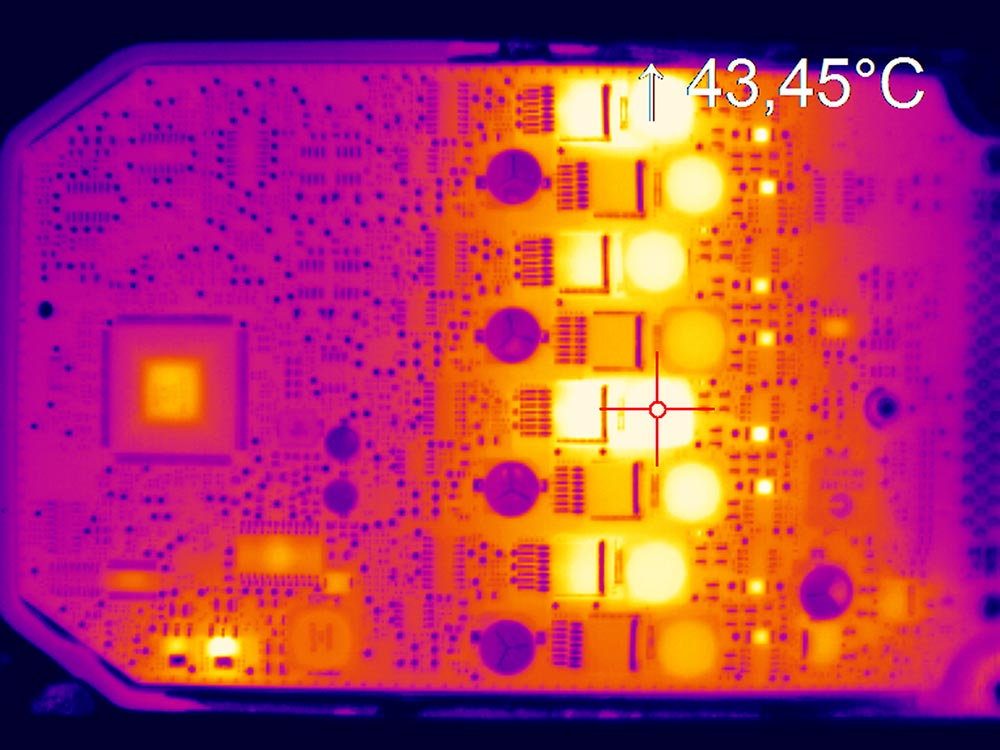
Placement constraints are where the mechanical, thermal and electrical intentions of a design become explicit. A keep-out around a connector protects the cable bend radius; a minimum distance between an inductor and a sensitive analogue input protects measurement accuracy; a fixed position for a mounting hole protects the enclosure fit. Written as constraints, these requirements survive a change of engineer, a change of tool or a change of vendor. Left as tacit knowledge, they are reinvented, or missed, on every revision.
This is also what makes a design portable to automation. A tool that understands the constraints can check them, enforce them and report violations with a location, and an engineer reviewing the output has something objective to review against. Investing in constraint definition therefore pays off twice: once in the current project and again whenever part of the work is delegated.
How the Role Changes
If the execution layer is increasingly automated, the value of a PCB engineer moves upward. Specifying constraints from system requirements, judging whether a stackup choice is manufacturable at the target cost, integrating thermal and mechanical needs, and verifying that generated copper satisfies the electrical intent become the core of the job. Reviewing automatic output is a distinct skill: it requires knowing where an optimiser is likely to be wrong, which is usually at the boundaries between rules rather than in the middle of a straightforward net.
Communication skills matter more in that world, not less. The engineer becomes the person who can explain to a mechanical designer why a clearance cannot shrink, to a project manager why an extra layer is cheaper than a re-spin, and to an assembler why a component orientation was chosen. Those conversations are exactly the part of the job that has never been automated.
Preparing Your Design Data
The practical preparation is the same whether or not automation is adopted. Build a design rule baseline that reflects what the fabricator can actually produce, keep it under version control, and apply it from the first day of a project rather than after the layout is finished. Work through the PCB design process deliberately, and check the result against manufacturable design guidelines before release rather than after the first quote.
Review discipline is the other half. Mistakes that survive to production are usually the ones nobody looked for, and the recurring categories are well known, as collected in PCB layout review mistakes. Measuring the finished board against the characteristics of a good design, rather than against the tool’s pass-fail report, is what keeps quality independent of who or what produced the copper.
Where the Boundary Actually Sits
A useful way to think about the boundary is that automation is strong where a violation can be detected mechanically and weak where a violation is only visible in the product. An automated system can enforce a spacing rule, match a length, or verify that a keep-out is respected, because each of those can be checked geometrically. It cannot tell whether a component placement makes the board impossible to assemble at the intended volume, or whether a ground strategy will pass an emissions test on the first attempt.
That boundary will move as tools improve, and it is worth re-examining rather than assuming. The constant is that the engineer owns the specification and the release. As long as the consequences of a design decision fall on the product, the responsibility for that decision stays with a person, regardless of how the copper was produced.
FAQ
Will AI replace PCB engineers? It will replace the part of the job that consists of executing clearly stated rules. The parts that require deciding what the rules should be, and verifying that the result serves the product, remain engineering work.
Should a small team invest in AI layout tools now? Only after the constraints are worth feeding to them. A team that has not documented its stackup, spacing and impedance rules will get more from that documentation than from any automation.
What skill should a layout engineer develop next? System-level understanding: power distribution, thermal paths, EMC, and the economics of fabrication. These are the inputs to the constraints that automation consumes, and they are harder to automate than drawing copper.